It’s been three weeks since the last visit. We had a holiday abroad for some winter sun and came back with the nastiest chesty cough and flu-like symptoms I’ve had for many years. My energy levels are just coming back and yesterday the weather was looking great for a visit. I desperately wanted to finish the felling of the sycamore in the N.E. corner where I am going to replant with oak saplings. First job though, was to finish preparing the Little Owl nest box I erected a few months ago. It needed a ring of tippex painting around the hole (I think this is so you can see if birds are using it withoug opening the box – they will wear it away quickly). Also it needed a layer of wood shavings placing inside. I was wondering if squirrels might have used it. No sign of them but there were numerous small bird droppings on the floor. Something small has been sheltering in it at night. I wonder what?
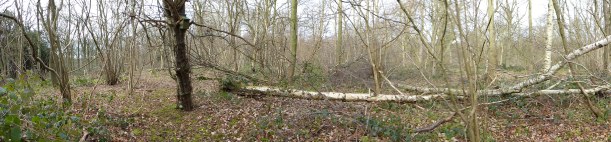
I have a new camera which has the facility to take panoramic shots. I took some on holiday and I love this feature so was keen to take some in the woods. This picture is taken from the NE corner where I have been doing the felling and shows the border with my next door’s plot on the left and pans right to show the area being thinned and the log pile from it.
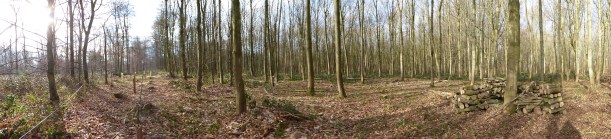
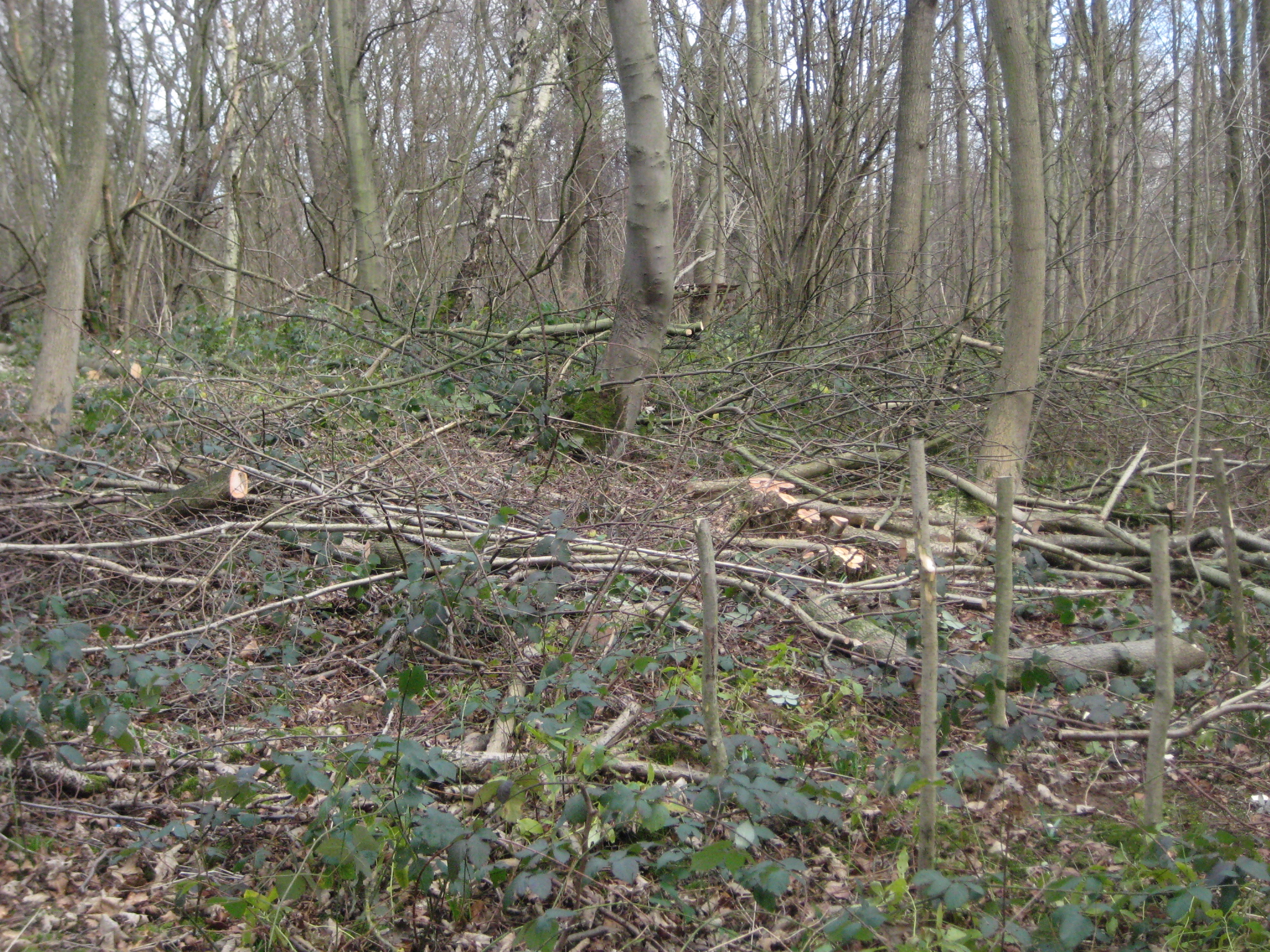
So to explain the reason for this work – why cut down healthy trees to plant some more? What you can see is a plantation of several hundreds of tall thin sycamore trees about 40-50 years old. This takes up approx 2/5ths of my woodland and is fairly boring. The dense canopy of sycamore excludes most of the light from the floor and so little else grows beneath it in the way of understory (small trees and shrubs) or ground cover plants (except bramble and moss and a few ferns). It was planted as a timber crop but has been neglected. Many of the trees are of bad form – stunted, forked, squirrel damaged etc and will never make good timber. So my aim is to gradually thin out the poor trees which will give the better ones more light and nutrition and so improve their growth rate. Then introduce some different species to add diversity and interest. So I picked this corner to start with. It already receives a lot of light from the east (left of the picture) which is thinly stocked, so I can take advantage of that by cutting into the edge of my plantation to open up a small coupe to be replanted. I have some oak saplings I grew from acorns two years ago and a few other assorted ones. They will need the extra light I have provided by felling and the ground cover plants should start to recover, having cut back the dense bramble. It will be interesting to see what colonises it this summer.
There was one large tree to fell that I have been holding back on. I was a bit scared of doing it on my own. I’m still a novice with the chainsaw and I was going to ask someone to help me with it. Well I can’t wait much longer so I bit the bullet and cut it down on myself. It was always going to have to fall part way into the plot next door but there was a slot where no trees are growing, just bramble so I little damage likely if I could hit it. I’ve already successfully felled smaller ones into that area and the plan was for this one to go there too. The weight distribution of the tree was hard to assess as it had a forked trunk about half way up. I made my cuts where I thought they needed to be and it came down perfectly. Wow what a rush you get when that happens. There were three other trees to fell and only one got hung up in another tree. Not bad three out of four!
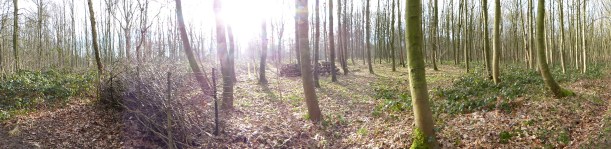
This is another panorama shot from the lower end of the sycamore plantation looking back up to the felled area at the very far end where you can see a V shaped gap in the tree-line.

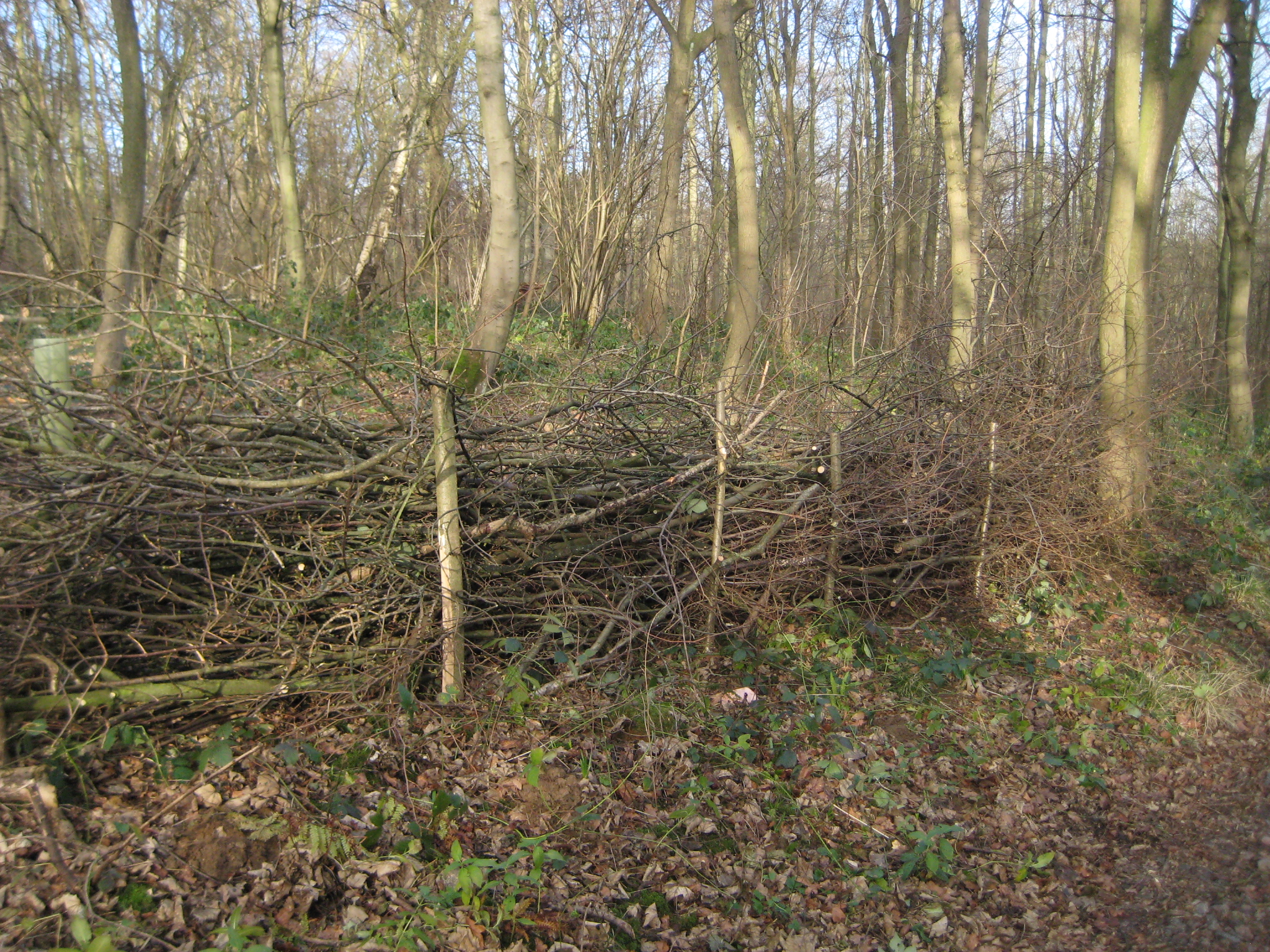
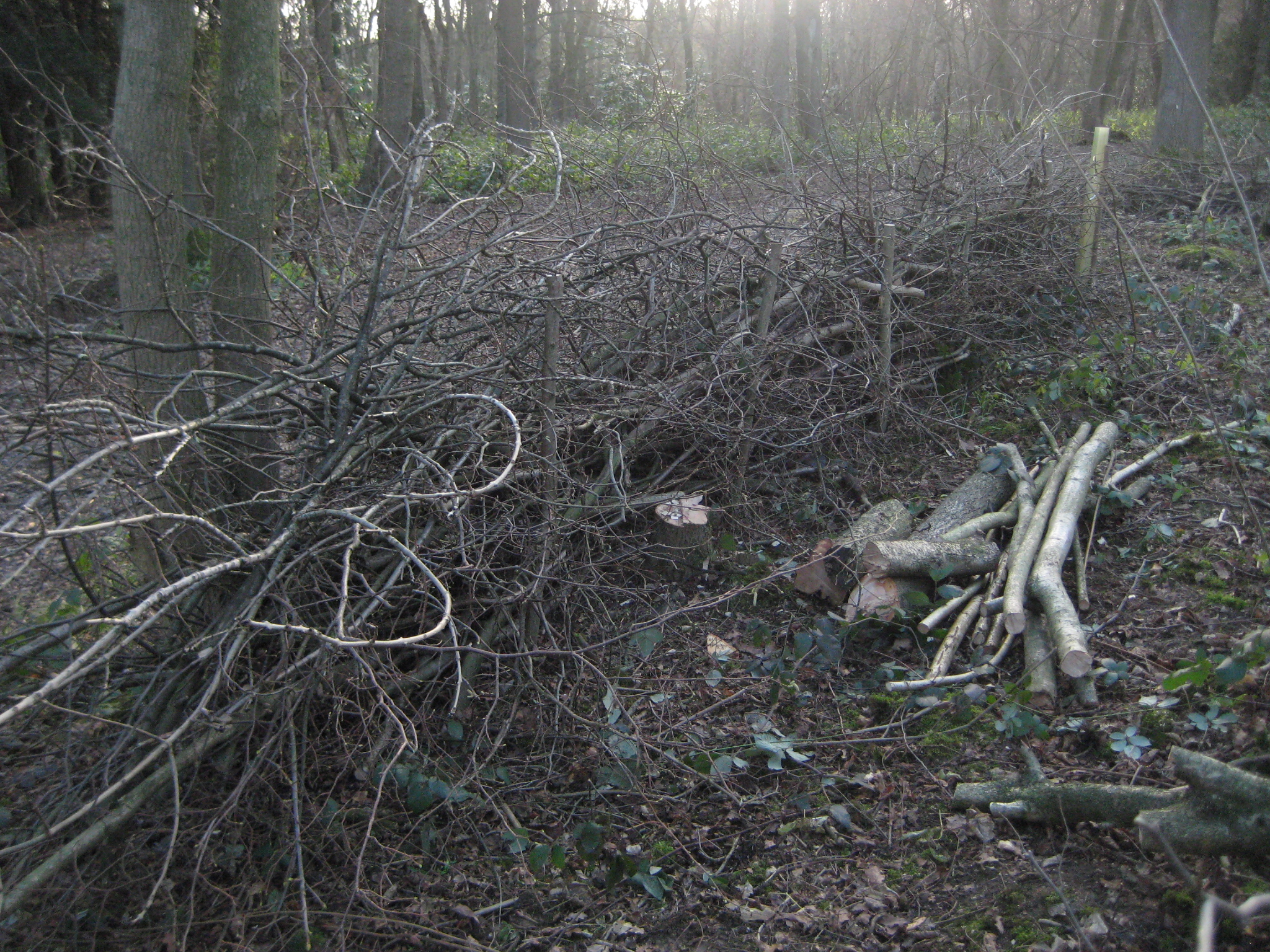
The weather was fantastic, sunny and hardly a whisper of a breeze. I sat on my newly felled tree trunk to eat my lunch. A pair of robins appeared, one perched on a twig where the sunlight hitting it’s red breast made it appear to be on fire! What a fantastic sight. They were exploring my new brash hedge, hopefully looking for a nesting place. Nice to see my work being utilised by the wildlife. For a while I was literally in heaven. What could be more perfect than that moment, sitting in my woods on the tree I had conquered my fear with, watching the wildlife with the sun on me. Man, I wish you could bottle that.
So the rest of my time was mostly spent cutting up the trees and stacking the logs. Still a fair bit of tidying to do, then start planting. A walk with my new camera resulted in some more nice panoramic shots which I’ll leave you with.