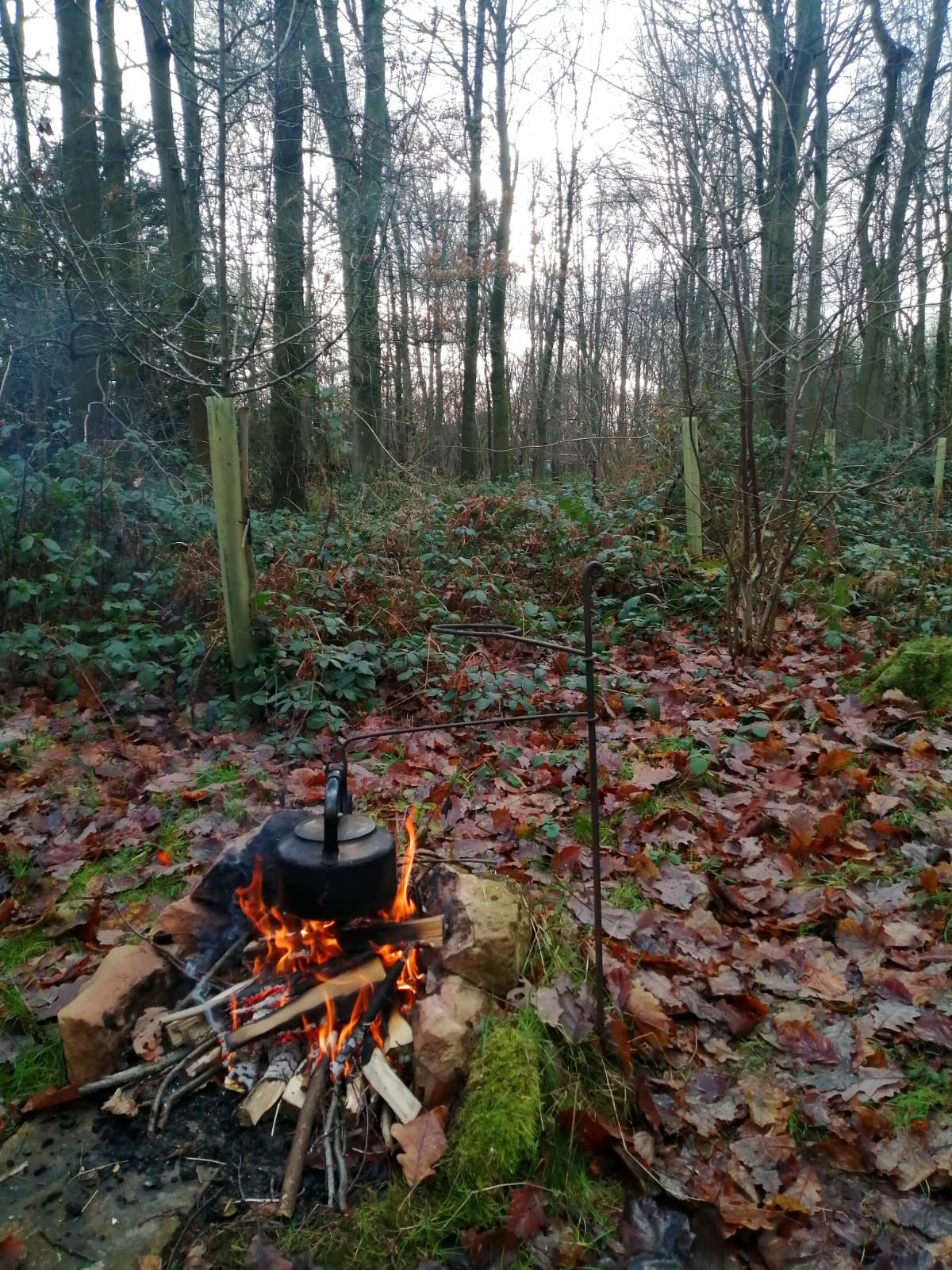
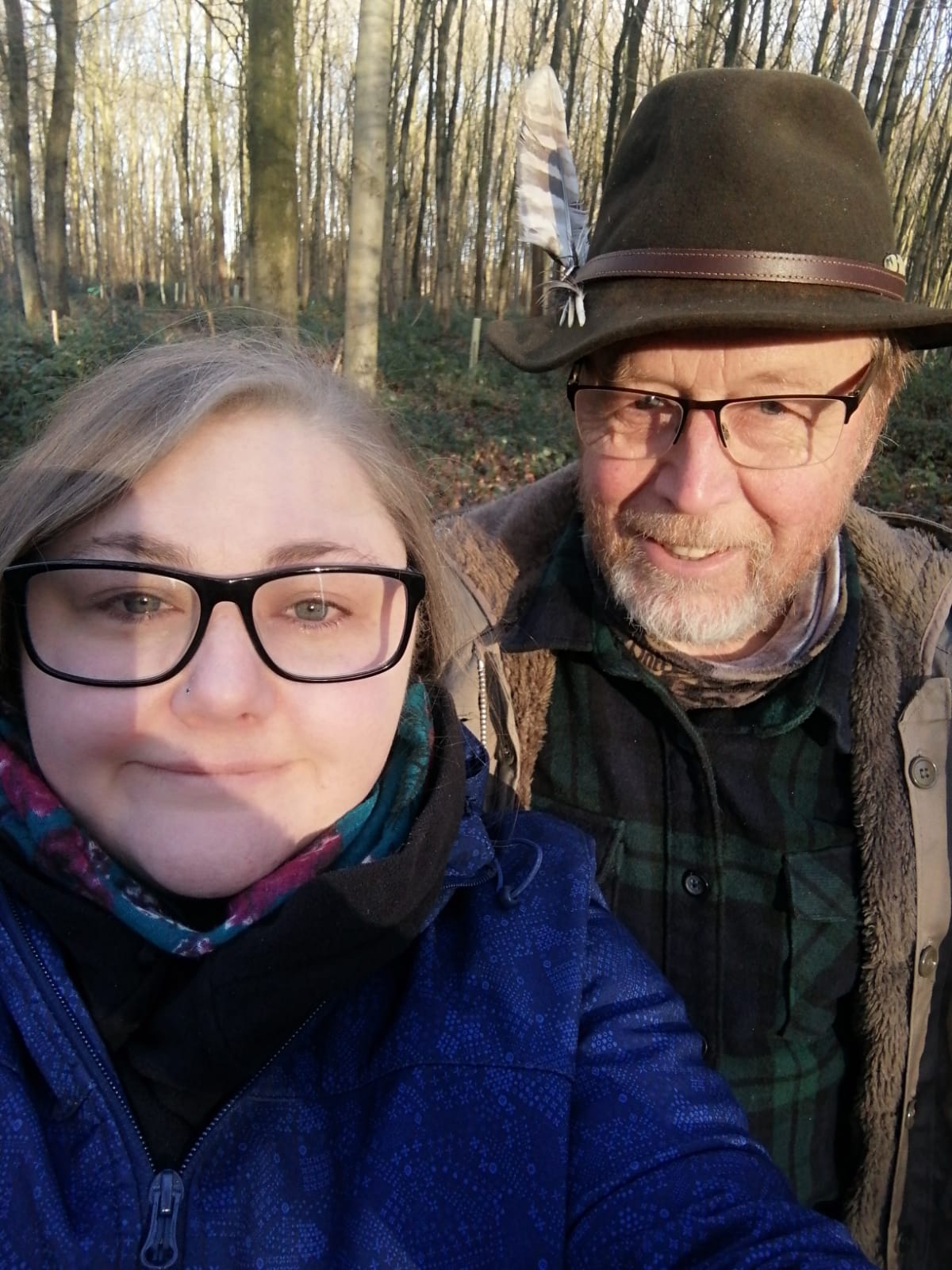
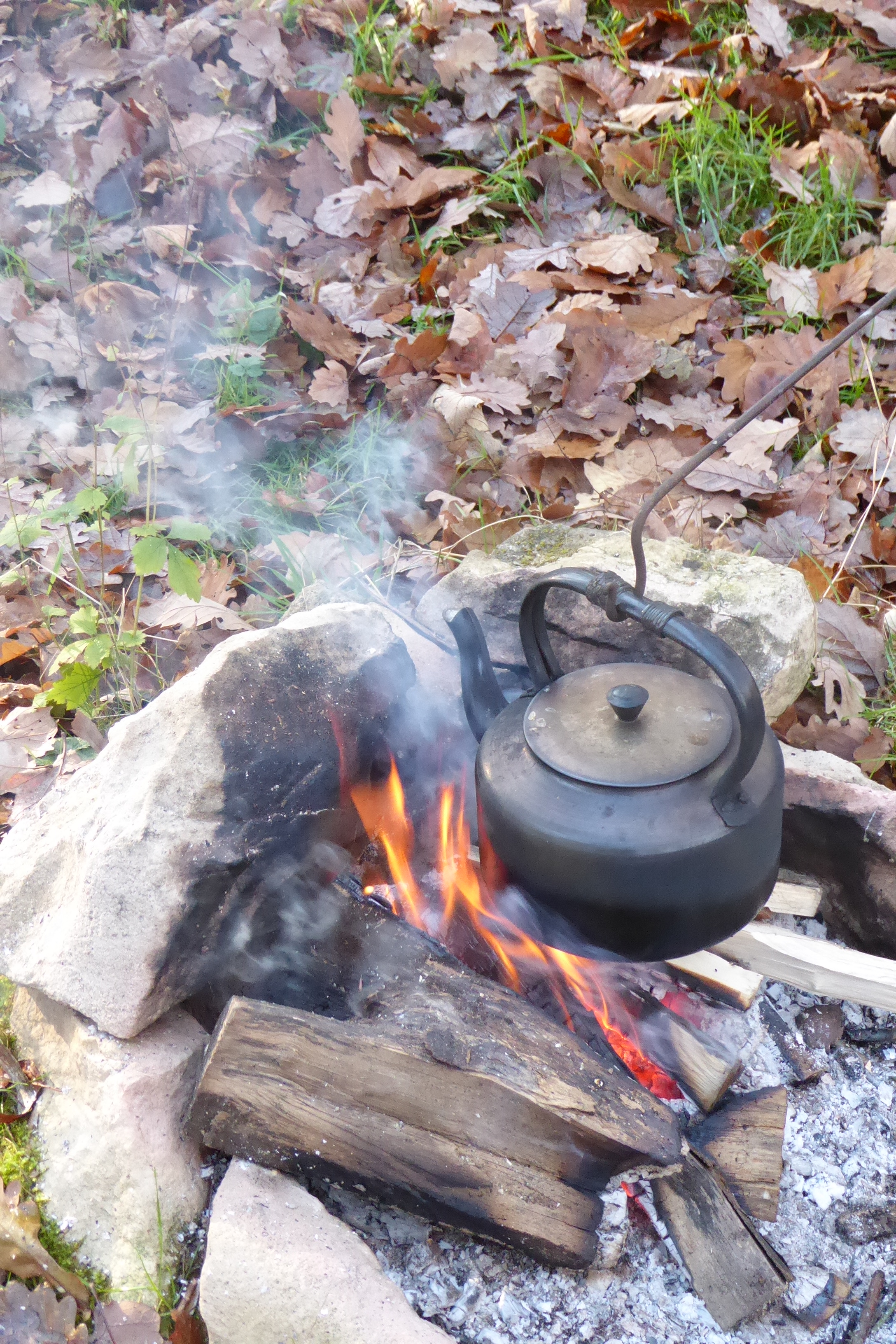
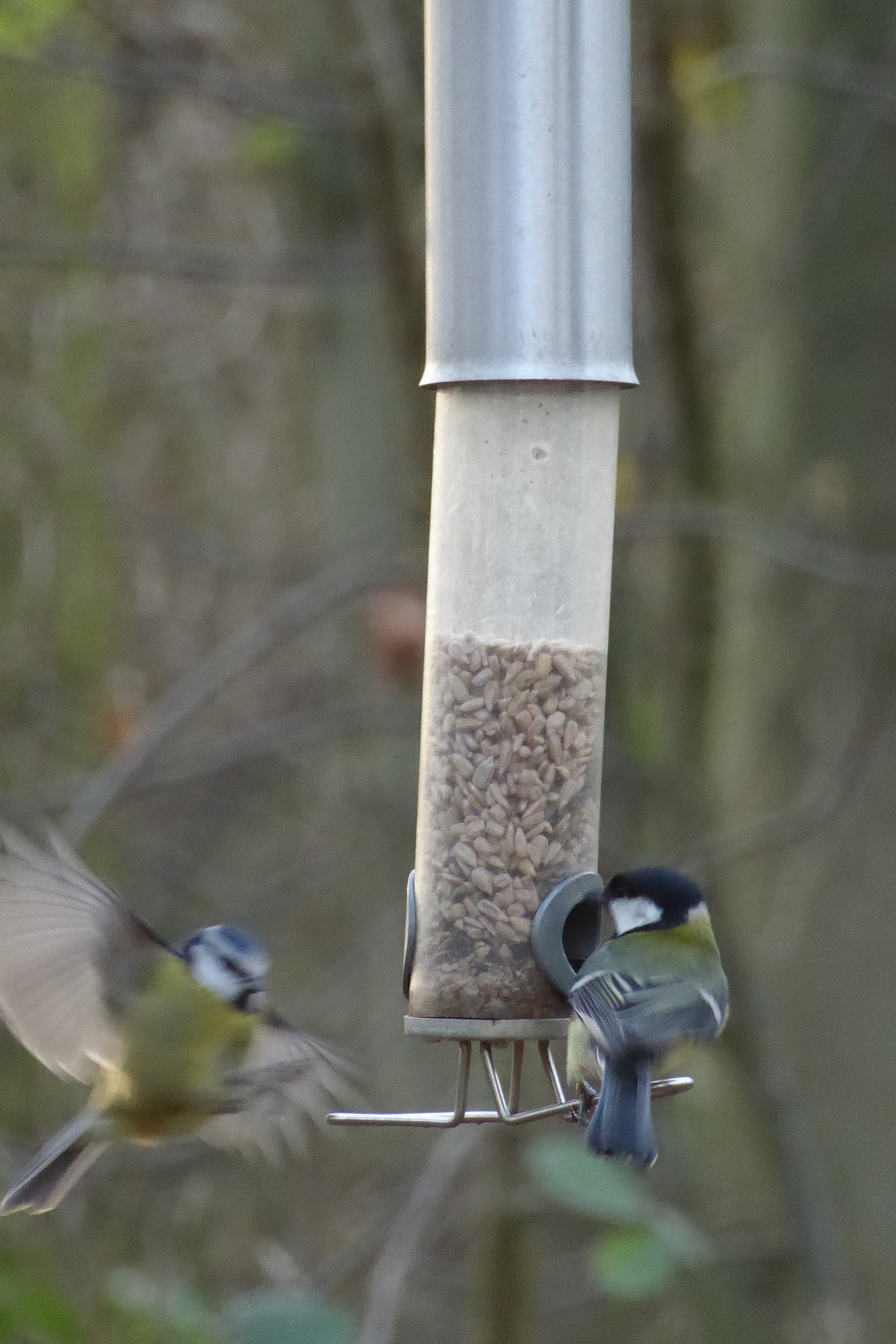
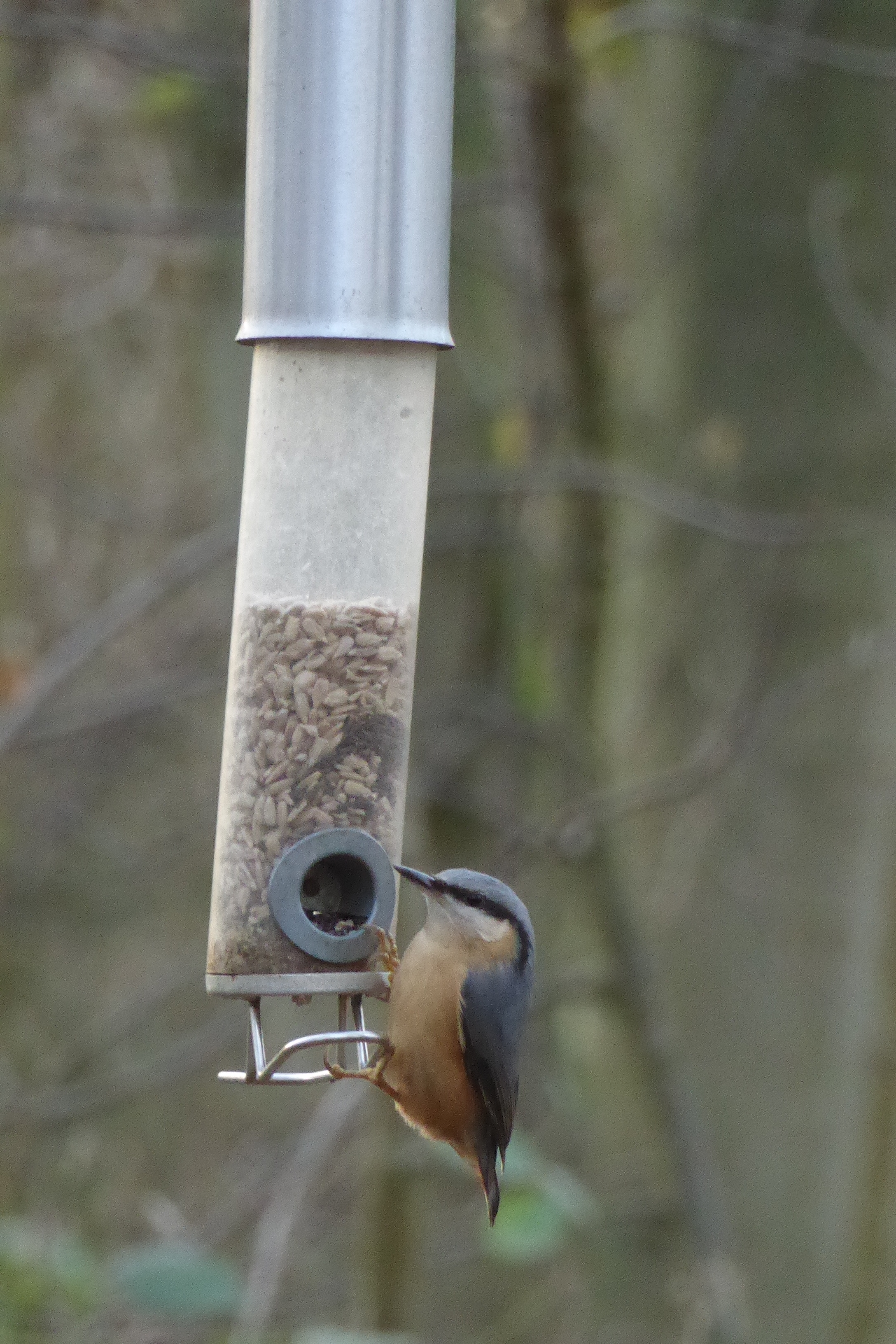
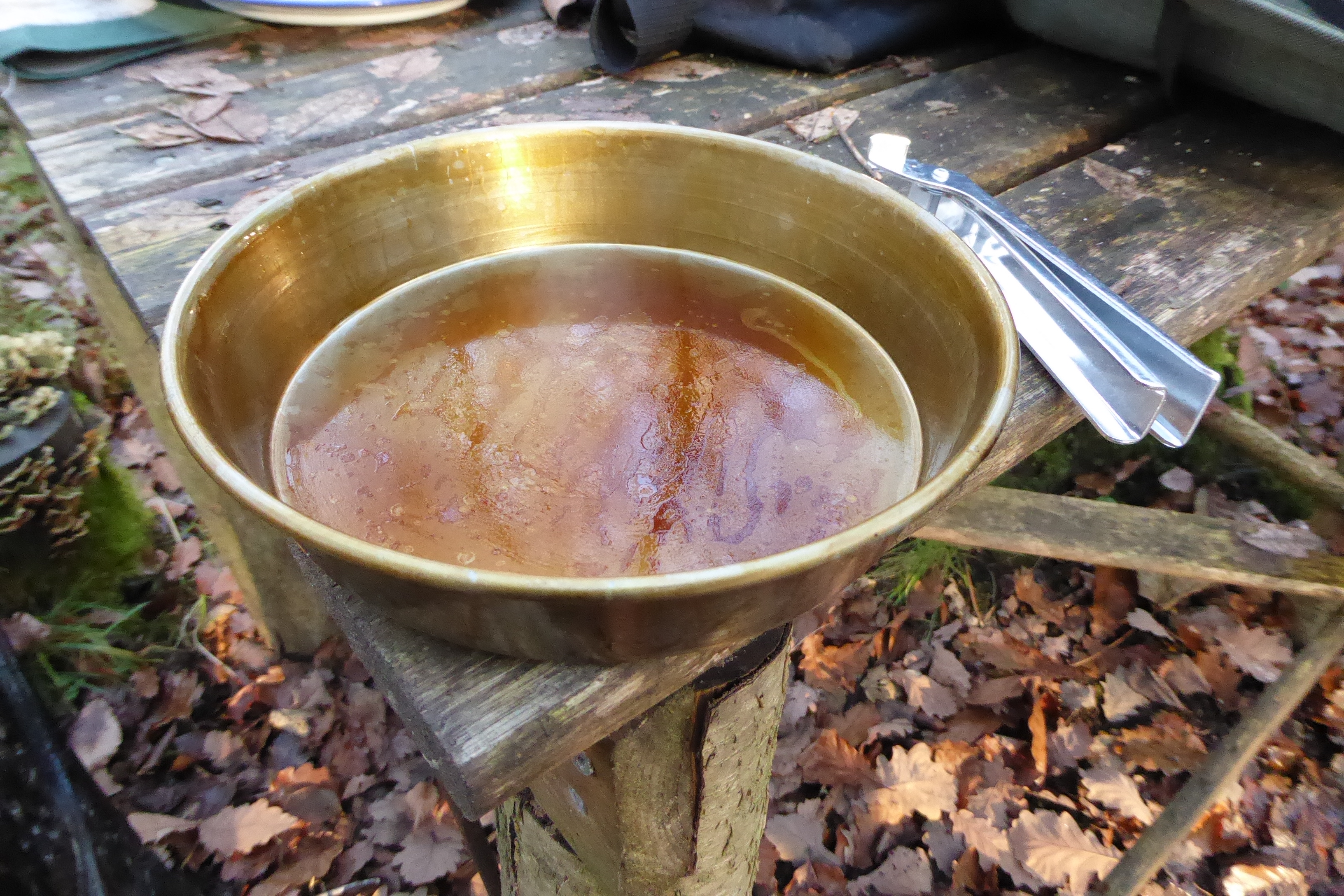
Sunday after Boxing Day and what could be nicer than taking your daughter to the woods to share the day and and practice a bit of bushcraft? She’s one of those practical girls that likes to get involved but hasn’t had many opportunities to visit in the past. It was going to be a special occasion for us both and turned out to be a lovely and memorable day. The weather was cold but fine. We put some bird food out and watched the little birds flocking in to feed, then onto the first exercise. Show her how to make a fire, gathering and processing materials then get an ember going from a flint and steel set. It only took a couple of strikes and she was away, blowing it into flame then building a fire for a brew.
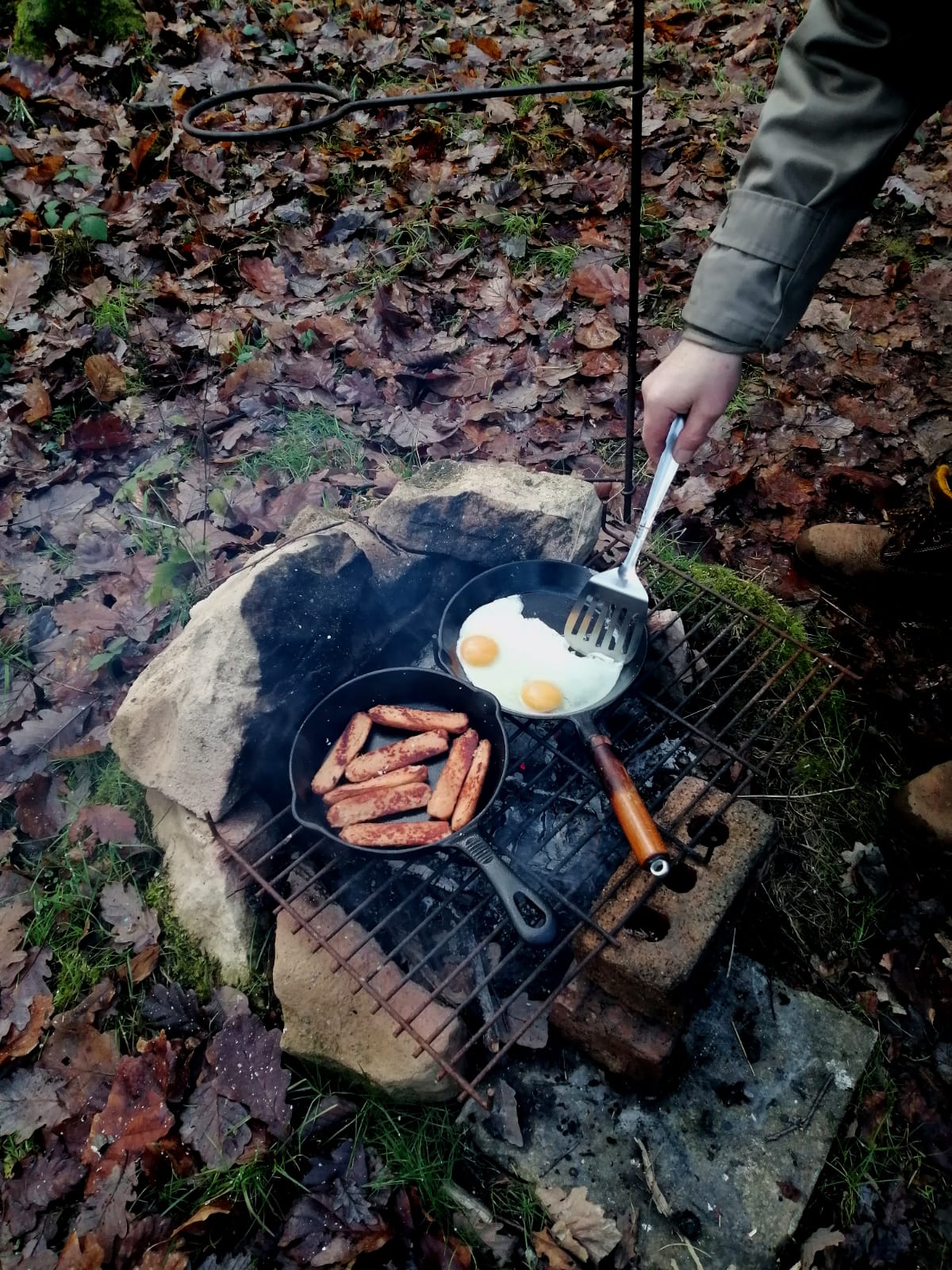
We had a bit of a walkabout, then my surprise plan was to find a suitable straight but forked hazel rod to make a walking staff for her. I let her choose, then cut one and we practiced some simple carving on scraps. She can take it home and carve some designs on it later. It was soon time for lunch – veggie sausage and egg sarnies.
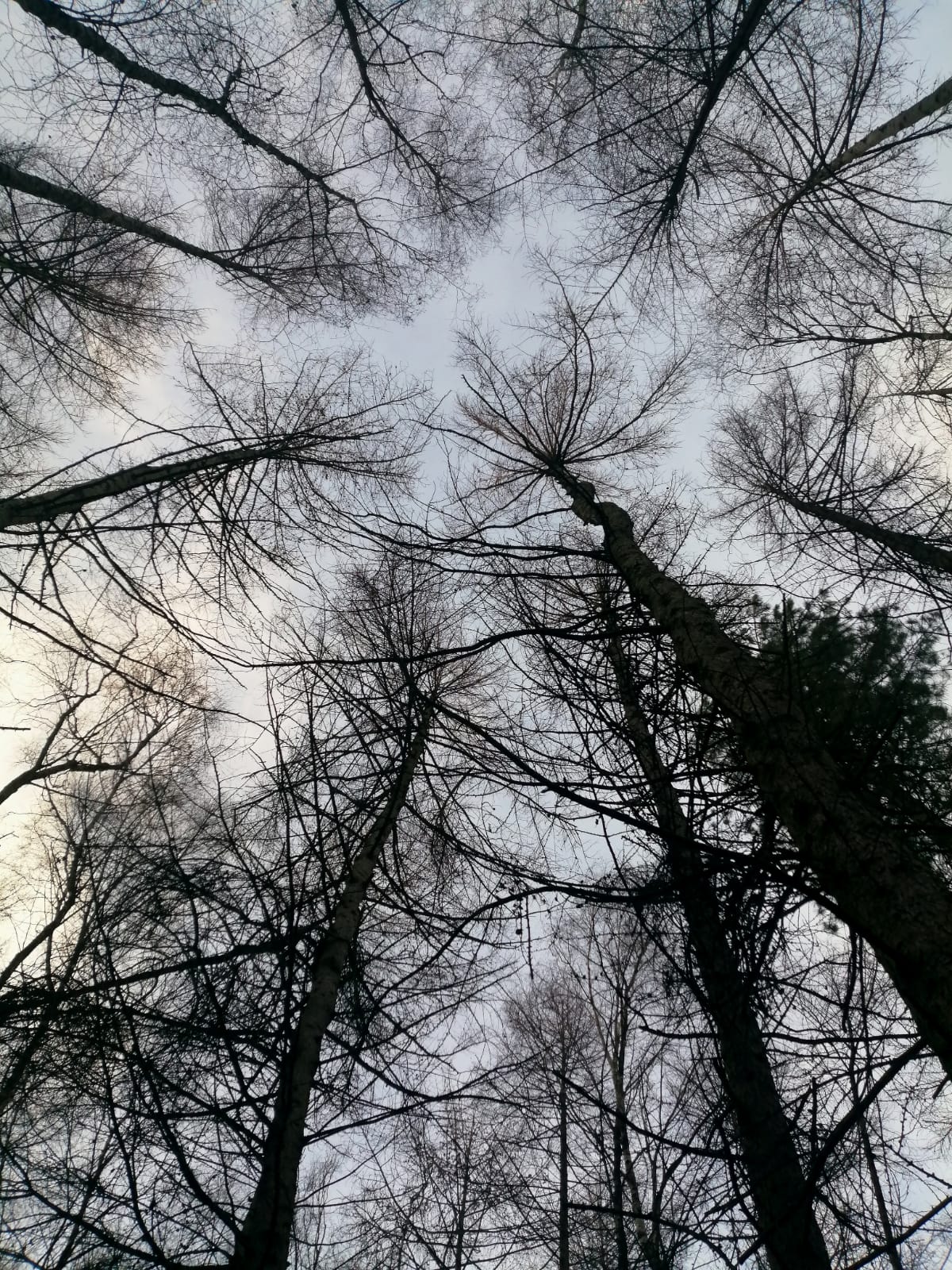
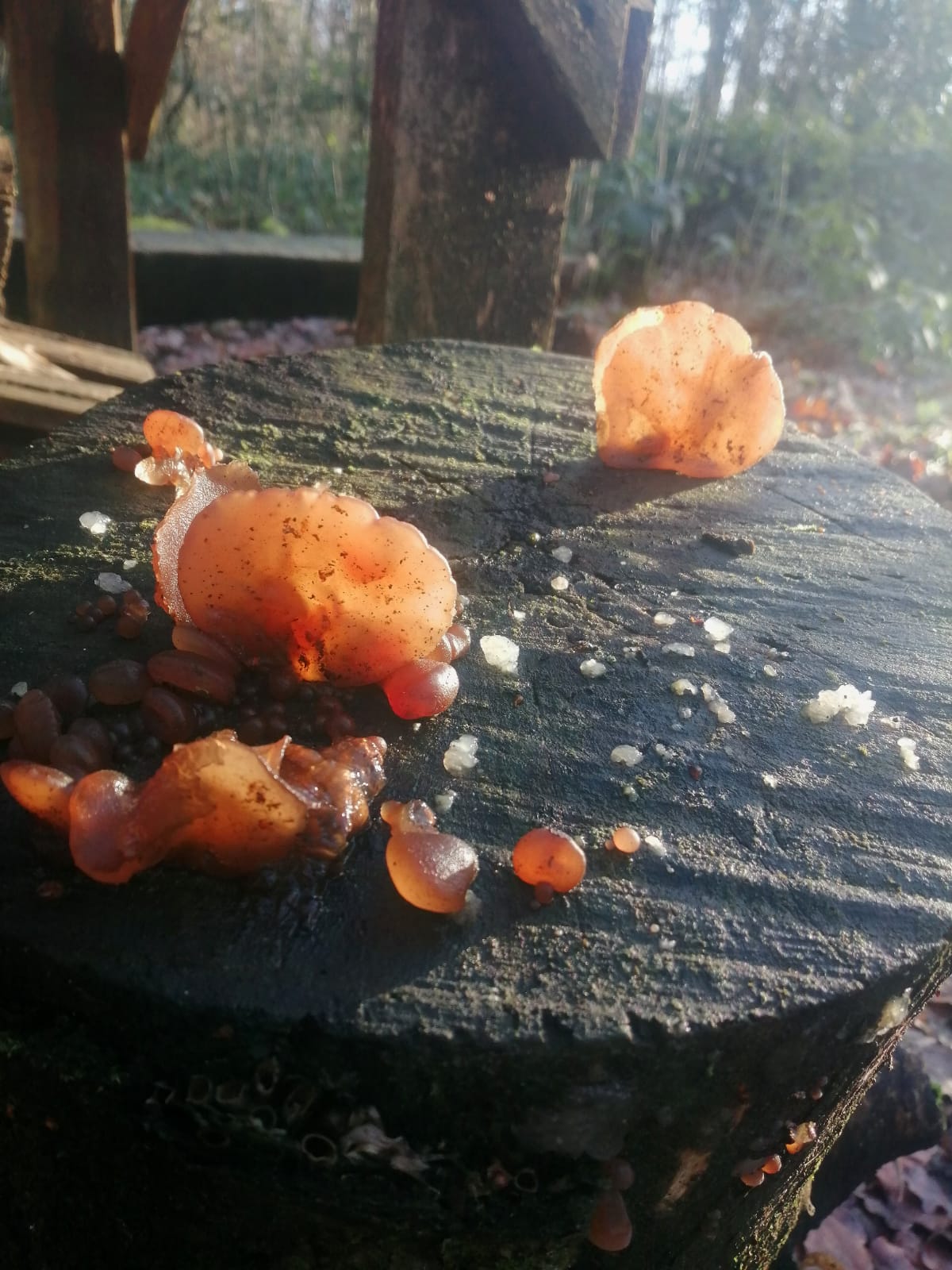
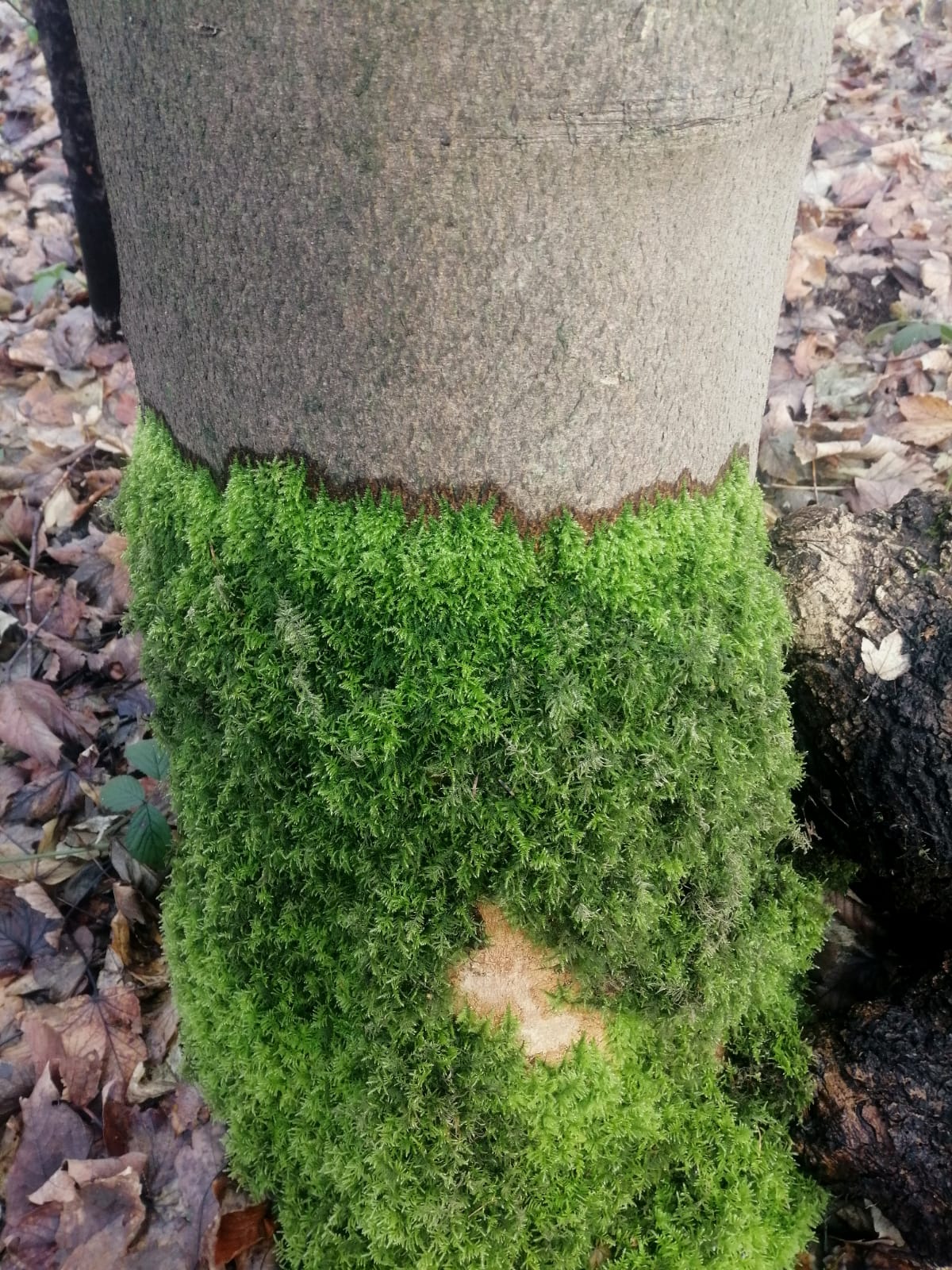
I collected some logs to take home and left her to have a wander and take some photos. These are all ones she took on her phone. I found her later staggering back to the car with a huge log she had found from my last visit’s felling session. She had no idea what she was going to do with it, she just liked it and wanted to take it home. We had a walk over to a neighbour’s plot to see his fantastic cabin and workshop and before we knew it, it was time to pack up again and head home. A nice relaxed and fun day out and a bit of dad and daughter bonding. What could be better? Here are a few more of her photos.
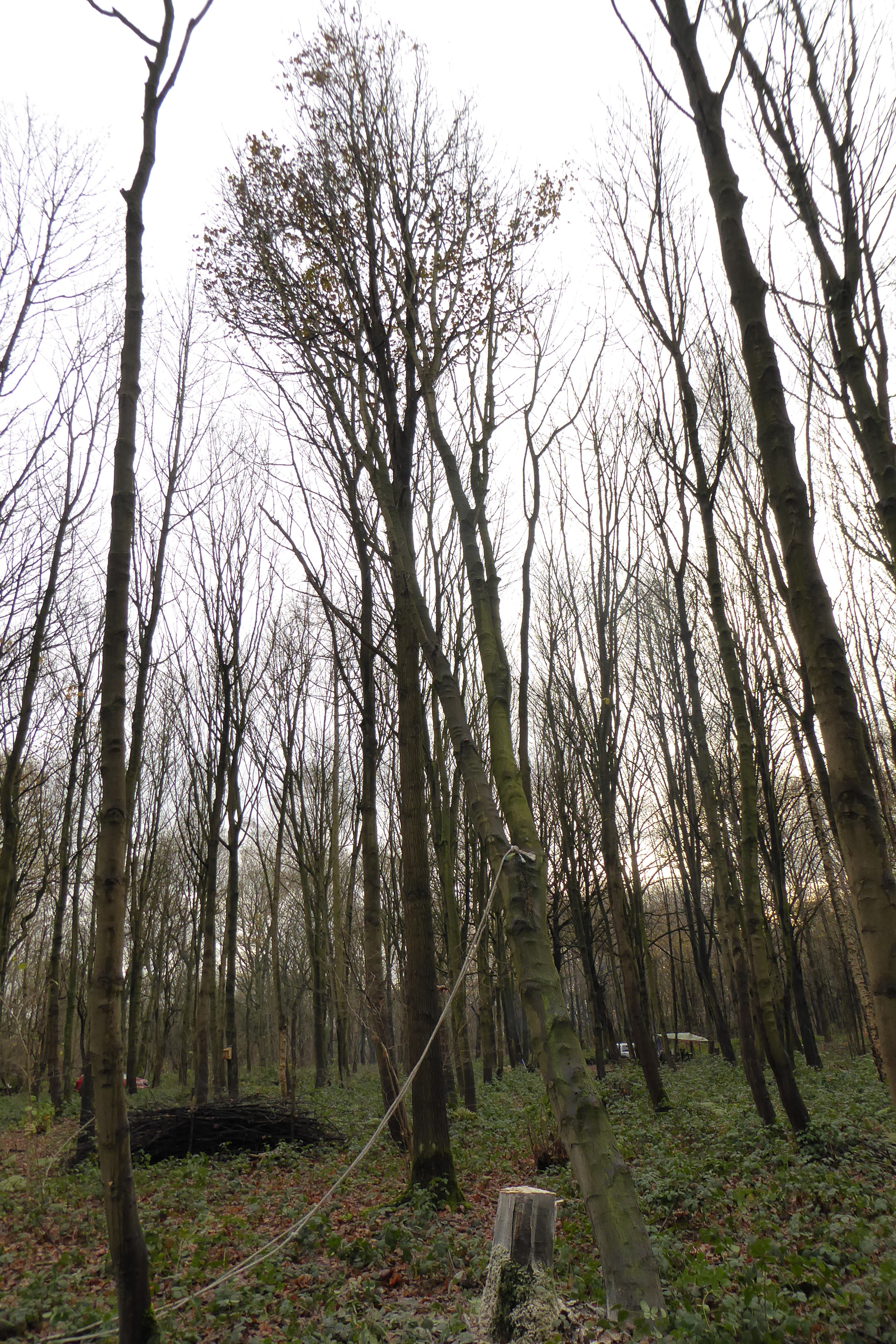
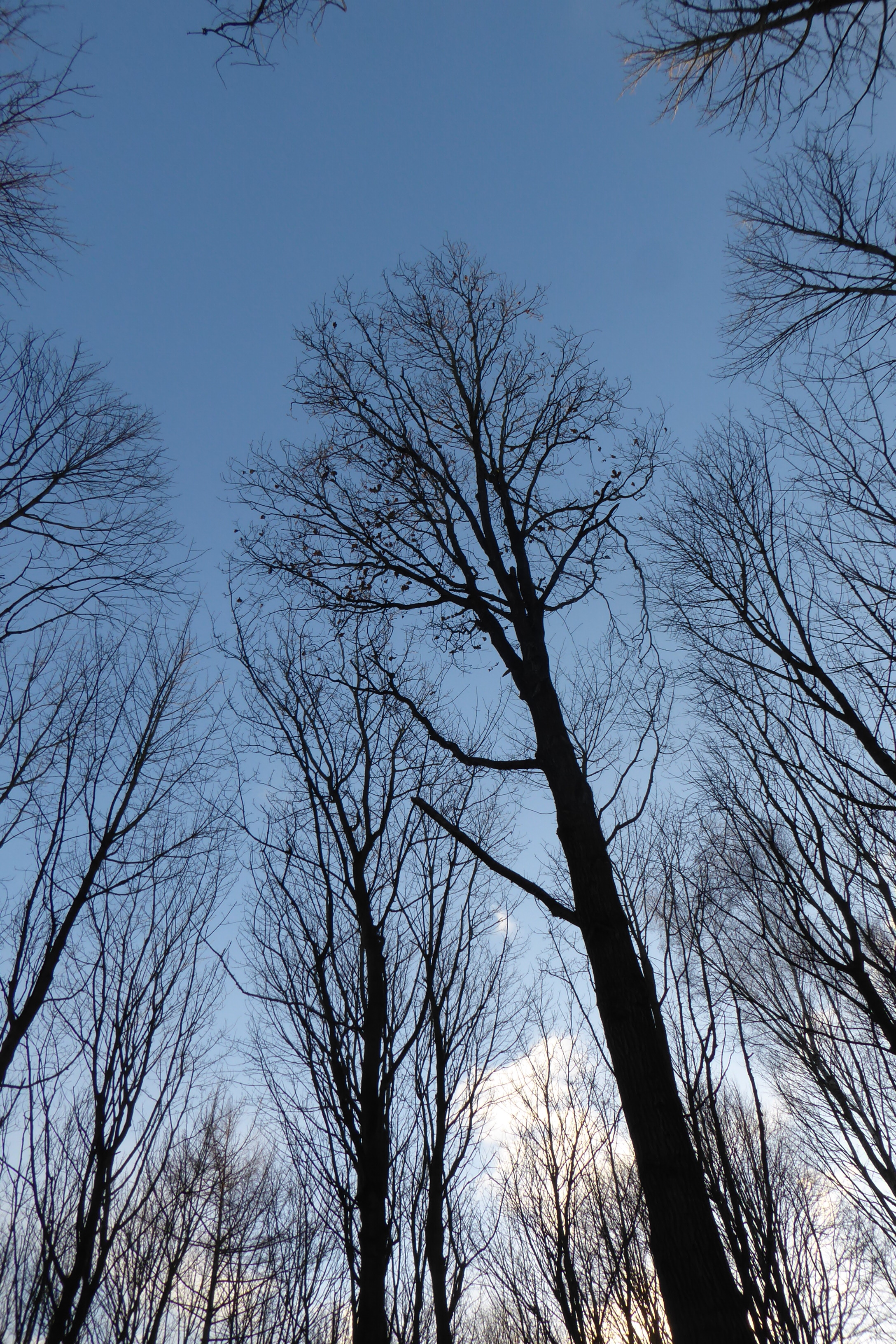
Last visit, I left you with this situation. A very large sycamore I felled landed smack bang on the middle of a large oak that I was trying to help. This part of my woods is a 50 year old sycamore plantation that needs thinning. The trees have grown very tall and lanky. They are planted closely in order to draw them up tall and straight to make good timber but the woods have been neglected and should have been thinned out years ago. Consequently there are lots of sickly looking trees, too thin or misshaped to ever make good timber. Some have forked (like this one) which creates a weakness which you will see further down this page. There are a few different species dotted about and this single oak has reached it’s potential for further growth because it is crowded out by the surrounding sycamore. By thinning trees around it, you create a “halo” of extra light which should encourage the oak to grow and spread its crown.
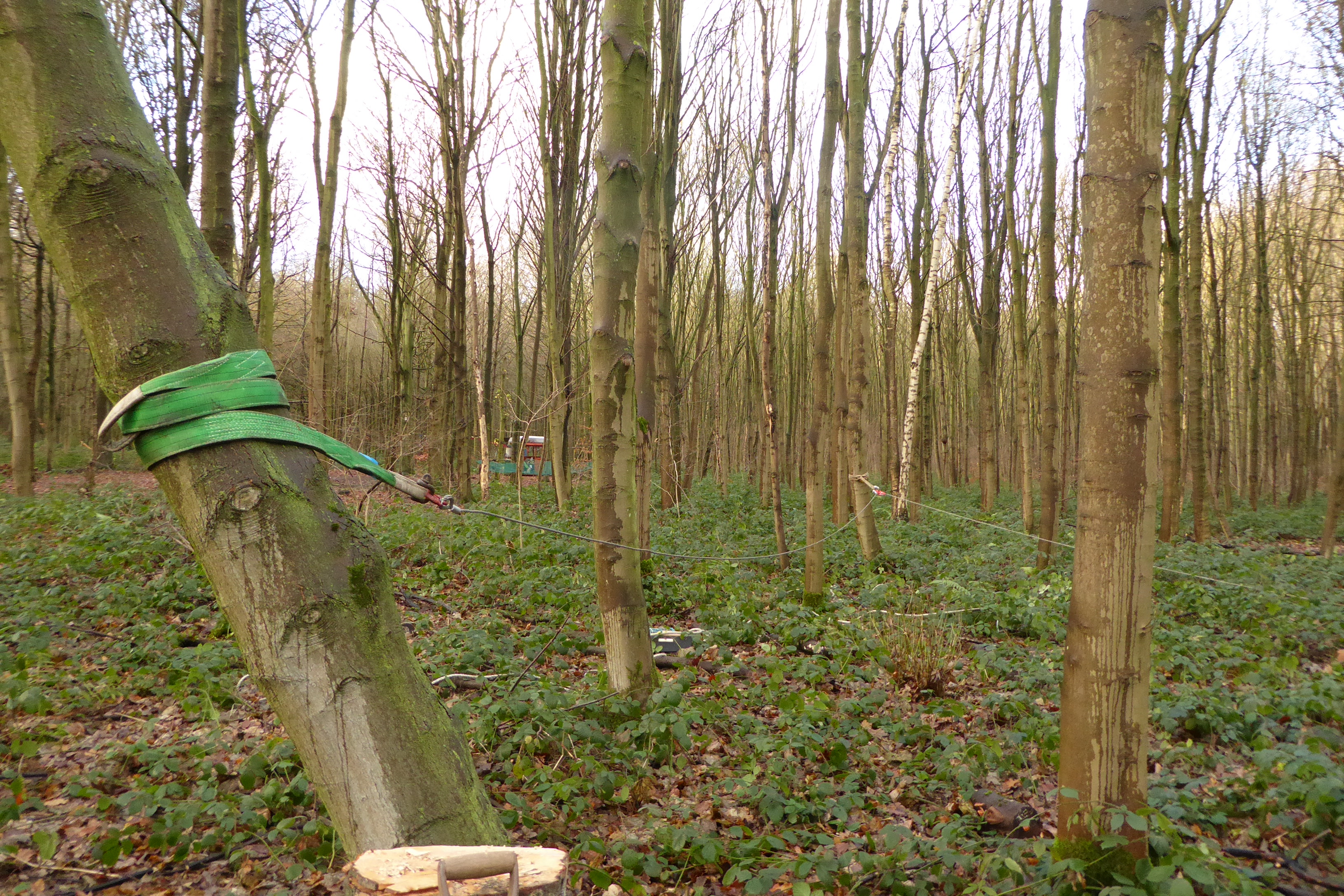
Yesterday’s visit was with the intention of getting that hung up tree down. I bought a secondhand winch shortly after buying the woods but have never used it but now it was time to test it out. The base of the tree embedded itself in the soft earth so no chance of pulling it outwards. My best bet was to winch it sideways and one technique is to wrap the strap around the trunk so that when you start pulling, it sorts of unwinds and rolls the tree sideways where it can then drop. Taking the winch wire through a pulley like this, allows you to operate it at 90 degrees to the tree, giving you a safer position and better view. Several attempts at that failed and I was starting to despair. Cutting the tree again seemed too dangerous. Using a winch gives you plenty of distance so was the preferred method.
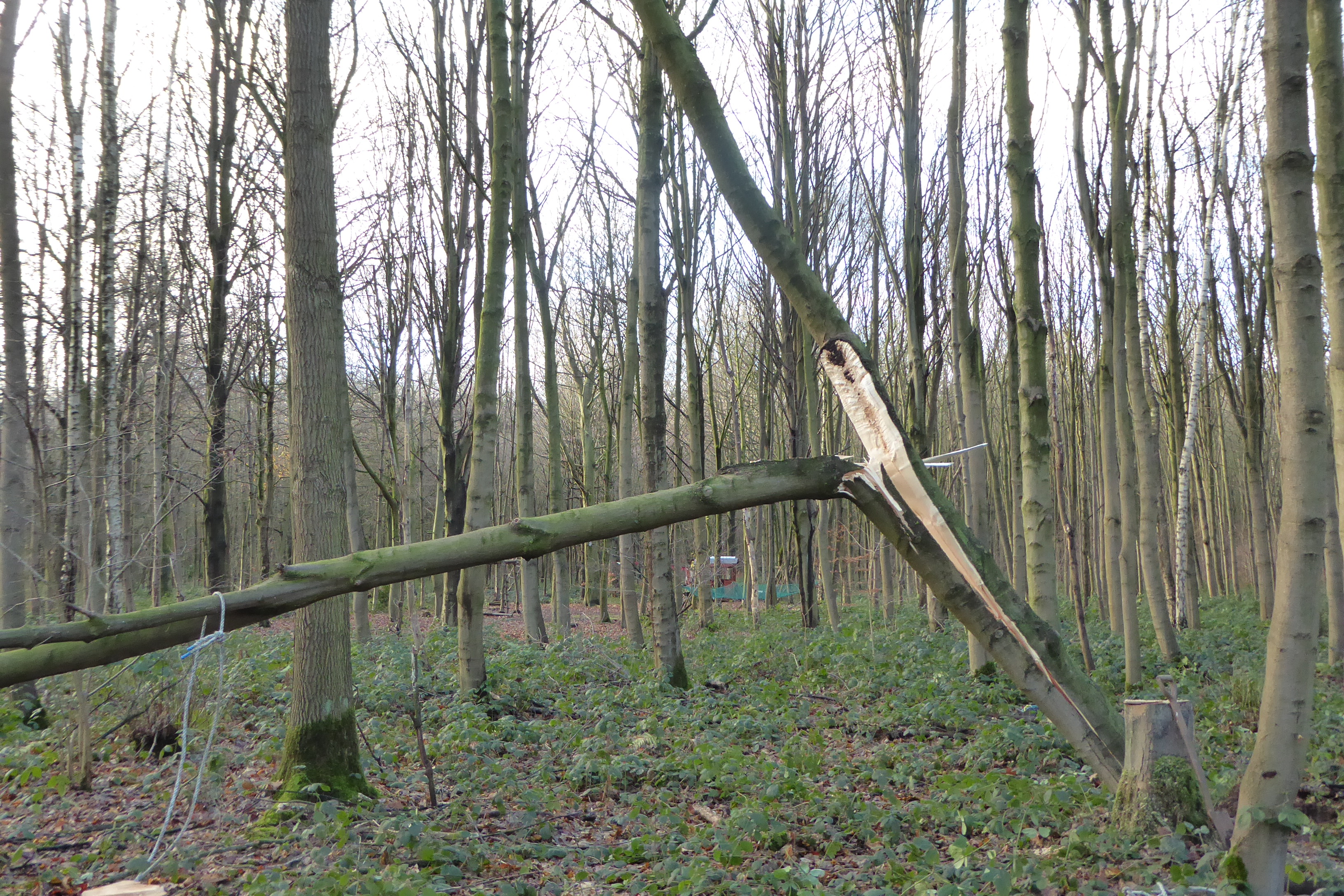
One more variant to try – pulling it to the other side and by attaching the pulley to the tree, you can double the pulling power of the winch. It’s a very scary operation for a novice and my adrenaline was pumping. As I cranked the handle, applying more and more tension on the tree, the first small cracking sounds indicated some movement. Eventually the left hand limb freed itself and with a massive “crack” fell. But the right hand limb was still ensnared and so as you can see in the photo below, the weak spot where the trunk forks, caused it to split. This was quite dramatic to say the least, and one very good reason to be well away from it with the winch.
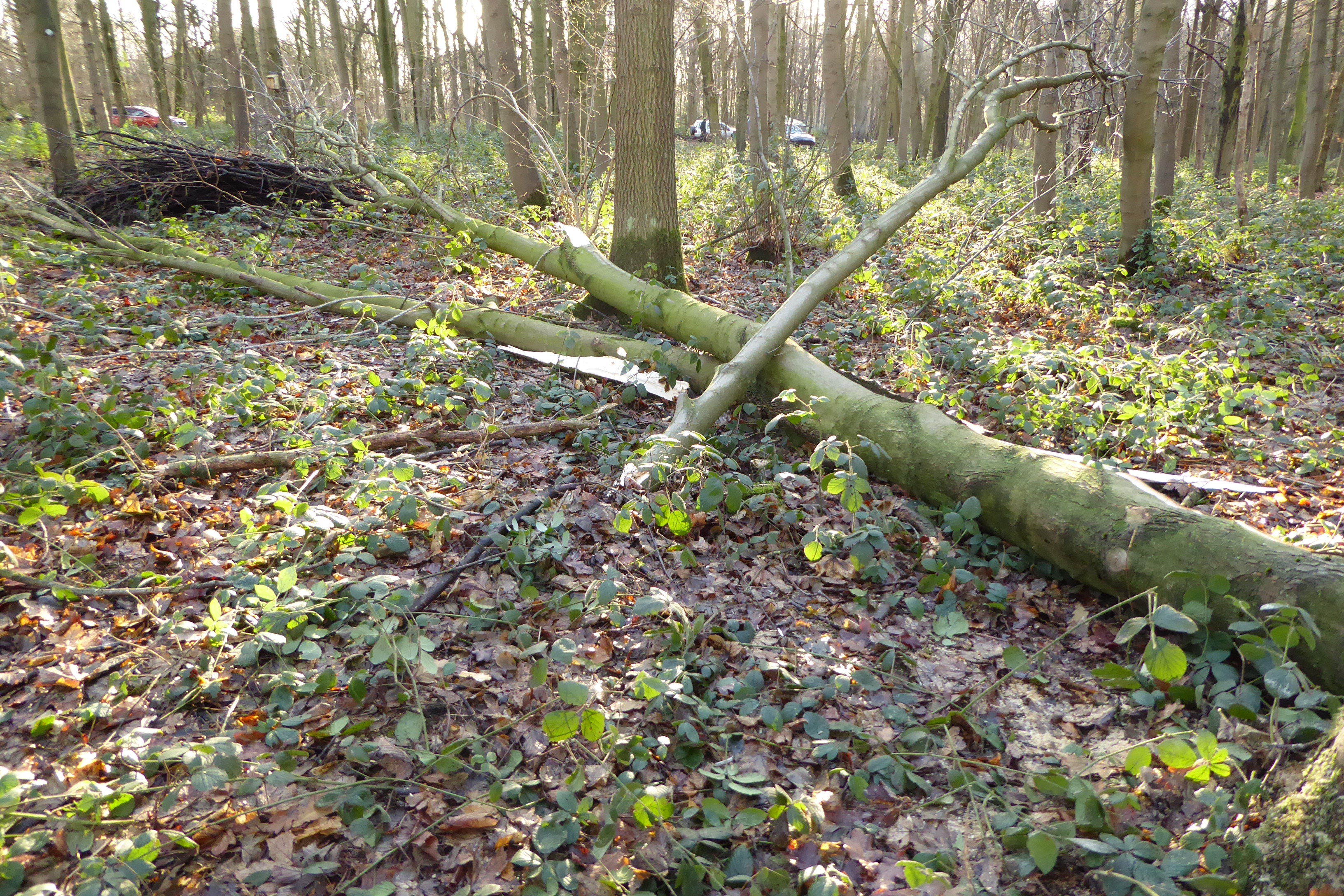
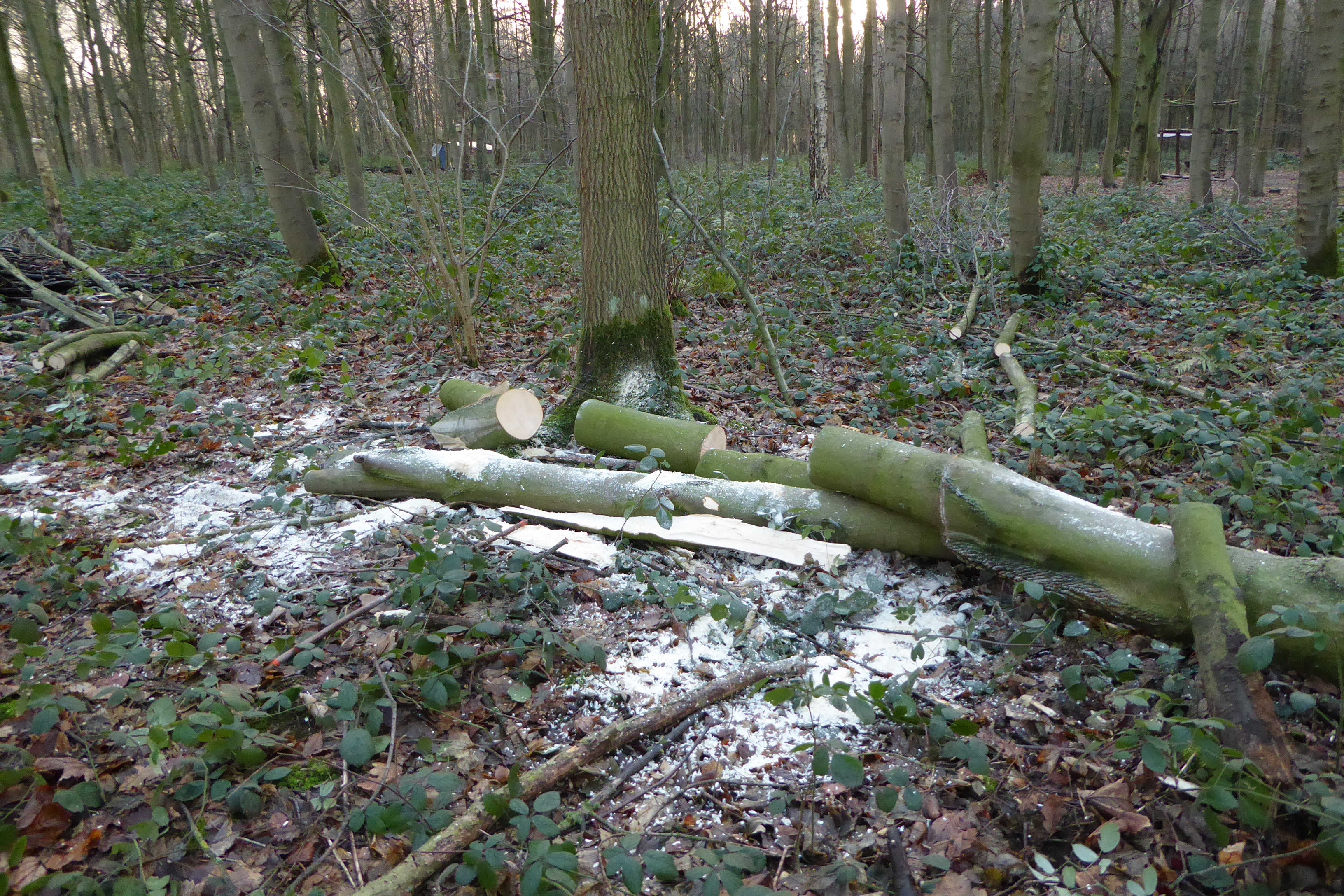
So now what? The tree is half down but in an even more dangerous state. Don’t even think of trying to cut it free with a chainsaw! The stresses in that cracked and leaning tree would be released like a wound up spring and totally unpredictable. I managed to get the rope high up around that remaining limb and pulled again. After much cracking and thrashing of branches it was down. Massive relief to my stressed nervous system. Now the fun part of cutting it into moveable logs can start.
The oak doesn’t look to have suffered much damage from the encounter and is now standing free again and has some headroom to expand into over the coming years and I can feel happier about the whole situation.
Yesterday was going to be a working day. I’ve spent the last few months mainly having fun and just enjoying the wood but it was time to get busy with some felling – thinning out. I wasn’t looking forward to it but the window in time is short, Spring will be here always sooner then you think. Felling and using a chainsaw is a dangerous business even for professionals let alone an amateur like me, so I always approach it with a healthy dose of fear.
I could have picked some easy ones to start with but the decision is a bit like eating a slice of apple pie. When I was a child, Mum used to make big apple pies and cut slices for us but I didn’t like the crust. Leaving it wasn’t an option back then, you simply didn’t waste food. So do you leave it till last allowing yourself the easy, full pleasure of the main part, with plenty of filling and sugary topped pastry, or do you get the worst, unenjoyable bit over first so you can relish the best bit. Well I always ate the crust first.
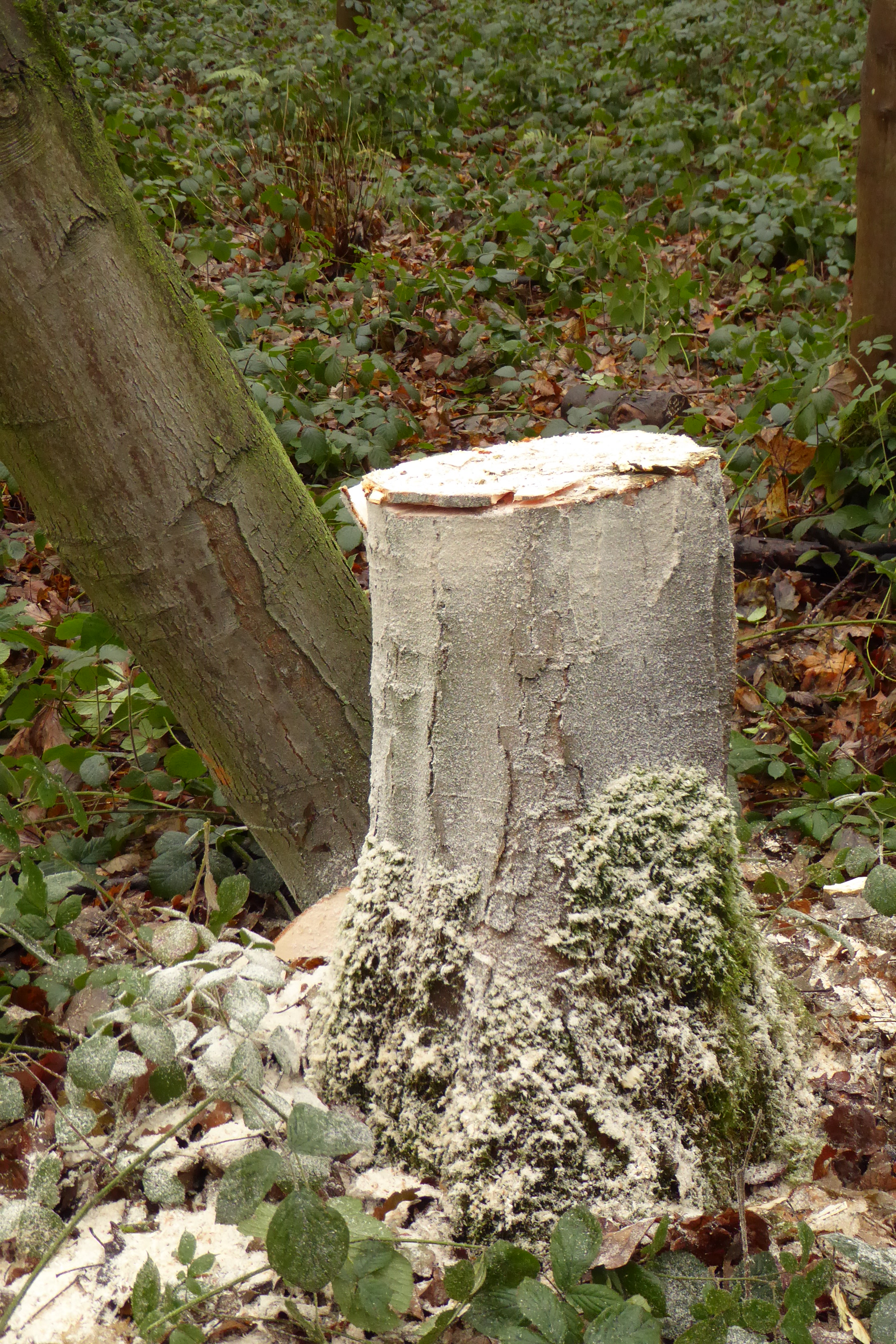
There’s a single tall oak tree in the middle of the sycamore plantation area (where I’m thinning) that needs more space to thrive. One of the sycamore trees that needed to come down near it is a large forked tree. I’ve been putting it off for a couple of years, it was never going to be an easy fell but yesterday’s decision was “crust first”. Another tricky one was next to the main ride so I started with that. It fell just where I wanted but, unfortunately and unavoidably, the top half landed in a neighbour’s plot and knocked over a small oak tree. I needed to cut up and remove all the tree straight away. That must have been at least half a ton of timber to carry and stack.
The big one next to the large oak was a real challenge. When assessing which way it would naturally fall, it wasn’t obvious. You look for a lean one way, look at the balance of large branches which might pull it in one direction. This one wasn’t obvious but I chose to aim it to the right of the oak. As I cut it, it didn’t move naturally (too well balanced) so used some wedges to start it’s fall. It went as wrong as was possible. It twisted and hit full on with the oak. After a few seconds of violent flapping and dead branches raining down, it settle bang in the middle of the oak. Normally with small trees, you can get a rope around it and with some serious sideways tugging, dislodge it but even with the help of my friendly neighbour, it wouldn’t budge.
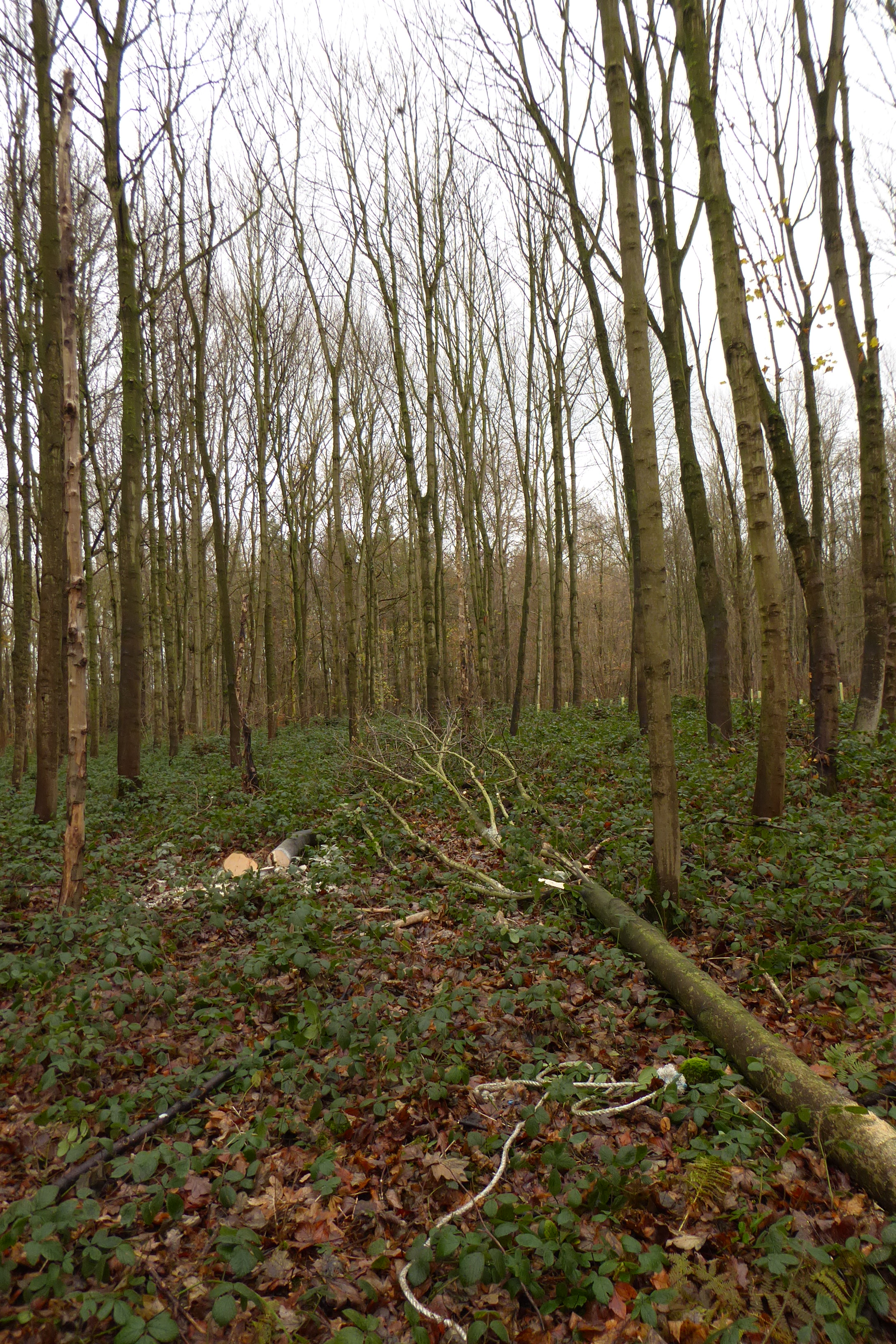
This photo really doesn’t show you the scale of the problem. because of their lanky height, they don’t look all the large but the trunk is about 14 inches diameter and the height of them must be about 50 feet. It is safe for the moment so I just had to leave it. By this time my physical and mental energy was running out. I had successfully felled two more with no problems but now it was time to try to rescue the neighbour’s small oak I knocked over. It had half uprooted it so I figured I could re-erect it and prop it up and with a bit of luck, it will re-establish it’s roots in a year or two. My neighbour helped out again and hit the nail on the head when he said, “It’s ironic, we spend ages taking trees down and now we are having to put one back up!”
Sorry I don’t have many interesting photos or much else to tell. These are the ones that came down easy, the middle of the apple pie! See you next time, hopefully with the big tree safely down.
Yesterday’s plan was to stay late in the woods and cook in the dark. In terms of bushcrafting and camping, I’m trying to push my boundaries a little and learn more. Covid has robbed me of many things and my confidence to go camping in the woods is one of them. So this year I didn’t get to do any. Last year I had been working up to doing an out of season camp and it’s still on my books to do one. There are a number of things that are very important to get right for it to be a success. It’s a very different ball game from Summer camping where it stays light till bedtime and it’s warm. I decided to test a few things out by going in cold weather and when the light fails early. Do I have the right clothing to stay warm when just sitting around for a few hours? Can I successfully cook a meal in the dark with a fire and a headlamp for light?
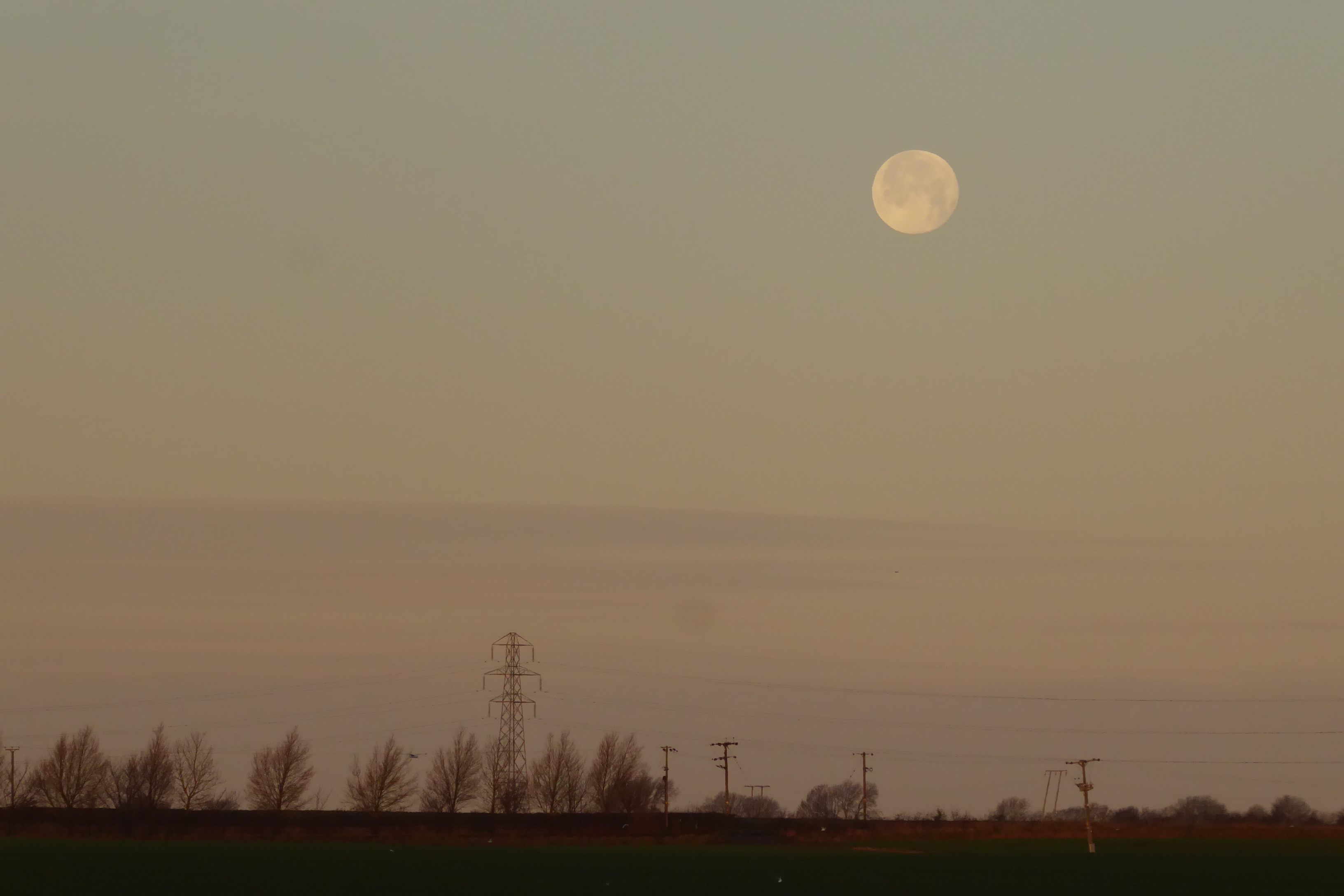
I arrived early as usual, just as it was getting light. As I drove up the ride an elegant Roe deer ambled along in front before heading off for cover. As soon as I donned my hat and boots I decided to take a slow walk around some of the rides, head out towards the top edge of the woods where it looks over farmland. Maybe more wildlife to spot. I didn’t see any there but was rewarded with a fabulous view of the full moon as it was setting and another Roe deer as I headed back.
Back at basecamp and time for a brew. Before I even put any food out, the small birds started flying into the surrounding trees in anticipation. I took the hint and filled the feeders and just sat enjoying the fire and my coffee, watching the birds and was in my element. I did the few necessary jobs I’d planned – get logs for home, inspect and empty the bird nest boxes then it was time for lunch. I had an experiment to do. I love my cast iron skillets, they are perfect for cooking over a fire but they are bulky and heavy. I’m planning to do a few mini bushcraft adventures back home – a longish walk in the woods, moors or riverside with a bit of cooking included. I will take a small camping stove and frying pan.
Most lightweight camping pans are either aluminium, titanium or stainless steel and unless you get Teflon coated ones, the food will burn and stick. I don’t like coated pans when cooking over high heat so was looking for an alternative. I hit on the idea of using carbon steel which when seasoned, becomes non-stick just like the cast iron pans. I found it impossible to find a small frying pan with foldable handle but after a lot of research, found some carbon steel pizza dishes used in the catering trade. Could this work for me? I have a detachable handle that grips the rim so it seemed ideal. I bought a six inch diameter one and seasoned it in the oven.
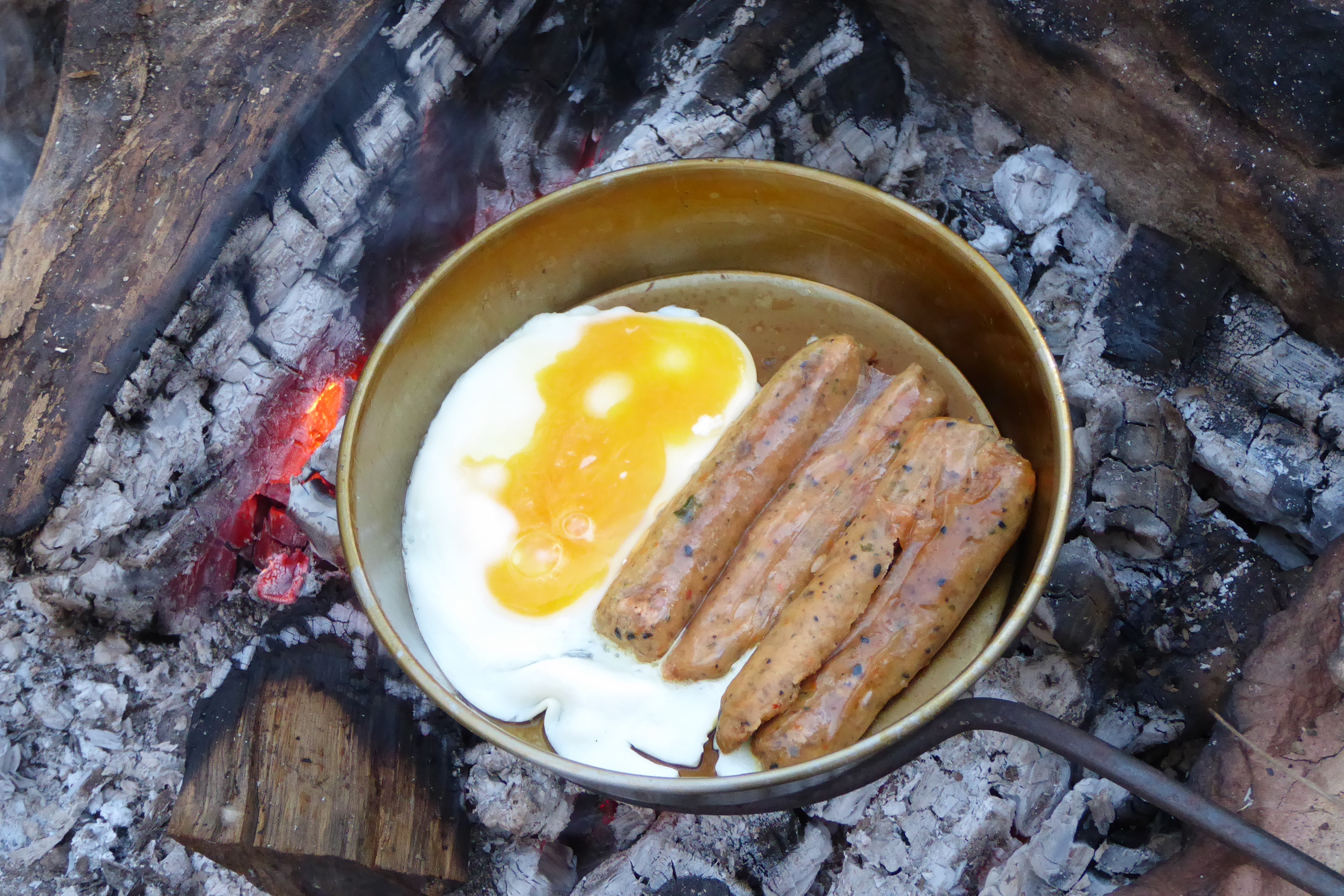
I planned to fry veggie sausage and egg for lunch. If anything is going to stick, an egg will especially if you break the yolk! Time for the test – perfect. In time with more use, the patina will increase and improve even more. You just need to avoid washing in detergent and oil it after use to prevent it rusting. Oh and bye the way, I like the yolk broken!
By three o’clock the light was starting to fade. I figured the key to a successful dark evening in the woods was preparation. Put away all unneeded equipment and bring down to camp what you will need. Keep things together as much as you can so you don’t lose stuff. Have a small stack of logs by the fire and chop a few smaller ones for creating flames. You need hot embers for slow cooking and flames for boiling. I planned a simple veggie pasta so I chopped the onion, garlic, red pepper and courgette ready for cooking later in the new pan. I have to be honest and say the meal wasn’t great. I was trying to keep it minimal but it was a bit bland, even with the Pasta sauce I brought and dash of chilli powder it was till lacking something – cheese I reckon. Some flaked parmesan or fried halloumi would have made the difference. I’m no chef so these things are not always obvious to me until afterwards. But the whole point of these experiences is to try things out and see what works and what doesn’t. I also realised I was expecting too much of the little pan, it took a long time to fry down all the vegetables but it will be perfect for the small meals I intend to cook on my walks.
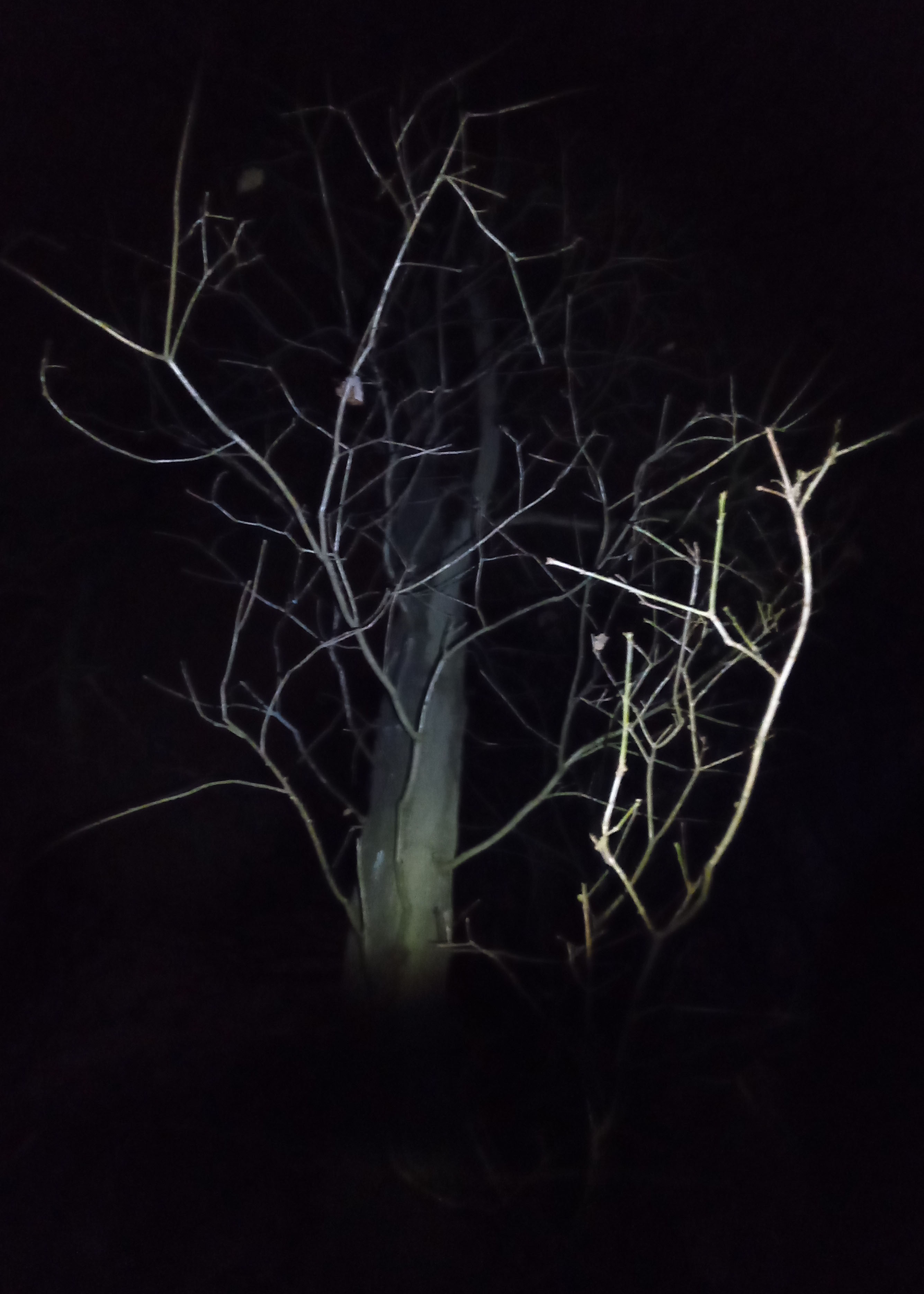
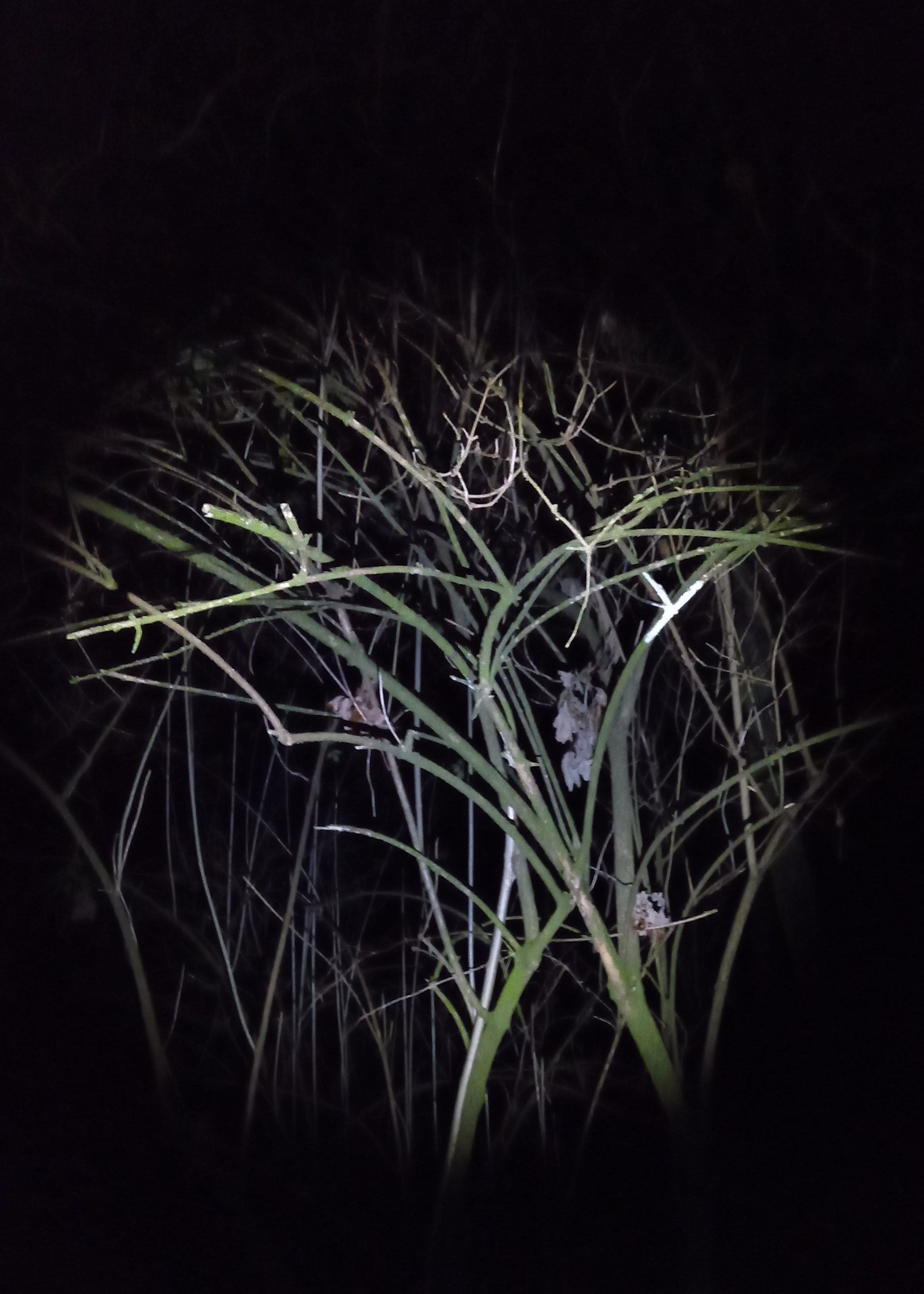
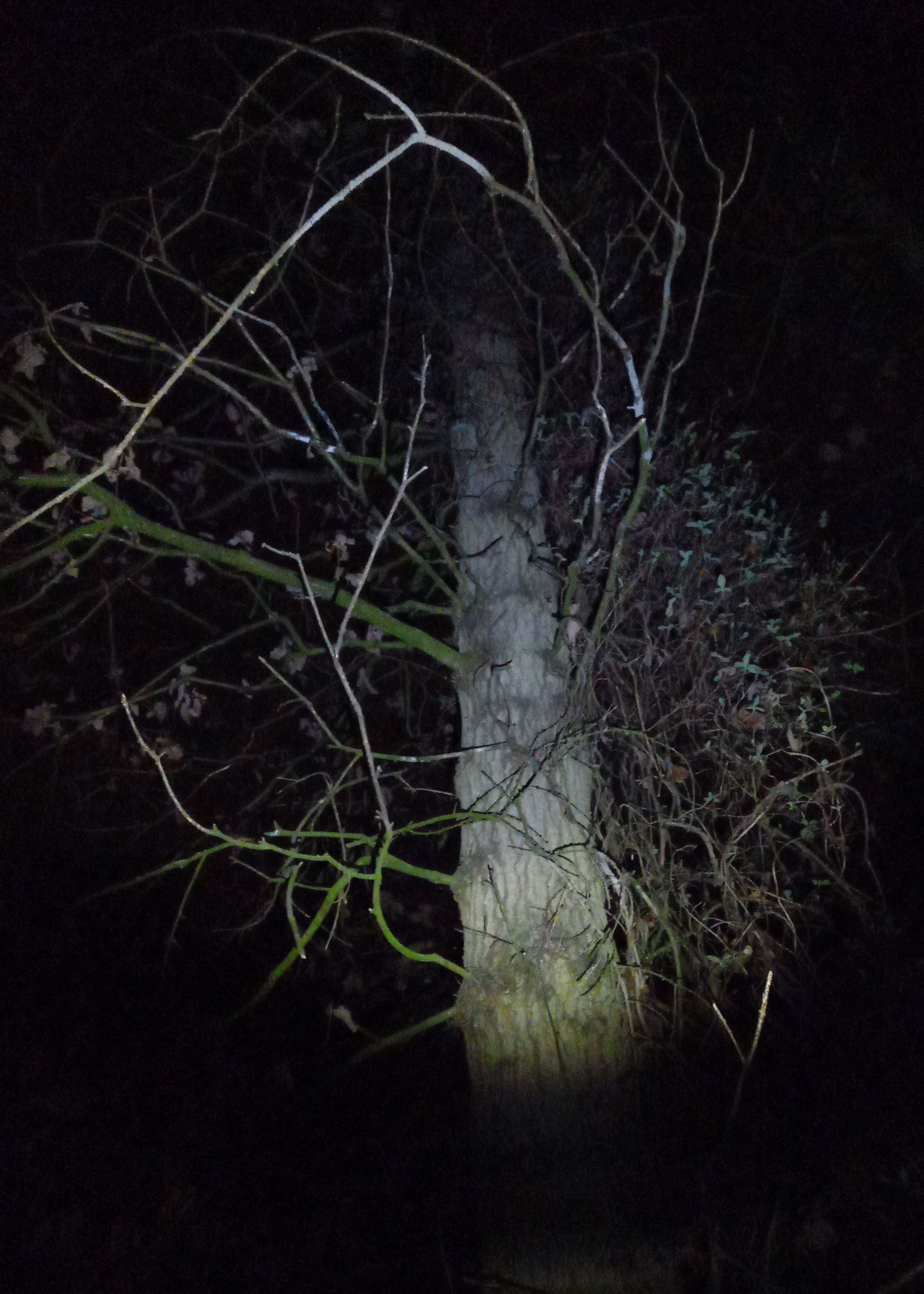
After the meal and the gear was tidied away, what else is there to do on your own in the middle of a pitch black woodland? Well have a walk with your torch of course. Although it was tricky operating my smartphone camera whilst illuminating a tree, the results were quite interesting and a little bit spooky looking. I’ll leave you with a few of the better ones.