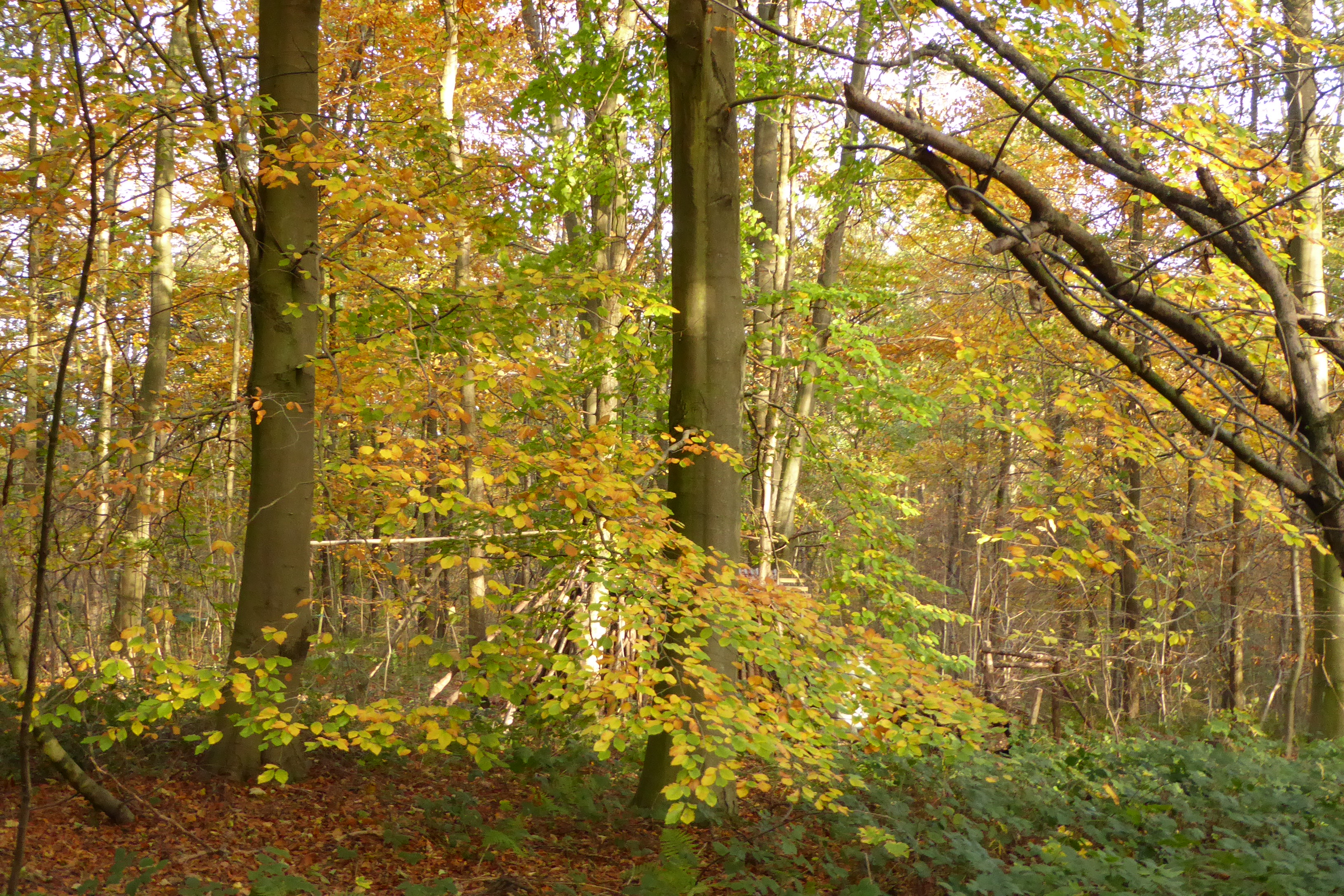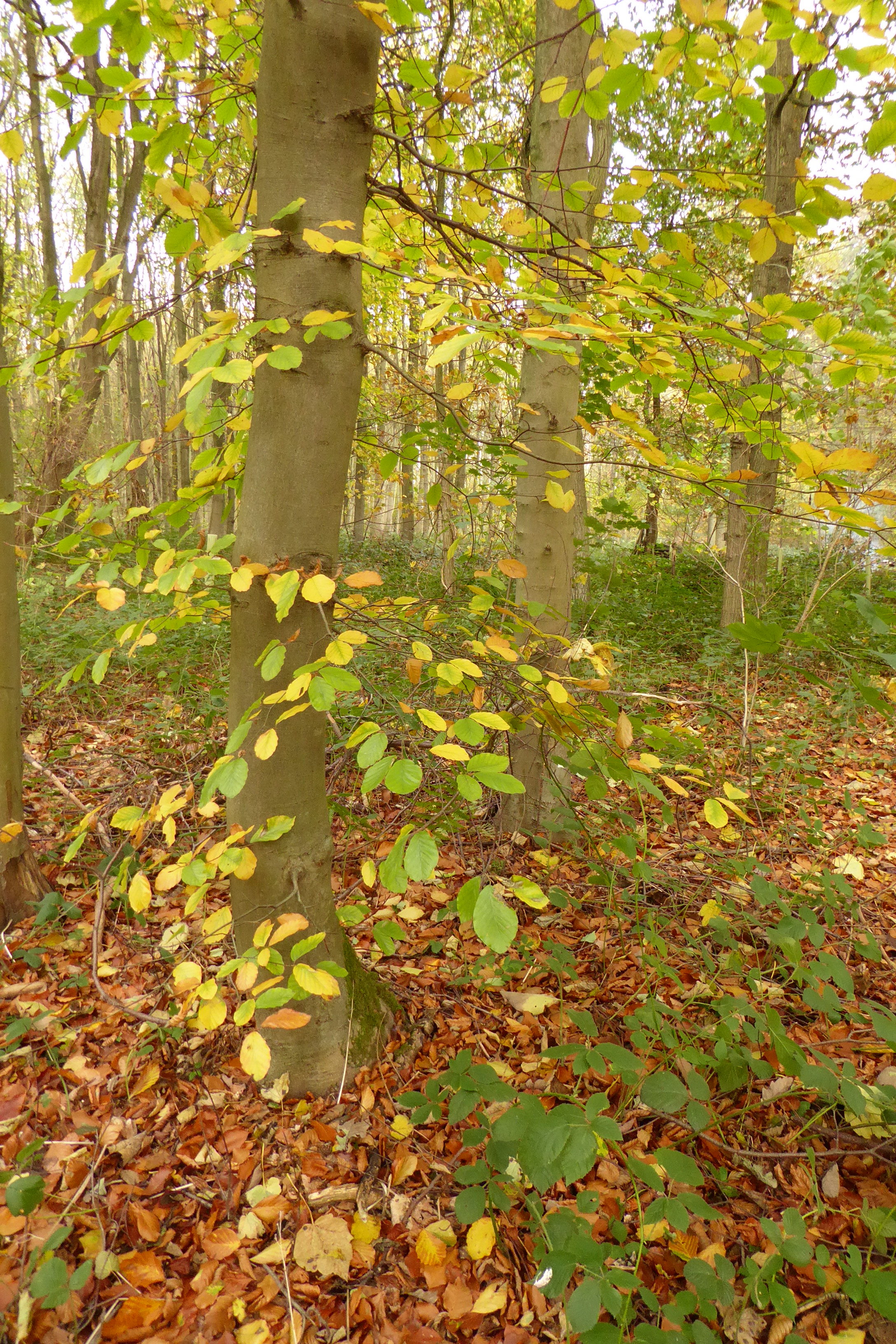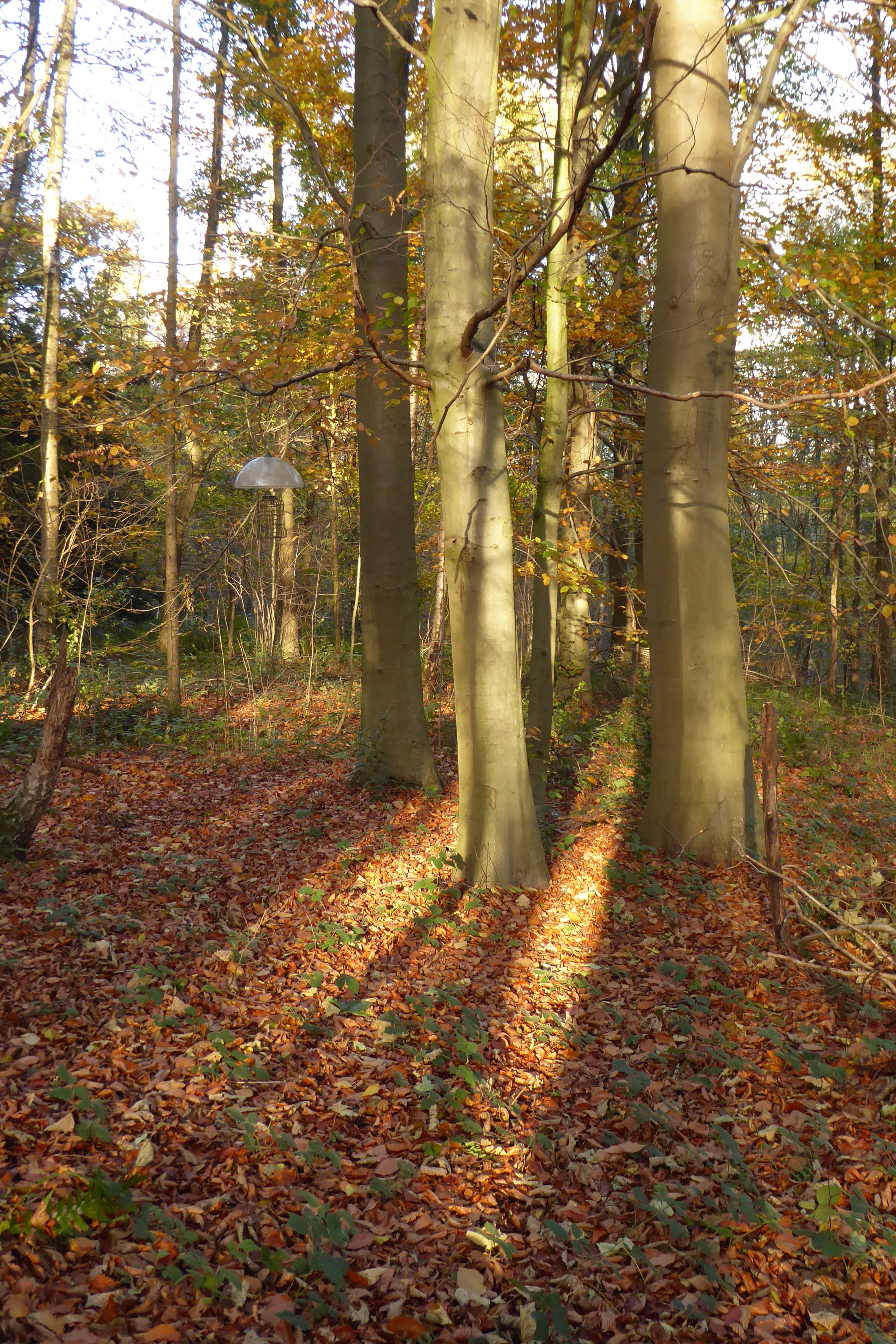
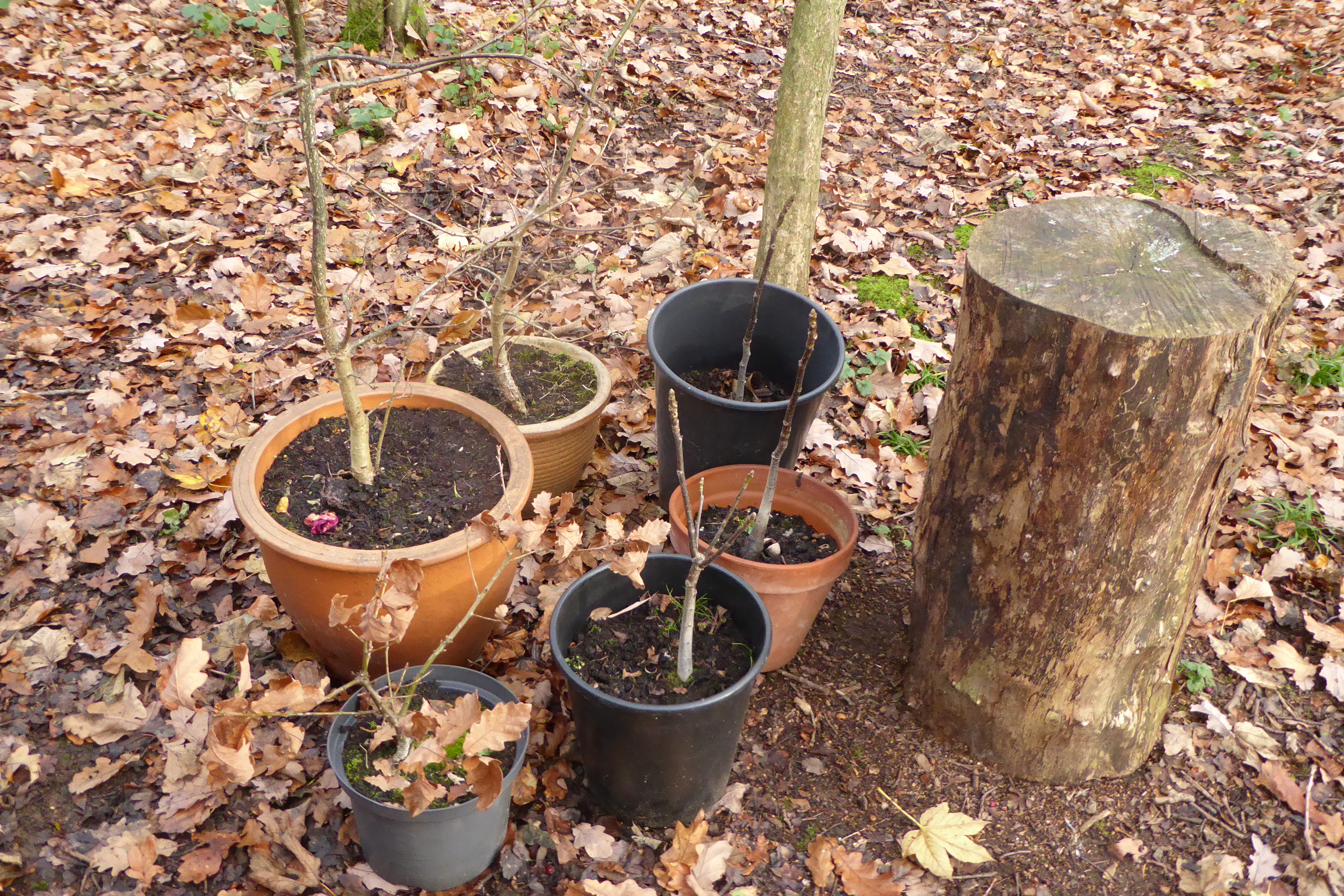
Just over half way through our second lockdown and I was ready for a woodland visit. I didn’t feel I was breaking any rules or risking infection by spending a day in the woods on my own and I had some trees to plant. Some kind neighbours donated some saplings they had grown from nuts but had nowhere to plant them. There were three oaks and three walnuts and the conditions are just right now for planting up.
I wanted to spend most of the day just “playing” there which was one of my reasons for buying the woods; to practice bushcraft skills, camping and engaging with a wild place, where I’m at liberty to gather resources and light a fire. To learn some of what our ancient ancestors knew as part of their daily lifestyle. I have found that once you step into the world of bushcraft and like many other hobbies, you acquire more and more kit. Partly because you feel you need it in order to operate your hobby, partly to upgrade older kit and many other reasons, not least of all – because we like new toys! I’m guilty as charged.
Sometimes this leads to losing the plot a little. We have kit lying around in cupboards, unused for months and often we forget just how to use it to full effect. Recently I have been systematically going through all my drawers and cupboards at home and rediscovering many nice items that I had abandoned or forgotten about. I have numerous other hobbies, all with associated kit. I am making an effort to get them out, use them, re-evaluate their usefulness and maybe dispose of the less useful or lower quality items.
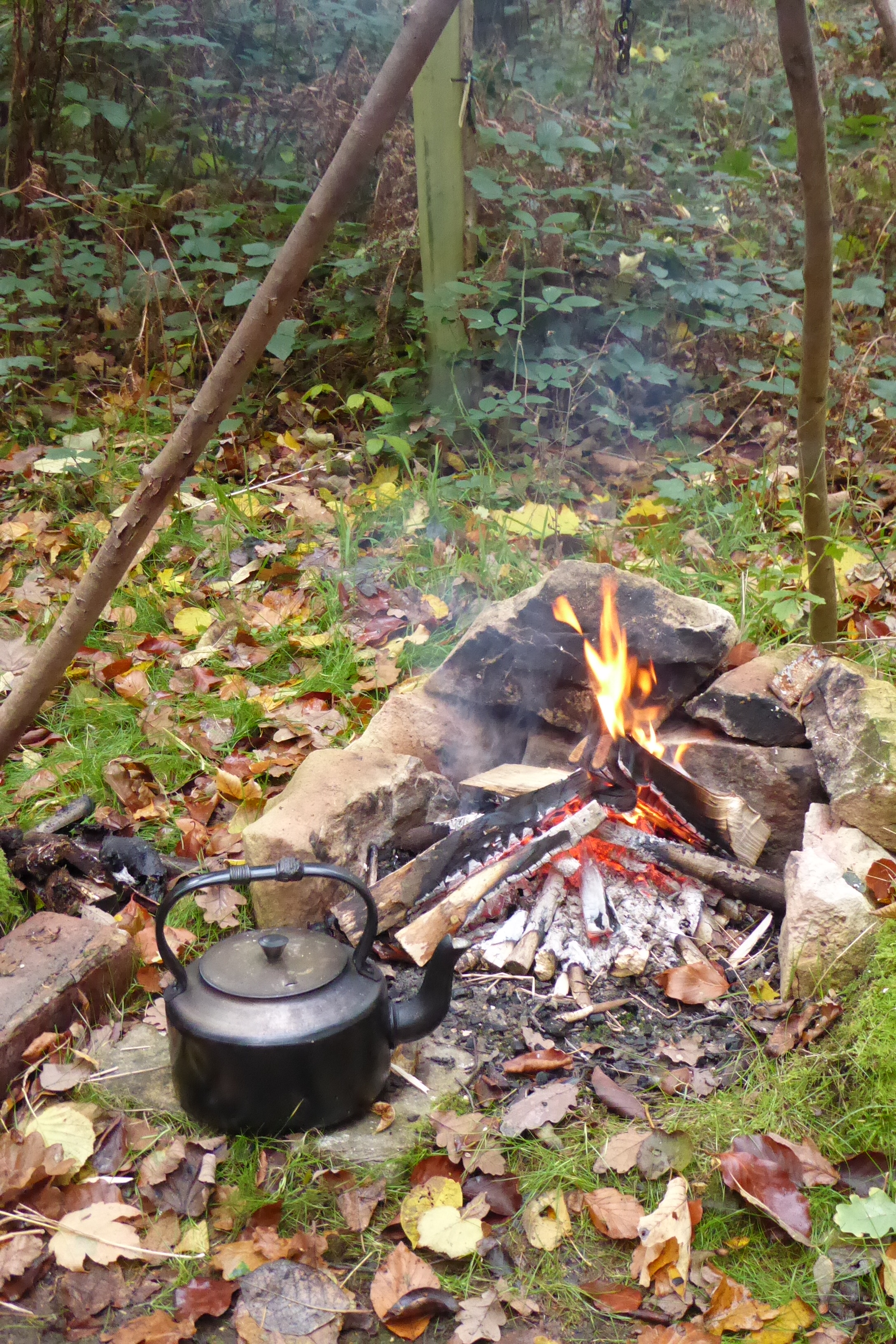
So with that in mind, I wanted to do four basic bushcraft activities – fire lighting with flint and steel, making charred punk wood tinder, food foraging and setting up a tarp shelter. Sometimes it’s nice to have a fire but I might have a list of jobs to do and don’t want to spend too much time on it, taking a few shortcuts to get it started.
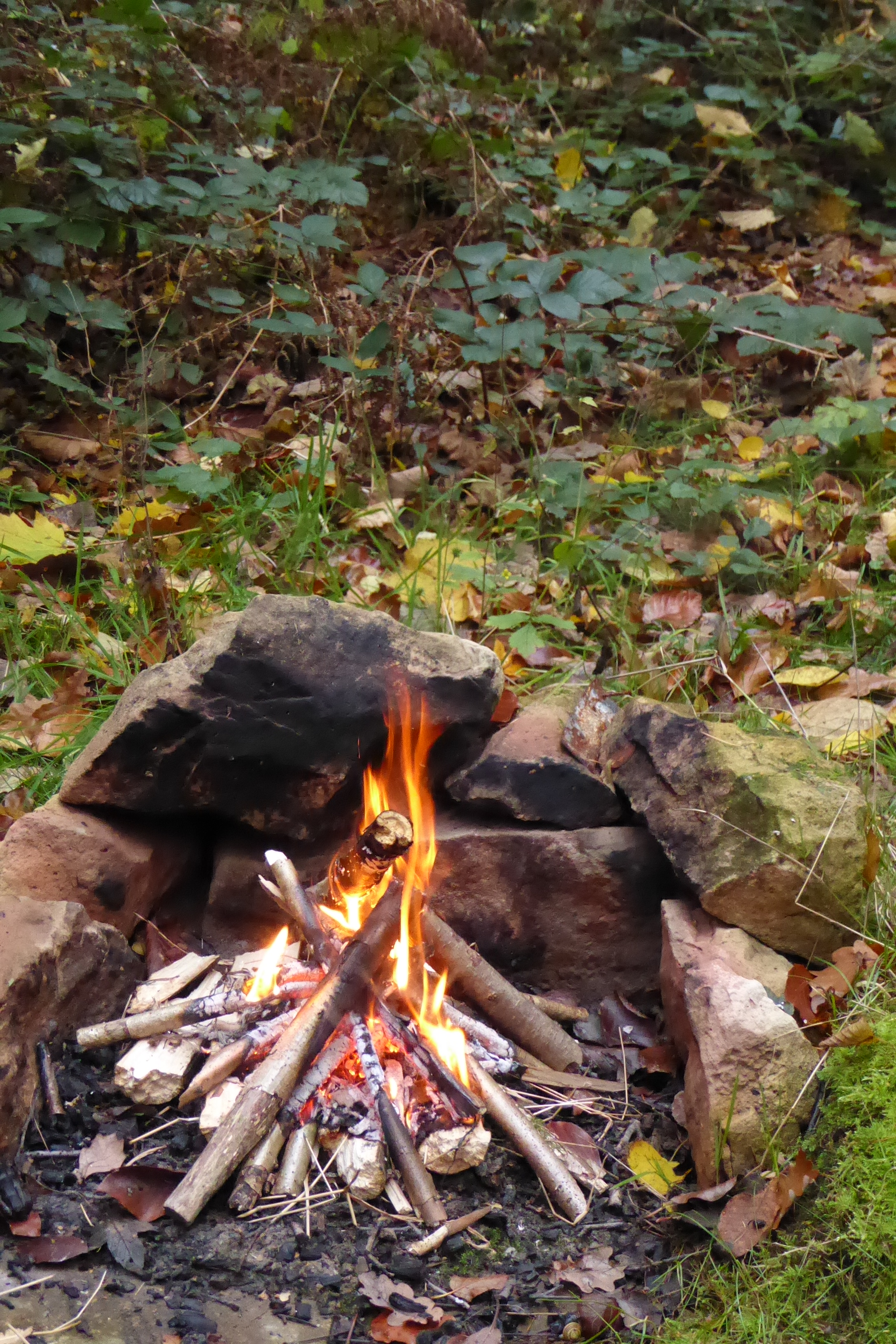
Making fire with flint and steel is akin to magic. It doesn’t look possible but here’s the science behind it. You have a piece of hardened high carbon steel and a sharp piece of flint. Both are cold and inert, and don’t appear to have fire in them. By striking the steel against the flint, you create a minute spark for a fraction of second, basically concentrating energy from your body by friction, so the latent fire is actually in your body. Using a piece of charred cloth (cotton) held on the flint, you catch one of those sparks and it will start the cloth smouldering. The process of turning that into a full fire you can cook on still seems remote but that’s where your fire making knowledge and skills need to be honed. It’s too lengthy a subject to go into in depth here but that’s what I wanted to practice. To find in a wet Autumn woodland, the right materials and to process them and work them into a fire is not easy but that’s exactly what I did. It’s hugely satisfying.
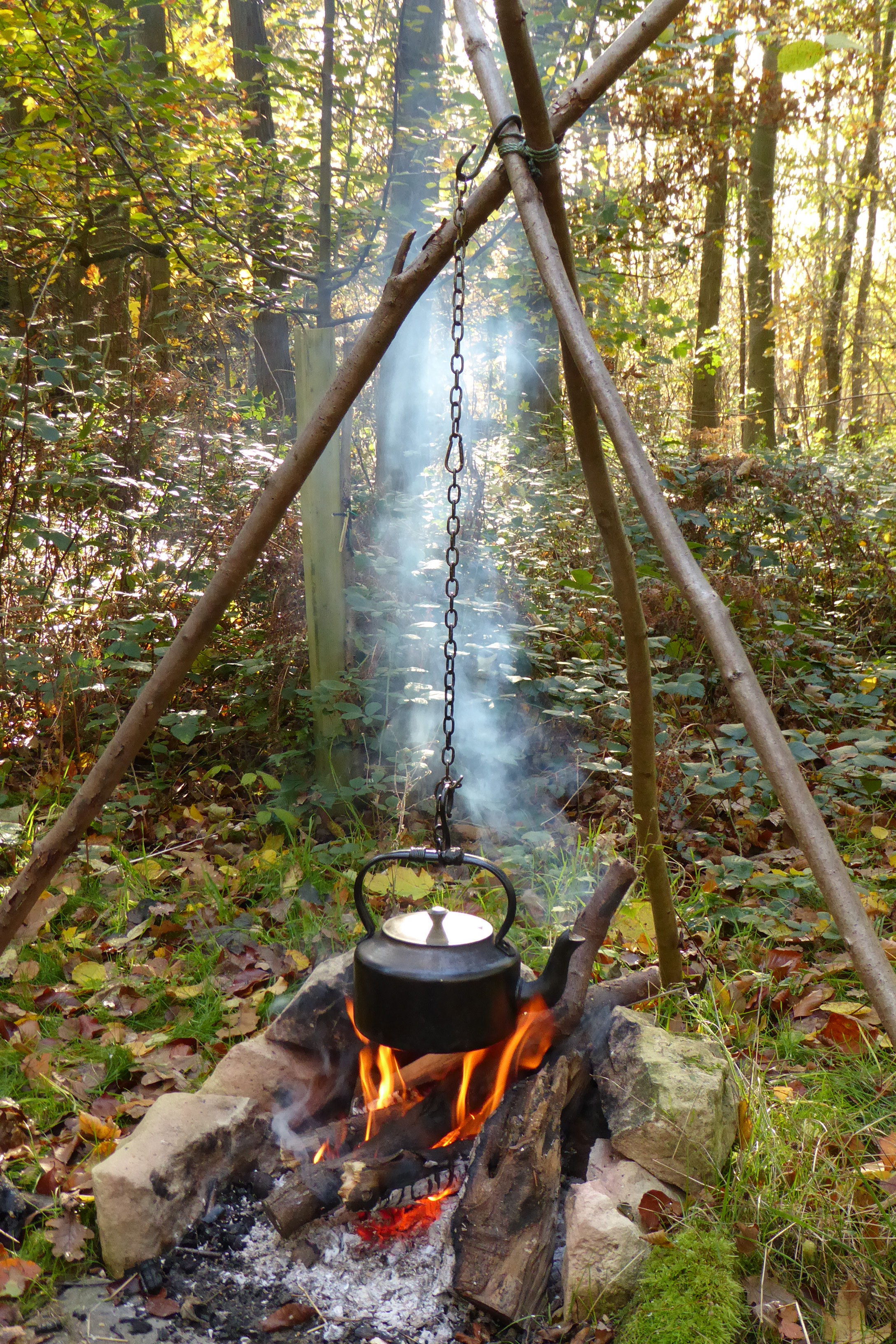
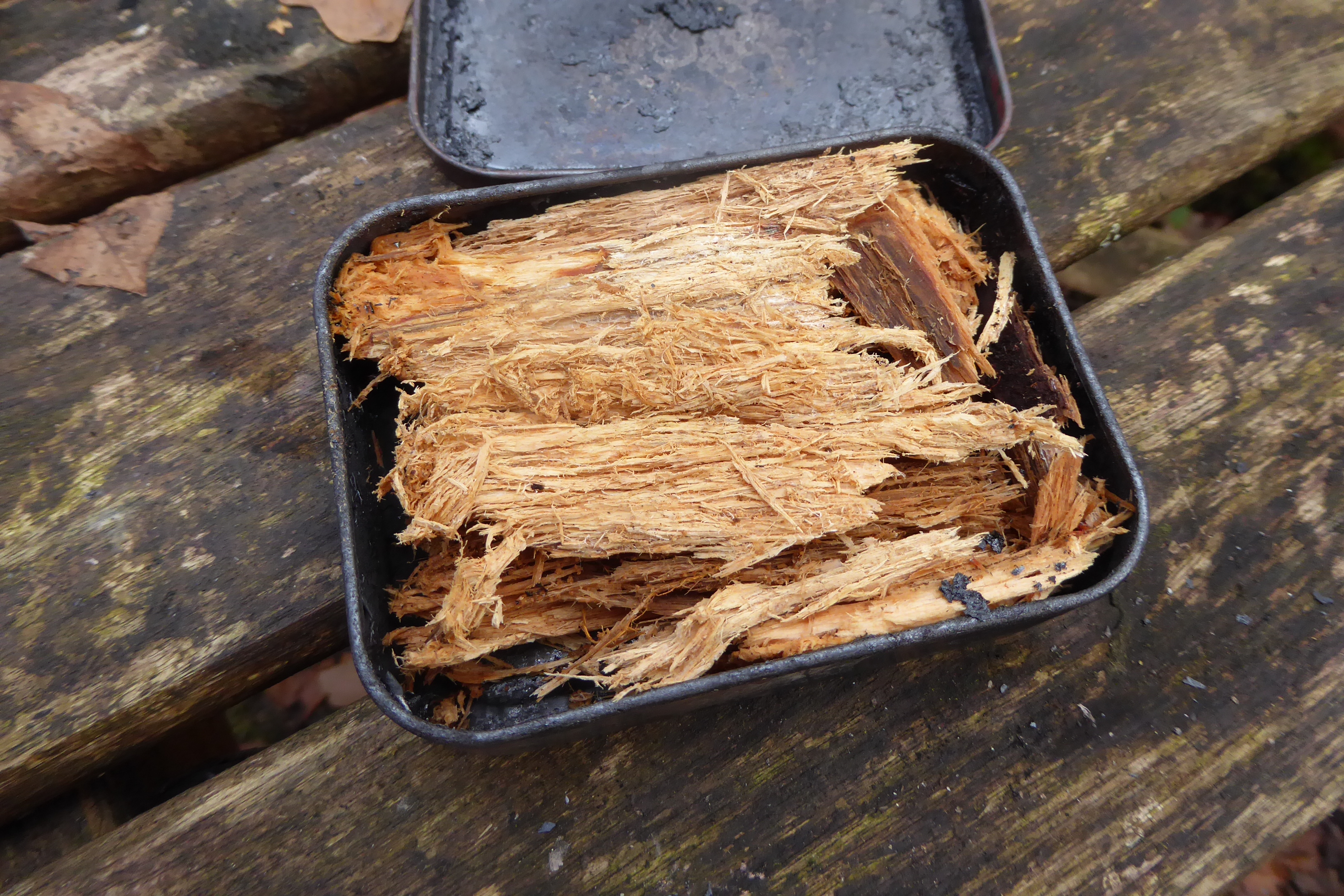
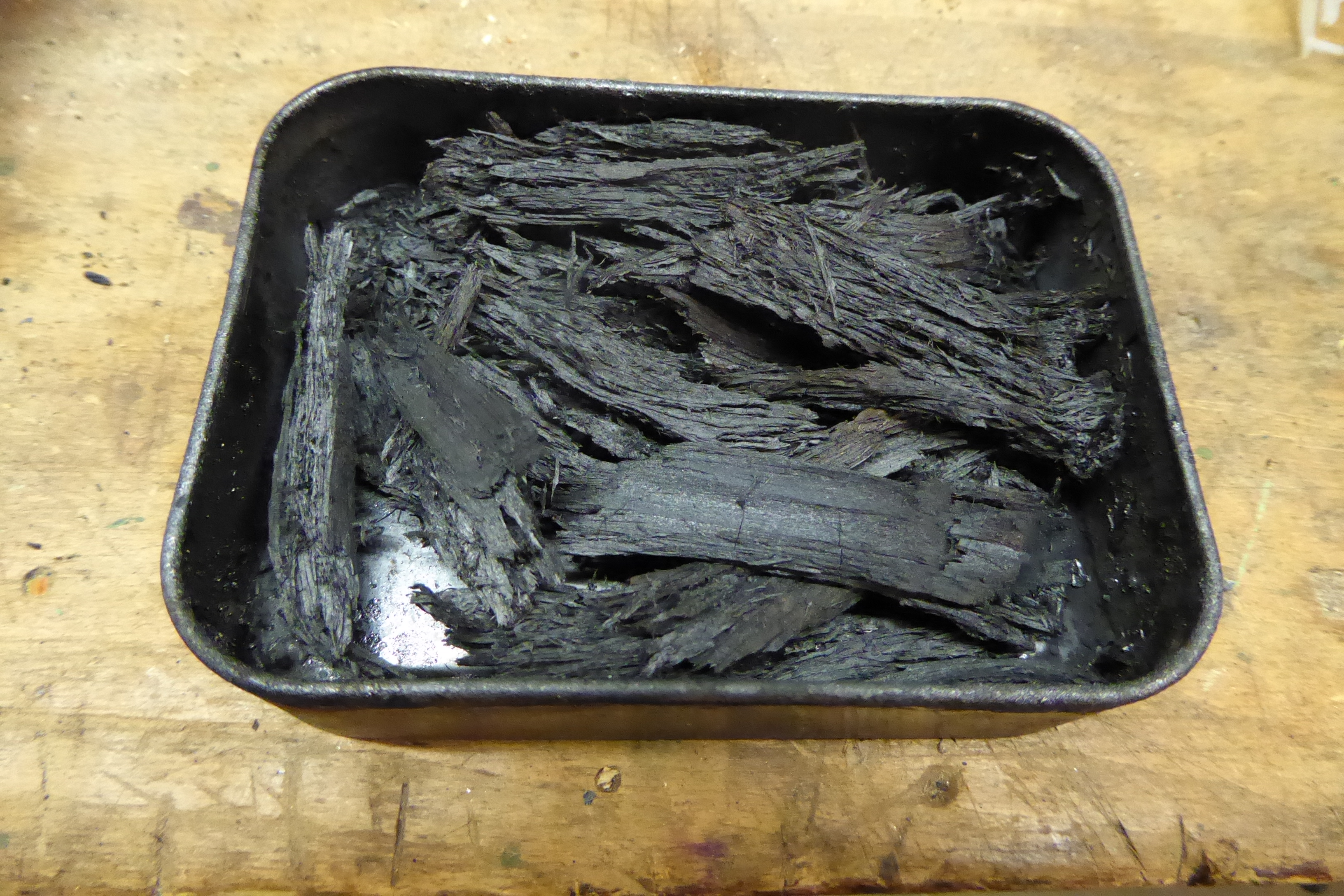
After a nice coffee, the next skill to practice was making charred punk wood. I talked about using charred cotton material to “take a spark” but cotton is manufactured, so if we want to go even more fundamental, we can make a product from easily found natural material – punk wood. It’s dead wood that has partially rotted to become soft and spongy. It will be damp or even soaking wet, which was what I found. To turn it into char, you put it in an airtight tin with a tiny hole in it and leave it in the fire for a while. The heat will firstly drive out all the water, then because you are excluding oxygen, the wood will turn into a very fragile (but easily ignited) charcoal. You can use either flint and steel or a ferro rod to throw a shower of sparks onto it to start your ember. Here’s the before and after photos of the punk wood.
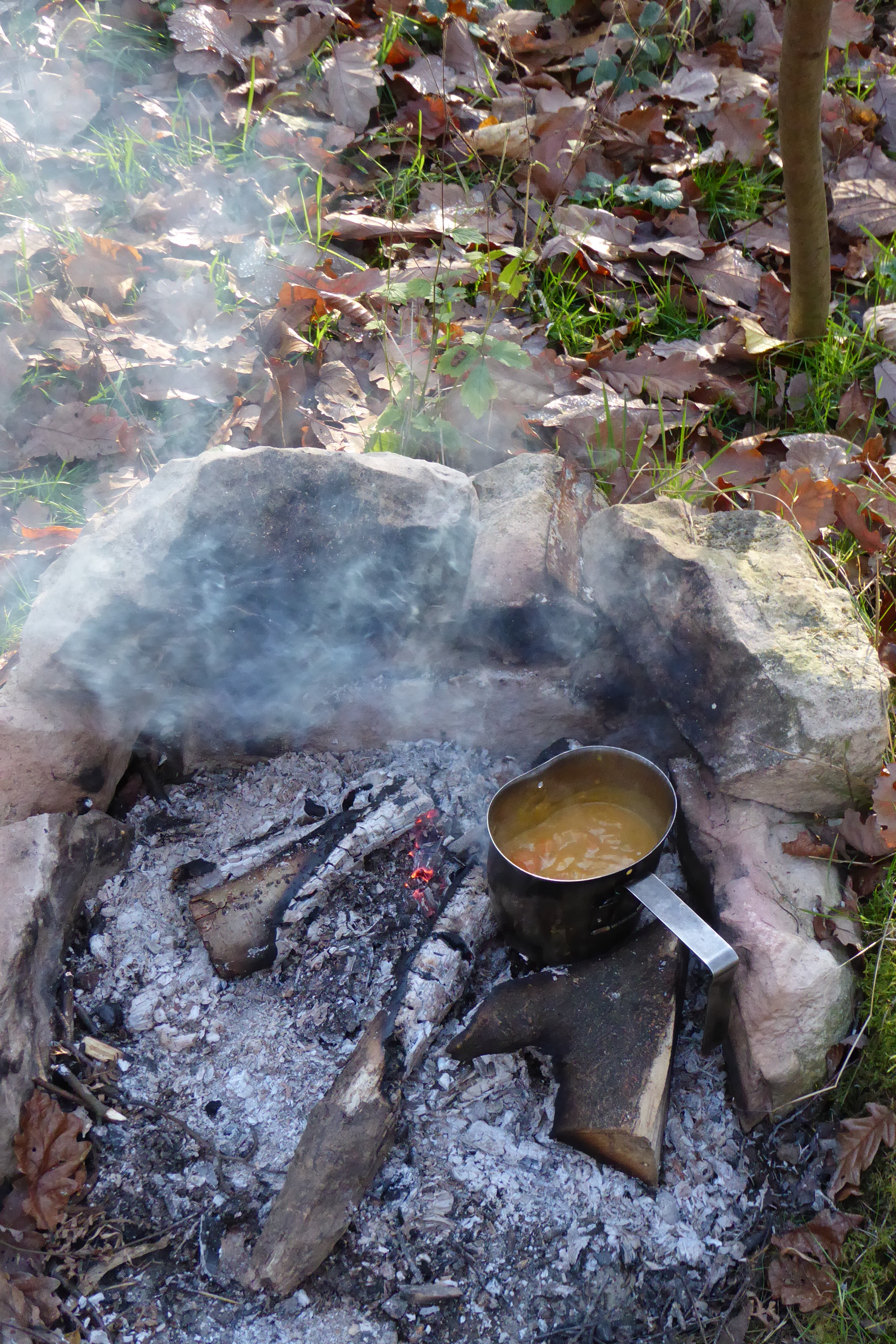
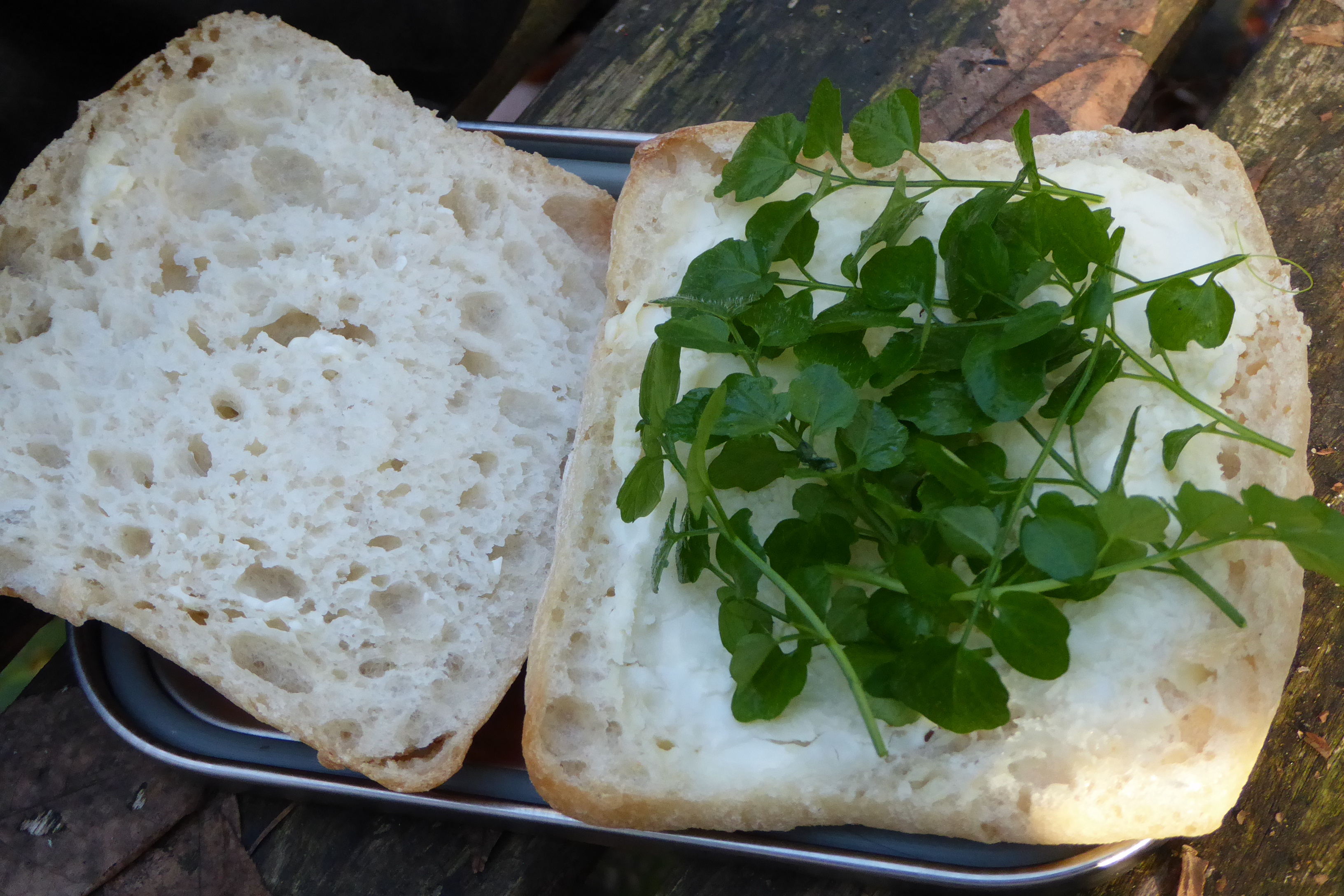
Next skill – food foraging. OK then, I didn’t intend finding a full meal, just an exercise to find something I knew was safe to eat to supplement the tin of soup and Dairylea cheese sandwich I had brought! Not exactly Bear Grylls standard but nevertheless, satisfying and interesting to see what could be found in a limited environment in Autumn. I found some really fresh Wood Bittercress. It tastes fantastic, very much like the sprouted mustard cress you buy in supermarkets and put in egg sarnies. So a quick rinse and shake and it’s good to go. Here’s my lunch. Great!
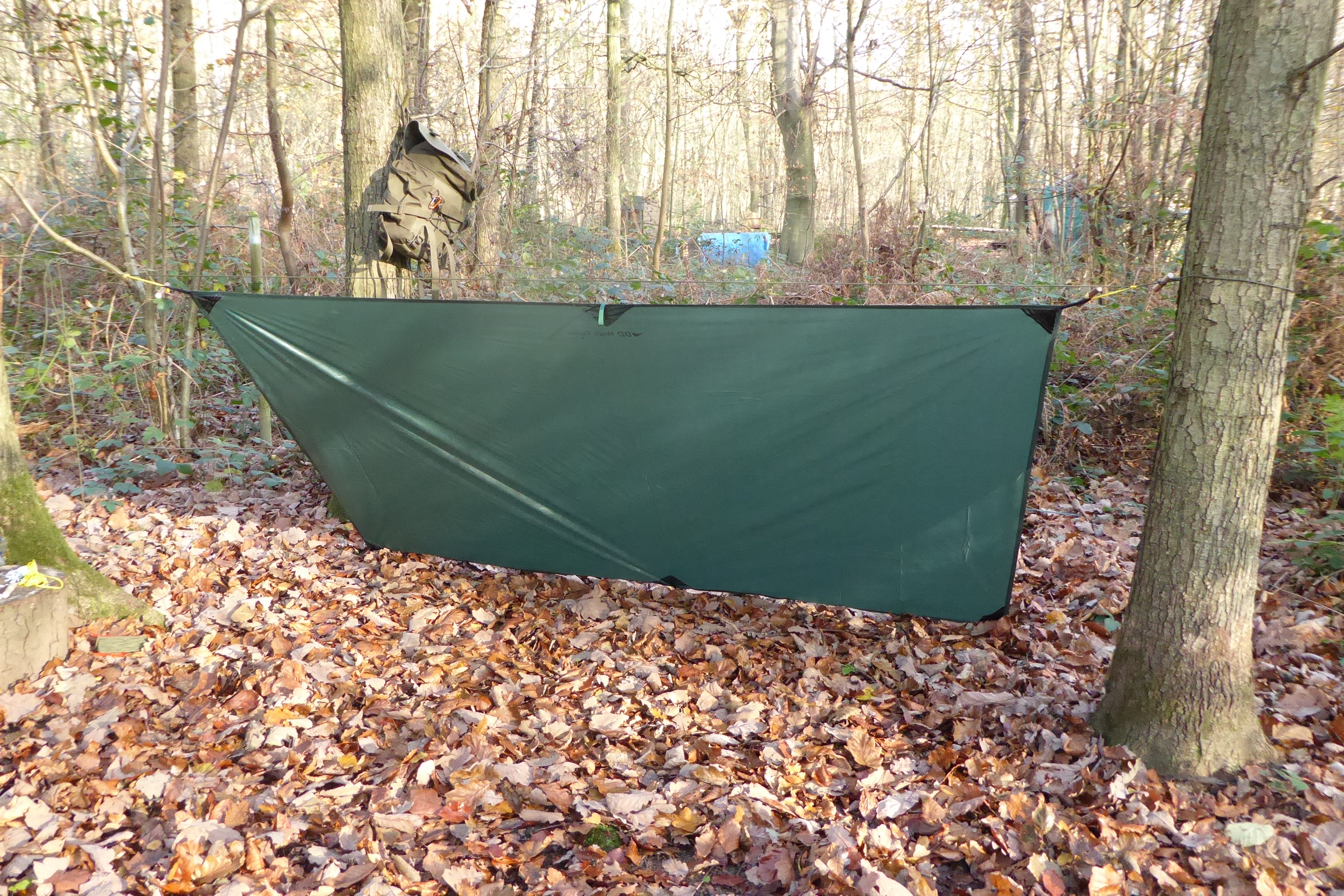
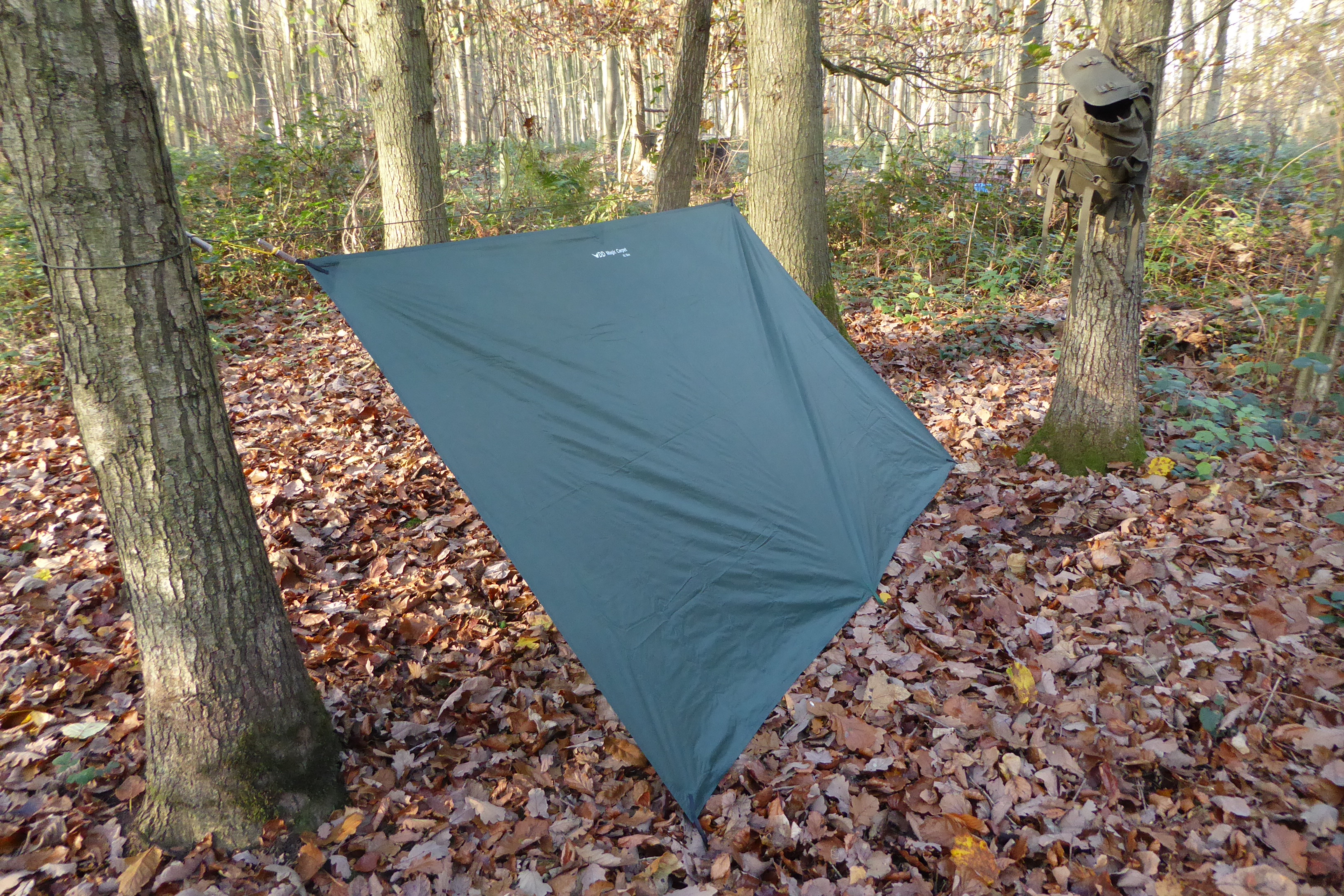
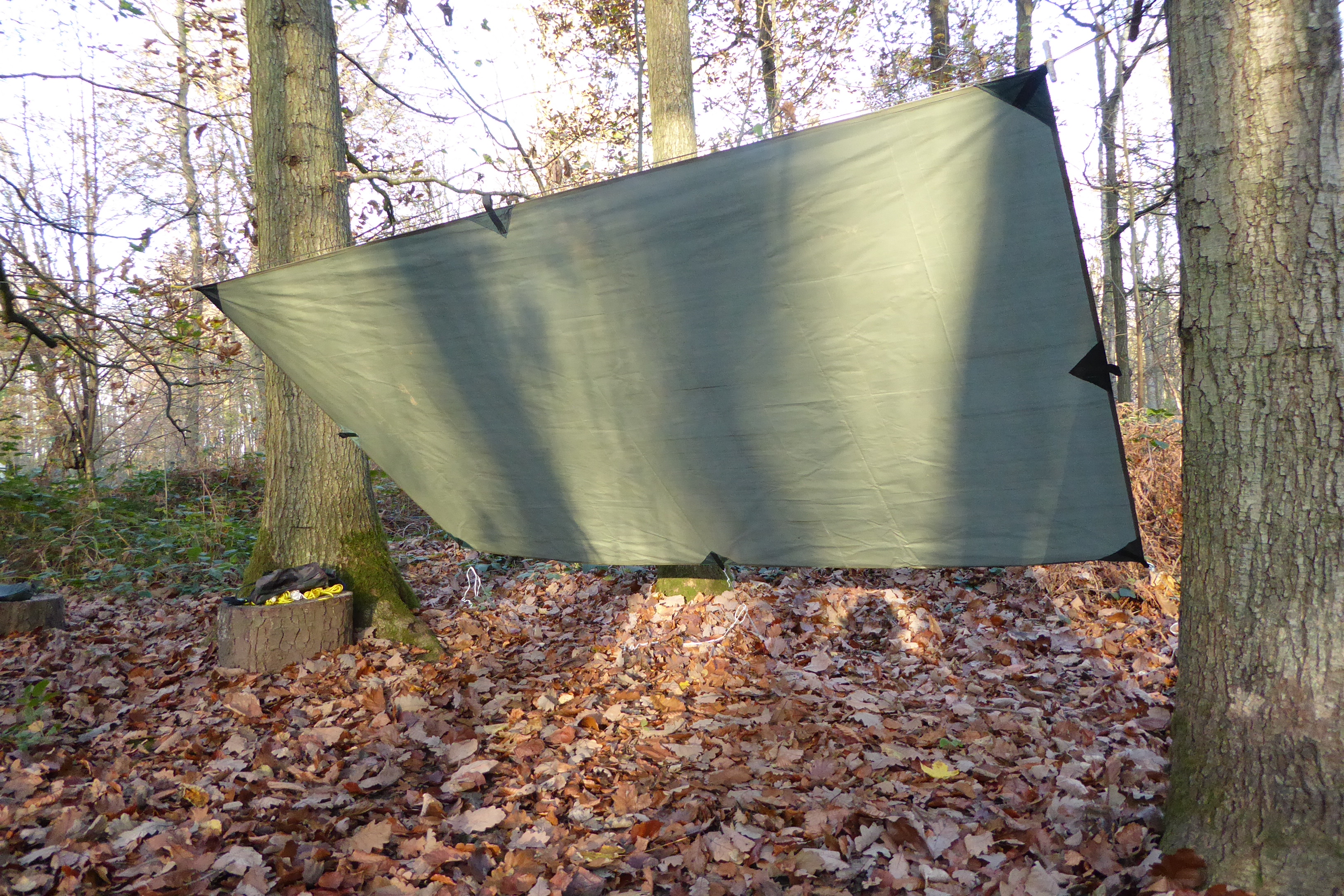
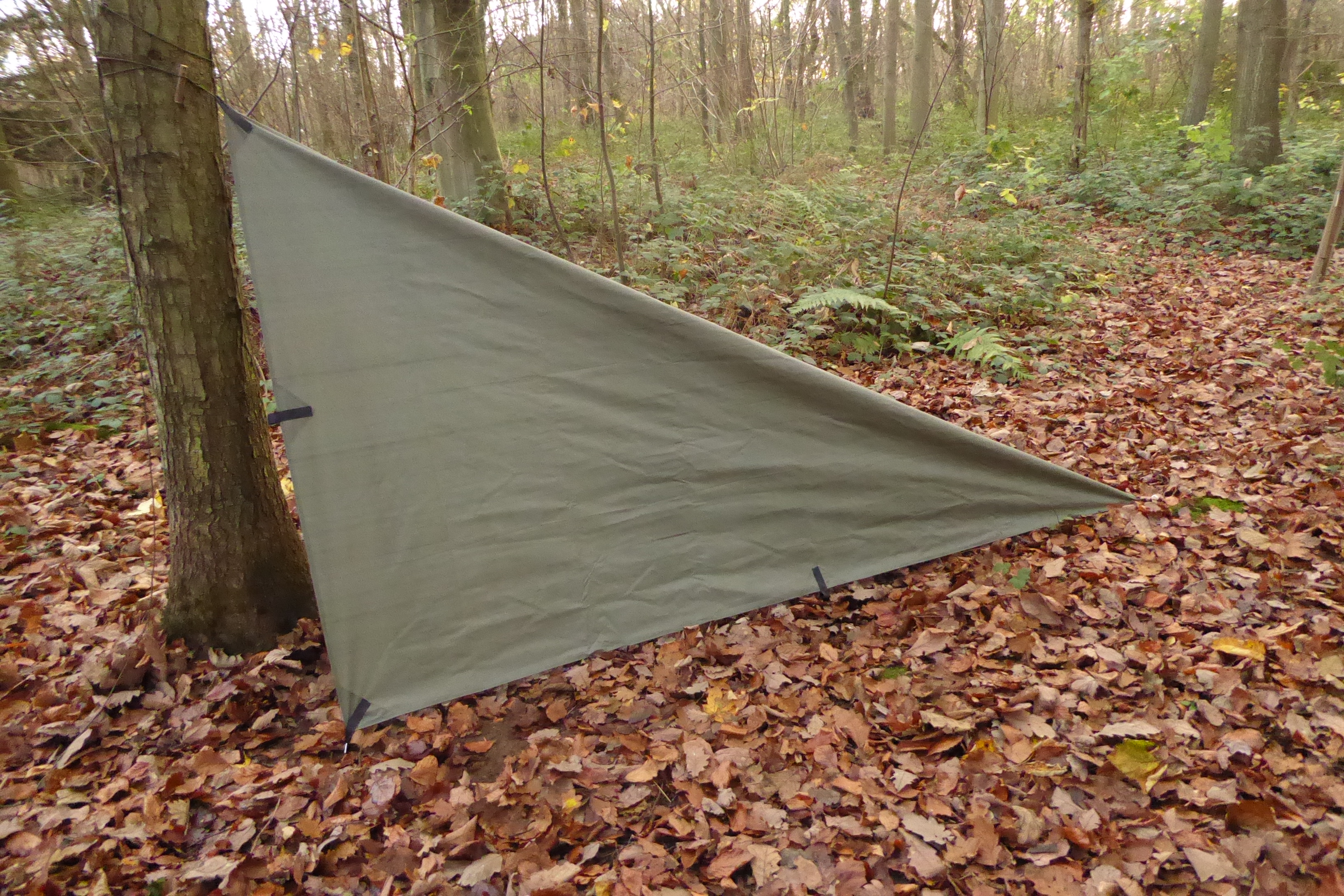
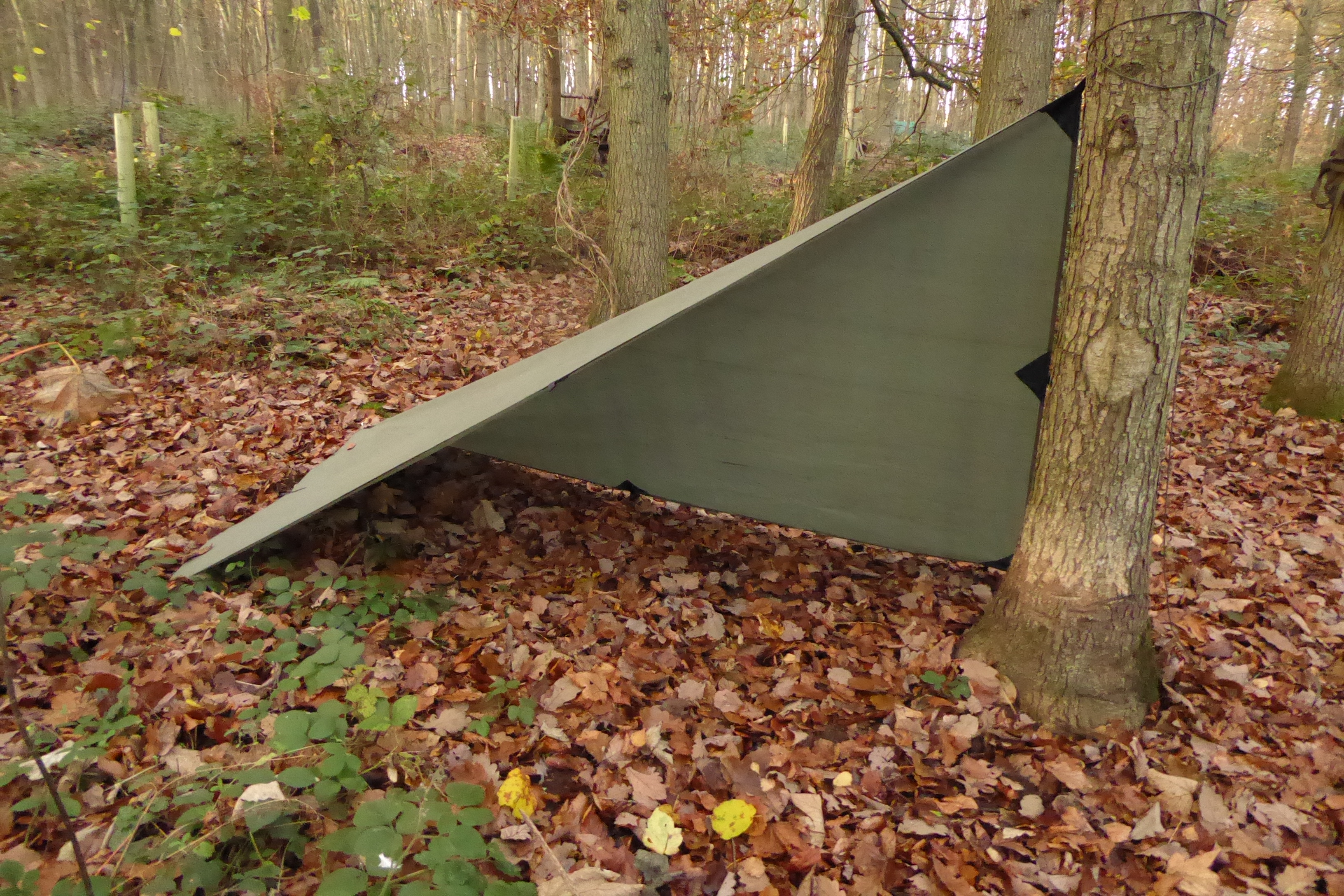
My last exercise was to try out two small tarps. One is a DD Magic Carpet XL. It’s only 2.2 x 1.4 metres and marketed as a small emergency wind/rain shelter or a groundsheet for picnics etc. The other is one I made from an ex military IPK which was just a sheet of strong material for emergency survival and is slightly bigger. It had no hem or tie-outs so I added them myself using my vintage Singer sewing machine. I’ve never really used them much so it was time to dig them out and have a play. I intend to use them on walks as emergency cover or windbreaks when making a brew so I need to be proficient at erecting them quickly. I wanted to practice knots for anchoring the ridgeline and see what was the optimum height for them as a lean-to configuration. Look up Truckers knot, it’s a fantastic tensioning knot. Also I wanted to try out a Plough Point config. which only requires one tree for support. It was fun and informative. Here’s some photos of how they look. What a fantastic day in the woods.