Diary of a man and his woodland

A blog about a man's dream to own a small woodland.


Leave a comment

A tribute to Elsie

Yesterday’s visit was a tribute to Elsie – my mum. We went to spread her ashes around the ten trees she had bought me for the woods. So this post is not about woodlands but a tribute to a person who was a true hero and without her, you wouldn’t be reading this blog. If she was a tree, she would be an oak. Strong and resilient and long lived. She made it to the grand age of 93 but it wasn’t an easy life. Like an old oak, she weathered many storms and bore the battle scars but despite that, stood strong.

WW2 was hanging over the country when she decided to leave her steady job as a bookeeper and do her bit for Britain. She signed up as a WAAF and played an important role, plotting aircraft for Bomber Command and helping us win the Battle of Britain. She raised her family, tending to her husband Lawson, who had suffered with malaria and stress related illnesses after his role as a radio operator in the 8th Army (another hero in my book, having survived the ravages of living in the Western Desert and escaping the enemy at Dunkirk.)  At the same time she held down several part time jobs and supported her sickly father, another old soldier, a gunner who had been gassed in WW1. Not an easy life for a young woman with two young children.

She suffered most of her adult life with a painful physical condition but rarely moaned or complained. In her late life she developed macular degeneration which robbed her of most of her eyesight and the hobbies she loved so much. When I bought the woods, she took a real interest in it and loved to hear me describing what it was like, the jobs I’d done, the birds I’d seen etc. She joined the Woodland Trust and donated money for trees for various projects they were running. She bought me ten large saplings which I planted two years ago. There are two wild cherry trees which I suggested might be dedicated to her and dad. When talking about the woods, she would often ask “How’s Elsie and Lawson doing?” She had a lovely silly sense of humour.

She loved her family, was always there for people when they needed some support and loved a get-together for a meal. Her life ended a year ago, as painful and difficult as it had ever been, with a degenerating heart condition and several mini strokes. She had no specific wishes for her ashes and after much considration, I decided the most fitting place was with the trees she had bought. After spreading the ashes, we headed to the nearby inn for a lovely meal. I know she would have 100% approved and hopefully those trees will live as long as she did.
Leave a comment

Mainly oak

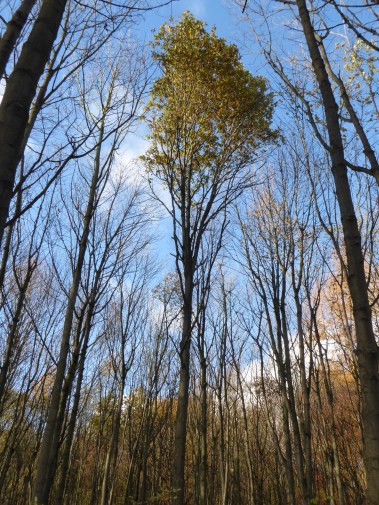
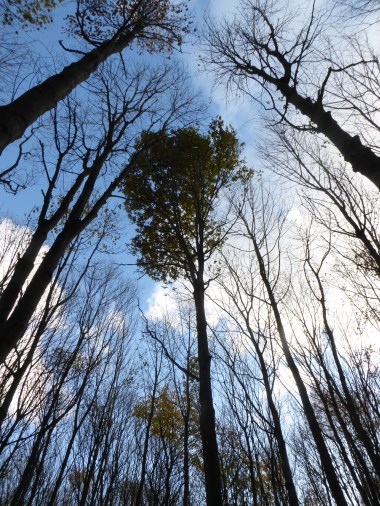
I picked a nice day again in between some really wet weather. The sun shone and it stayed dry all day. I had a long list of jobs to tackle but knew that achieving even half of them was wishful thinking. The two main jobs were building a new brash hedge near my logshed and thinning some sycamore around a tall oak tree. At the north of my woods is a plantation of sycamore which should have been thinned out years ago. They are about 50 years old now and tall but many are thin and sickly. My long term aim is to thin them and also create areas where other species can be introduced in order to start the process of converting it back to a more natural looking habitat. Somewhere in the middle is a solitary oak and I was advised to “halo thin” around it to “release the crown”. As the young trees grow in close proximity to each other, they jostle for light and space and eventually form a crown of branches and leaves. If you look at a mature plantation when in leaf, you’ll see that those crowns seem to fit together rather like a jigsaw. They each take up as much space as they can find before encroaching on  a neighbour. At that point, growth seems to slow down. So where you have a tree that you want to favour and promote more growth, you can thin those around it to provide a sort of halo of space and light around it’s crown. So this is what I wanted to do.

004

You can see how the crown looks small in comparison to it’s height. This is how all the trees look due to the close planting and lack of thinning. By giving it a little more space above, the crown should fill out and the stem should put on more girth. Of course the other trees nearby are going to try to do the same. I took down four small trees for starters but I reckon there are three bigger ones that may need to come down too in order to reduce competition. It set me thinking that it might be a good plan to take more down in that area, making this a focus for underplanting with some hazel.

008

007

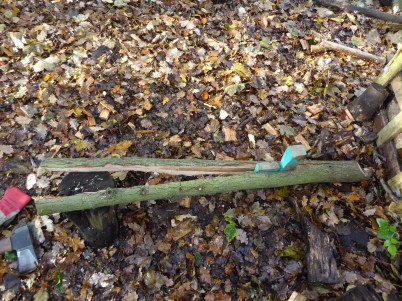
I took a few more small trees down in other areas, among them were two small and sickly oaks. My next job was to start the new brash hedge. I want it to be fairly long lived, as it is going to be at the side and rear of my logshed. So the posts for it, need to be of something that won’t rot quickly. I have loads of sycamore branches but that doesn’t last long in the ground. The oak does and I decided to try to split the two pieces to make four posts, using an axe and wedges. I’ve done it before with some ash and it was really hard work. Surprisingly the oak split very easily.

001

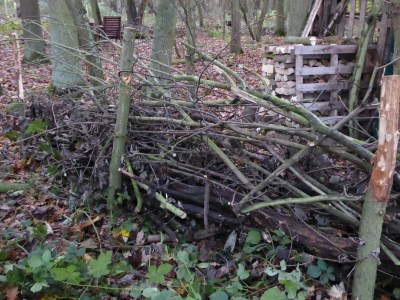
I love making brash hedges, they are so satisfying. Firstly it’s a way of using up the waste branches after felling, rather than burning it. Secondly is becomes a haven for all sorts of wildlife – fungi, insects, birds and small mammals and thirdly it is a natural looking feature that adds interest to the woods. I know there are mice and toads hiding in and around my logshed, so this will provide extra shelter that won’t be disturbed when I’m working. I’m hoping it will bring more birds to that area too, that I can enjoy when taking a break. I started by piling some biggish, rotten logs and branches for the base, hiding a few old terracotta plant pots among them. They could be potential nesting or hibernating quarters for toads and mice. On top of that is the more twiggy brash from nearby fellings. The hedge is only part built yet but this is what it’s looking like. As I was building it, an inquisitive robin landed on it to check it out, almost impatient to to start using it. As the line goes in Field of Dreams, “build it and they will come“.

011


Leave a comment

something fishy

I’m really getting in plenty of visits at the moment, partly because I want to push on with lots of jobs before spring. My list for yesterday arrived around 2.30 am when I awoke to hear five scallies talking loudly outside and smoking a spliff. I’d gone to bed thinking about what I was going to do at the woods, so my brain just continued with the internal conversation. “Take the chainsaw, finish cutting, chopping and stacking last winter’s felling. Sned the new ones (cut off the side branches) and start making a new brash hedge around the log store, dig a pit and fill with logs and rubble to make a wildlife sanctuary and fix some squirrel protection plates to my birdboxes. By the time I got back to sleep I could have done at least one of those jobs for real!

It was a glorious morning and as I arrived there were two cars just heading up the ride into the woods. I recognised one as a neighbour I hadn’t seen for a while, so first job was to head over to their plot to say hello and catch up. Back at mine I made the first job to light a fire for coffee and to get some nice embers ready for cooking a whole mackerel I was having for lunch. A friendly robin appeared on a nearby branch. There was no doubt it had come to see what I was up to. I love that, when a bird seeks you out, rather than flies off thinking it is in danger. It suggests a sense of trust which to me is precious. The dappled sun coming through the remaining autumn leaves and the comfort of a new, smokey wood fire is hard to beat. The other car at the ride, I discovered was another neighbour who called around and we had a good long chat about woodland ownership and a bit of a walkabout. He makes some fantastic wildlife videos of his woods and camping trips.

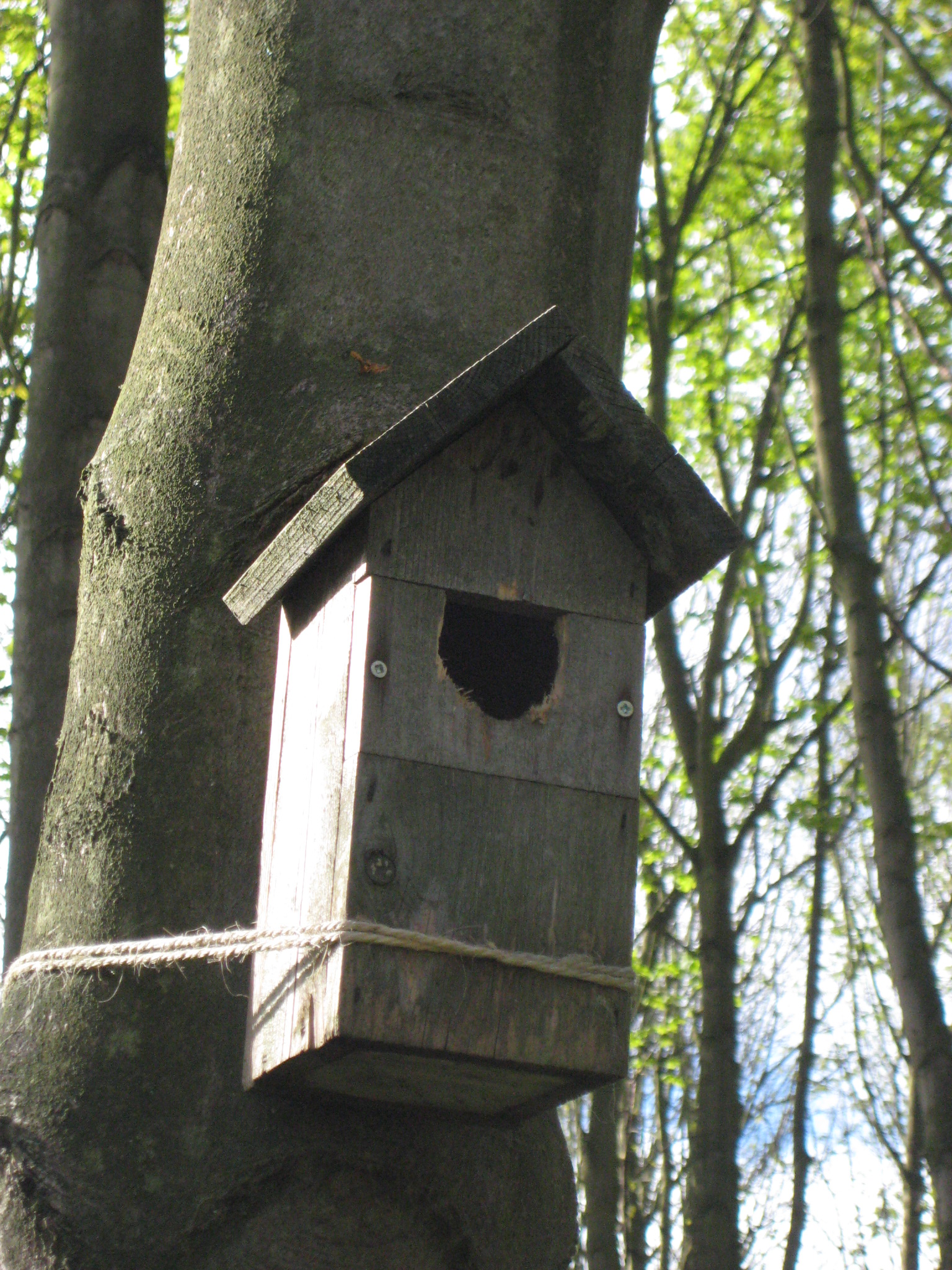
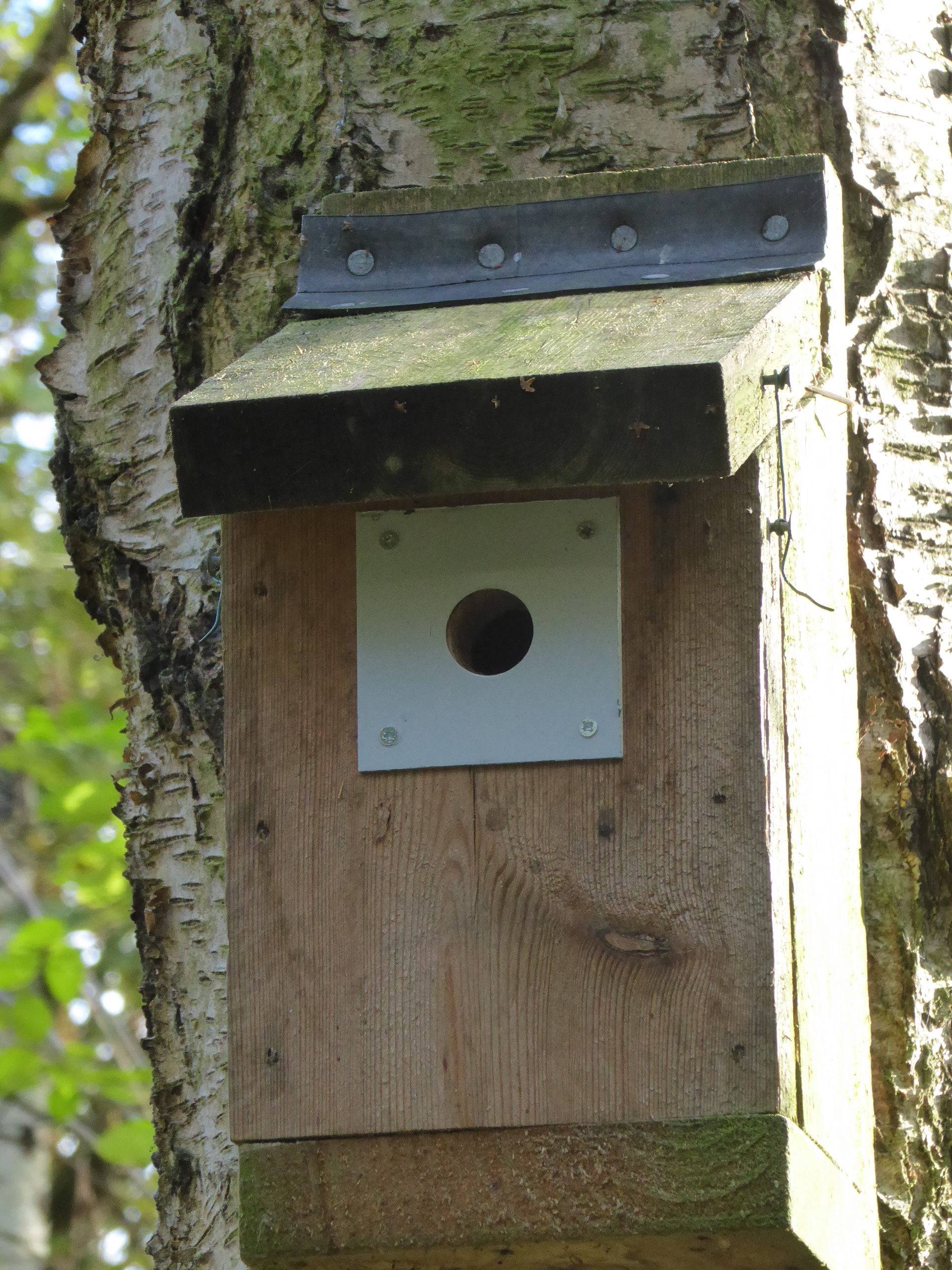
During the spring, some of my bird nest boxes had been attacked by the greys trying to get to the eggs and chicks. They had gnawed at the holes to enlarge them, so I have bought some metal plates that fit over the hole and hopefully, prevent it in future.

squirrel damaged nest box

squirrel damaged nest box

001

It was a good opportunity to open the boxes, repair them and clear out any debris and see which had been used. Out of seven boxes, only two looked as if birds had successfully bred. Two remained unoccupied and three had been started and abandoned – a bit disappointing. By now it was already time to start cooking the fish which I simply wrapped in foil and put on a grid over the embers. I’m a rubbish chef but it came out nice and went well with my red Thai curry flavoured instant noodles. A very messy but tasty meal. The fish scraps went on the fire to dispose of.

After lunch I set-to with the chainsaw, attacking the last remaining pile of old logs. I had hoped to clear them off as it’s getting boring now but nope, still a few to go at. I did the snedding and felled a small wonky oak tree. I checked out the mouse nest that has been under an upturned metal bin for about a year. It looked abandoned, so I decided it was time to reclaim my bin for more practical purposes.The days are very short now so there was only time left to load a few more logs to bring home, tidy up and head off home. Next time I’m hoping to start building the brash hedge. This will partly enclose the area around the back and sides of my logshed. It will partly hide the shed for aesthetic purposes and provide shelter and nesting places for wildlife and hopefully allow me to see more of it too. Till next time, bye for now.


Leave a comment

Bramble blitz

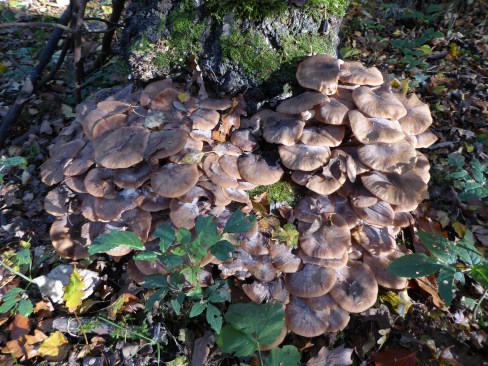
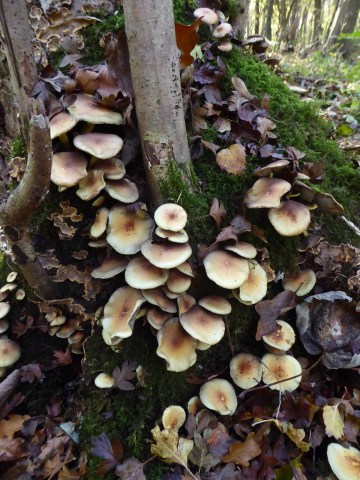
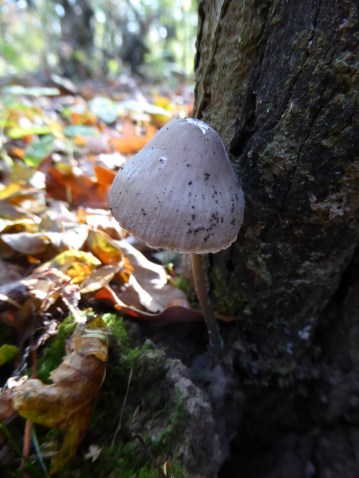
The weather has turned a whole season this week. A few days ago we were having warm days that would be welcome in summer. Now Autumn is definitely here. The first frosts this week will hasten the dropping of leaves from the trees and so it was evident at the woods yesterday. It changes the whole feel and perspective and can even disorient you as you have become accustomed to the heavy, leafy clothing that summer has been wearing. It happens again in late spring only in reverse. I’ll talk more about that shortly. A short walk around with my camera found these amazing clumps of fungi growing on dead tree stumps.

002

016

005

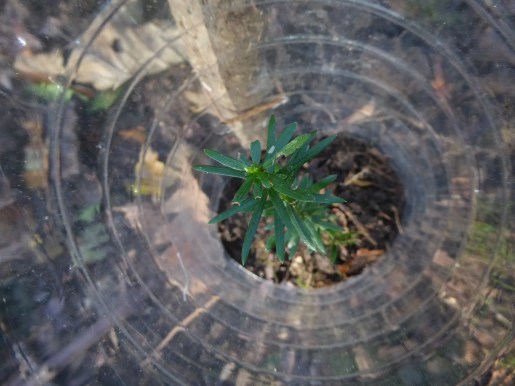
The day was earmarked for some serious bramble-bashing. I’ve been lenient on it for a year, mainly due to having so many more interesting or rewarding jobs to do. Last week gave me a taster of how much differece it makes when you can clear an area. I had spent an hour just pulling it up at the roots so the idea was to repeat that and finish that small area, then hit the big boys with the petrol brushcutter. There’s so much bramble in some areas that pulling isn’t an option.  So going over it with the brushcutter first, clears the heavy ground cover which allows easier access and weakens the plants. The roots are still in and will sprout again in spring. Maybe another quick going over in late summer will weaken them further, then the following year I can probably start pulling them up by the roots. Whilst pulling some yesterday I found a tiny yew sapling. I’ve been hoping to find some but so far to no avail, even though there is a massive one just over the border and I was sure there would be some saplings nearby in my plot, but no. I found this where I least expected it. I’ve protected it with a cut-off plastic water bottle.

020

So onto the bramble war. This area has grown really thick with it since I planted some saplings two years ago which are now in danger of being smothered. this is the before photo.

027

and this is after.

033

It looks severe doesn’t it? I sat nearby and ate my lunch. A robin came to investigate the new landscape. It was bobbing back and forth all around, probably looking for new food disturbed by the work. But it occurred to me that the once familiar landscape, had suddenly changed. The robin would be used to what was there and might need to re-familiarise itself with the new terrain. Good or bad for wildllife? Well it depends on your perspective. Some insect species will rely on the bramble to lay eggs on, animals feed on the berries (though in my woods it’s largely just foliage and few berries) and some animals and birds will have protection from predators and rain. On the other hand, nothing much else can grow under the heavy shade. Without the bramble cover, other plants should germinate and provide a richer diversity which will benifit other insects and animals. The bare looking ground now will soon be overgrown again next summer, so it’s a short term loss for a longer term gain.

That lead me to thinking about how the change in seasons can be disorienting at first. You don’t consciously realise it but the familiar clumps of bramble here and there, the odd foxglove or burdock plant, the shape of certain trees are all visual clues that your brain must be processing to help keep your position identifiable. When it changes at the end of the season, it’s almost a different place.

Here’s the sycamore plantation that was another target for bramble clearing. This area is fairly boring. The trees were planted in the 1960s and have been neglected. They should have been thinned and in summer the area is incredibly dark. So there’s not much ground cover other than bramble. The pathway I cut two years ago proved that the underlying wood anemonies and bluebells really enjoyed the lack of brambles. After clearing a sizeable chunk of this area, I am looking forward to am amazing spring show of the anemonies. This was hard back-breaking work but very satisfying. Again it looks severe but eventually I hope other ground cover will take advantage. There are some very nice ferns in areas of low bramble cover which I am hoping will spread.

044