
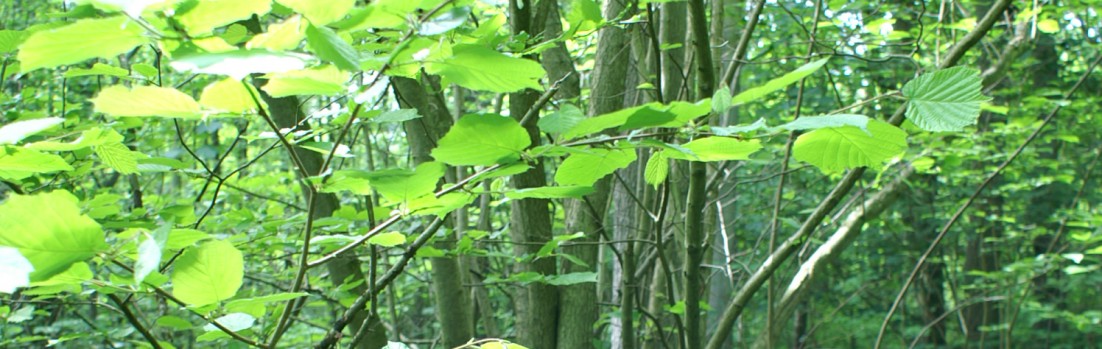
How rapidly things change in the woods at this time of year. The canopy has fully closed over now and a large part of the woods is dark and gloomy. One of my long term plans is to thin out to allow more light in. This is a process that has to be done slowly as a sudden and dramatic change in light levels can upset the overall ecology of the woods. Many plants, funghi, mosses and invertebrates enjoy the dark cool places. Then again many other species enjoy light and airy habitats and these are what need encouraging now. So a balance of light and shade is the answer. It was noticeable that birdsong and visitors to my feeders has dropped right down, now that most of the young have fledged and left their nests. But where do they go? Surely they must stay around where the food supply is.
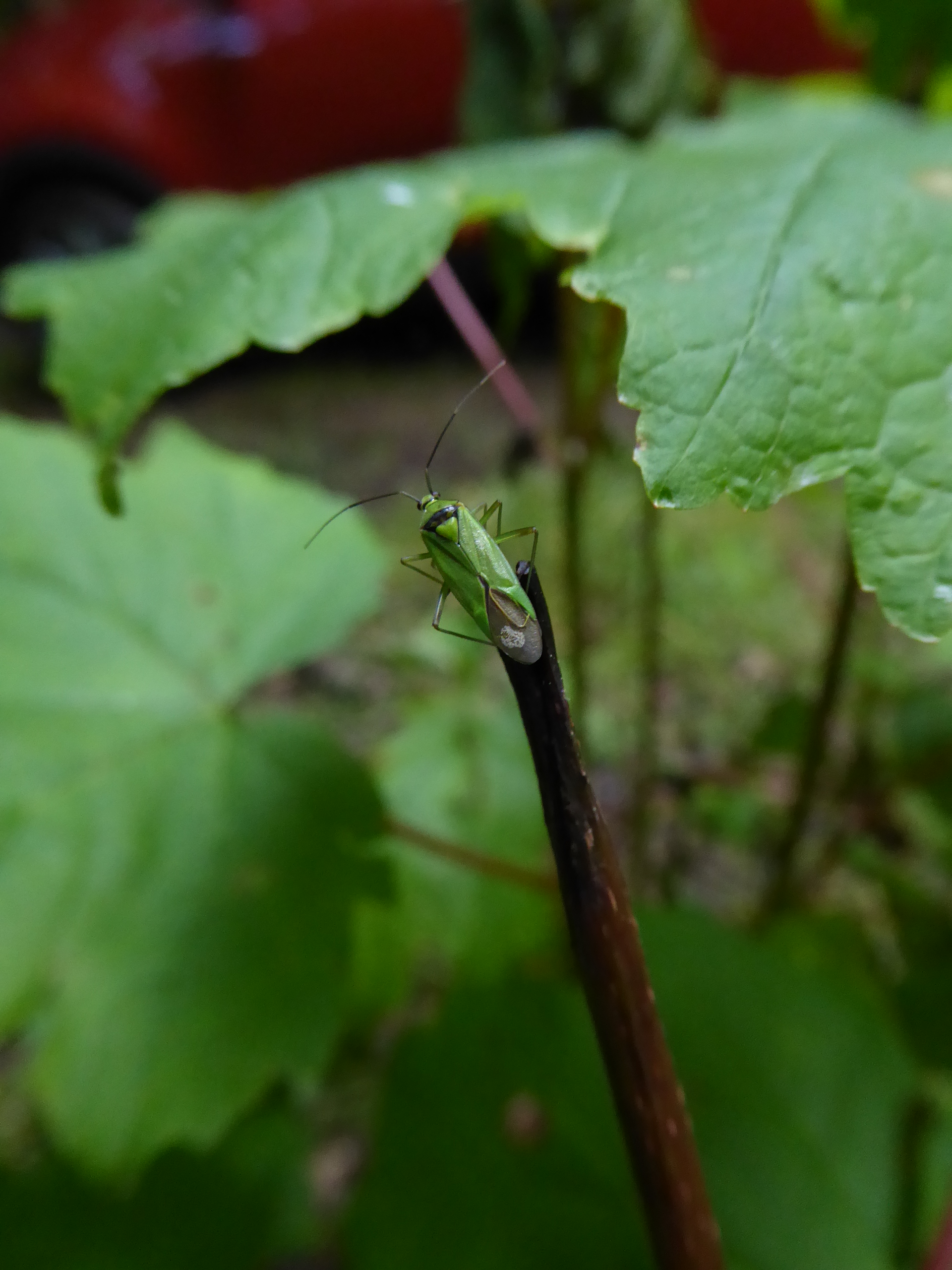
This bug seems to be eating the new sycamore shoots
Insects are rife and some are enjoying the fresh new shoots like this green bug. I noticed some of the new sycamore shoots that have sprouted where I cut down the trees in winter, are starting to turn black and wilt. Close examination revealed several of these bugs which are obviously piercing the shoots and robbing the sap. Some of the new oak saplings have already got holes in the leaves. As an ex-allotment holder and once keen gardener it goes against the grain. I have to remind myself that this isn’t a garden, it’s a wild place and all these creatures are part of the food chain that makes the whole thing work. They were there a long time before me and they haven’t destroyed the woods.
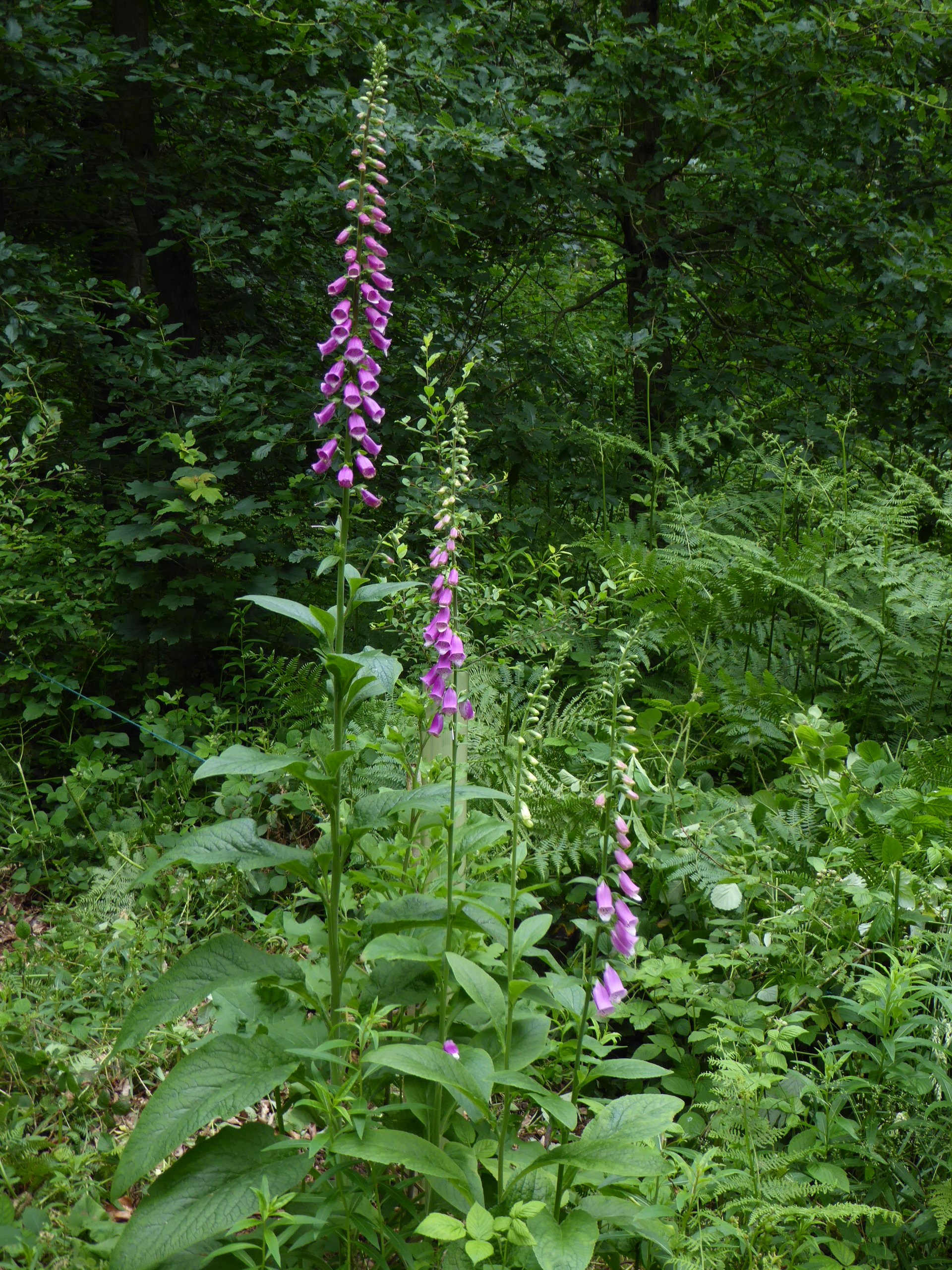
foxglove by my camping area
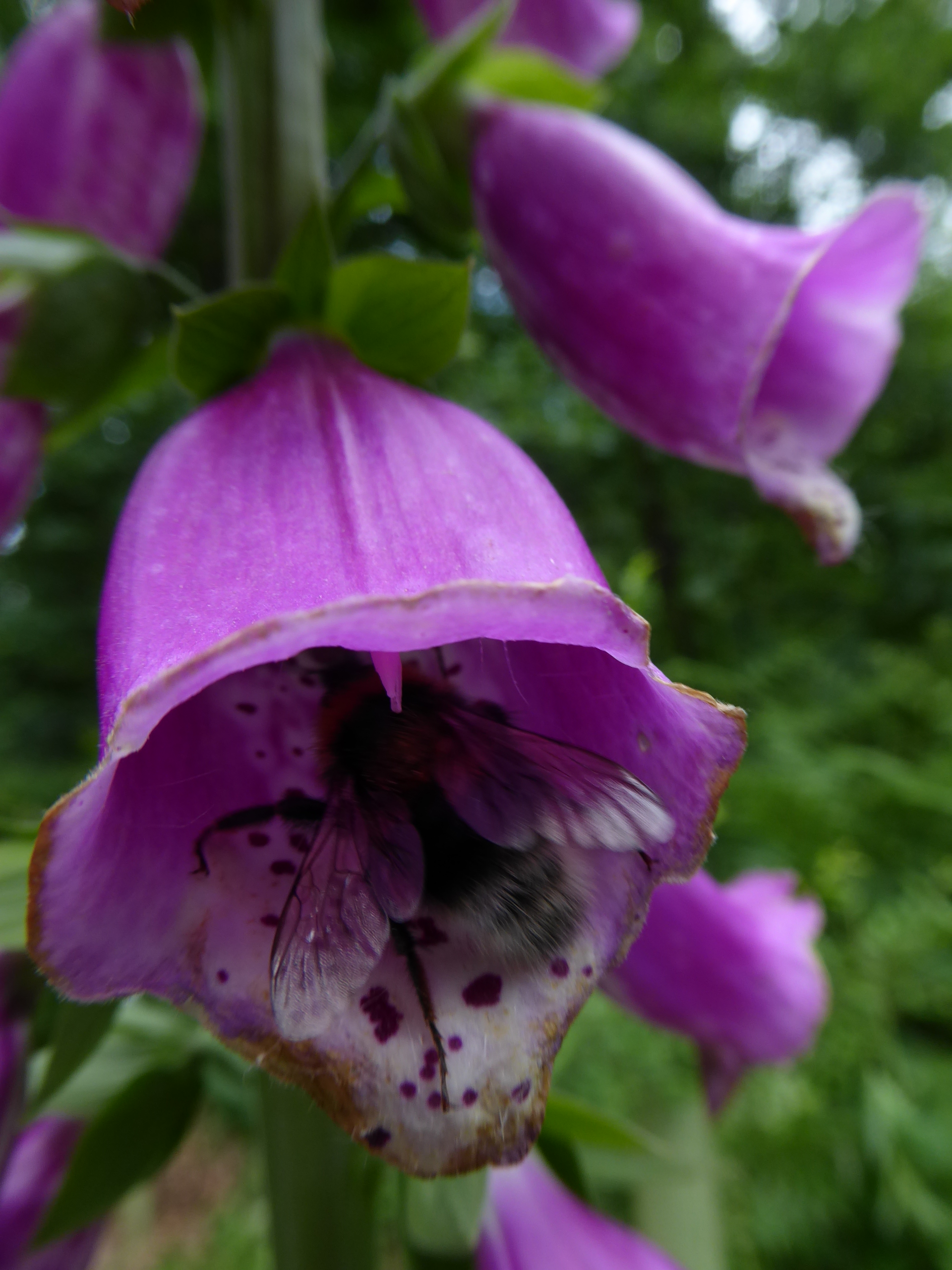
There is a fantastic tall foxglove plant in a sunny spot by my camping area. I have to admit I planted it. I love the flowers and I wanted some colour in an otherwise monochromatic, green wood. I know bees love them and that was my other reason. They need some sun so this is the ideal spot. I sat and rested a number of times and watched the bumble bees in and out all day. The question is, how quickly does a flower replenish it’s nectar? There were so many visitors, that either the foxglove is constantly producing more nectar, or there are a lot of disappointed bees.
It was a day for getting lots of work done. Priority number one was to grub out the weeds around the new tree plantings. Not a job I was looking forward to, it’s hard, sweaty work and not all that satisfying. Necessary though, as you want to keep competition for water and nutrients to a minimum for a few years until the new trees have established good deep roots. So far all the trees I planted are doing fine, some better than others but I mustn’t neglect them. I managed to get around to clearing half of the saplings, those that I planted the first year and in greatest need. I used a mattock to hack and scrape away the weeds around them.
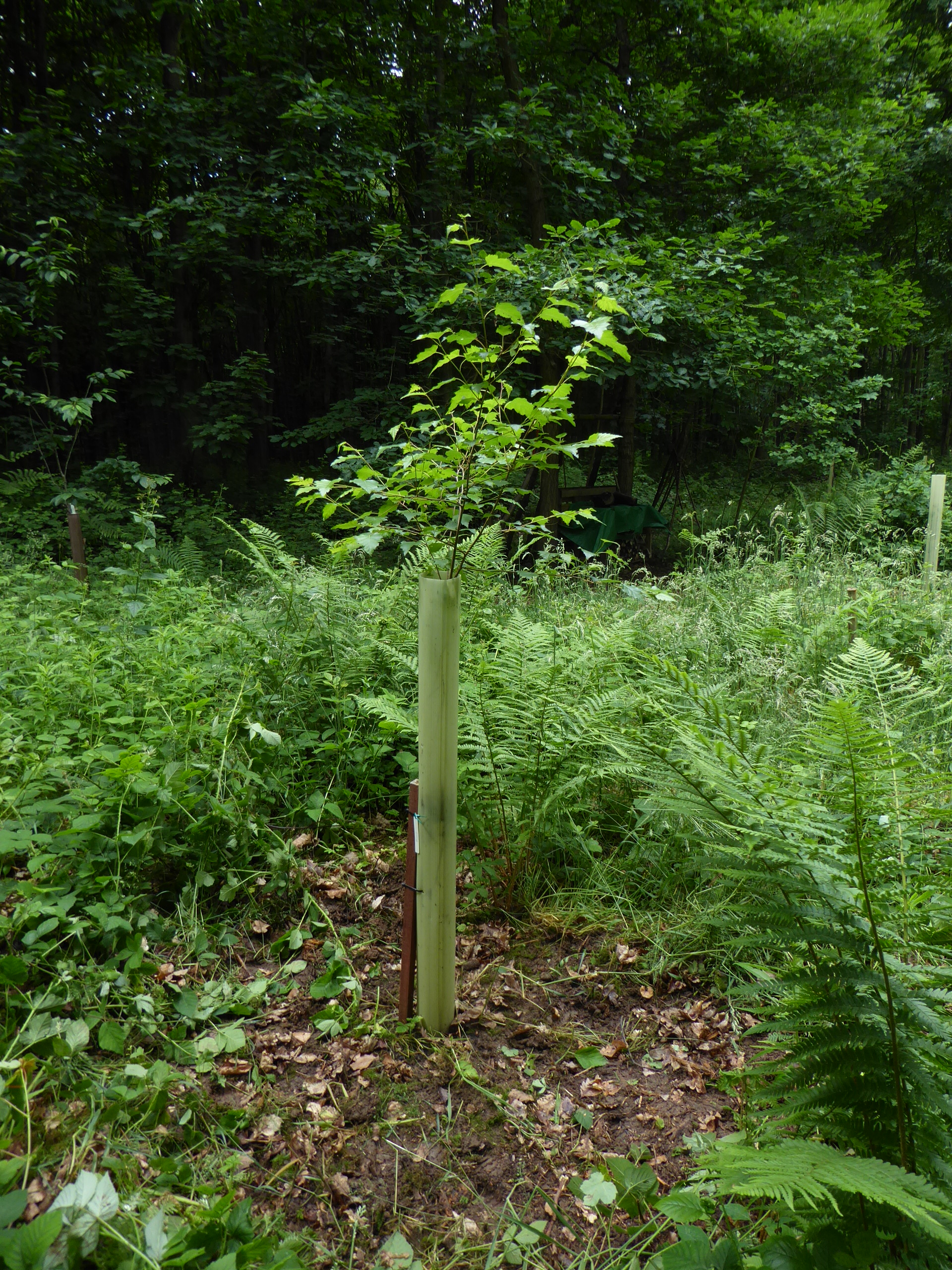
Weeds grubbed out around a thriving silver birch sapling
Other jobs included splitting and stacking more logs for seasoning – still loads to do yet and probably won’t get them all done before the next phase of felling. I filled three large trugs of dry logs to bring home and have now filled my small logshed in my back yard. I’d say it has taken about 36 trugs full.
I recently bought a cheap version of a small action camera. You know the type that cyclist fix to their helmets etc. I was keen to try it out. It has a very wide angle lens and various brackets and clips that allow you to fix it to numerous things. It takes stills and videos. My intention was to do some walkabout vids of the woods so it was time for some fun and experimenting. I tried clipping it to my belt first, then to my hat to give an eye-level view. The result were mixed. The camera struggled to cope with the ever changing light levels as I walked around and the ultra-wide angle lens view creates something called barrel distortion which is not very noticeable on stills but when taking video, becomes very obvious when you move the camera from side to side. Most of the distortion is at the edges so as you sweep your view sideways, the distortion moves across and gives an almost psychedelic impression that you might have taken an illegal substance! Even though I walked slowly and tried to move the camera fairly slowly when changing views, the results are far too jumpy and could make the viewer dizzy. Funny how it didn’t make me dizzy when I took it but when watching on a screen, the same view is definitley uncomfortable. I need to work on my camera technique before subjecting you to a walk through the woods.
Whilst walking about I found a bird’s nest. Earlier in the year I disturbed a thrush in that location but couldn’t find it. Later I could hear a mistle thrush singing incessantly in the trees above. I reckon this was it’s nest.
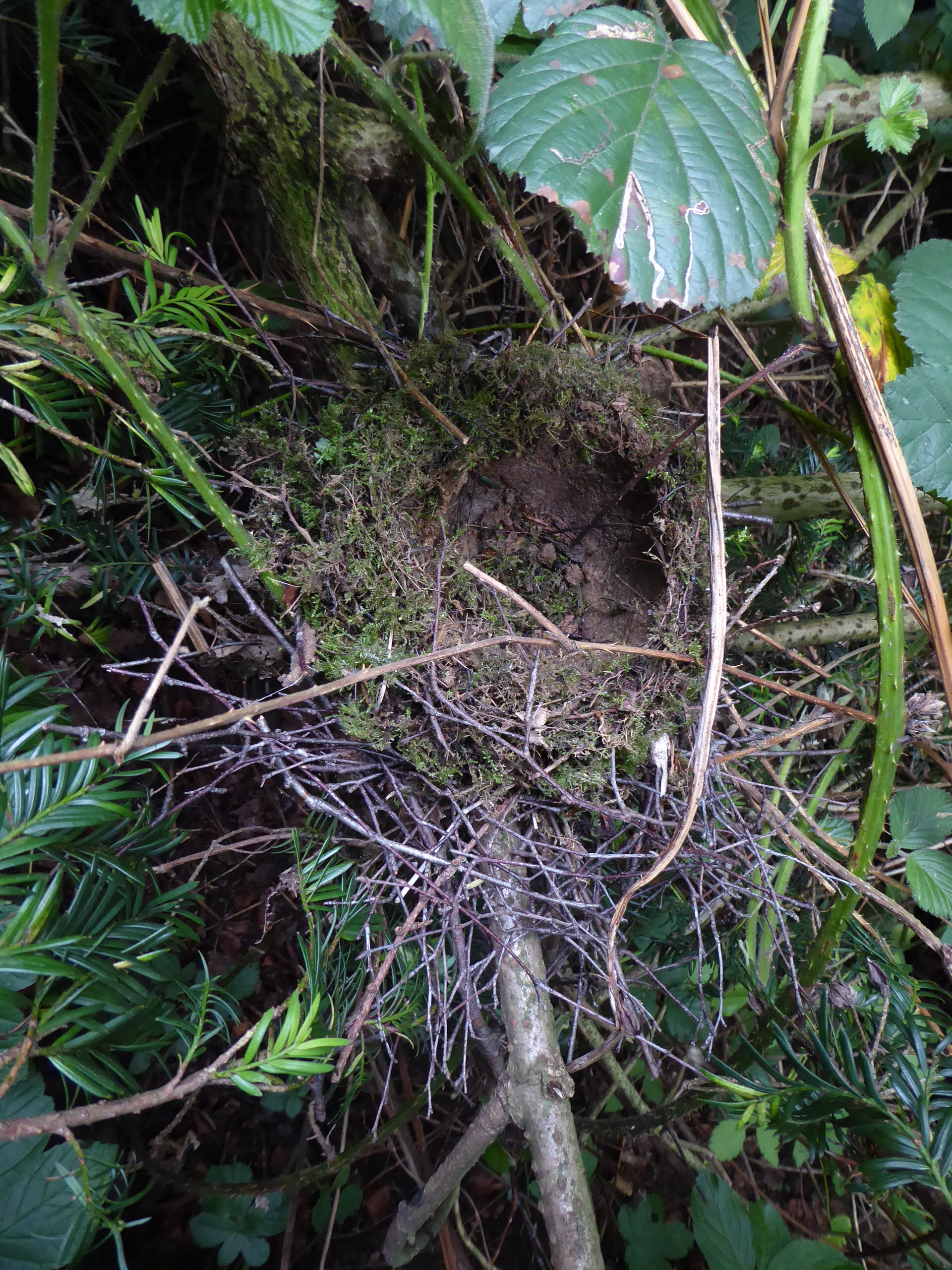
Mistle thrush nest?
One of the bonuses whilst filming was totally unexpected. Throughout the woods, there are hundreds of small holes in the ground. When planting trees I come across them and unearth tunnels in the soil. Some have mounds of soil around them, some not. I had thought the larger mounds were caused by moles but was puzzled about the smaller ones, or those that are absent of mounds. I have never seen any mammal activity at these holes and have been quite disappointed. I wondered if they were made by voles. As I walked around with the action camera, I came across one of these holes and I got closer and tilted my head towards it just to get a shot of it for the record. A small brown rodent popped out for a split second, spotted me and bolted back down the hole. It was a fleeting, surprise view that almost made me jump and I think I saw a long snout which suggests it was a shrew. I have checked information on the internet and am sure that’s what they are. The animal was similarly surprised and puzzled by my presence and is no doubt Googling to find out what I am!

