
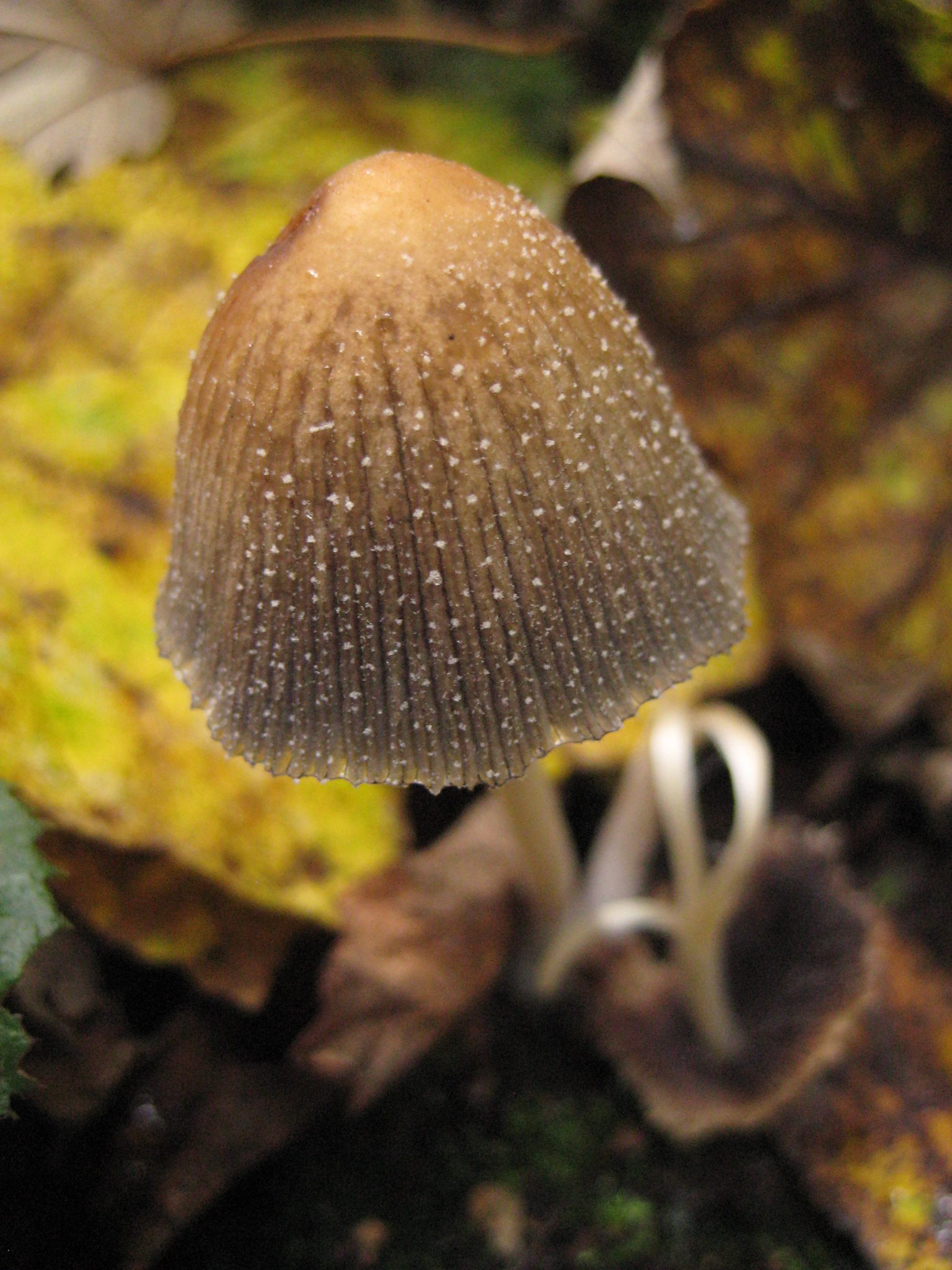
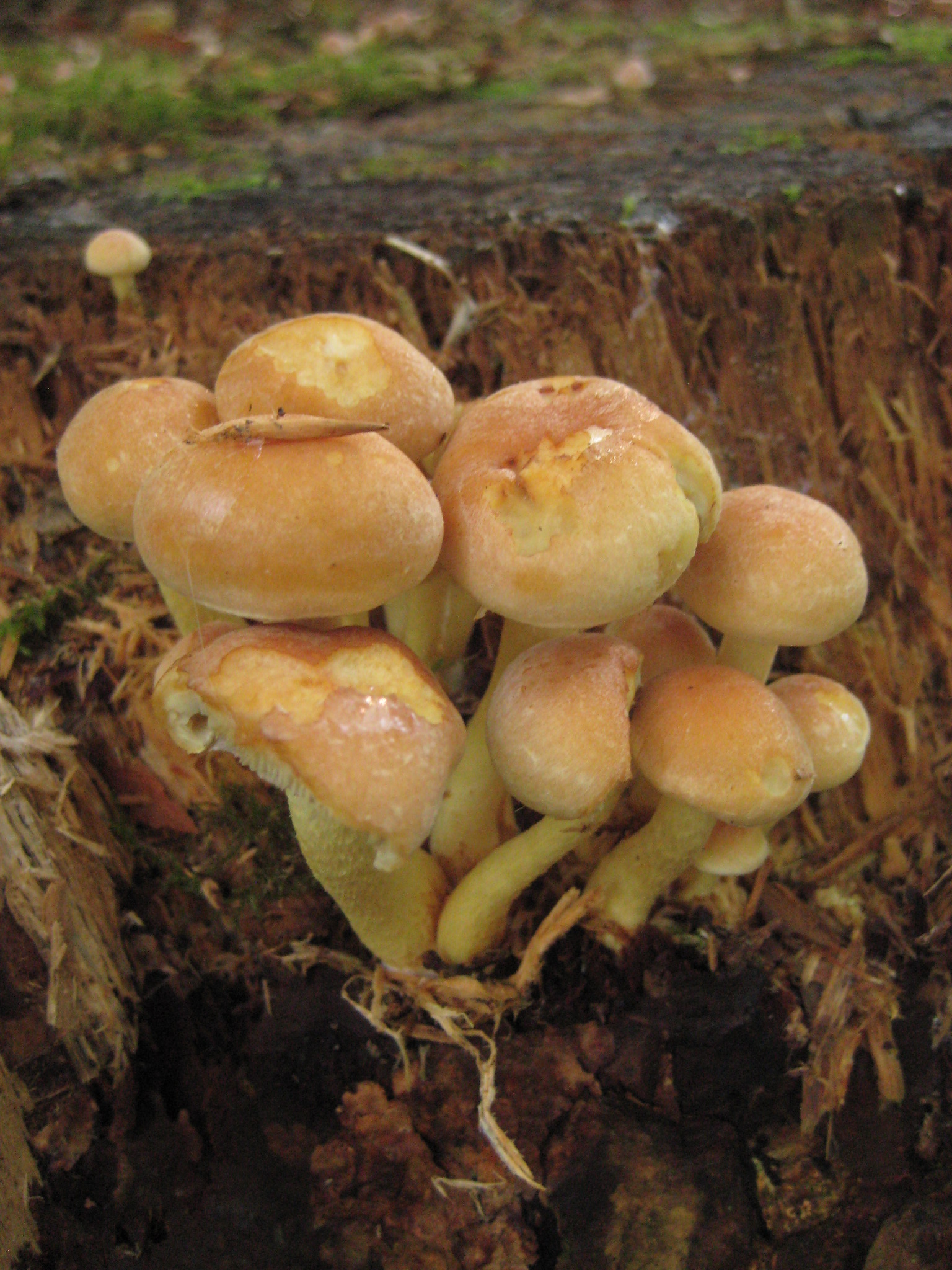
fungi growing on a dead tree stump
Couldn’t wait to get back into my woods. Been a stressful week and in much need of some woodland therapy. Autumn is approaching and the wood is changing. There’s still a lot of green around but the sycamore are starting to drop their leaves and numerous flushes of fungi are to be found, though I haven’t learnt how to ID many of them yet. My aim on this visit was to continue clearing the top NE corner by brushcutting a big section of the brambles around the trees I have recently felled and the ones I will be felling next. You really need to have good access around your trees when felling, brambles make excellent trip-wires and you don’t want that when the tree starts to fall and you need to “leg it” out of the way.
I started my day’s work by cutting up the remaining brash from the last visit and piling it into the dead hedge I started. It’s starting to take shape and gain some height now. I was really pleased to watch a tiny wren investigating it later as I stood to survey my day’s work. Build it and they will come. They love to bob around in dead branches and that was one of the reasons for building it. I’m hoping something might build a nest in it next spring, blackbirds and robins also like hedges for nesting.
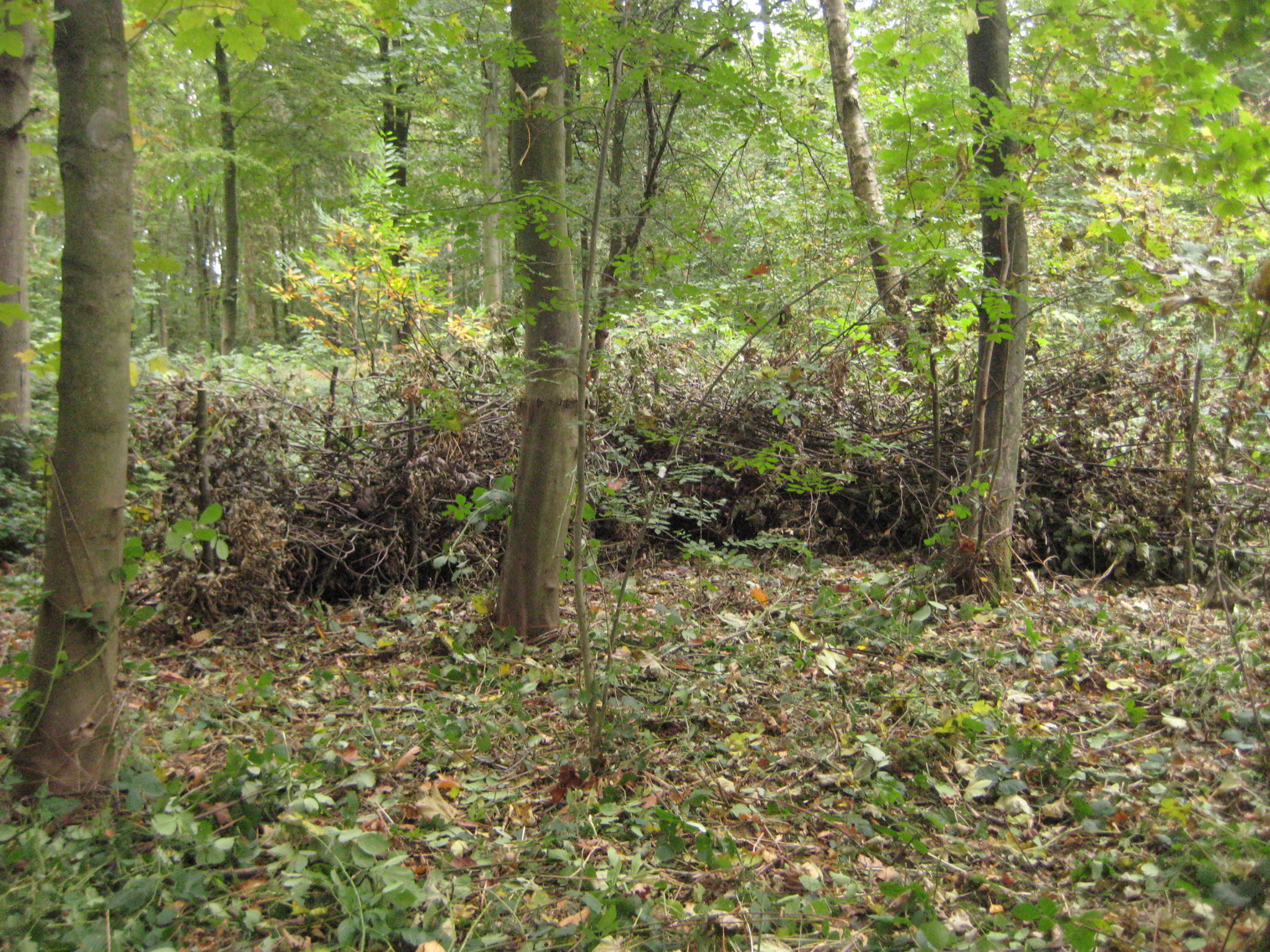
brash dead hedge starting to take shape
I managed to clear quite a large patch of brambles by the end of the day. The result looks sparse now, no ground cover, just chopped bramble and the tree trunks but I know it will start to bounce back next spring now that the extra light can get to it. The bramble will have to be cut again when it starts to regrow and part of the day was spent going back over areas I did last winter that have regrown. Now the next paragraph and photo are a bit gruesome so those of a nervous disposition look away now!
I spotted a patch of something grey near my rest area and went to investigate. It turned out to be a male blackbird carcass and it was ripped apart and many of the feathers had been plucked and scattered around. It’s a sad sight because blackbirds are one of my favourite species. They are friendly to humans, have a lovely song and stay with us through winter. I rarely see them in my woods too, so seeing one dead and mutilated wasn’t the best bit of bird spotting. But in a woodland, life and death walk hand in hand. Everything is living off something else and I found some consolation in knowing that some other animal has benefited and found a meal (probably a buzzard or owl) and so will many smaller creatures as the carcass decomposes and returns to the earth. It serves to remind us of how fragile life is but how natural death is too. A subject that is very much on my mind these days. I took the gruesome photo because we shouldn’t shy away from this aspect and it will be interesting too to see how long it takes to disappear completely.
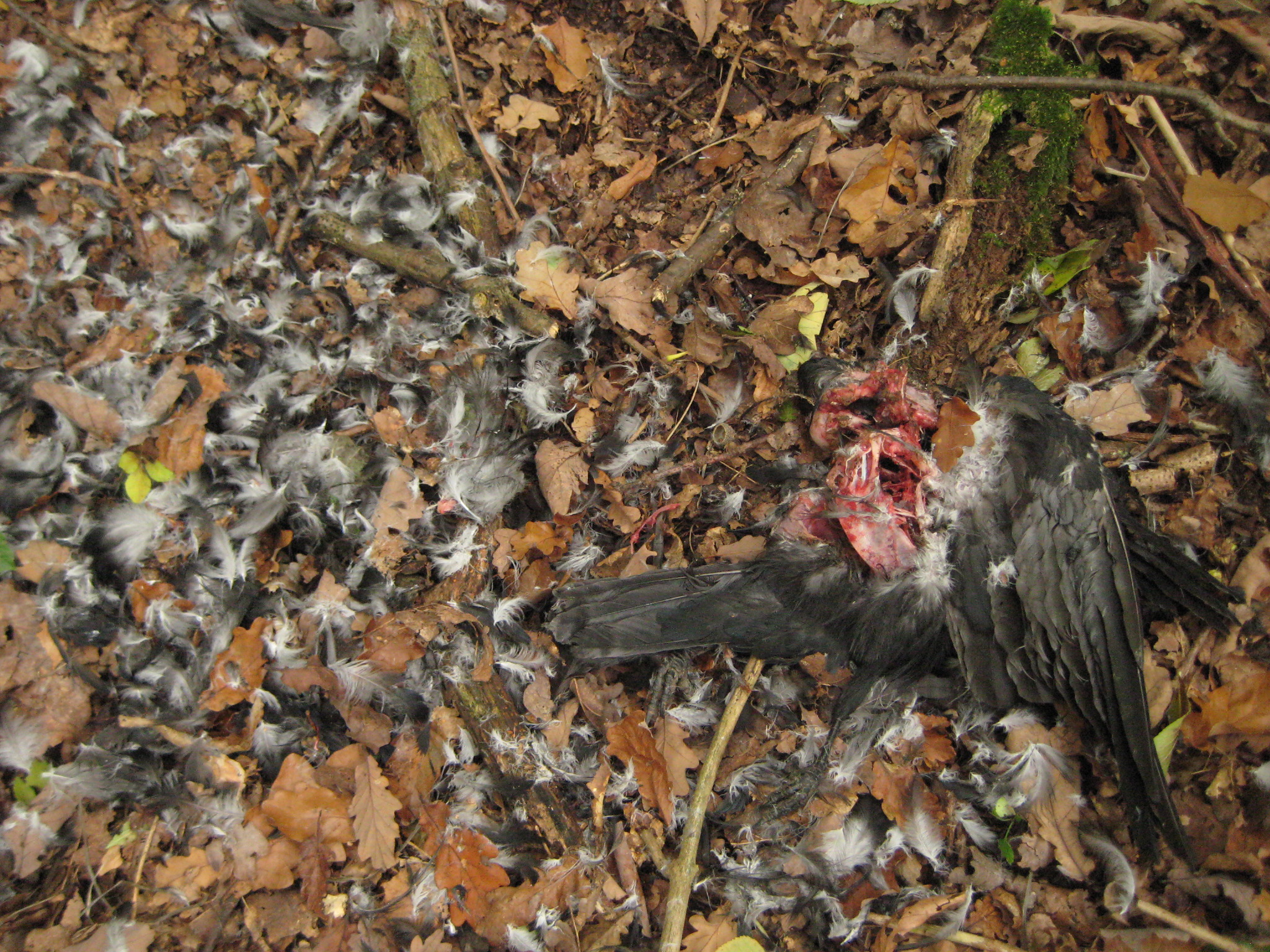
Blackbird carcass
On a lighter note, I had the pleasure of meeting some of my woodland owners, Janet & Simon who were working on their plot nearby. They are new owners too and have been making good progress, clearing laurel and making paths. Their wood is very different to mine, more of a coniferous woodland with lots of larch and pine. They kindly and enthusiastically gave me a guided tour. We enjoyed spotting other tree species that are growing naturally among the larch and their prize fungi which was three magnificent red and white spotted ones, like you see in fairy tale books. I was quite envious! We chatted for ages about our woods and I had to drag myself away to get some more work done but the social aspect of woodlots and having good neighbours to chew the fat with is something I enjoy. Until next time and if you have a woodland near you, go and take walk and see what you can find, it’s a good time of year to do it and you’ll feel more alive.

