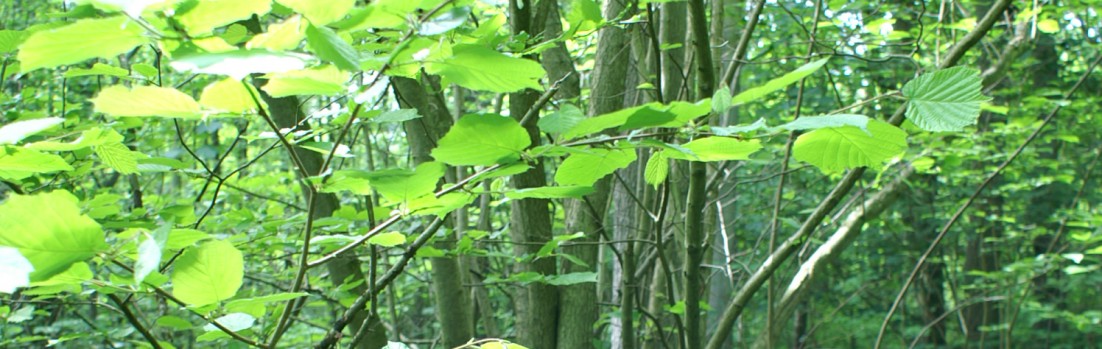
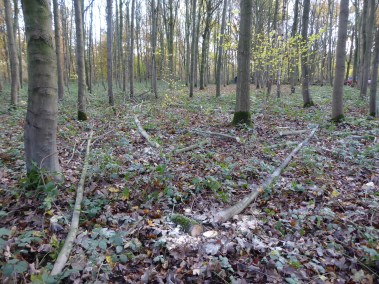
I picked a nice day again in between some really wet weather. The sun shone and it stayed dry all day. I had a long list of jobs to tackle but knew that achieving even half of them was wishful thinking. The two main jobs were building a new brash hedge near my logshed and thinning some sycamore around a tall oak tree. At the north of my woods is a plantation of sycamore which should have been thinned out years ago. They are about 50 years old now and tall but many are thin and sickly. My long term aim is to thin them and also create areas where other species can be introduced in order to start the process of converting it back to a more natural looking habitat. Somewhere in the middle is a solitary oak and I was advised to “halo thin” around it to “release the crown”. As the young trees grow in close proximity to each other, they jostle for light and space and eventually form a crown of branches and leaves. If you look at a mature plantation when in leaf, you’ll see that those crowns seem to fit together rather like a jigsaw. They each take up as much space as they can find before encroaching on a neighbour. At that point, growth seems to slow down. So where you have a tree that you want to favour and promote more growth, you can thin those around it to provide a sort of halo of space and light around it’s crown. So this is what I wanted to do.
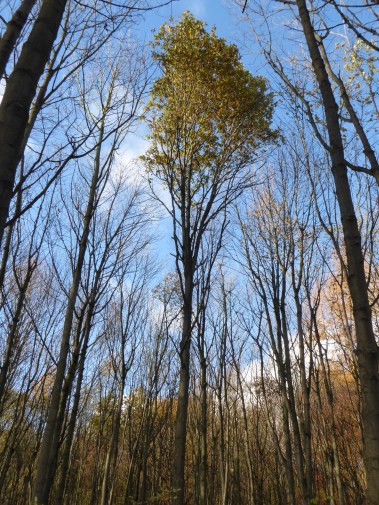
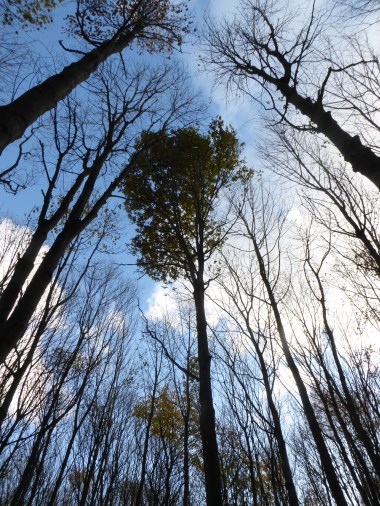
You can see how the crown looks small in comparison to it’s height. This is how all the trees look due to the close planting and lack of thinning. By giving it a little more space above, the crown should fill out and the stem should put on more girth. Of course the other trees nearby are going to try to do the same. I took down four small trees for starters but I reckon there are three bigger ones that may need to come down too in order to reduce competition. It set me thinking that it might be a good plan to take more down in that area, making this a focus for underplanting with some hazel.
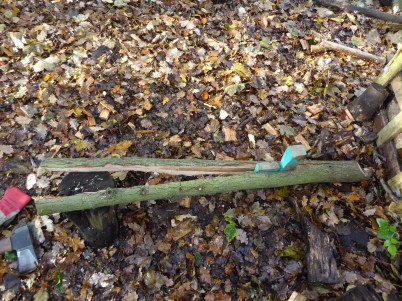
I took a few more small trees down in other areas, among them were two small and sickly oaks. My next job was to start the new brash hedge. I want it to be fairly long lived, as it is going to be at the side and rear of my logshed. So the posts for it, need to be of something that won’t rot quickly. I have loads of sycamore branches but that doesn’t last long in the ground. The oak does and I decided to try to split the two pieces to make four posts, using an axe and wedges. I’ve done it before with some ash and it was really hard work. Surprisingly the oak split very easily.
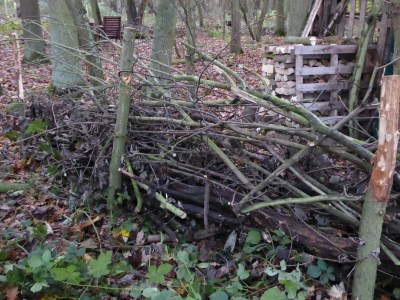
I love making brash hedges, they are so satisfying. Firstly it’s a way of using up the waste branches after felling, rather than burning it. Secondly is becomes a haven for all sorts of wildlife – fungi, insects, birds and small mammals and thirdly it is a natural looking feature that adds interest to the woods. I know there are mice and toads hiding in and around my logshed, so this will provide extra shelter that won’t be disturbed when I’m working. I’m hoping it will bring more birds to that area too, that I can enjoy when taking a break. I started by piling some biggish, rotten logs and branches for the base, hiding a few old terracotta plant pots among them. They could be potential nesting or hibernating quarters for toads and mice. On top of that is the more twiggy brash from nearby fellings. The hedge is only part built yet but this is what it’s looking like. As I was building it, an inquisitive robin landed on it to check it out, almost impatient to to start using it. As the line goes in Field of Dreams, “build it and they will come“.