
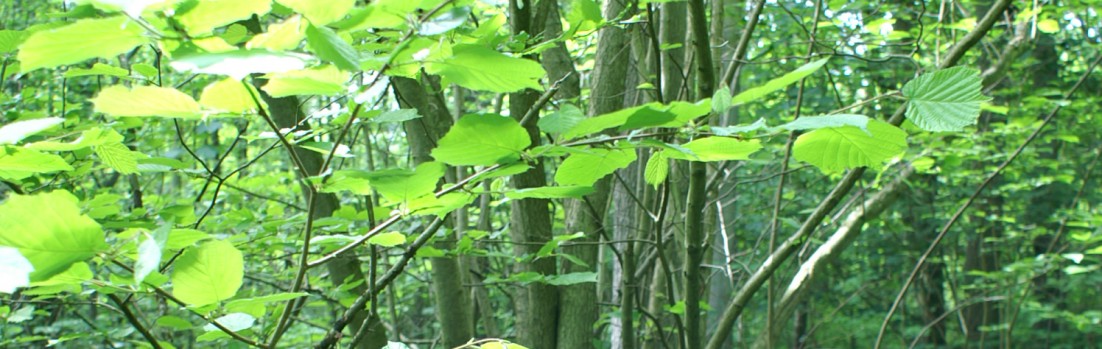
I was wondering what to use as my title for yesterday’s visit and noticed I had 99 posts so the 100th post seemed significant (but nothing at all to do with what I am going to write about). It’s a while since I was at the woods, having had a long weekend in “that” London as my Northern mate once described it. Last weekend was scuppered due to a central heating leak which needed my attention for almost four days. Yesterday was a coppice training day, organised by the Woodland Trust and one of the other owners (Andy) who has lots and lots of neglected hazel he wants to restore. He has very little knowledge of woodland management, so booked a professional coppice worker for the day (Alistair Hayhurst) and invited anyone else at the woods to attend.
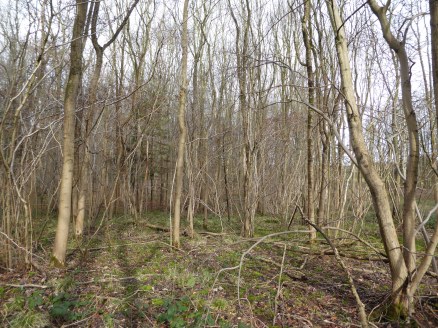
We were lucky with dry weather and I arrived early to try to get a few small jobs done first. After storm Doris a couple of weeks ago, I wanted to see if there were any trees down. I only found two, very rotten ones had gone. My shelter was looking a little worse for wear, I need to make a better roof and add some more logs to the walls. A job for summer time. I measured up for a potential extra shelter – just a simple plastic tarp strung up near the logshed to give some more cover for logs and my workspace when log splitting and maybe doing a bit of woodcraft.
It was soon time to collect some gear and walk down the long ride to Andy’s wood where the training was happening. Alistair makes a living as a coppice worker in Derbyshire. He makes all sorts of products from hazel and willow. Few coppice workers have their own supply of rods to harvest and have to buy it. How it works basically is that when a woodland owner has an area ready for cutting (usually every 7-10 years) workers interested in buying the harvest put in a bid, the highest is the winner. They then go in and coppice (cut it down to ground level) deal with the brash and take the wood away to be worked into their products, such as hurdles, fences, garden furniture, bean poles etc. An acre of hazel can cost £1000. Alistair also travels around giving demonstrations.
We were a small but enthusiastic group and the plan was for Alistair to demonstrate the cutting and layering of the hazel rods. We would then all muck in and “attack” an area, practising the techniques and clearing under his supervision. Here he is explaining how to layer a rod using a traditional tool – a billhook.
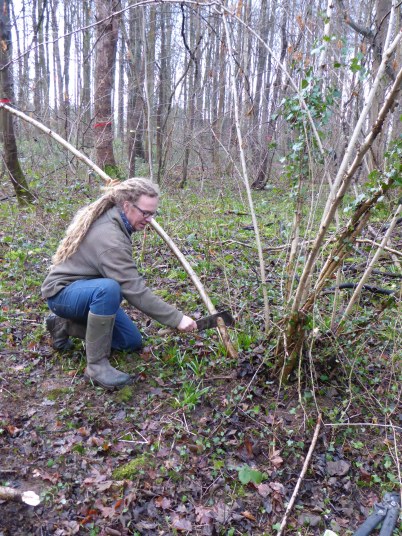
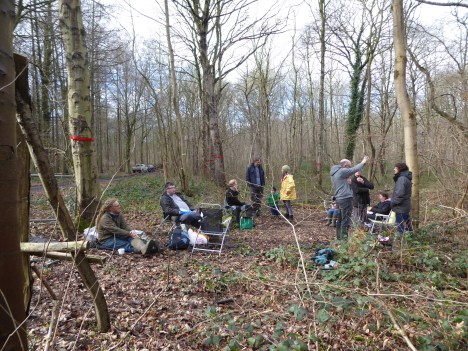
Layering is a way of producing new plants and increasing the stocking density of the area. You select a long straight rod, around an inch in diameter and partly slice through, near ground level until the rod falls to the ground but still attached to the base. The rod is pegged to the ground about six feet from the plant which will send new roots down. After a few years, the rod will have rotted away, leaving a new young hazel tree. The parent tree will have sprouted new growth ready for the next cutting. We had a break for lunch and sat in the winter sun, chatting and realaxing for a while.
After lunch we did some more coppicing, then a demonstration of how to split the rods using a tool called a froe and a sort of wooden frame called a cleaving brake which acts as a sort of vice to wedge the rods whilst you work on them. The reason for splitting them is to create more material for your products out of the rods you have cut. It’s a tricky technique and one that requires plenty of practice and patience. I learned a lot and really enjoyed the communal atmosphere of working together in the woods.
What about the surprise visitor? Earlier in the week, Andy had spotted something unusual lurking in my neighbours plot and posted it on our Facebook page. It was a Rhea. It’s like a small ostrich, native to S. America. It was bedding down for the night. It seemed it might have escaped from a nearby house where they were bred. The house owners said they hadn’t had any for over two years so has it been on the loose all that time, wandering the area and managing to feed istelf? Neither the police nor the RSPCA were interested in doing anything about catching and re-homing it, so it is till resident for the time being. I couldn’t find it but I’m hoping to see it next time if it’s still around. Andy tried to catch it but failed. The story continues.

