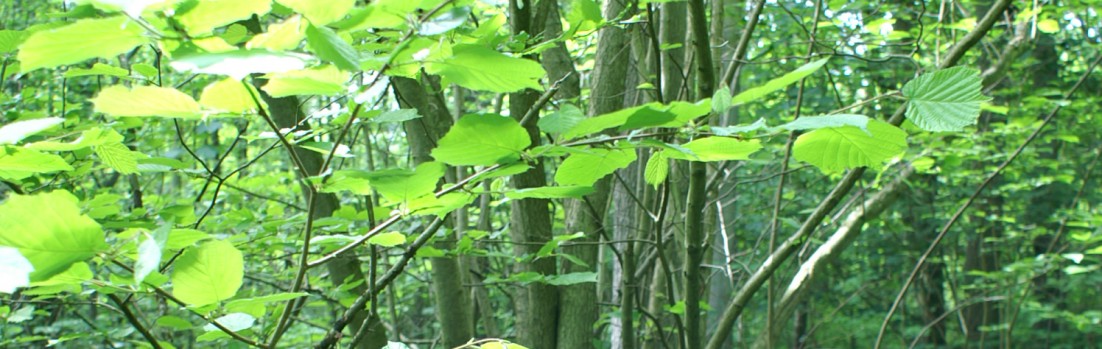
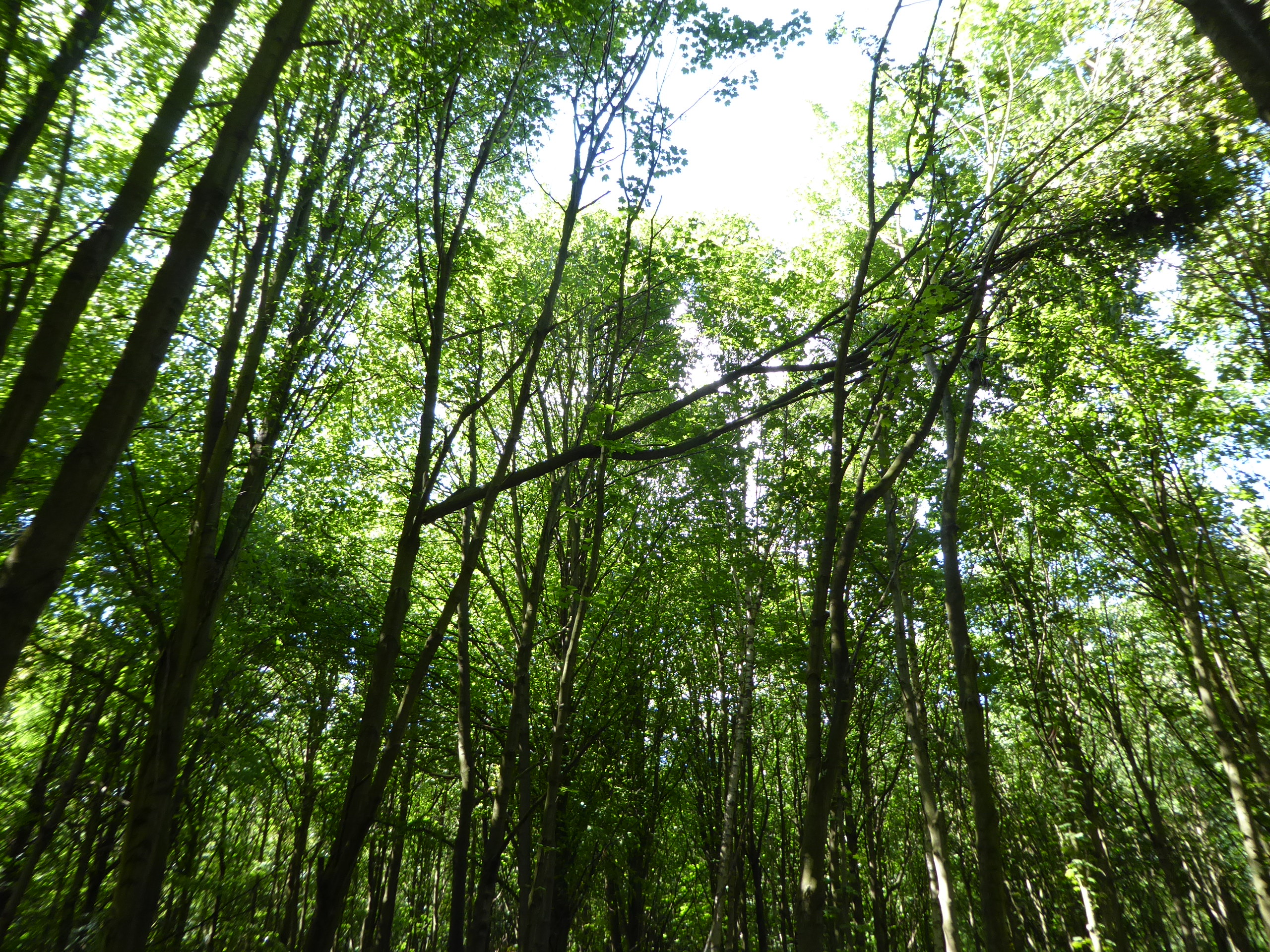
It’s been a wet and windy week so it was no surprise yesterday to find a few broken branches. This was the worst, where a large limb on one of the tall sycamore has snapped and lodged itself in a neighbouring tree. These plantation trees are very tall but quite narrow. It’s quite eerie when the wind gets up as they flap about in all directions and sometimes bang into each other making a loud wooden clap sound. I stay well away from them on those days.
It’s two week since my last visit but for some reason seems much longer. At this time of year, a lot changes in two weeks. The trees are now fully leaved which makes most areas quite dark. The ground cover has shot up and brambles are sending out massive long leaders. The recent rain has softened the earth though, making it fairly easy to pull them up by their roots. I had a a couple of hour-long sessions just doing that and it’s surprisingly satisfying, though hard work and at times painful – they fight back!
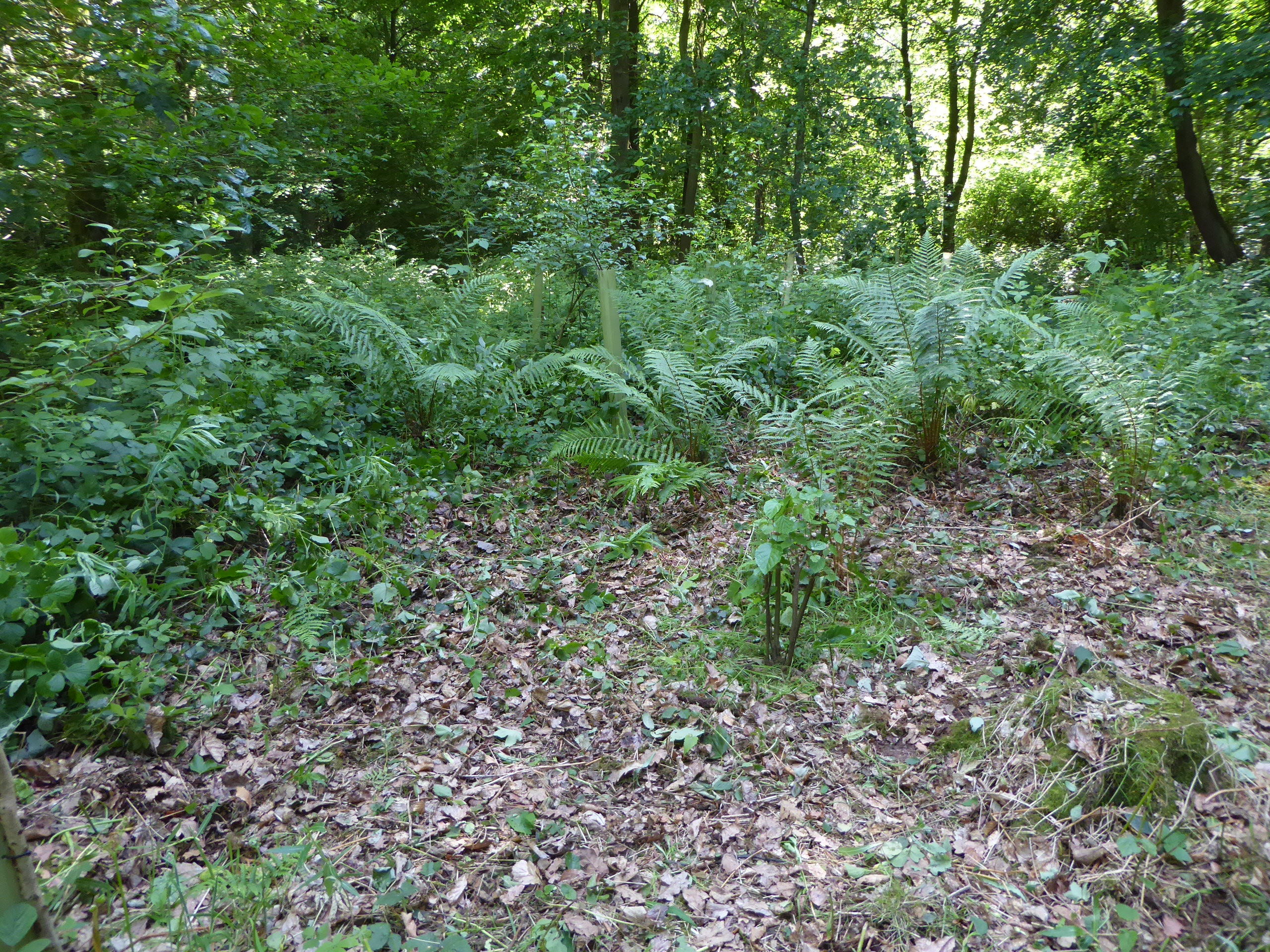
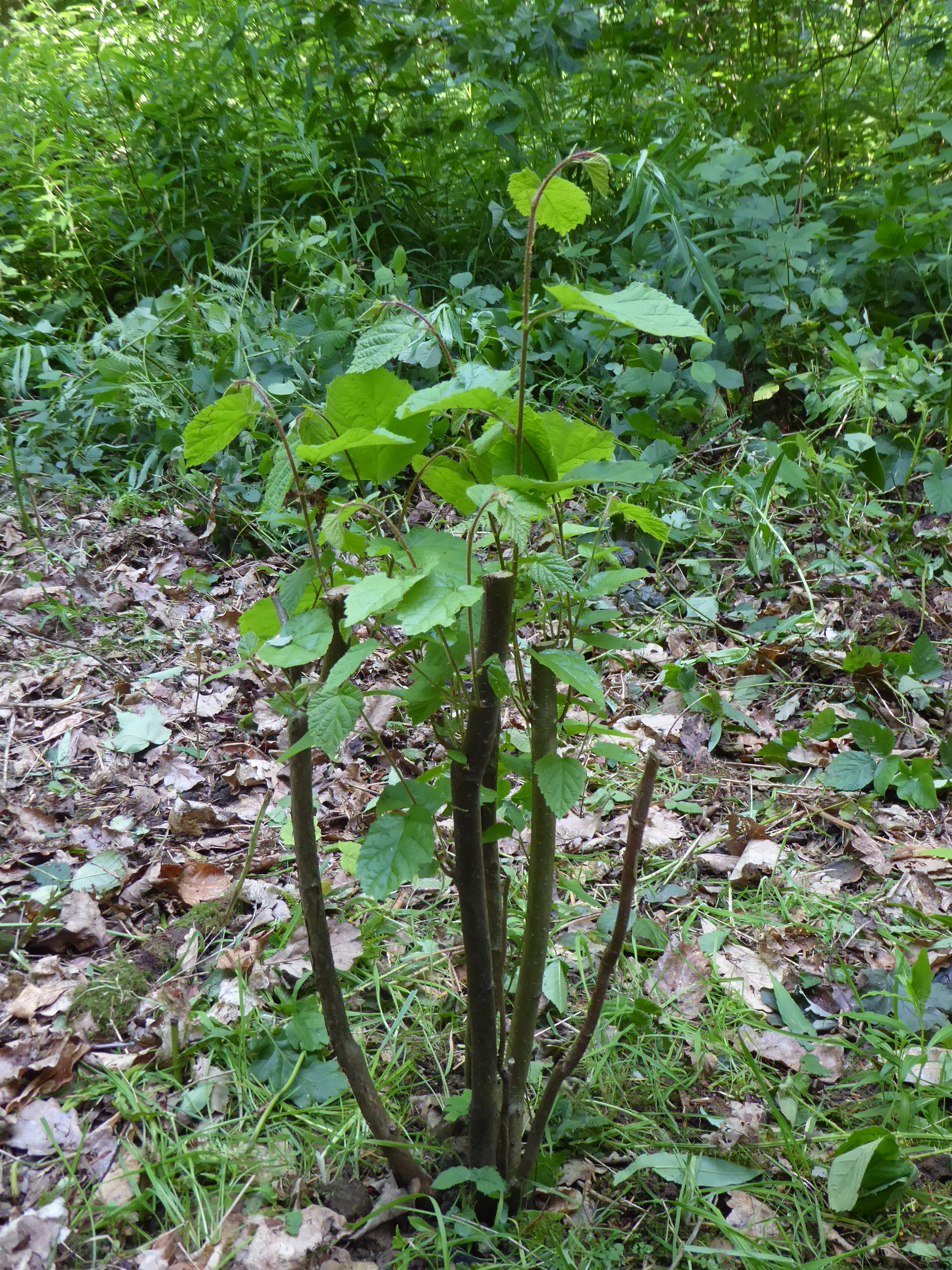
This is one of the areas close to my camp. The bramble and willow herb were swamping these beautiful ferns and the small hazel in the foreground. I’ve brushcut this area a few times which has definitely encouraged lots of new, different ground cover species and the ferns are flourishing with the extra light but the brambles don’t give up so easily. So pulling them by the roots is my main strategy now.
The small hazel is one of the plants given to me by a friend whose partner had dug them out of her garden. I was quite late planting them and they were bare rooted and had lost most of their small fibrous roots, so there was some doubt as to how well they might recover – if at all. They would need to make new roots pretty quickly in order to take in water to feed the new leaves which would soon be sprouting. I purposely left about 12 inches of old stem which would be holding water and energy to help them through the first recovery stage. It’s been a very dry spring which is not what they needed. I’ve watered them whenever I could but it was never enough. Well so far so good, I’m pleased to say they seem to be doing very well. Simon R. – please report back to Jane and show her this photo.
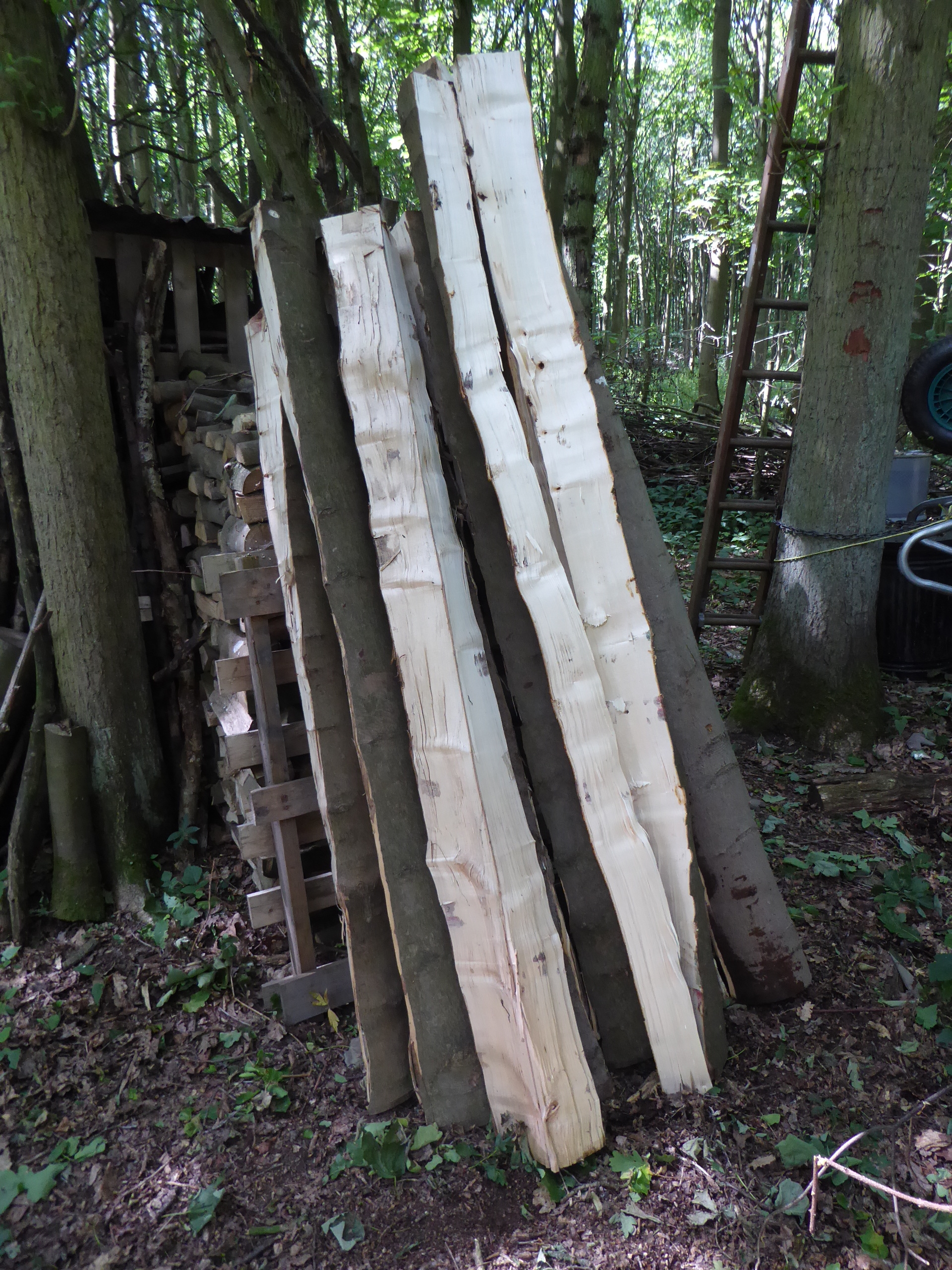
The other main job I planned, was to continue splitting down some of the large sycamore logs, hoping to be able to use them as stakes for the deer netting. Well sycamore isn’t a particularly good timber for that but as I have lots and lots of it, I wanted to see if it was feasible. The verdict is – debatable. Some of it came out as useable but much of it didn’t. It’s hard work and time consuming so is it worth the effort? Probably not but here’s a picture of the pieces I worked on. Much of it is too thick for stakes and to try splitting further will probably result in pieces that have “run off” i.e. not split evenly along the full length, ending up with shorter and unusable shapes. These pieces shown might be used for the other walls around the composting toilet so not a wasted exercise.
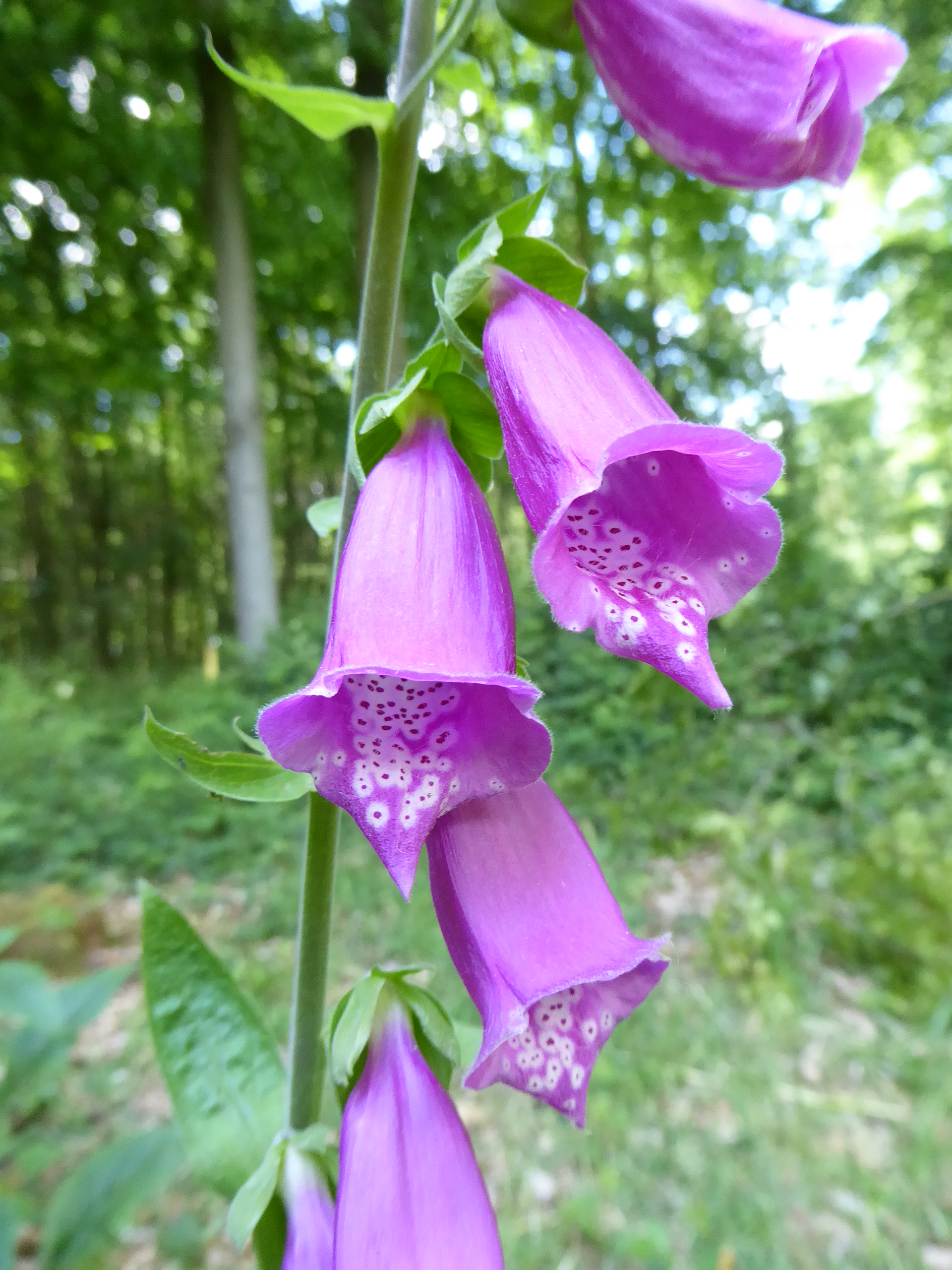
Finally, I mentioned how the ground cover has benefited where bramble has been controlled to a degree. I have tried to improve these areas with the odd bit of wild flower planting, to help nature. Two years ago I dug up a couple of foxglove plants that had self-seeded in my garden at home. I planted them around my camping area to add some colour and and foraging opportunities for bees and other insects. I’m pleased to see that they survived and have even spread a little bit. The bumble bees love the flowers and so do I.