Yesterday I had the pleasure of some company and help from my good friend Phil who also owns a small woodland in another part of the country. He is a real woodlander and lover of nature and also an expert bushcrafter. We can talk all day about the subjects and not get tired and the wonderful thing about knowing someone like that is that they understand how you feel about it all without having to explain it and with no danger of boring them to death. They “get it”.
There’s something really special when you can properly connect with nature and I’m sad to say that most people have not experienced that. Probably because we live in such a “developed” environment and have become too comfortable with our cosy homes, cars etc. I think that given the chance, most people could find that connection. It’s not too long ago that all our ancestors had it and there’s probably some sort of genetic memory in us all that is still lurking and can be triggered when given the chance. Some people have a natural leaning towards it and actively seek it out in their lives in different ways, not necessarily on a conscious level. Look at how popular hobbies such as angling, walking, landscape photography, climbing, mountain biking etc are. They all allow you to connect with the natural world and make you feel good.
We started the day with a short guided tour, then decided a fire was the order of the day. We foraged for some dry tinder and twigs and soon had a fire crackling away and the kettle on. That shared activity of working together to create the life sustaining warmth of a fire also resonates deeply in my ancestral, archived memory bank.
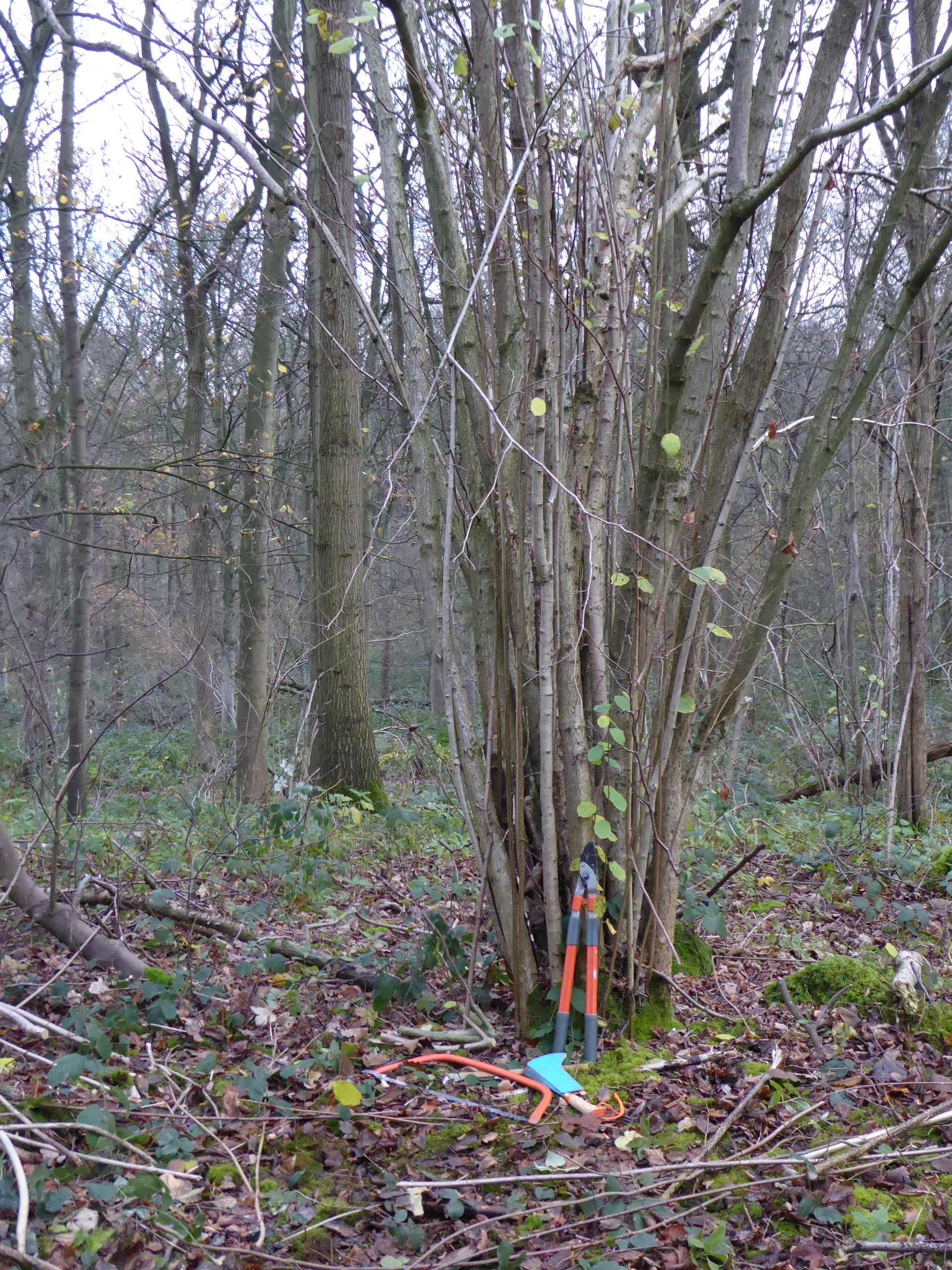
There were two, large overstood hazel trees that I wanted to coppice this year. They are on the edge of the area I have already done and have plenty of light now, so should respond well to regrowth. Although hazel trees look small in comparison to the larger standards, they are often trickier to cut down when neglected like this. The multi-stemmed nature means that they usually get stuck in nearby trees and also have a tendency to twist as you cut them, often trapping your saw. It’s definitely easier with a helper. This is one of the trees before we attacked it. The photo doesn’t convey just how much timber is in it but each of those branches probably reached a good 25-30 feet high.
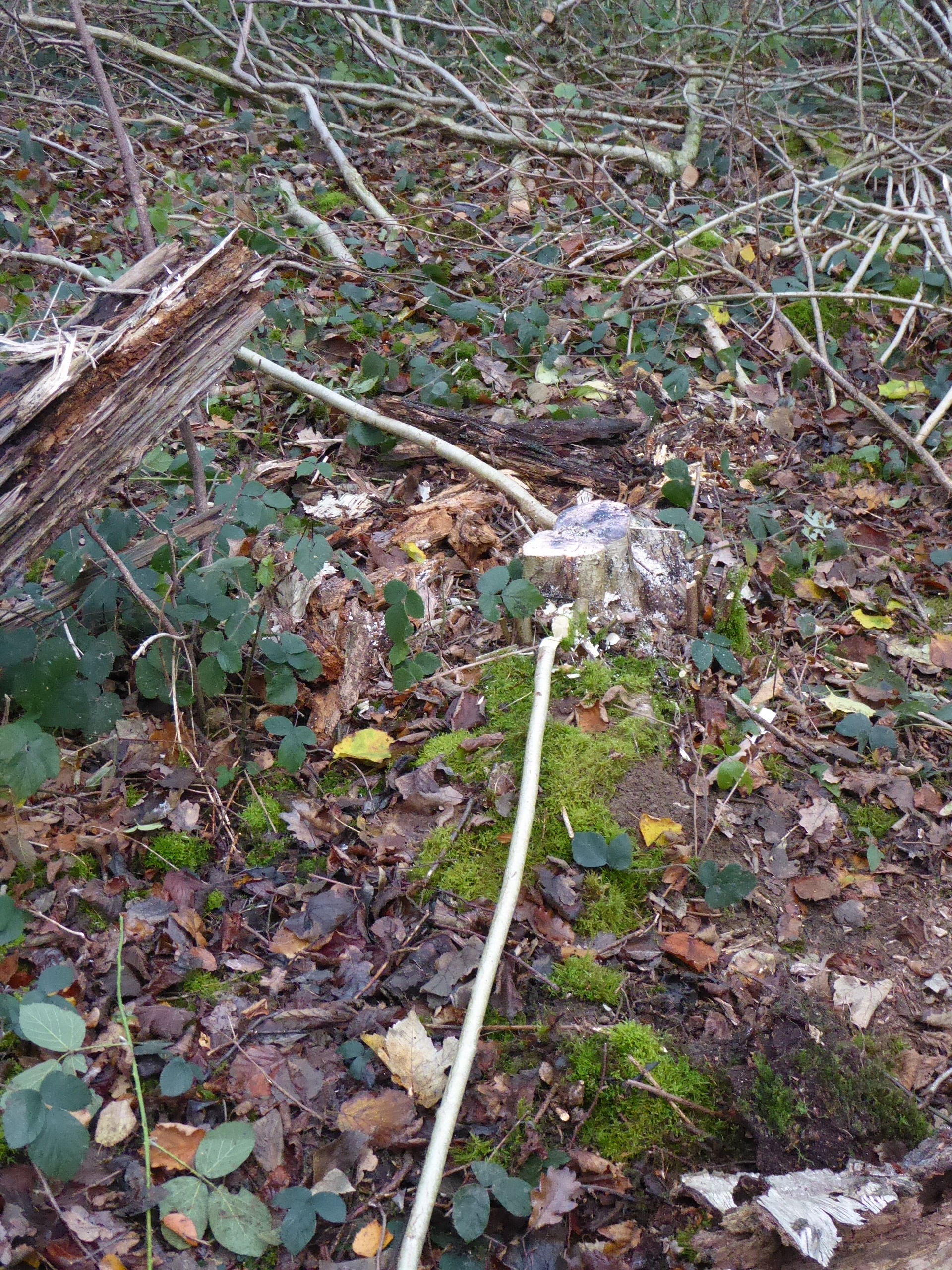
I wanted to have a go at layering a couple of branches to create new plants. It involves partially cutting through the stem low down, then letting it fall to the ground and pegging it down twards the end. As it’s still partially attached, the parent tree will continue to feed it but the stress of it will cause the pegged stem to throw down new roots. In a couple of years you have a new tree and the old stem attaching it will rot away. You can see the newly coppiced stump and two layered stems in this photo.
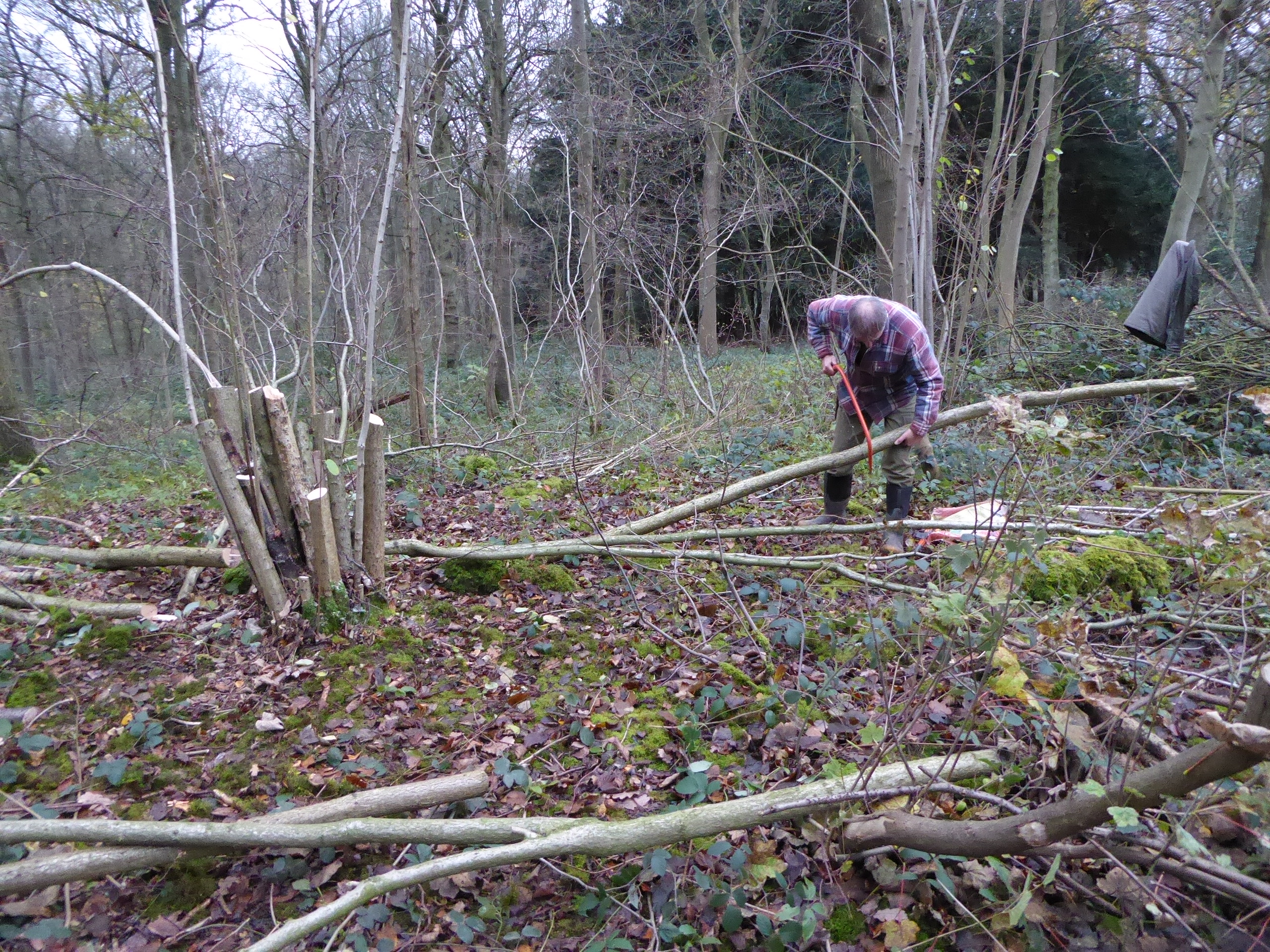
We spent an hour or so cutting up the felled branches and stacking them. There’s still some brash to clear and some tidying to do but we got the hardest part done. I am very thankful for the help and we both enjoyed working together, doing what we truly love – working with nature. The process of coppicing looks brutal but it is beneficial to the tree. Left alone it would die off in a couple of decades or so. By cutting it back, it resets it’s biological clock and stimulates new growth, lengthening it’s lifespan. Here’s Phil hard at work. Happy days!