
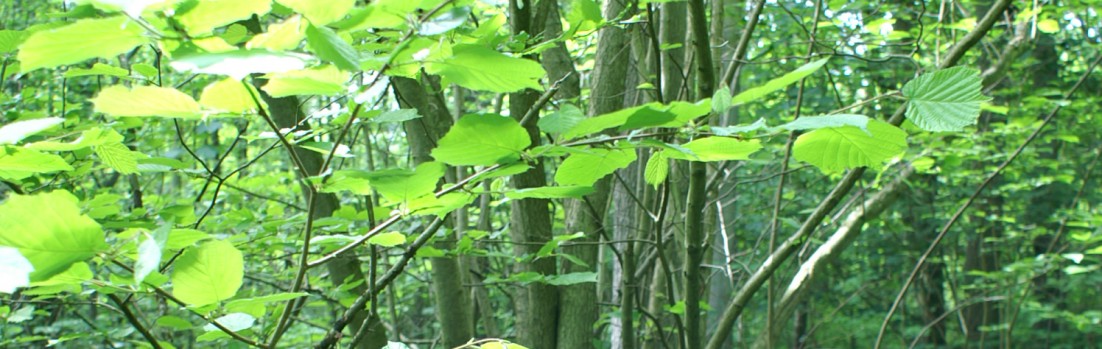
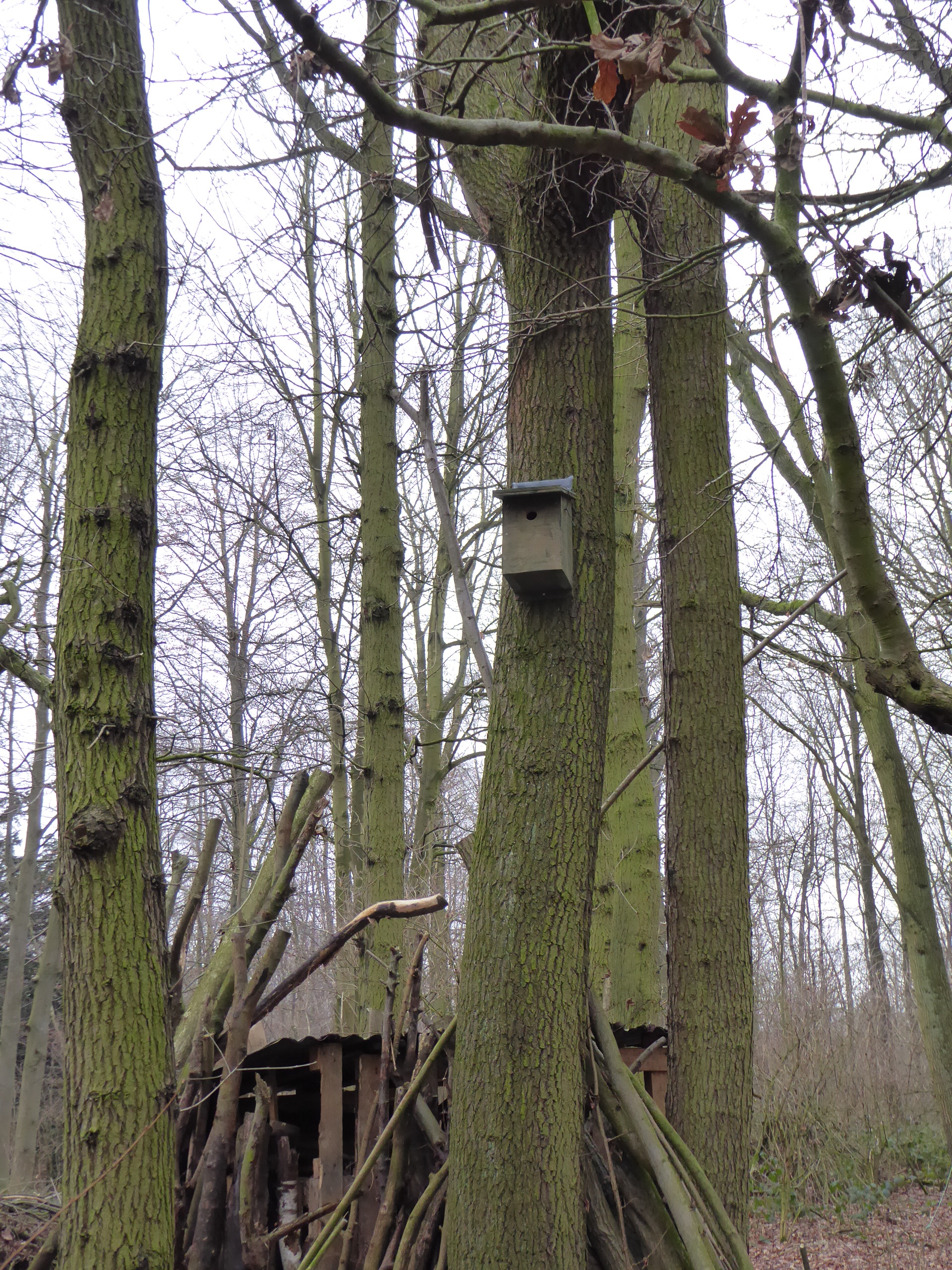
Saturday was dull and incredibly grey but little sign of rain. I’d made three new bird nest boxes last week. Two were slightly bigger than usual and intended mainly for nuthatches. I recently discovered that there’s no necessity to place boxes high up, other than to prevent people looking in and disturbing them. Most small birds prefer to nest low down anyway and as my woods aren’t open to the public, it makes sense to place them low enough to reach without using a ladder. However the nuthatches do prefer to be higher. This is one of my new boxes in position near my logshed and work area now. Last year a pair used an old woodpecker nest nearby. I often see them in this particular area so there’s a good chance of them using it. It’s close to where I often sit for a coffee break, so I can watch them come and go.
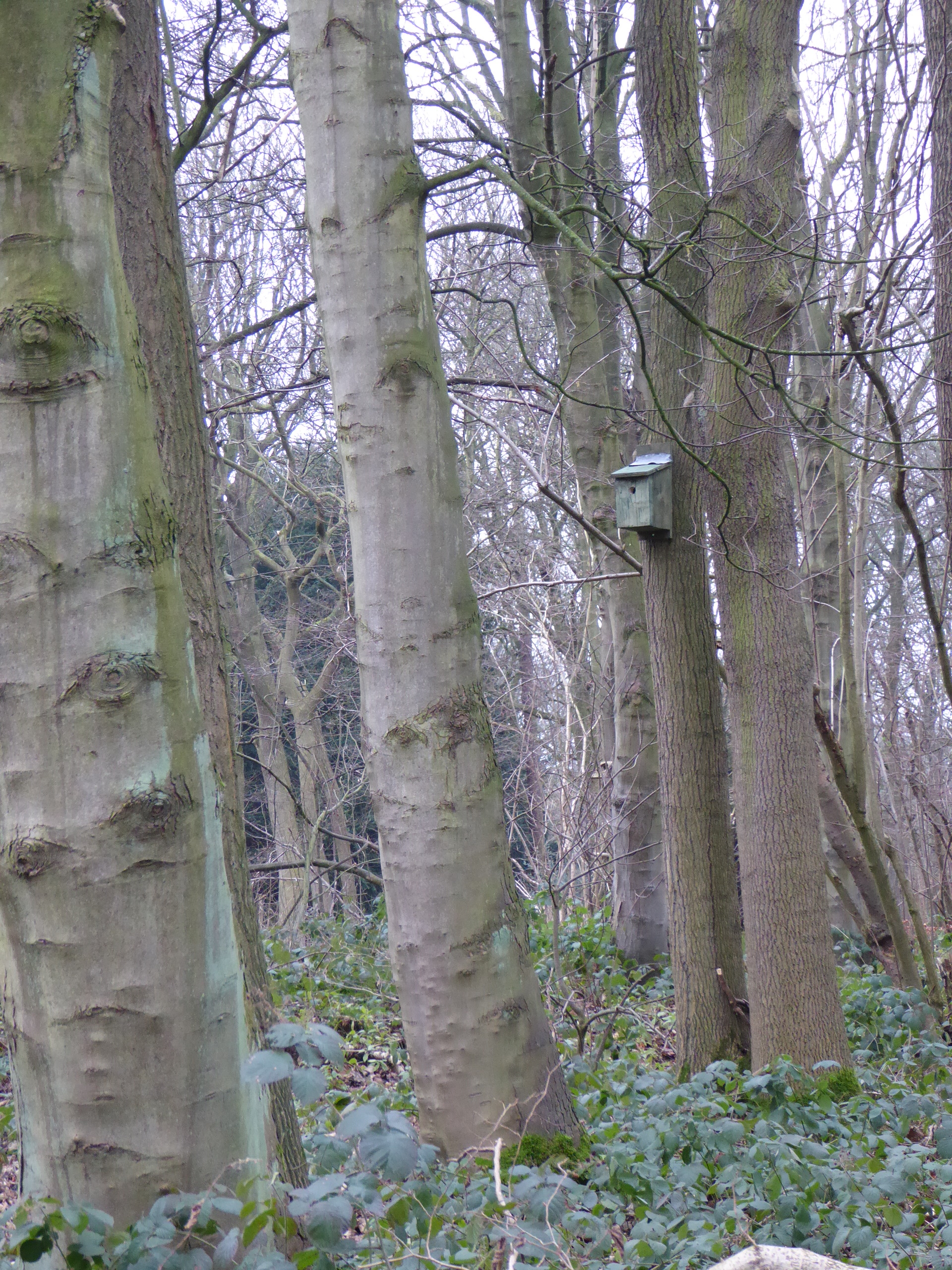
I thought it a good idea to go around all the other boxes, look inside to see if they were used last year and clear out the old nesting material in readiness for the new season. I had ten boxes and eight of them had been used. They would probably all be members of the Paridae family – blue tits, great tits or coal tits which are common here. Sadly one of them contained about eight tiny skeletons, so either the parents abandoned them or were killed by predators – owls, buzzards etc. Two of the boxes had fresh fecal matter, suggesting that birds were using them for nightime shelter during the winter. Many small creatures were also taking advantage – a queen wasp, a yellow coloured ladybird, spiders, millipedes, and various unidentified larvae. So the boxes are useful in many ways. The two boxes that weren’t used have been repositioned by stuffing them low down into the brash hedges. Robins and wrens might make use of them as they like overhanging cover. This is the other new nuthatch box.
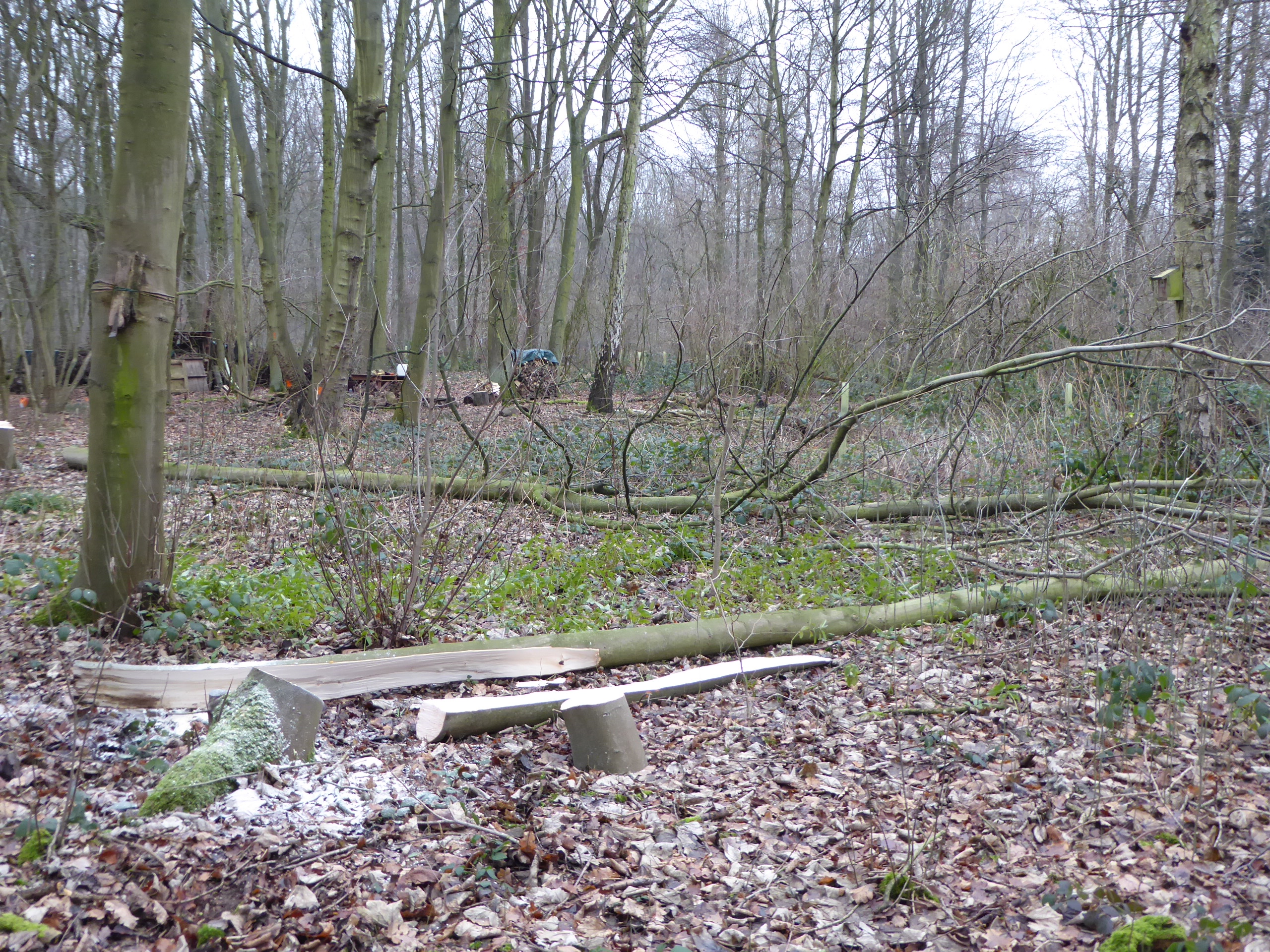
The other main job was to fell some more sycamore. My next door neighbours were in which was reassuring when using the chainsaw. We help each other out when trees get hung up which is a regular occurance. The first one was easy and came down where planned with no fuss other than it “barber-chaired”. A term used when tree stems unexpectedly snap off above your cut. It causes the bottom of the tree butt to pivot backwards on the fixed portion rather like the old fashioned barber’s chairs when they laid the customers flat for shaving. It’s dangerous and the reason you should not stand directly behind the tree when cutting. It was my fault, my lack of expertise. My back cut was too low. Must try harder!
The second one was much bigger and judging where it’s natural lean was and planning the cuts so it fell where I wanted it to, quite challenging. As I make the back cut and it gets close to the front “gob” cut, I usually pause to see how far I am and if my cut is parallel. This time I noticed the cut had opened slightly, suggesting the tree was starting to go. You daredn’t look up while cutting with the chainsaw, so it’s the only sign you get and time to stop and retreat to see if it falls. It didn’t fall but had started to lean. This is the part that is most nerve-wracking for me because it’s unstable and I have to get close again and take action to get it to fall. My first method is to hammer a wedge into the open cut but if that fails I have to take another small cut with the chainsaw. It fell with a reassuring crash exactly where I wanted it to. The feeling of exhilaration and relieve that it is safely down and I am uninjured, might be similar to what people get when participating in extreme sports. The “barber chair” can be seen in the foreground and the deceptively large tree behind. They look like large sticks in the photos but scale is misleading. Bare in mind they are probably forty to fifty feet tall.
One more to go and this one was at the top of the woods and would need to be felled partially across the track/ride. One of my neighbours watched out for anyone walking while we attempted to fell it. The base of the stem had a steep curve which would make it’s natural lean opposite to where I wanted it. Rightly or wrongly, I decided to cut above the curve, taking it out of the equation. It’s not probably how a professional would have done it but it made sense. However, cutting at face level feels very wrong. This one got hung and seemed to be still joined by a sliver. Wedgeing the cut proved useless. Taking a few more centimetres out with the saw didn’t help. By far the most comfortable option is to sling a rope around it as high as you can and pull sideways to dislodge it from neighbouring branches. It’s usually a case of rhythmic pulling and releasing, to get a nice swing going. I spent half an hour snedding and tidying up the ride. I was tired and it was time to quit while winning. I pottered for half an hour or so, taking the luxury of just looking at my woods. Standing quietly I spotted numerous small birds – tree creepers, nuthatch, various tits and a robin. They are quiet at this time of the year, so unless you stop and observe, you tend not to be aware of their presence. Birds are my favourite creatures.

