
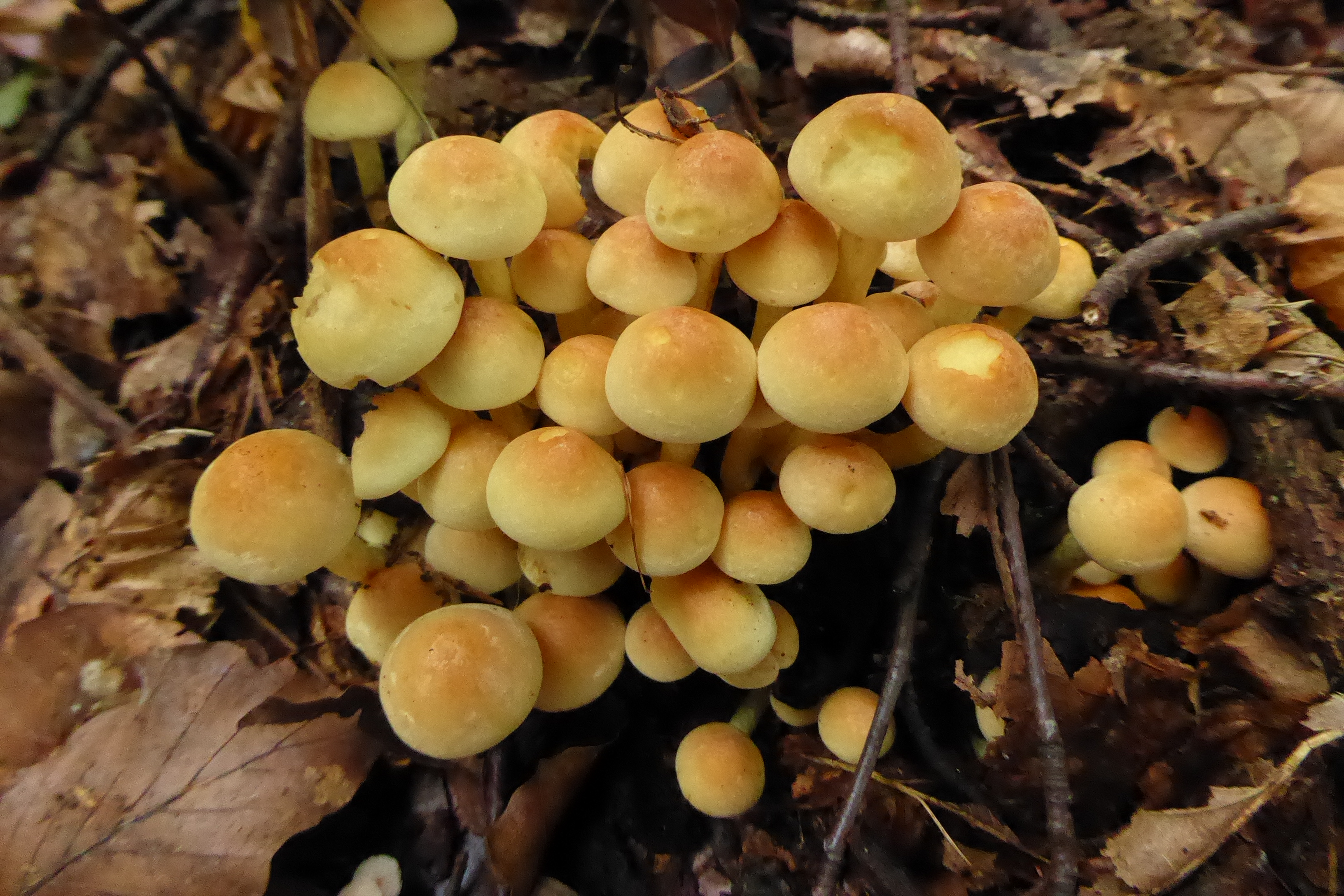
above – Sulphur Tuft (Hypholoma Fasciculare) fungi on a dead tree stump.
We’ve just had a few days caravanning in Southport on the Sefton coast and the sight of thousands of pink footed geese flying in formation as they head out to the salt marshes at dusk everyday is awe inspiring. It was the last morning of the mini break and as I head to the toilet block, I see and hear them returning inland. On a cold October morning, a warm toilet seat is a mixed blessing! I try not to think too much about who the last occupant might have been and turn my thoughts to going home, inspired by nature then another visit to my woods.
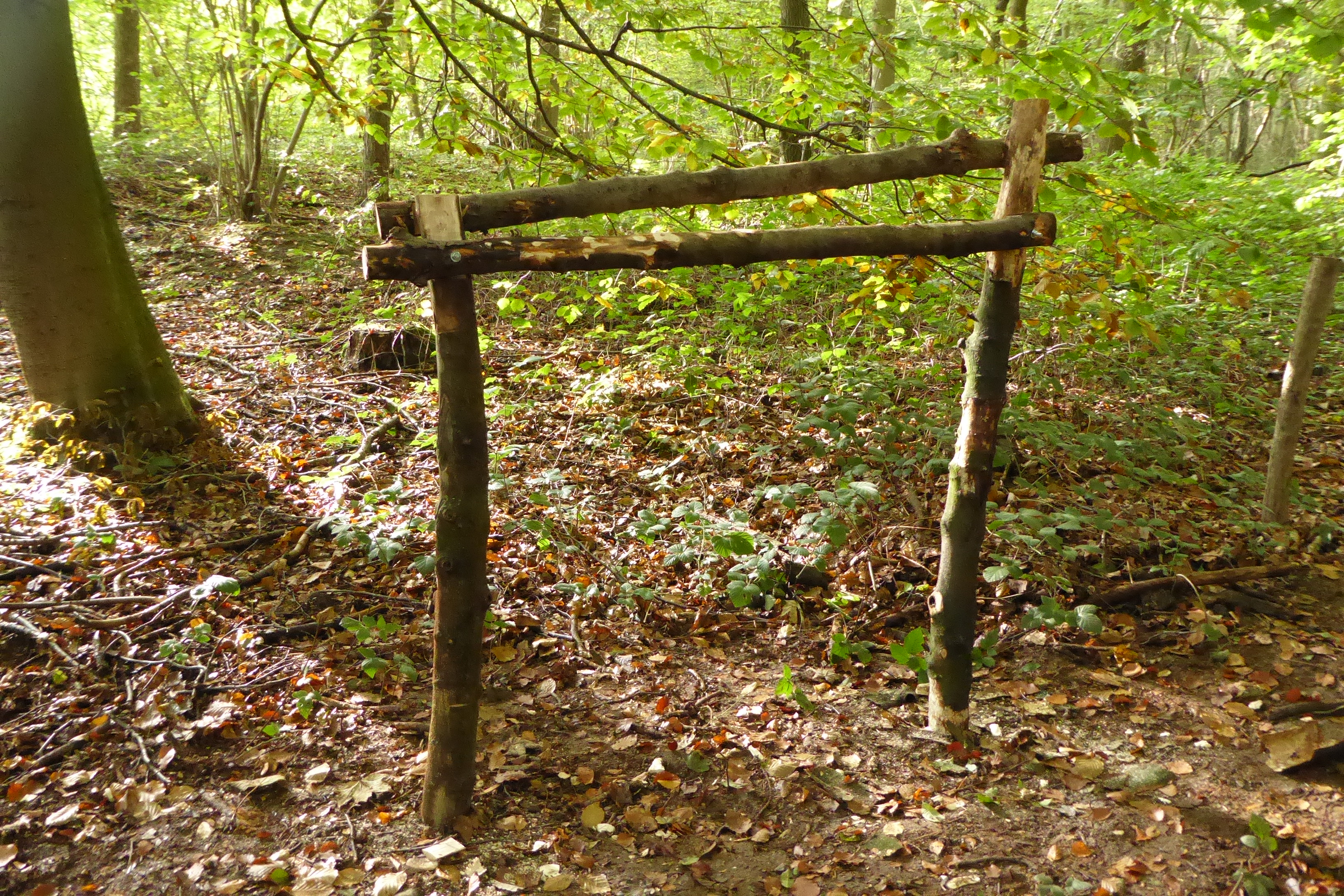
It was dark and drizzly when I left home to go on Saturday but I was ready for another visit and had a few tasks in mind. Last time, when I was preparing the hazel rods for basket making, I discovered that the riving break used for splitting rods, had rotted away. I needed to make another. I also wanted to do a few little jobs at the pond which is next to my workshop/shelter. It was still drizzly, so an ideal place to spend the day.
The riving brake consists of two upright posts with two horizontal ones, angled to form a shallow triangular shape. When splitting hazels rods for example, you place the rod between the horizontal poles which allows you to bend it which is needed when splitting them. It’s also called cleaving or riving them. The triangular shape allows you to put rods of different diameters in it. There’s still a few finishing touches to do but this is how it’s looking.
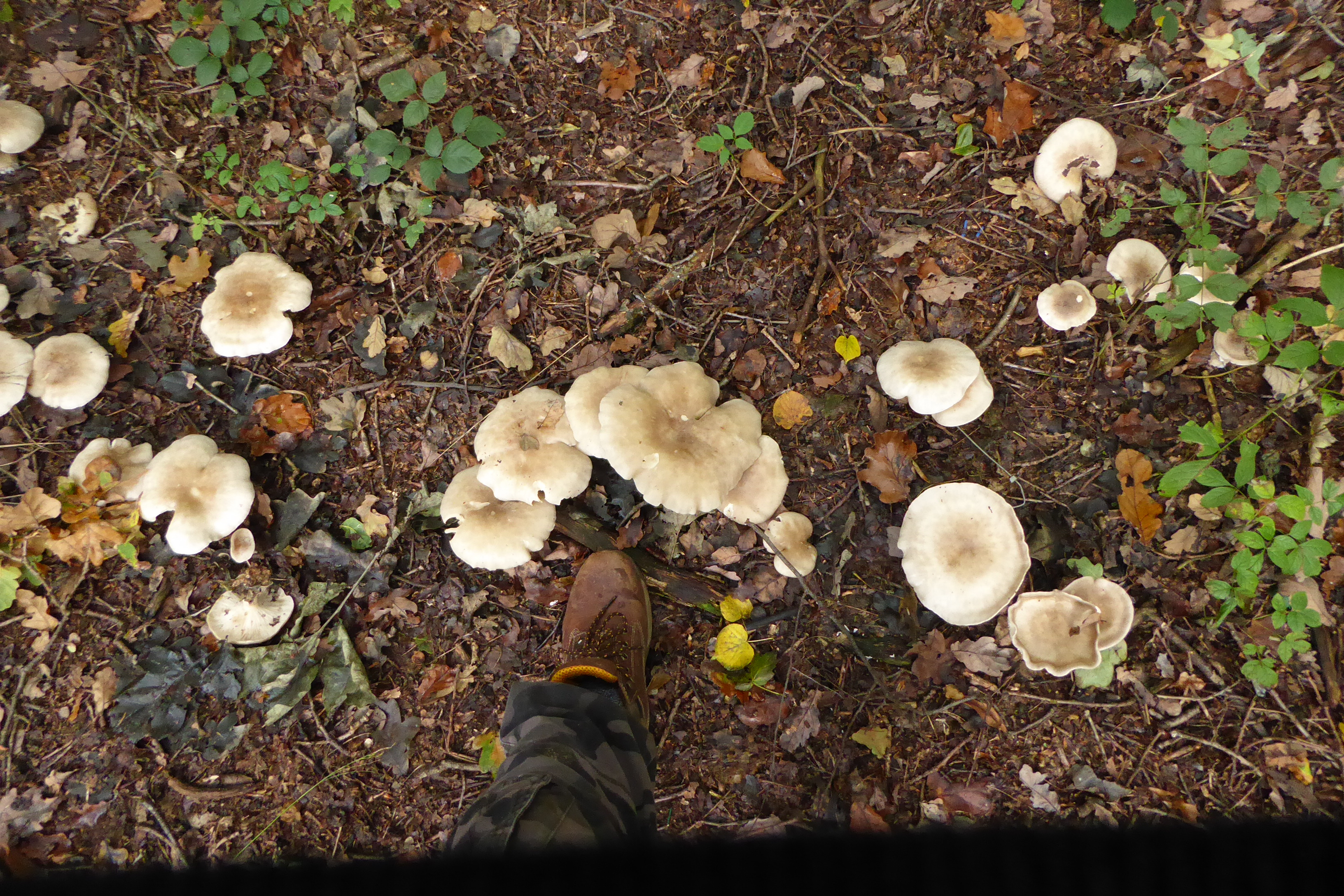
The large clump of fungi that I discovered last time is even bigger now. This photo shows my foot next to the biggest one so you can see how big it was – around 20cm diameter. I do believe these are Clouded Agaric the Latin name is Clitocybe Nebularis and I found more in different parts of the woods.
It is a good time for fungi now and the recent wet weather has sparked off a lot of fruiting bodies. For those that don’t know how fungi grow, the main organism is a hidden web of root-like fibres called mycelium. They are under the earth or inside rotten wood. The mushroom part is just the fruiting body, just like an apple on a tree. It contains the spores that will eventually be released to the air or the ground to reproduce and spread. So picking the mushroom does not kill the organism any more than picking an apple does. It just limits it’s capacity to reproduce. It has recently been discovered that mycelium of certain species of fungi are symbiotically connected with trees. They attach to the trees roots and are usually particular to one species of tree. Both parties benefit. The fibres are minute and known as Mycorrhizae and they can extend for miles underground. They can bore into rocks extracting vital minerals and water which are passed onto the tree roots and in return the tree provides them with carbohydrates which they cannot manufacture for themselves. Amazing!
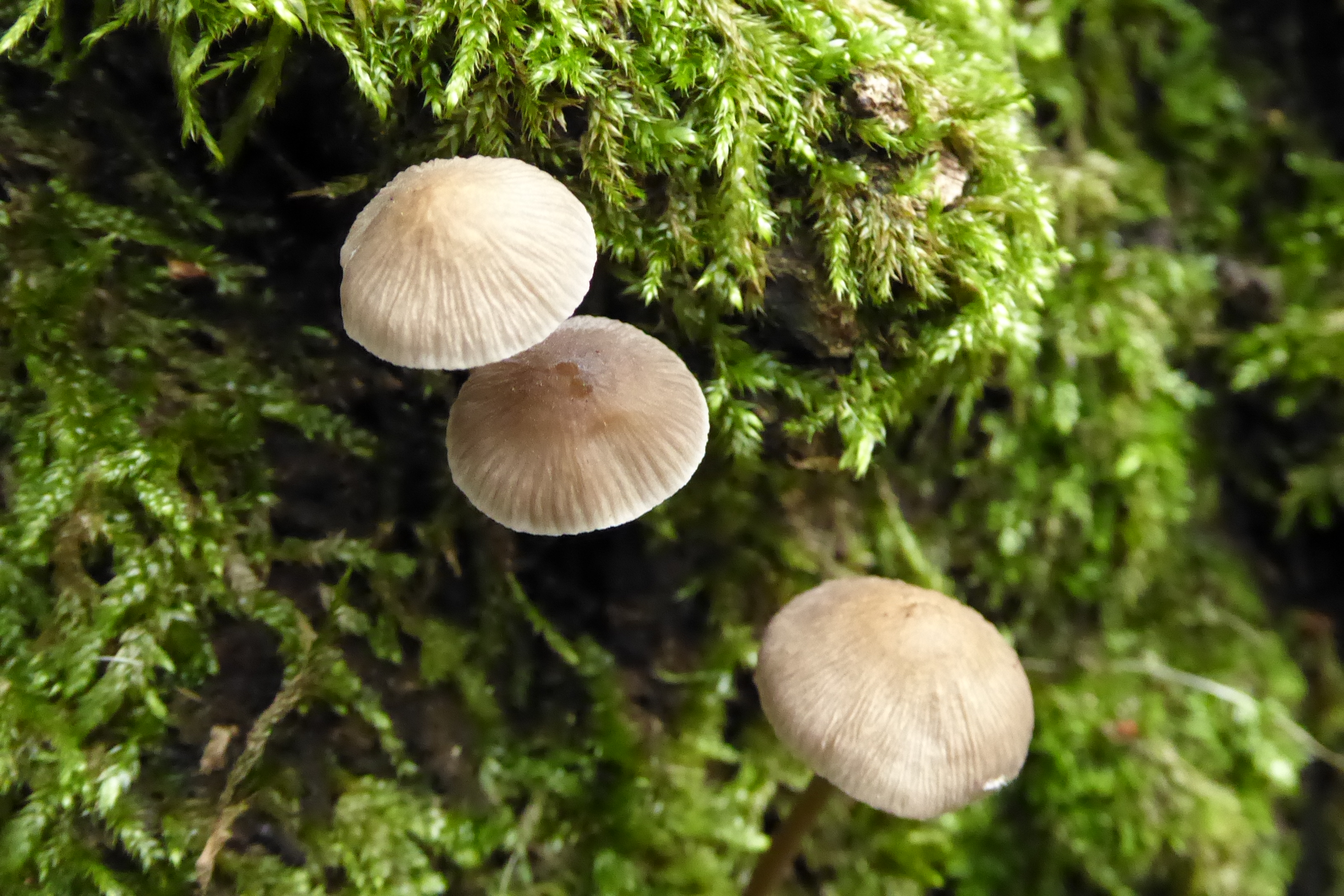
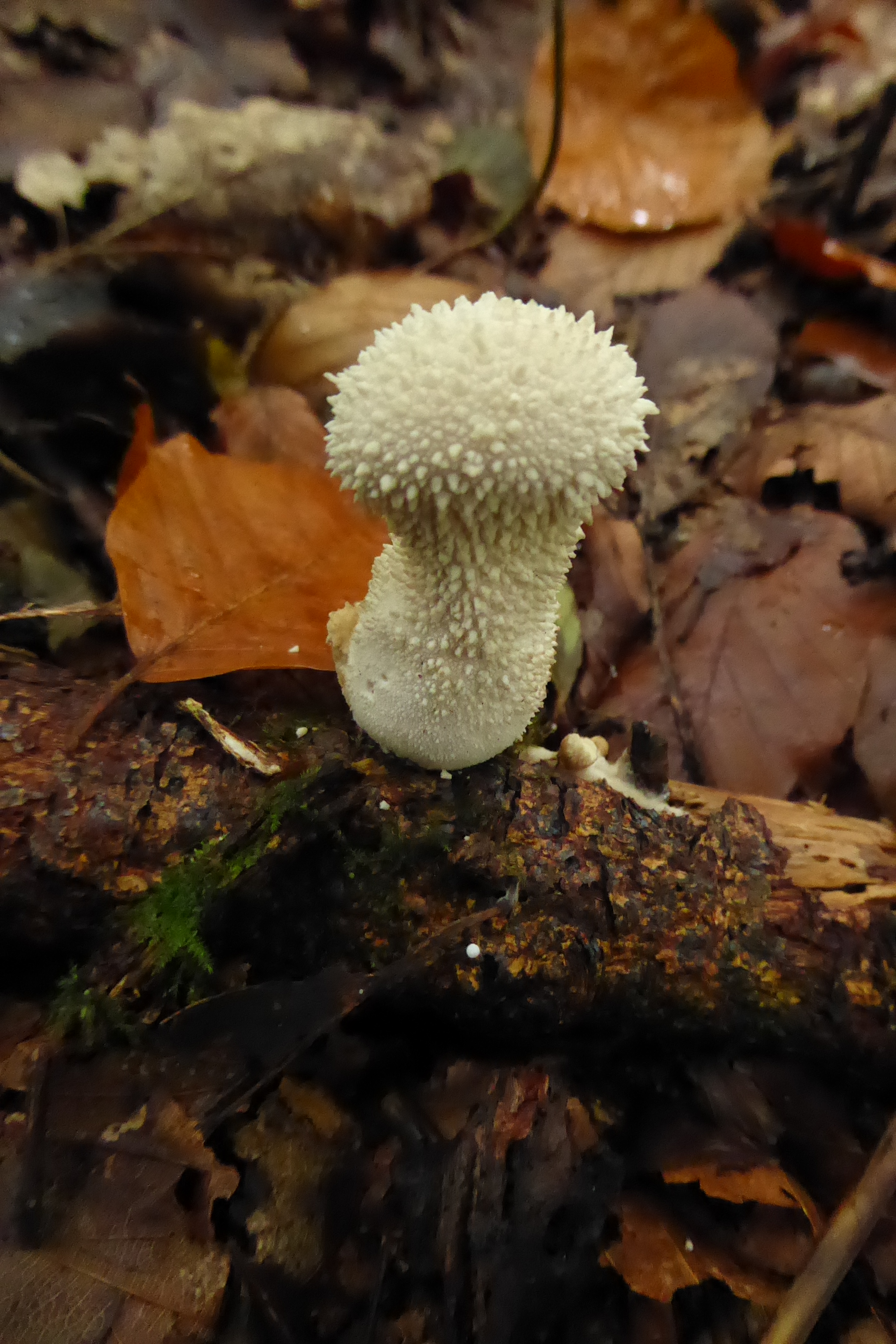
These gorgeous tiny fungi growing in moss I believe are one of the Bonnet (Mycena) family and below is a tiny Common Puffball (Lycoperdon Perlatum) growing on a dead stick. It’s about 2-3 cms high.
The autumn colours on the trees are just starting to show, so next time there might be some photos of those. I am still working my way through the 300+ video clips on my trailcam and hope to post some compilations later this week. Bye for now and get out there and enjoy nature and see what you can find.

