Diary of a man and his woodland

A blog about a man's dream to own a small woodland.


Leave a comment

10 new trees and spring observations

So far I’ve planted twenty three small saplings in the areas I’ve cleared of bramble. Trouble is they are only about 30cm high so all you can see is the tree guards and stakes. I wanted a few taller trees you can see above the guards, that could be dotted around to create some variety of size and something for me to see growing. I found a special offer at a Tree nursery of ten bare rooted trees approx. 2m high. Two each of birch, wild cherry, bird cherry, crab apple and rowan. I collected them yesterday and headed down to the wood to plant them. They were strapped to my roof bars and it felt like I was carrying my babies out there. I drove pretty slowly all the way. It took me most of the rest of the day to plant them up. They needed quite a large hole digging but first job was to prepare the planting area by weeding out the cut-back bramble roots. They are tough knotty clumps with long trailing roots. The knot of each one had a pink bud waiting to shoot up in a few weeks. So although I have cut them to the ground, I’m expecting them to resurface and when they do, I’ll keep hacking the new growth off until they give up the battle. After planting they needed staking and protecting with tree guards. Looking good now. That’s probably all I’ll plant till next season.

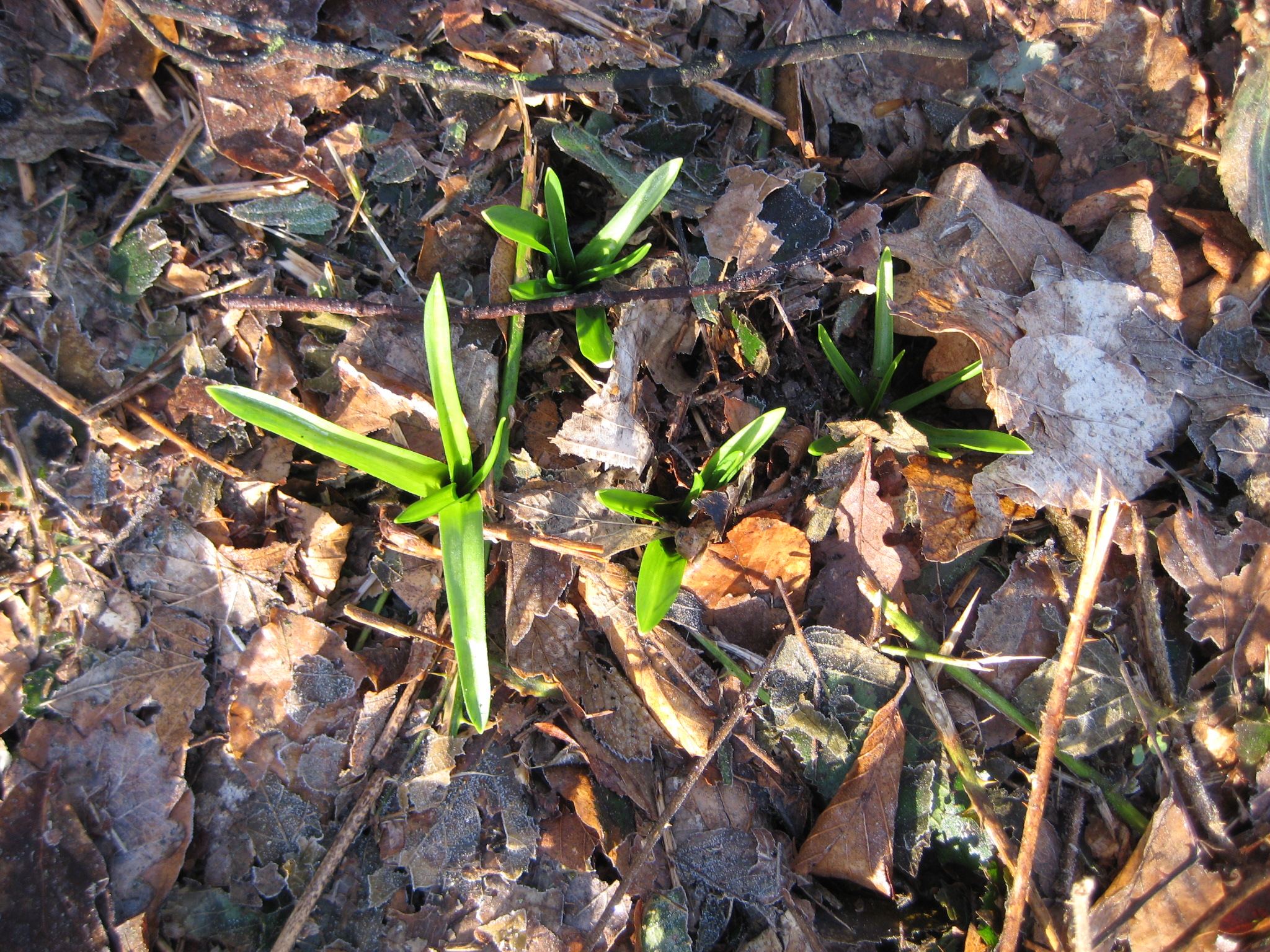
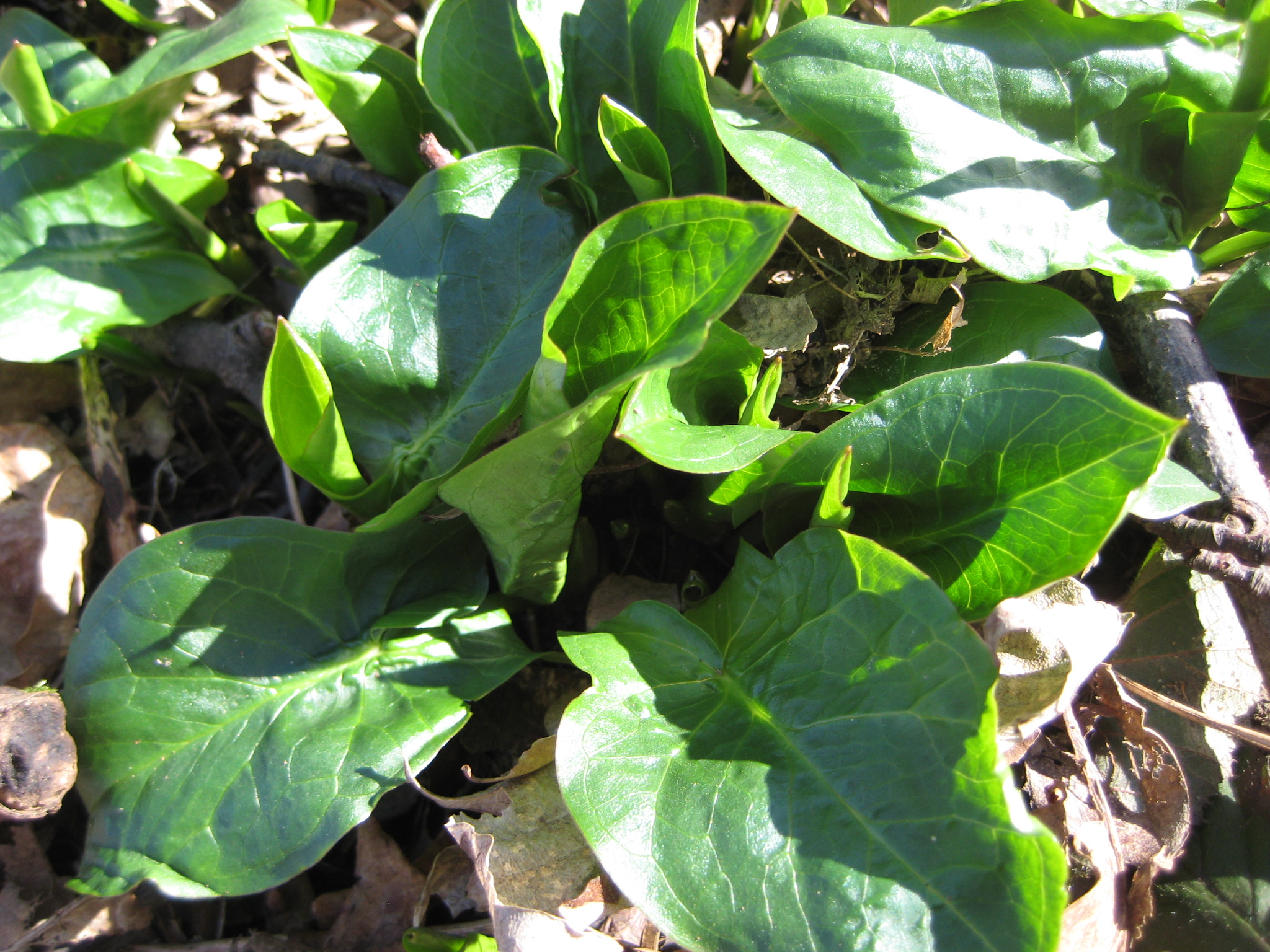
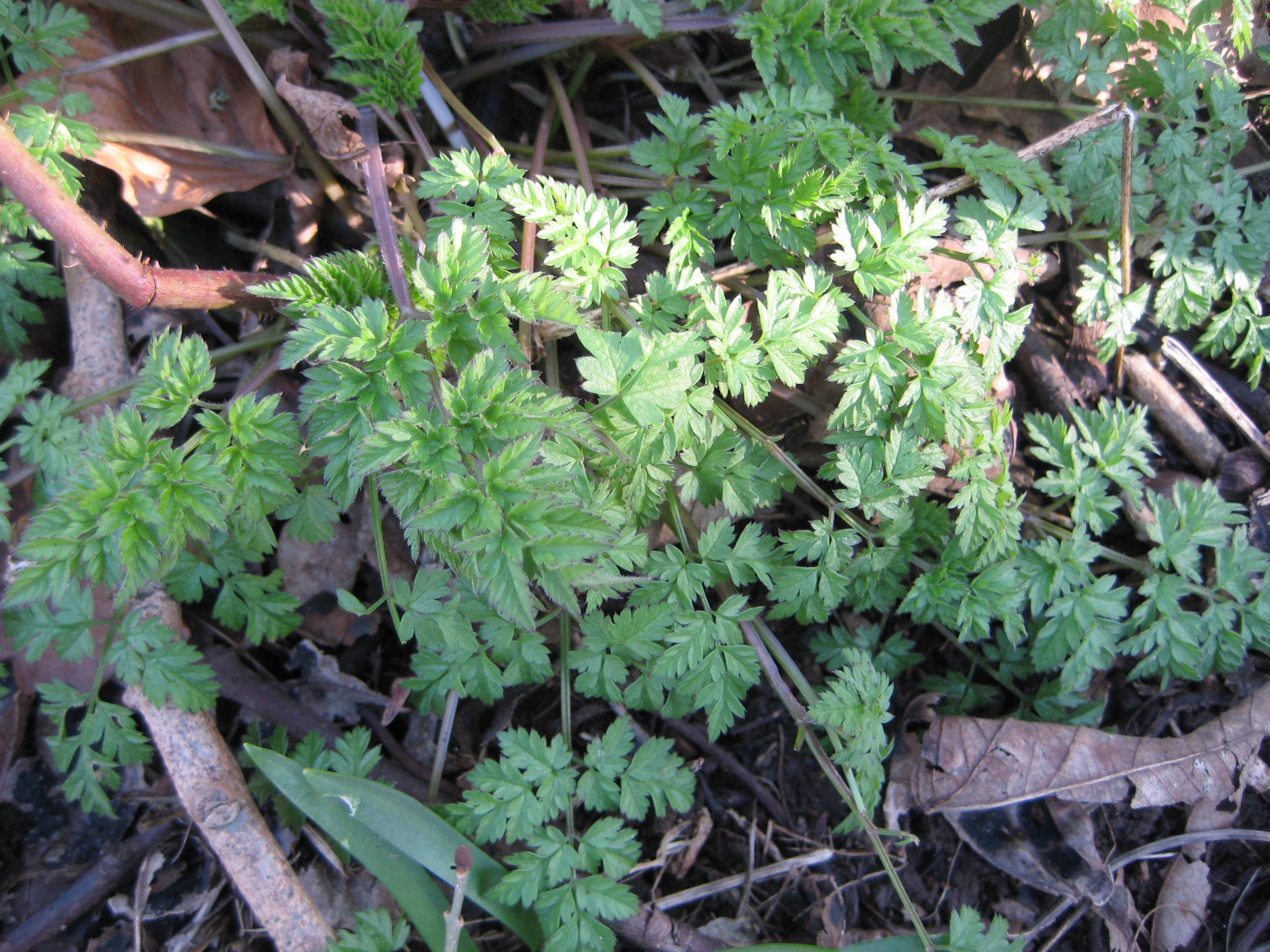
I took some time off from digging holes to have a short walk around and see what has started to grow. The hawthorn and elder trees are just starting to break bud and the wild honseysuckle is starting to open some leaves. On the ground the bluebell leaves started pushing through for two months but are now showing everywhere in abundance. Also spotted numerous clumps of Lords and Ladies also known as Cuckoopint, Herb Robert, Dogs Mercury and common nettles. My woods are slowly waking up!
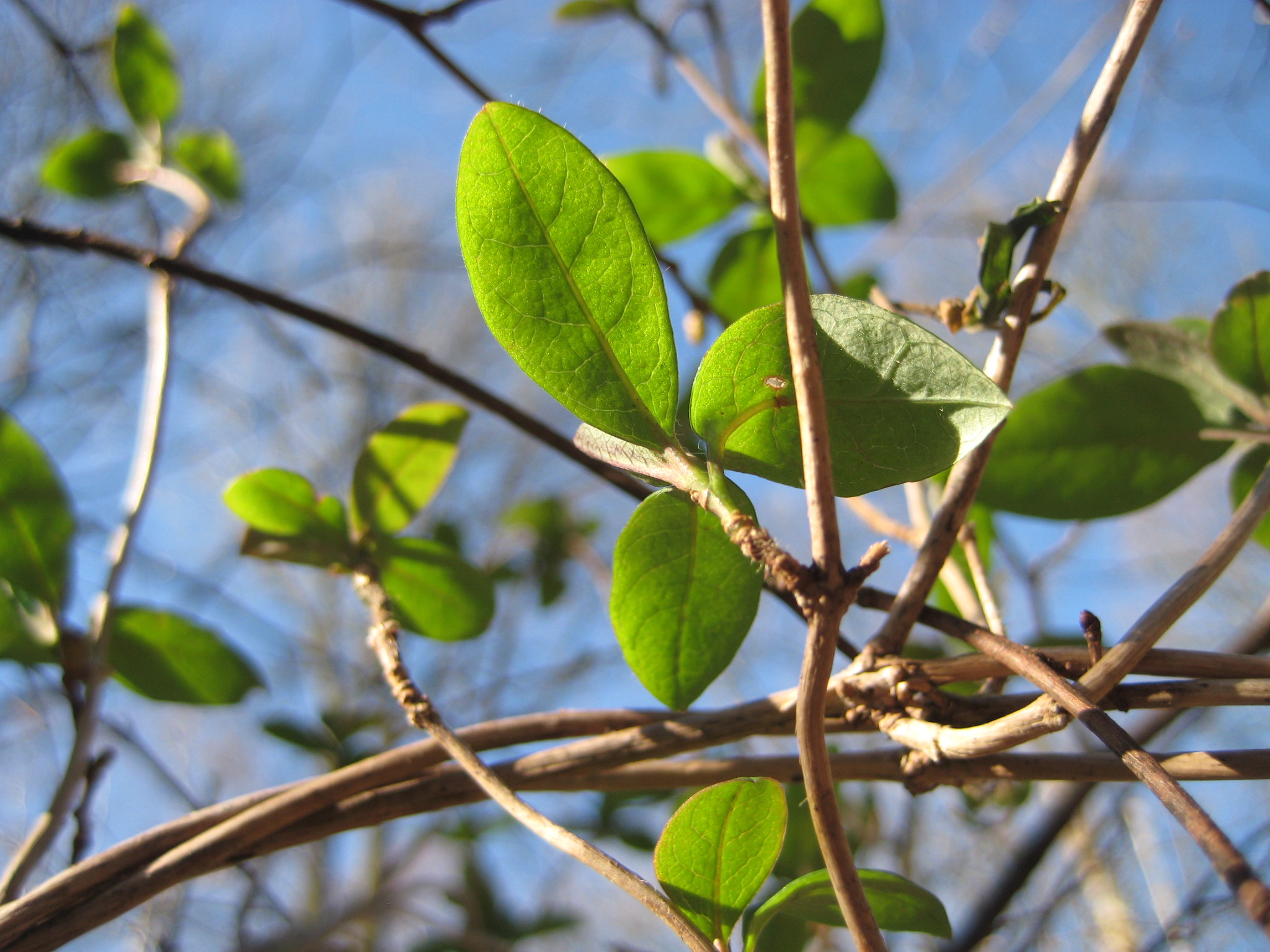
Wild Honeysuckle leaves just opening
Wild Honeysuckle leaves just opening

New leaves of Lords and Ladies
New leaves of Lords and Ladies

New leaves of Herb Robert
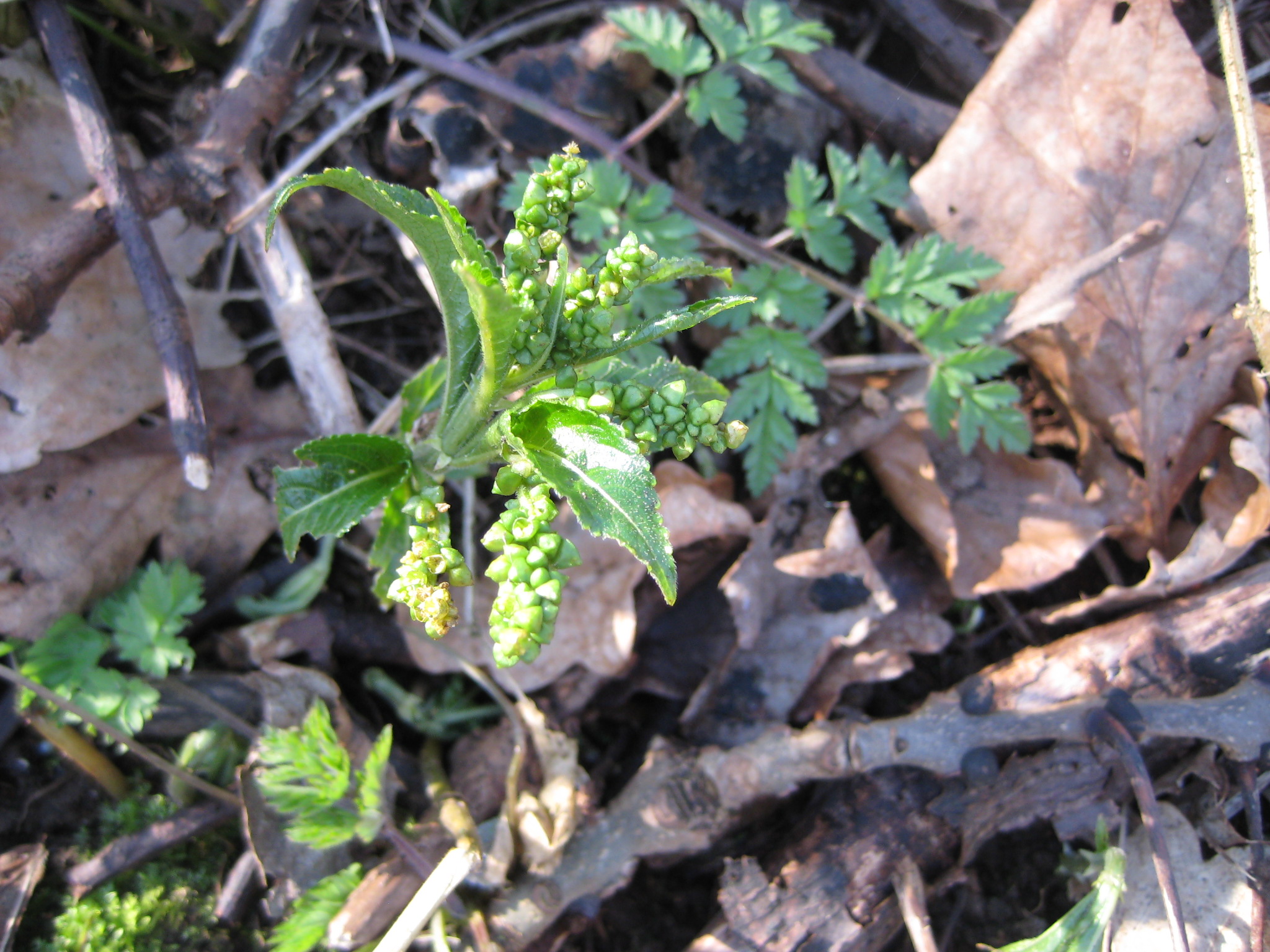
New leaves of Herb Robert

New leaves of Dogs Mercury
New leaves of Dogs Mercury

Leave a comment

Two new bird boxes and some hard graft

Two days ago and it was a lovely sunny day again. There’s a feeling of spring just around the corner. I noticed patches of Arum Maculatum or Lords and Ladies also know as Cuckoopint coming through here and there. They produce white lily type flowers which turn to bright orange berries. Poisonous but beautiful.

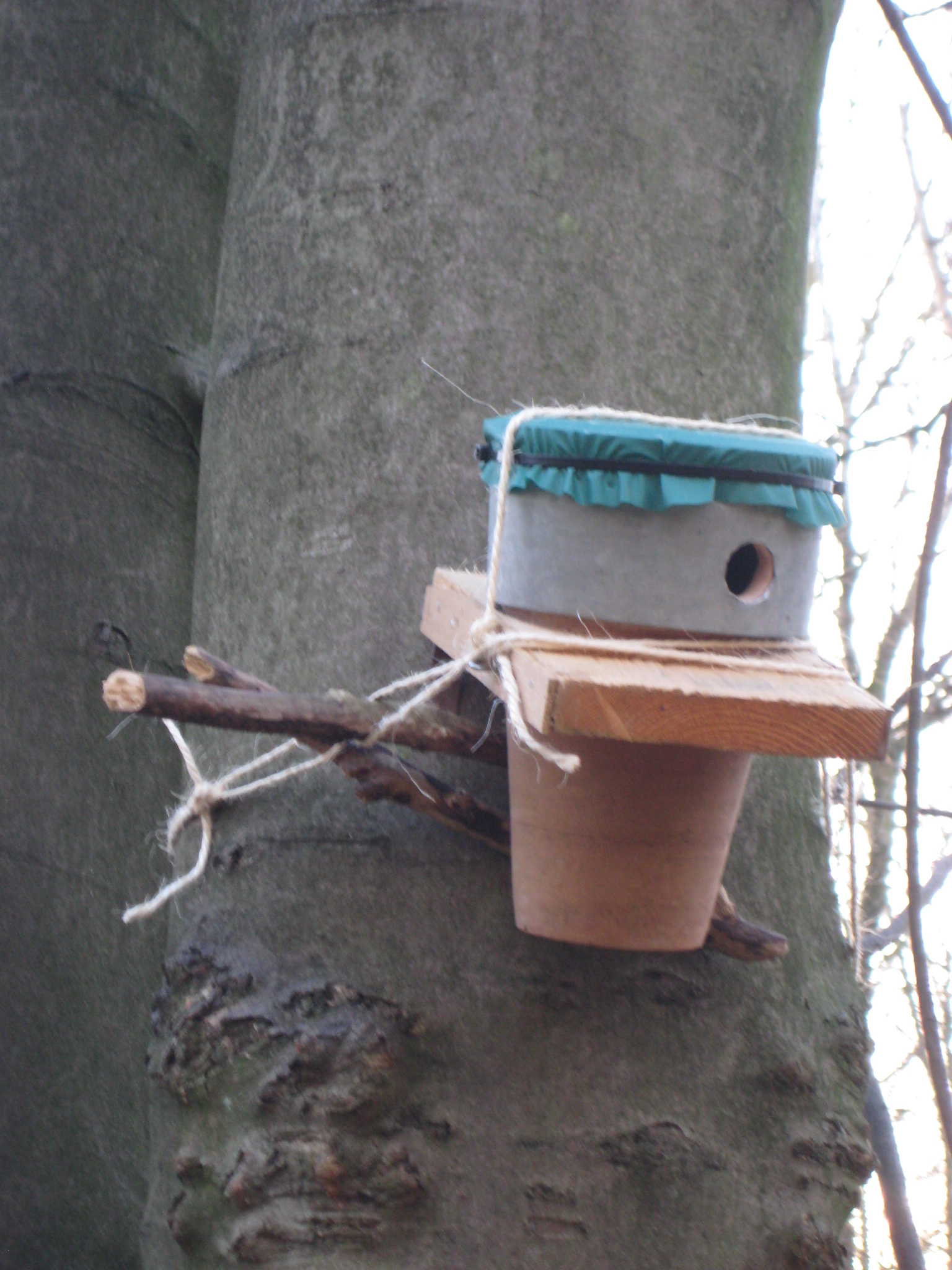
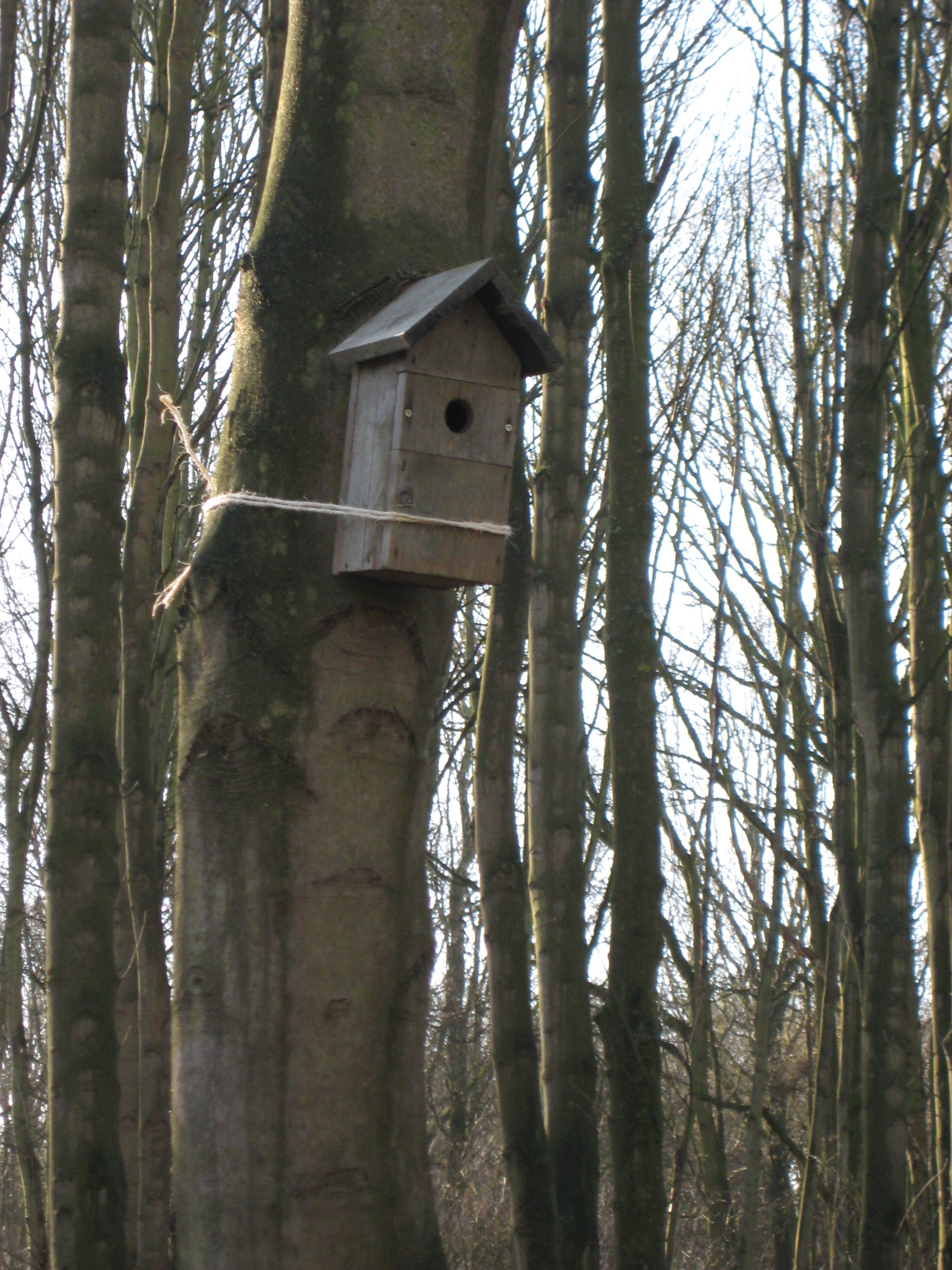
I’d made a new bird-box out of an old flower pot and commandeered another old but usable wooden box and wanted to put them up. Small birds will be busy sussing out possible nesting places now so my first job was to find suitable spots for them. I placed one on the edge of the sycamore plantation next to the sunny open glade. The other down in the area near where I have been re-coppicing hazel. There were lots of the tit family of birds around so hopefully they will use them.

Birdbox by the glade

Birdbox by the glade

Bird box placed near the hazel coppice

Bird box placed near the hazel coppice

It was another day of hard graft. I had ten new hazel saplings to plant and stake up which took me to lunch time. In the afternoon I settled into some more tree felling. The holly I thinned last time needed more work and clearing away to reveal a huge hazel next to it. There were about 6 large branches. Two of them proved quite tricky as they were very tall and got hung up in other trees. They had to be cut in several places to release them and make them safe. It’s quite unpredictable how they are going to fall when you cut. Even though they appear to lean one way, the weight of branches pulling another way often causes them to twist and behave unpredictably. At first it seems a straightforward job and easy to tackle but experience is teaching me to think differently and treat each cut with respect and forethought. There is a lot of weight in these branches and getting it wrong could prove quite dangerous. I ran out of time before I was able to clear those away so that’ll be a job for next visit.

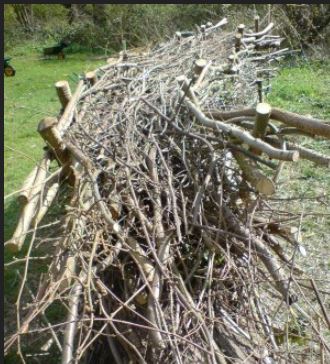
The branches are dressed by cutting off the twiggy tops and side shoots, leaving more or less straight poles and rods of varying diameters. They can be used for all sorts of projects. The bigger stuff will provide good logs for burning. The thin twiggy stuff is called brash. In the past, foresters often made huge fires to dispose of it. I’m not in favour of that as it damages the ground underneath. You need deadwood for fungi and insects to feed off so leaving piles of brash here and there is good. It also provides safe havens for small mammals and birds. Eventually it will rot down and feed nutrients back into the earth. The trouble is, I will have huge amounts before long. I have two very large piles already which look a bit unsightly. So I have ideas of making some dead or brash hedges. Basically you hammer a double row of posts into the ground spaced about two or three feet apart. You fill the space between these post with brash, compacting it down. You build it up layer by layer and it creates a dead hedge. As it rots and settles you keep topping it up. It makes a great habitat for insects, small animals and birds whilst using up your felling waste in a more orderly manner. I have a few ideas as to where I will build them but that is a job for later in the year. Here’s a good example of one.

A good example of a dead or brash hedge

A good example of a dead or brash hedge


Leave a comment

A glorious winter’s day in the woods

I think yesterday’s visit was one of the most enjoyable yet. The sun shone all day and the temperature warmed enough to take my coat off. Some people might think that a woodland in winter is not very interesting and that it’s a time to take it easy until spring comes along. Far from it. There are a number of reasons that makes winter a great season to be in there. The trees are bare and you can really see the structure of the woodland. Walking around it is far easier and it gives you a chance to really study the trees, take stock of what you have, what might be diseased or poorly shaped and therefor candidates for some thinning out. The cooler temperature makes working more comfortable and no biting insects to pester you. It’s definitely a time to do some solid forestry work. And how satisfying that is too.

So yesterday I continued working on the south east corner where I cut the huge over-stood hazel a few weeks ago. I cut three more smaller ones back, a couple of youngish sycamore and one of the two large straggly holly trees that are shading out that corner. The area looks quite devoid of trees now. At first glance, it might appear that I have overdone it and created a bare piece of land but that’s not the case. The four hazel trees will hopefully recover by sending up lots of new shoots from the base. They need the extra light around them that the thinning out had created in order to photosynthesise and flourish. In a few years it will look entirely different again.

The newly coppiced area at the south east corner of the woodland

The newly coppiced area at the south east corner of the woodland

So what else is going on right now? Well the bluebell leaves have pushed through quite nicely. They are everywhere and spring is going to be very interesting this year. The hazel trees are covered in long catkins already. Some of the grasses are starting to grow again and there are various green patches of plants that I can’t identify yet. There’s a nice patch of young ash saplings which look about 2 years old. They weren’t so obvious in the summer but now you can see them clearly. They are in an area where there aren’t many trees, so they will be a welcome addition. I will try to transplant a few into other areas to fill some spaces. Due to the spread of ash dieback disease, it is not permitted to plant new trees or move them around the country. As there is no disease yet in my area and I am only moving them a few metres from one position to another in the same small woodland (my woodland) I see no harm done.

The tips of the bluebells showing through the woodland litter

The tips of the bluebells showing through the woodland litter

A group of ash saplings naturally regenerated

A group of ash saplings naturally regenerated


Leave a comment

A hard day at the woods

My latest trip was a few days ago. I had a few aims for the day. Clear up the felled hazel limbs from my last visit. Replace some old tree shelters with new ones. Try out my chainsaw. Take my new wheelbarrow and chain it up to a tree. Well I achieved two of them.

It was a mild, dry day for January. First job, wheelbarrow. I bought it on the internet. The tyre was flat but I assumed it was part of the “flat pack” arrangement. I had a pump in the car and intended to inflate it when I got there. It wouldn’t stay up. So I decided to bring the wheel back home and leave the rest of the barrow. I thought I’d left a chain and padlock in my secret stash so I could secure it to a tree but I was mistaken, so the whole thing had to come back home. Bad start.

I set to, sorting out the hazel limbs I had cut last time. They were strewn around where they had dropped. I snedded them (cut the small side branches off) to make poles, rods etc and graded them into several piles – big diameter trunks to be split for stakes etc, long medium diameter ones as possible building materials for a shelter, smaller straight rods for stakes, thin whippy rods for craft produce perhaps, odd shaped pieces to be cut for firewood, and brash and deadwood to be left to rot. It was hard physical work but very enjoyable. I have piles of material to work with now and a nice tidy site around the newly coppiced hazel stump. My next task in that area is to coppice a few more old stools and create a nice small coupe that I can then fence of from deer and see how it progresses in spring. In future I think it wise to do the snedding and sorting of each branch as I cut it. That way it avoids having to wrestle with tangled branches and should be easier and quicker to sort and grade.

Next job needed to be lighter work so I replaced the tree shelters I mentioned. I have planted a few saplings but used old tree shelters I found lying around which are discoloured. They are basically long plastic tubes which you put around each small tree and tie it to a stake. It protects the vulnerable plant from deer and small animals. Once they get established in a few years, they can be removed.

Next job was to carry some of the hazel logs back to my log store. The hazel I coppiced is at the far corner of the wood and the store is in the middle. The route across was strewn with brambles and fallen branches, causing trip hazards. So the next strenuous job was to clear a path directly from the log store to the hazel log site. Using my machete, I hacked at the bramble and moved all the dead sticks and branches. Now I have a nice clear path across. Hard, backbreaking work but effective. It gave me chance to see close-up, what is growing in that area. I found small oak and hawthorn saplings and some wild honeysuckle.

Sadly I didn’t have time to try out my chainsaw for the first time. There’ll be lots of logs to saw up soon and I’ve just knocked together a sawhorse out of scrap timber today. Another small step forward. No new pictures this time, sorry.


Leave a comment

Coppicing

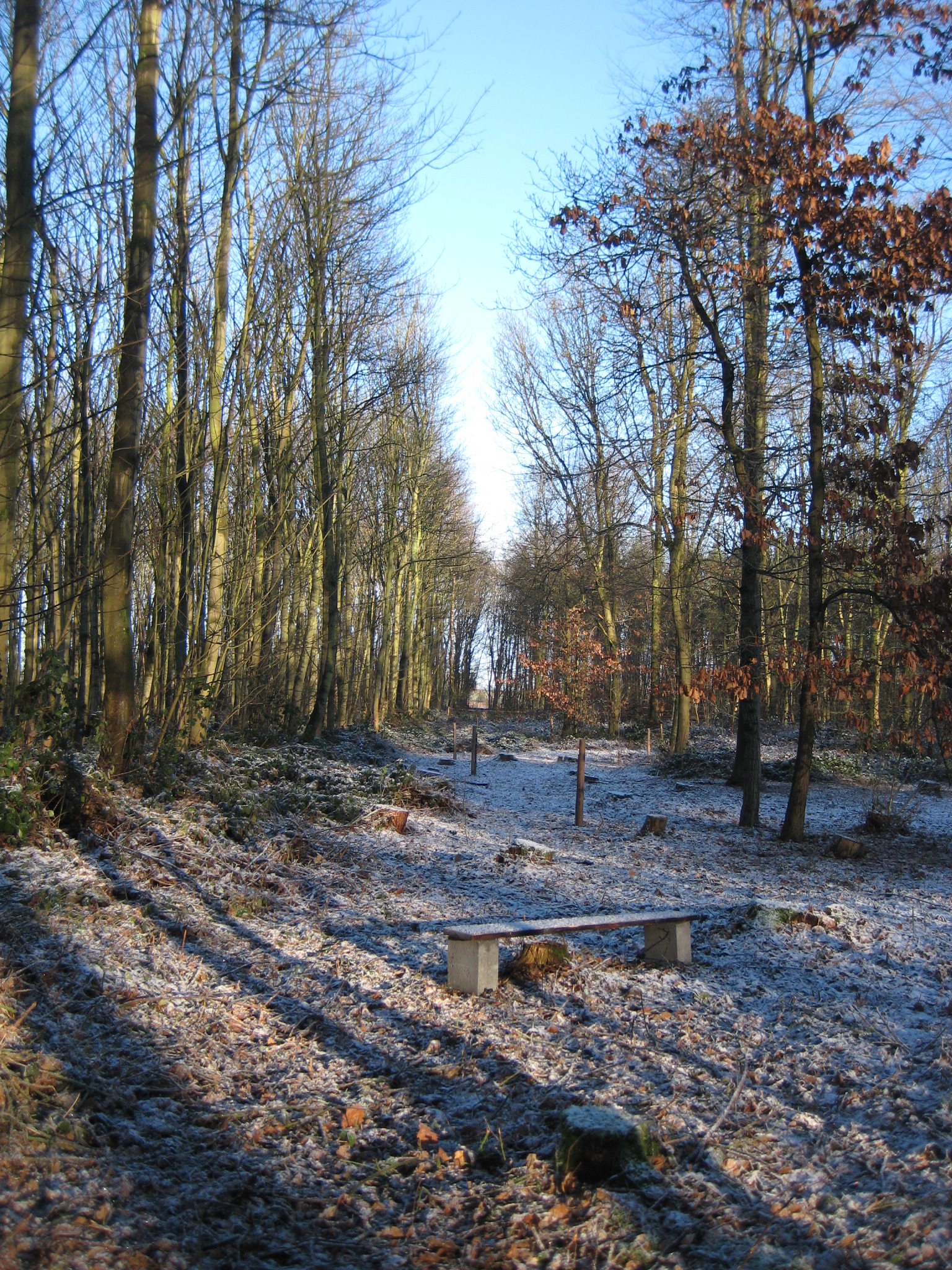
Yesterday was a beautiful cold sunny day. A light dusting of frozen snow made everything stand out and looked beautiful. However it was a day for working hard and getting two important jobs done.

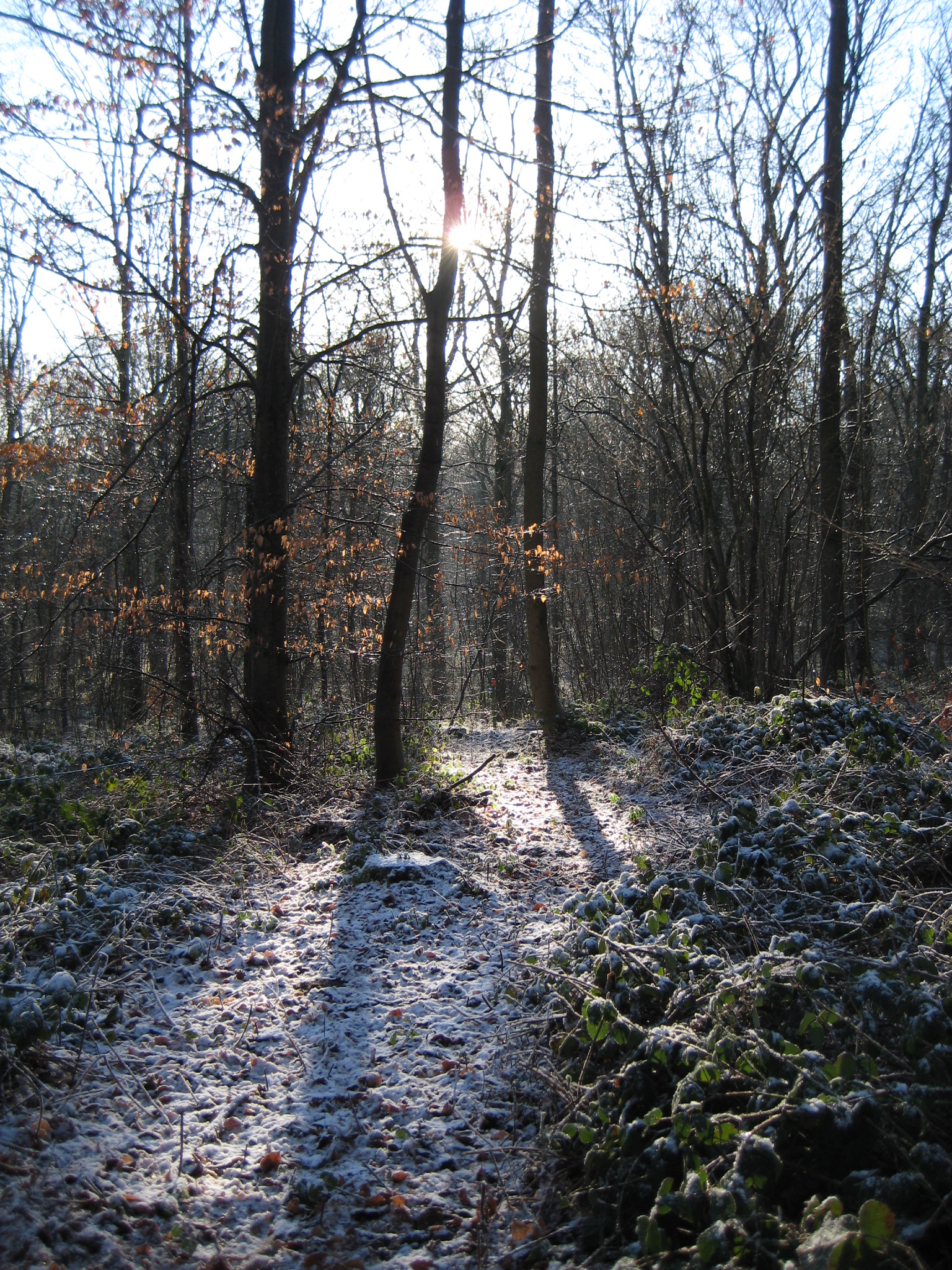
A light dusting of snow and some morning sun.

A light dusting of snow and some morning sun.

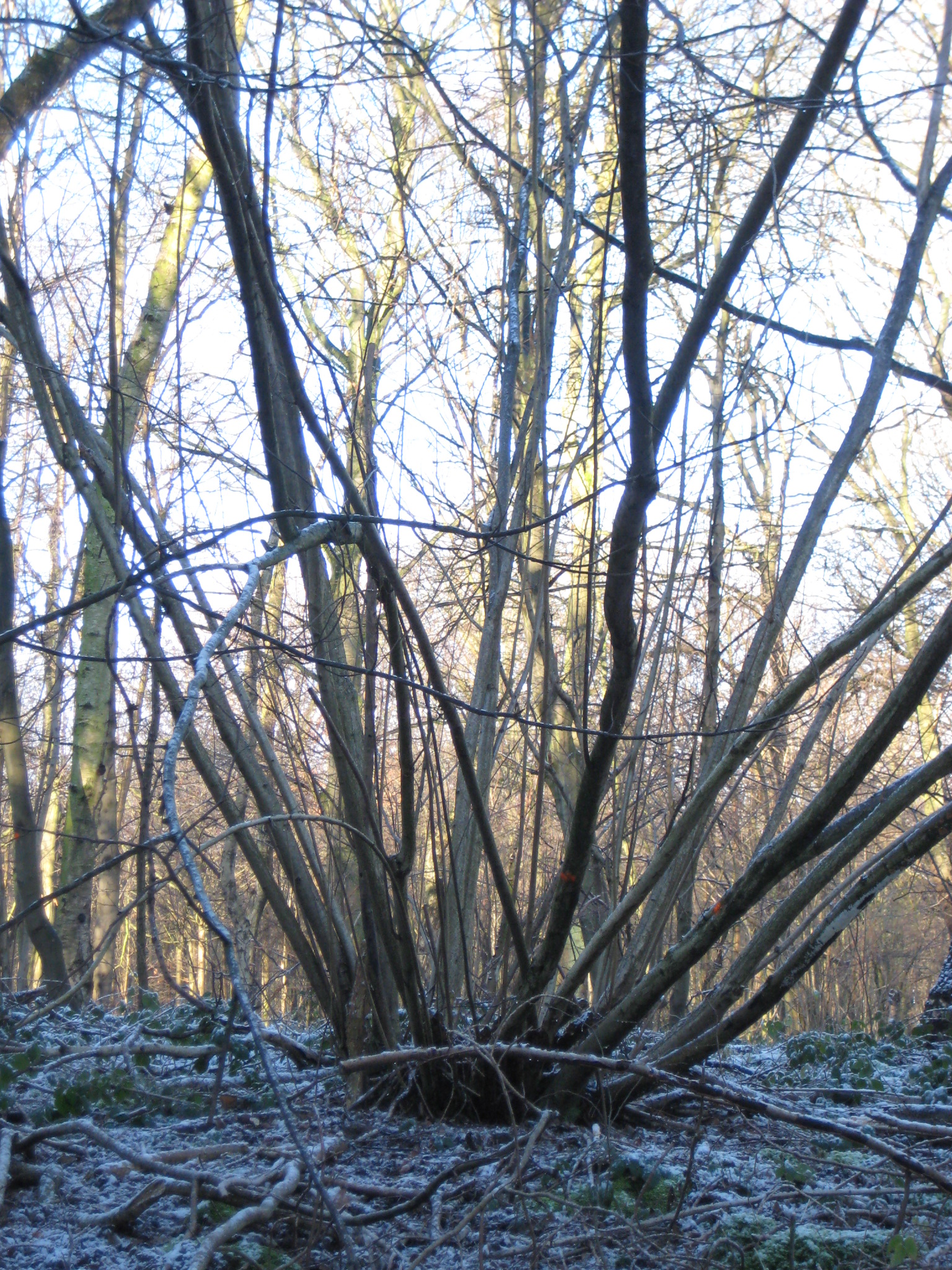
I have a huge over-stood hazel, desperately in need of re-coppicing. The boughs are so heavy that they are almost horizontal. The danger being that the weight pulling down can split the stool (base) of the tree allowing rot to set in. So having now got my felling licence, I’ve been itching to get in there and start doing some surgery. This is how it looked before I started.

Huge overstood hazel ready for re-coppicing

Huge overstood hazel ready for re-coppicing

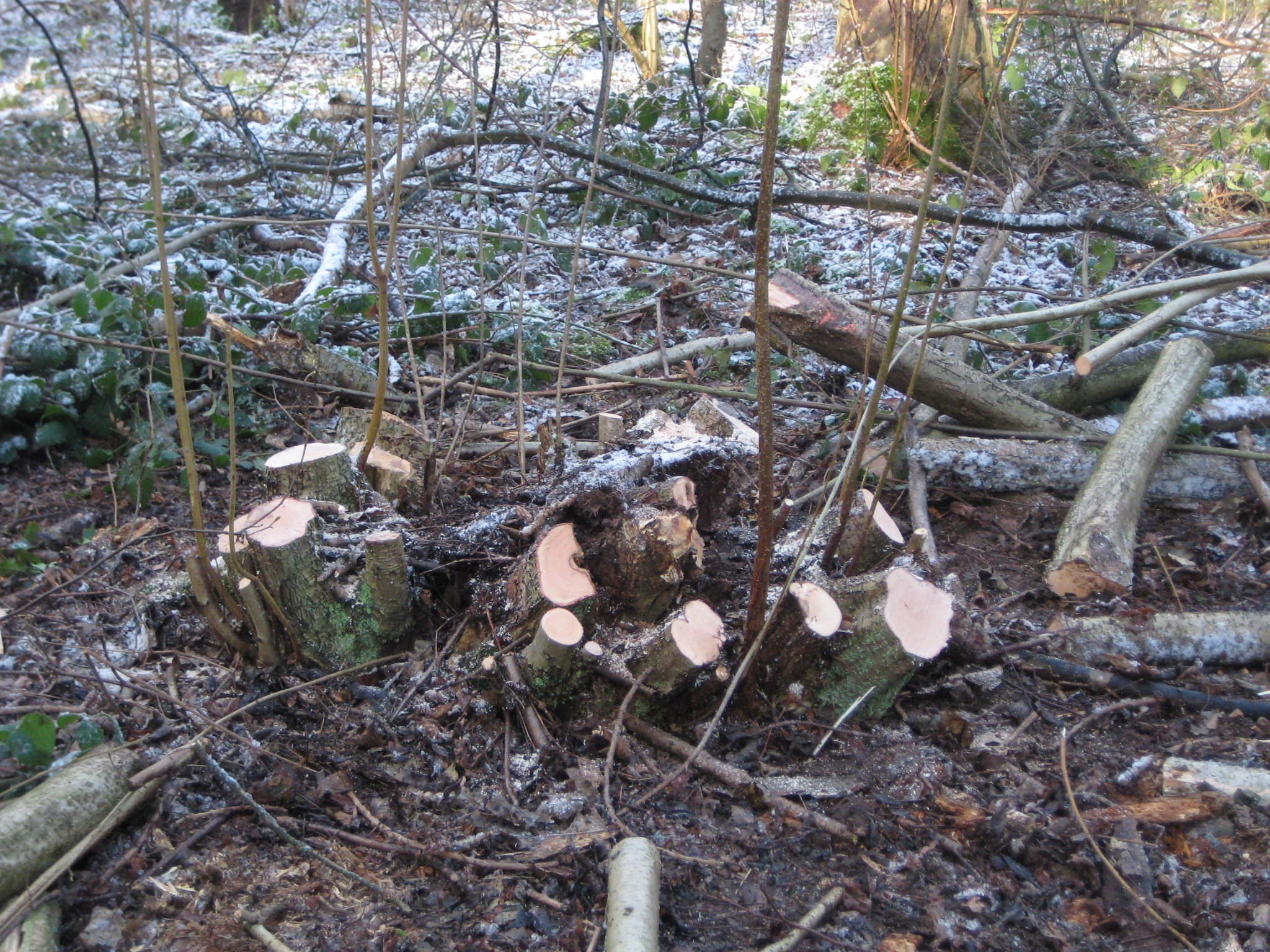
The boughs need cutting right down to a few inches above ground. The problem is, the weight of them will split them before you finish the cut. If they split low down, you damage the stool again. So the first cuts were made about a metre above ground level. A shallow cut underneath first helps to minimise splitting, then start the true cut, just above and higher up the bough. It’s amazing how tall these boughs had become – easily 10 metres to the tips. Quite a lot of weight to them too. So here’s how it looked after the first “trim”.

Over-stood hazel after the initial cut to remove the weighty boughs.

Over-stood hazel after the initial cut to remove the weighty boughs.

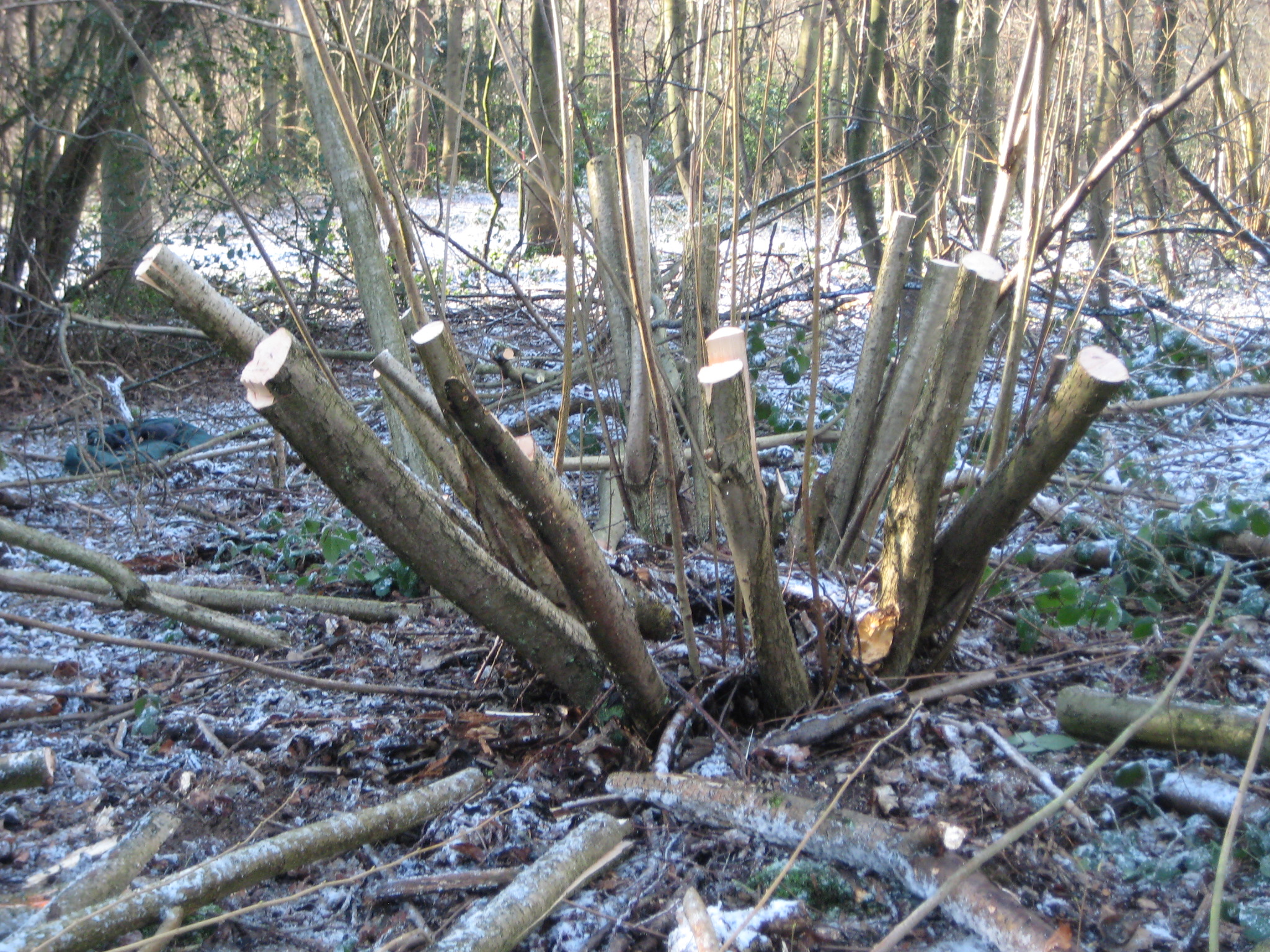
Having then released the main weight from them, it was a case of trimming them down to a few inches above ground. I left a few thin “whips” on to help the tree photosynthesise when spring comes and hopefully, the new shoots to grow away quickly. It’s a case of clearing up the sawn boughs and waiting to see how it responds. The tree was already showing catkins. There won’t be any more of those for a few years now but I should get some nice straight rods for craft work. I’ll protect it from deer for the first few years with some netting. I was interested to know how old these boughs were – how many years since last cut. I counted about 30 years growth rings.

The finished job, the hazel re-coppiced.

The finished job, the hazel re-coppiced.

I said there were two important jobs. The other was to finish clearing the bramble in the triangular glade patch. The bluebells are starting to show their leaf tips so I wanted to get this done ASAP to avoid damaging them too much. Job done, now wait and see what other wild plants emerge in spring now that the competing bramble and bracken are cut down and light can re-enliven all those dormant seeds. I shall be doing some more replanting here soon too.

The triangular glade where I have finished clearing bramble and bracken

The triangular glade where I have finished clearing bramble and bracken


Leave a comment

New Year in the woods

New Years are non-events for me these days. In reality it’s just an extension of the last one isn’t it? But this year I can consider it a new year as a woodland owner. Firstly I have been granted my Forestry Commission thinning license which means I can start cutting down trees to thin them out, re-coppice the hazel and at the same time, create some timber material for using in my planned projects.

Secondly, I was given 10 small saplings as Christmas presents, so yesterday, with the help of my eldest daughter, we planted them up in the clearing where I have been working on eradicating bramble. A lovely satisfying feeling, to add new stock and eagerly await spring to see them burst into life and watch them grow over the coming years. They are all British native species – one each of crab apple, rowan, blackthorn and hazel and three each of dogwood and whitebeam.

Thirdly, whilst digging, we noticed the small tips of bluebells ready and waiting for spring. Some had just pushed through the surface. Other small shoots were evident too. So yes it is the start of a new year in the woods and my first full calendar year.

It was my daughter’s first visit and it was a beautiful sunny frosty morning. It warmed up as the day progressed, the ground was soft enough to plant, having been protected from frost by the dead leaves. We sat contentedly eating sandwiches and a bowl of home made soup, heated over a small stove, the smell of wood smoke in the air and the dappled sun around us and watching a robin hopping around. After a while my daughter said “I can see why you love this place.” Enough said!

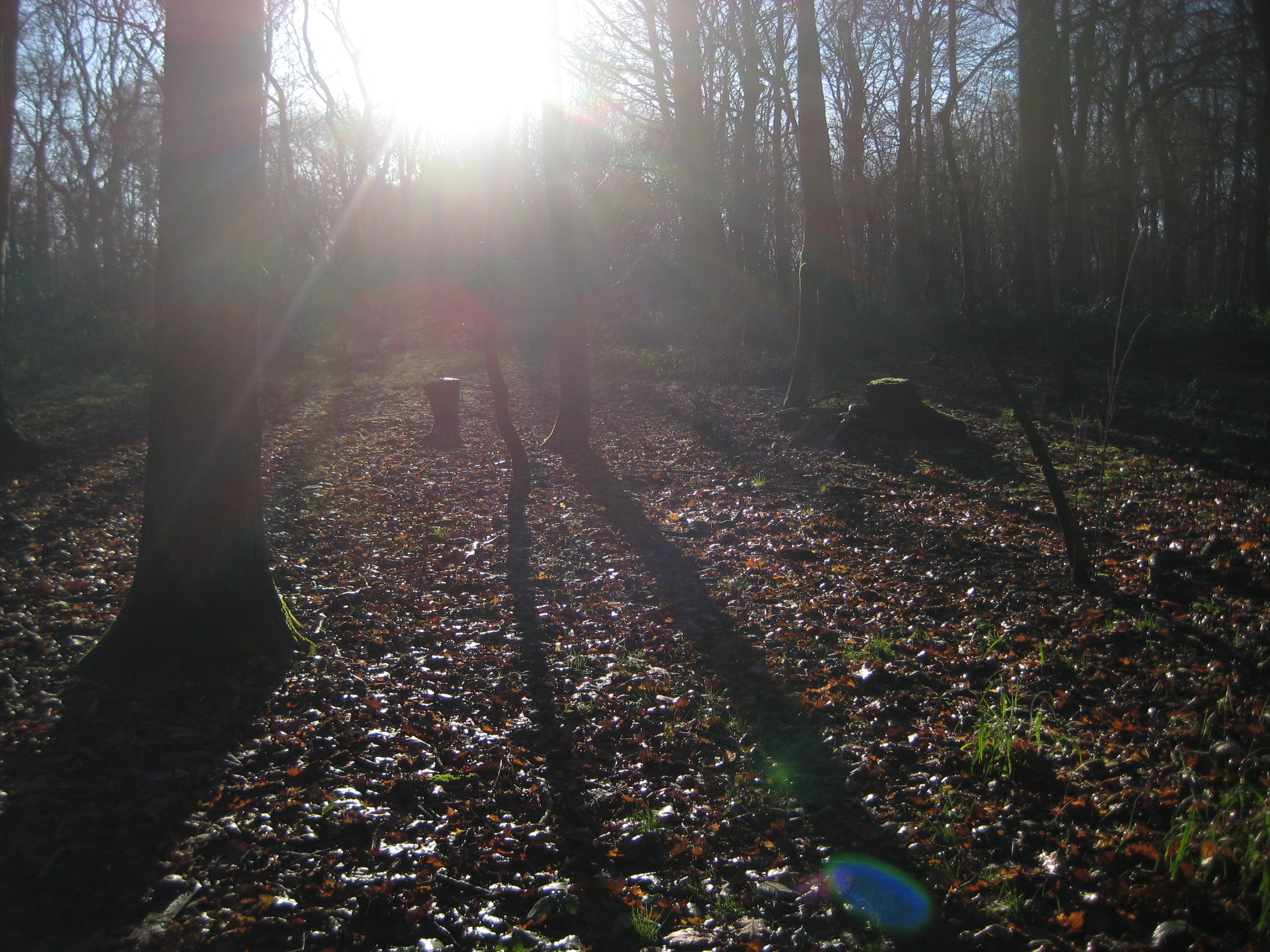
a frosty sunny morning in the woods

a frosty sunny morning in the woods


Leave a comment

Lots happening in my neck of the woods

Quite a few developments since my last post. I’ve been twice. The first visit was a beautiful frosty and sunny morning. It was nice to see the wood in yet another different light. It’s a time for getting on with some jobs and right now I’m concentrating on clearing bramble and preparing my log store for when I can start thinning. The frosty conditions made brushcutting easier and I managed to increase the area I’ve been working on, quite considerably. I did some more work on my log store, collecting dead branches to prop up around the sides to disguise and tone down the garish wooden pallets. I met some neighbours who had just seen a small herd of about 7 or 8 roe deer pass along my ride. I cut some more dead sycamore trunks for logs to take home.

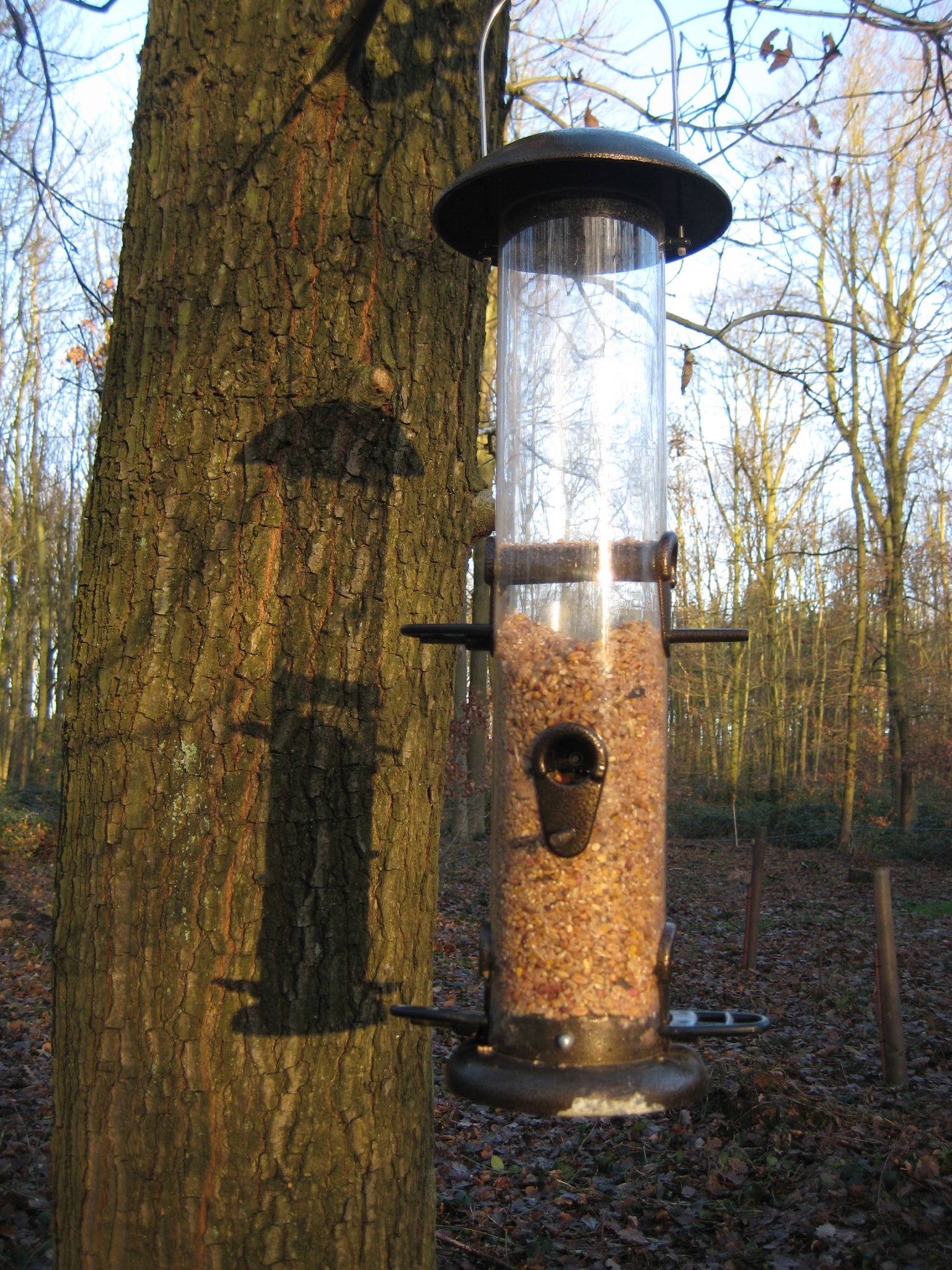
Whilst resting for lunch, I noticed a flock of about 20 small birds in the trees near my bird feeder. As far as I could see they were mainly Great Tits and Blue Tits. I have noticed the seeds have gone down, having had to fill them two or three times since I put them up but it’s the first time I have seen any birds on them and I wasn’t sure if it was just squirrels raiding it. The birds flew on and off the feeder for some time, one of them landed on the nest box I made in summer. Hopefully, they will adopt it in spring and rear some young.

Evidence that birds have found my feeder

Evidence that birds have found my feeder

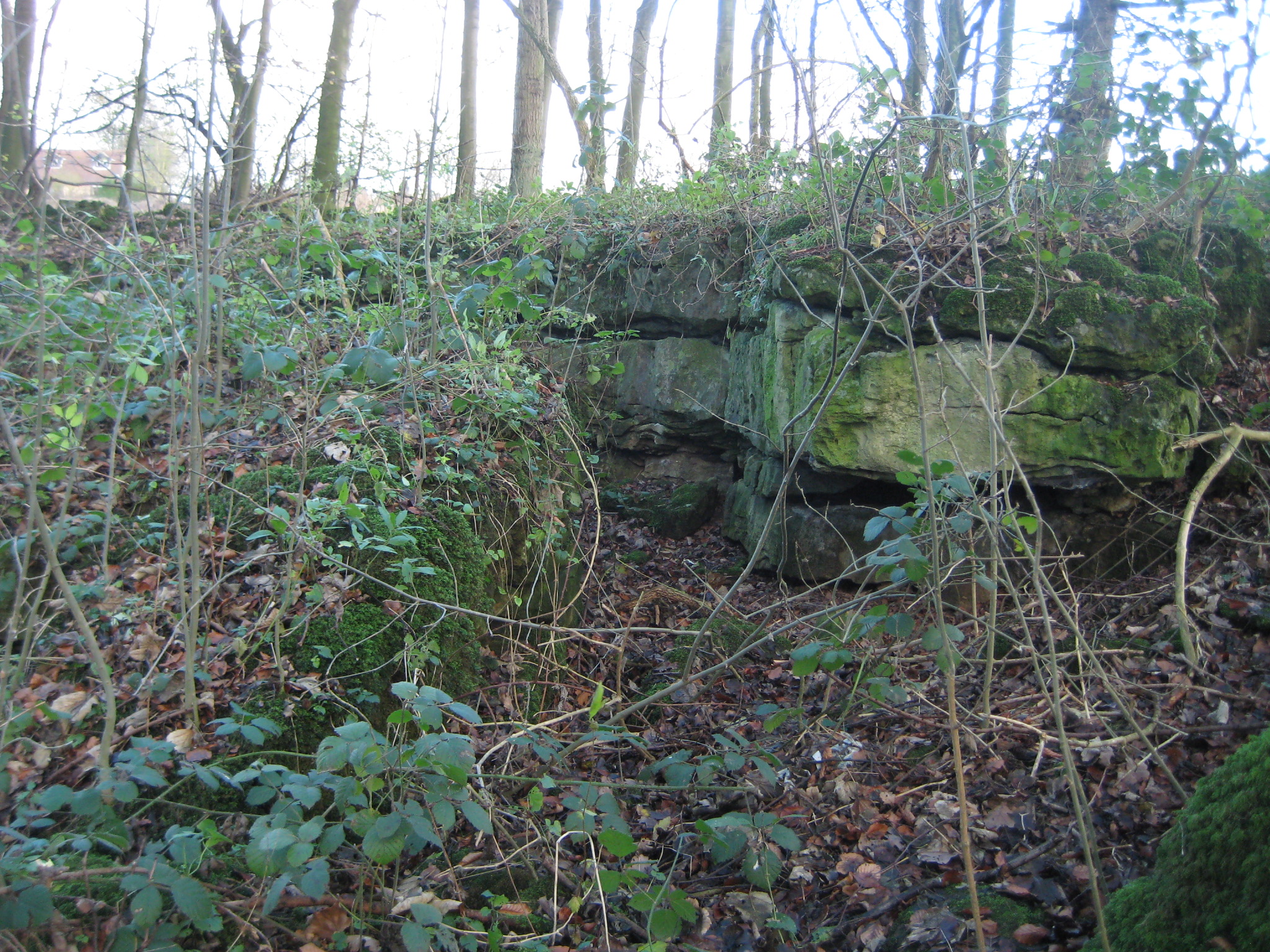
My last visit was interesting. The man from the Woodland Trust had arranged for the local archaeological society to visit mine and a neighbour’s plot to look at some digs that were done about 20 years ago. My neighbour has the remains of an ancient cave dwelling where two skeletons were found buried. Carbon dating showed them to be a man aged about 35 years and a young woman of about 15 years and dating back around 3500 years ago. The dig on my site wasn’t easy to date but is the remnants of an old bank and ditch that was probably a field boundary at one time. There are records of Roman enclosures in nearby fields so they could be part of those.

The ancient cave dwelling and burial site in a neighbours wood

The ancient cave dwelling and burial site in a neighbours wood

I spent the rest of the day cutting logs and foraging for dead branches to disguise the log store and thoroughly enjoyed it. The icing on the cake came the day after. My Forestry Commission thinning licence. Now I can start re-coppicing the hazel which will give me some much needed material for stakes and other projects plus some firewood to season for burning next winter. Things are going to get a whole lot more interesting soon.


1 Comment

Do you own a woodland or………….

Do you own a woodland or …… does it own you? A few months ago when I bought my wood, I wrote “I am now the proud owner of a small woodland.” I’d like to revise that statement. I’ve come to realise that it’s the other way around. Sure, I own the piece of land that it sits on but I don’t own the wood. The creatures, plants and animals that live in and off the wood are the true owners – it is their home and supports their lives. I am just a visitor, a guest.

I’ve realised that the wood is an entity in its own right and not just the sum of its many components and I’ve fallen head over heels in love with it. I can’t wait to see it the next time. It occupies my mind every single day, many times over. The wood doesn’t care if I exist or not. It will carry on without my presence.

There’s a certain feeling comes over me when I enter it. I felt it the first few times I visited. At first it was just a feeling of peace and tranquillity mixed with an excitement of “owning” a wood. That feeling has grown and evolved into something much deeper. Now I feel a sense of awe when I look up at those trees and listen to the birds and look at the plants and insects and myriad lives that occupy it. I can liken it to entering a cathedral. You are struck by the beauty of what’s around you and the scale of a force so much more powerful than yourself and you are the guest and it deserves your respect and appreciation for being what it is. It bathes you in a cloak of calm and peacefulness.

It’s hard to explain to someone who hasn’t experienced it but I feel drawn in and want to merge with it. For the time I am there, I want to be a part of it and not just a visitor. When I step in, I become a woodland creature, an inhabitant, an integral component of that entity called a woodland. So I do what I can do, play my part and work hard to improve and beautify it even more and for that time, I feel a true part of it. My sense of being “me” gets pushed out of my mind and seems to disappear. It’s a fantastic feeling, being at one with nature. I have to tear myself away at the end of the day. We have somehow separated ourselves from nature for the sake of comfort and convenience but it’s good to remember that we too are part of it. Next time you decide to take a walk through a wood, find a nice quite spot away from the public and dog walkers. Stop, sit, observe, listen and make no judgement. Just be there in it and let it wash over you. If you’re lucky, you will feel that connection with nature again.


Leave a comment

A good day’s work in the wood

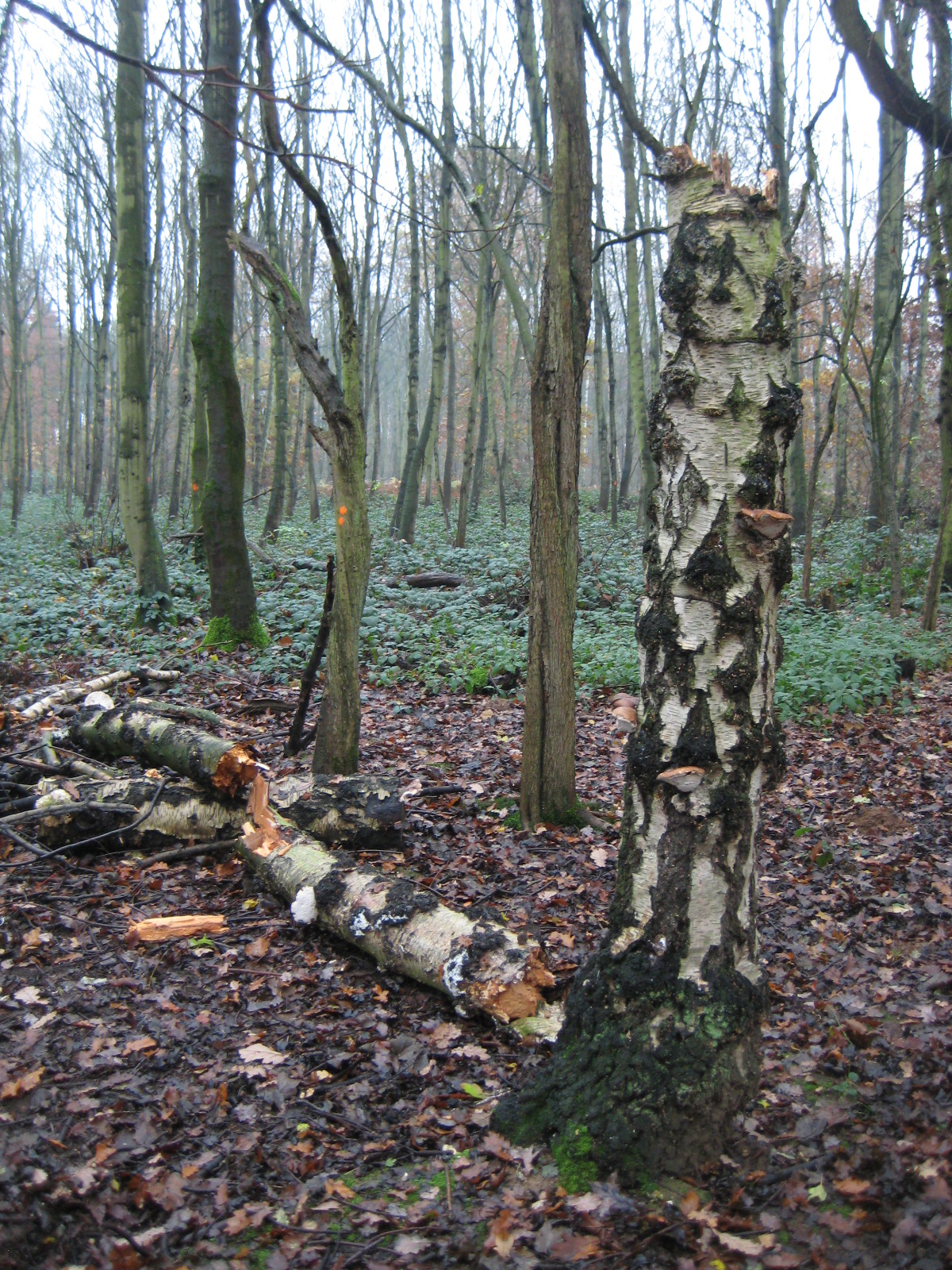
It was another dull, grey and damp day on Saturday. On arrival I immediately noticed a large rotten birch tree had fallen over and lay in pieces on the ground. It’s too far gone to be any use for firewood so eventually I’ll move some of it into the cleared area I’m working on to add some interest and habitat for insects and fungi.

Fallen rotten birch

Fallen rotten birch

I’ve figured that winter is the time to get on with some work in the woods. It’s not a time for sitting around but an ideal opportunity to crack on with something useful. Clearing overgrown brambles remains a priority. When spring arrives I don’t want to risk shredding birds nests or new wild flowers that might be emerging so the more I can get done now, the better. As growth dies back, it’s easier to see what you have got. Where brambles are thick, they have suppressed most other growth but on careful inspection, I found numerous young ash, hawthorn, elder and other saplings. In order to avoid chopping them off with the brushcutter, I took time to scrutinise the small area to clear, then marked the saplings by tying a small piece of brightly coloured wool around the top of the stems. That way I can see them as I approach with the cutter. I need to get some tree guards soon to protect these young trees. Clearing the bramble will make them more accessible and easier to spot by the deer.

After 45 minutes of clearing I decided a rest and a brew was in order. I had put my reading glasses in my coat pocket and now they were gone. A black case is not easy to find among the shredded foliage and earth. Luckily I spotted them and have made a note to mark the case with some bright paint to make them easy to find. I have come close to losing a few things even though I try to be careful. I realise now why a lot of woodland tools are orange coloured. So that’s a little job for home – mark as many of my woodland tools and items with something bright.

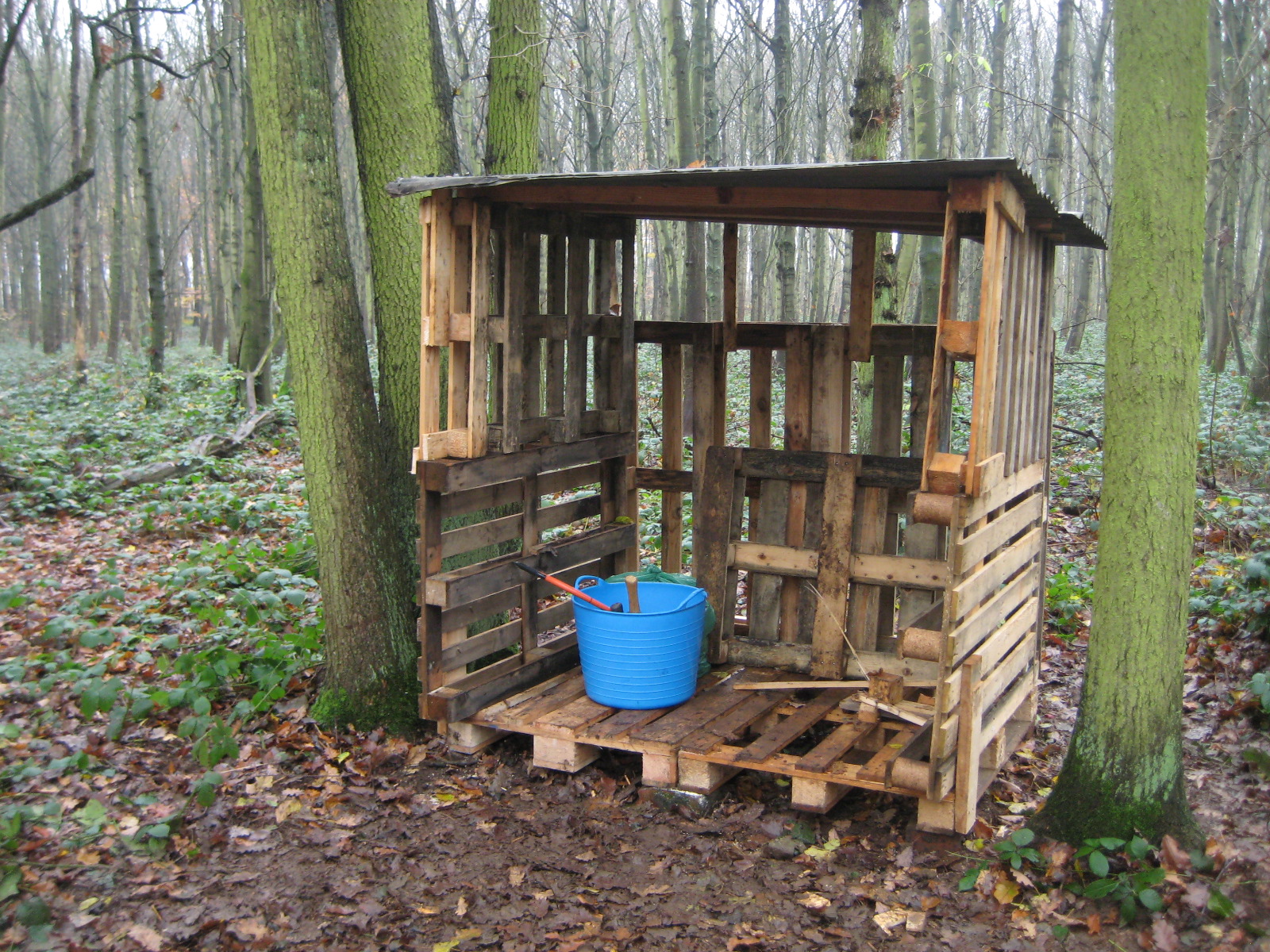
I finished my ramshackle woodstore – now it has a roof and is ready for some logs when I can thin some trees. Still waiting for my felling licence from the FC though. It just needs some deadwood branches stacking around it to disguise it and make it less conspicuous. It’s bigger than I intended and for now, could offer some protection for me in a sudden shower.

Logstore finished.

Logstore finished.

I did take some time to sit for a while and observe my wood. Not much wildlife this time but I was rewarded by two buzzards circling just above my trees where I sat. All in all, another enjoyable day in my woods.