
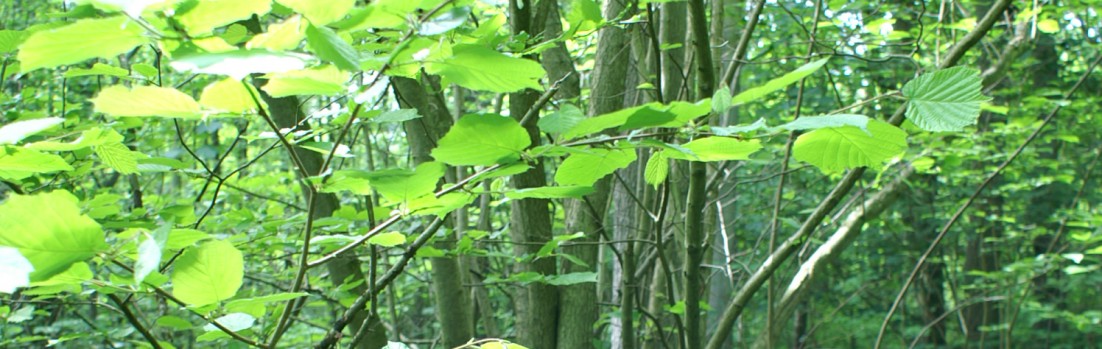
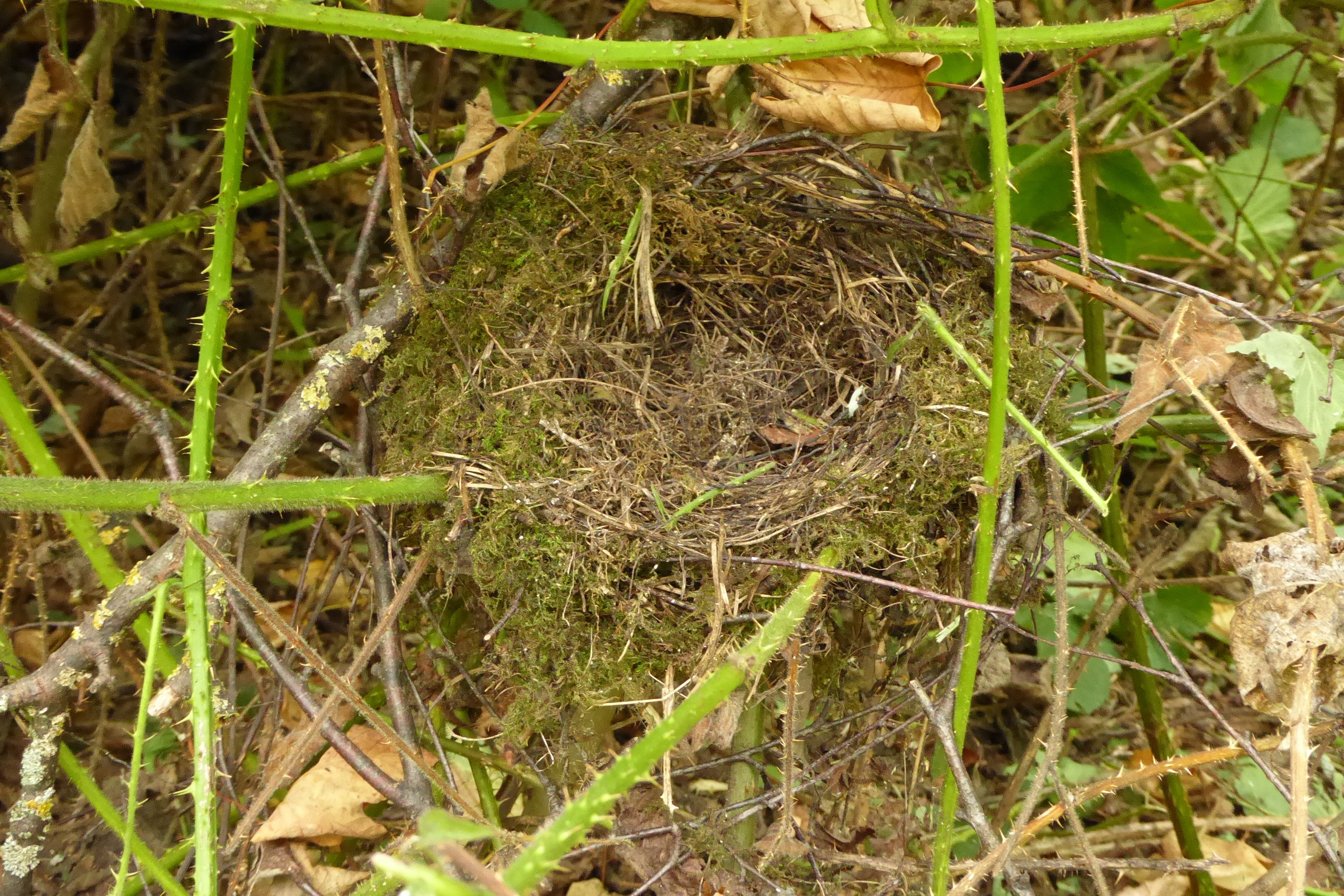
This year the brambles have gone crazy. Was it the rainy winter followed by early sunny weather we had in Spring? I’ve decided that trying to keep them down to any significant degree is impossible. .o my strategy these days is just to keep the paths and work areas clear, keep them down around any plantings I’ve done and blitz the areas where I am intending doing any felling. It’s clear that wildlife benefits from them. Hiding places for small birds and mammals, frogs, toads etc. Food from the flowers and berries and places for certain butterflies and other insects to lay eggs. Whilst clearing one of the paths I came across this old nest. Possibly a robin. So there’s some proof and also to make sure cutting is done before or after nesting season. Pretty sure it’s finished now.
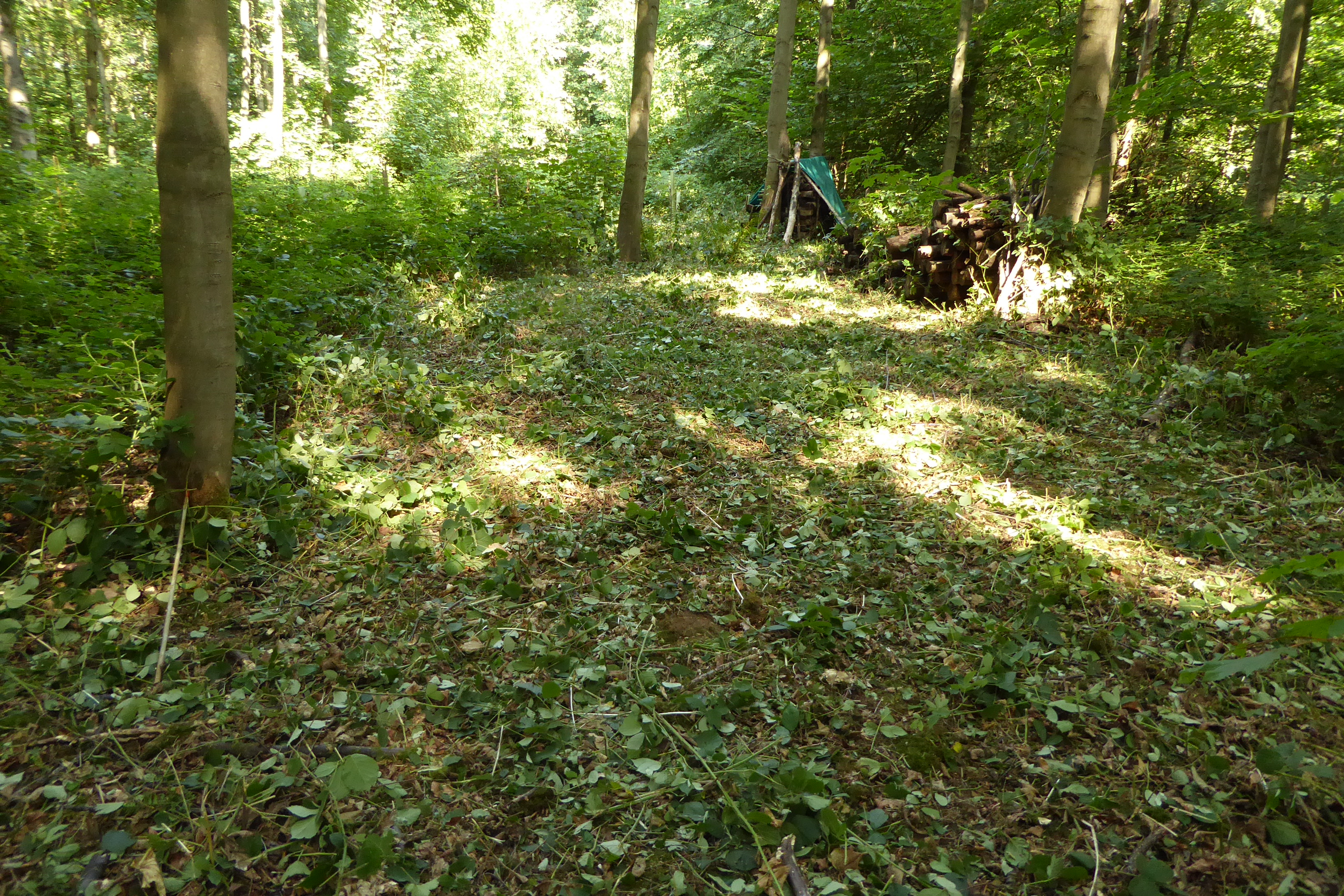
You can see from the photo below where I have cut it back compared to the area behind and to the left. Still some more to do there. It’s the area I felled and replanted, so the extra light has given the bramble a massive boost but that will compete with my saplings for water and nutrients.
I was supposed to be camping on Wednesday night but earlier in the week the forecast showed thunder and rain all night and all day Thursday. So I cancelled. When Wednesday/Thursday came it was wall to wall sunshine. Despite all the satellite and computer technology available to meteorologists, they still can’t be relied on more than a day before!
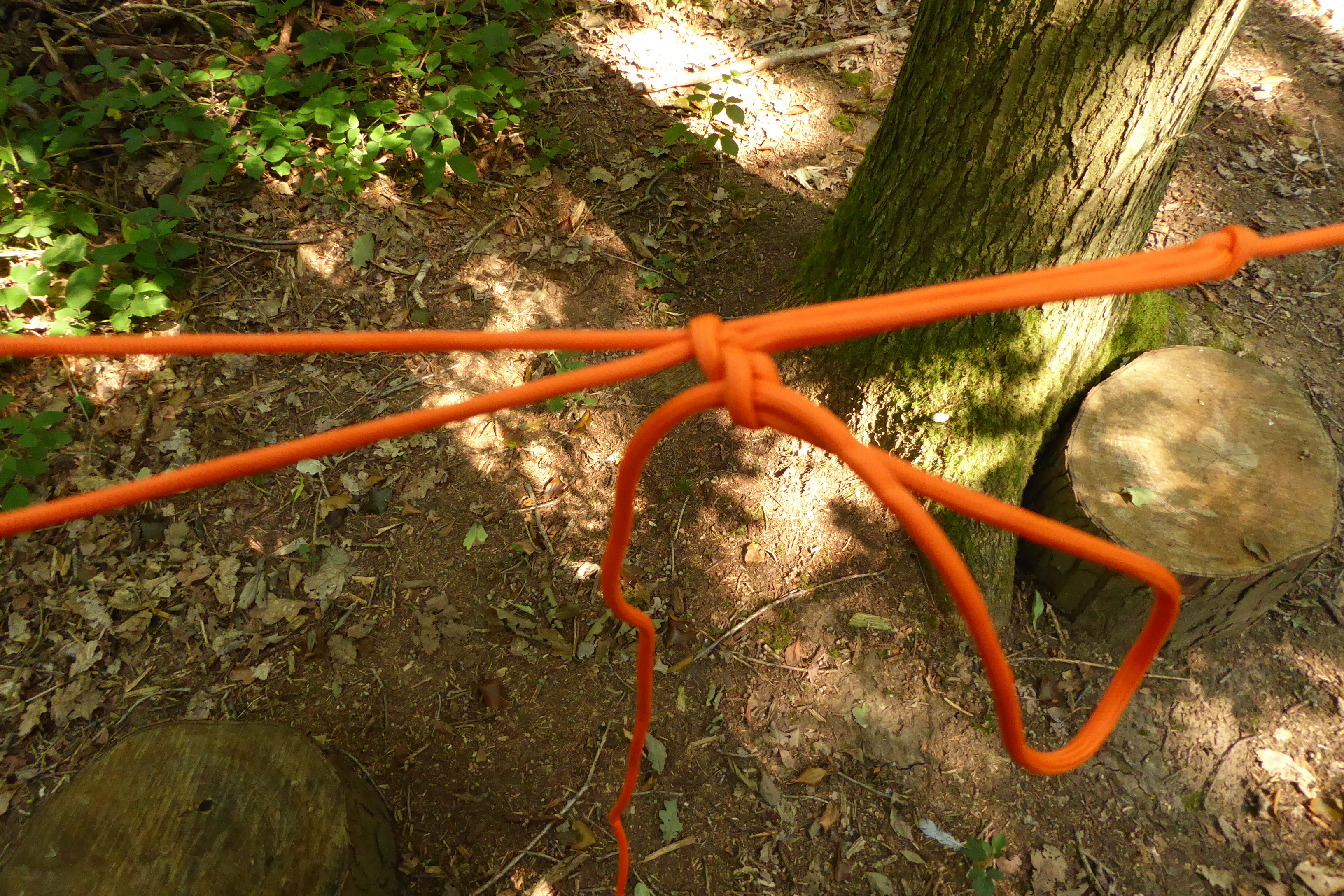
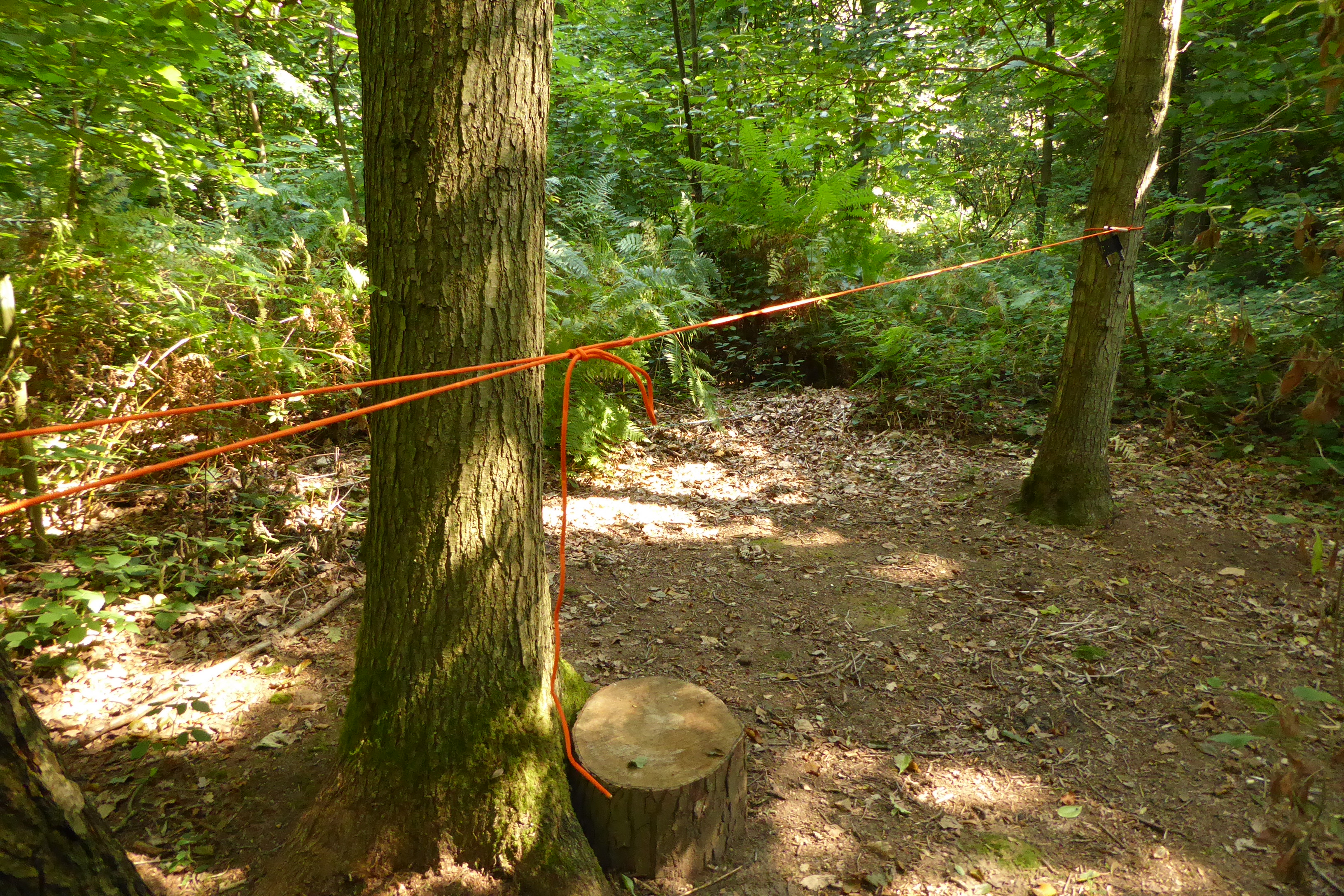
Where I plan to pitch my tarp/tent, I need to erect a ridgeline to hang it on. It needs to be very taut. There are various special knots which allow you to pull the line tight but the one I had normally used (as demonstrated by Ray Mears) wasn’t as good as I wanted. I saw a better one on Youtube called a Trucker’s Hitch. You anchor one end to a tree with a simple Bowline and toggle, then run the other end around the other tree and use the Truckers Hitch. It works like a sort of pulley system. I’m not very good at learning knots but I practiced at home, running a line between the front door handle and the newel post at the bottom of the stairs! So it was time to try it out on the trees. Here’s some photos to clarify it but if any campers/bushcrafters want to know exactly how, then just search for them on Youtube. It’s too hard to explain in simple words.
Here’s the static end using a toggle and bowline
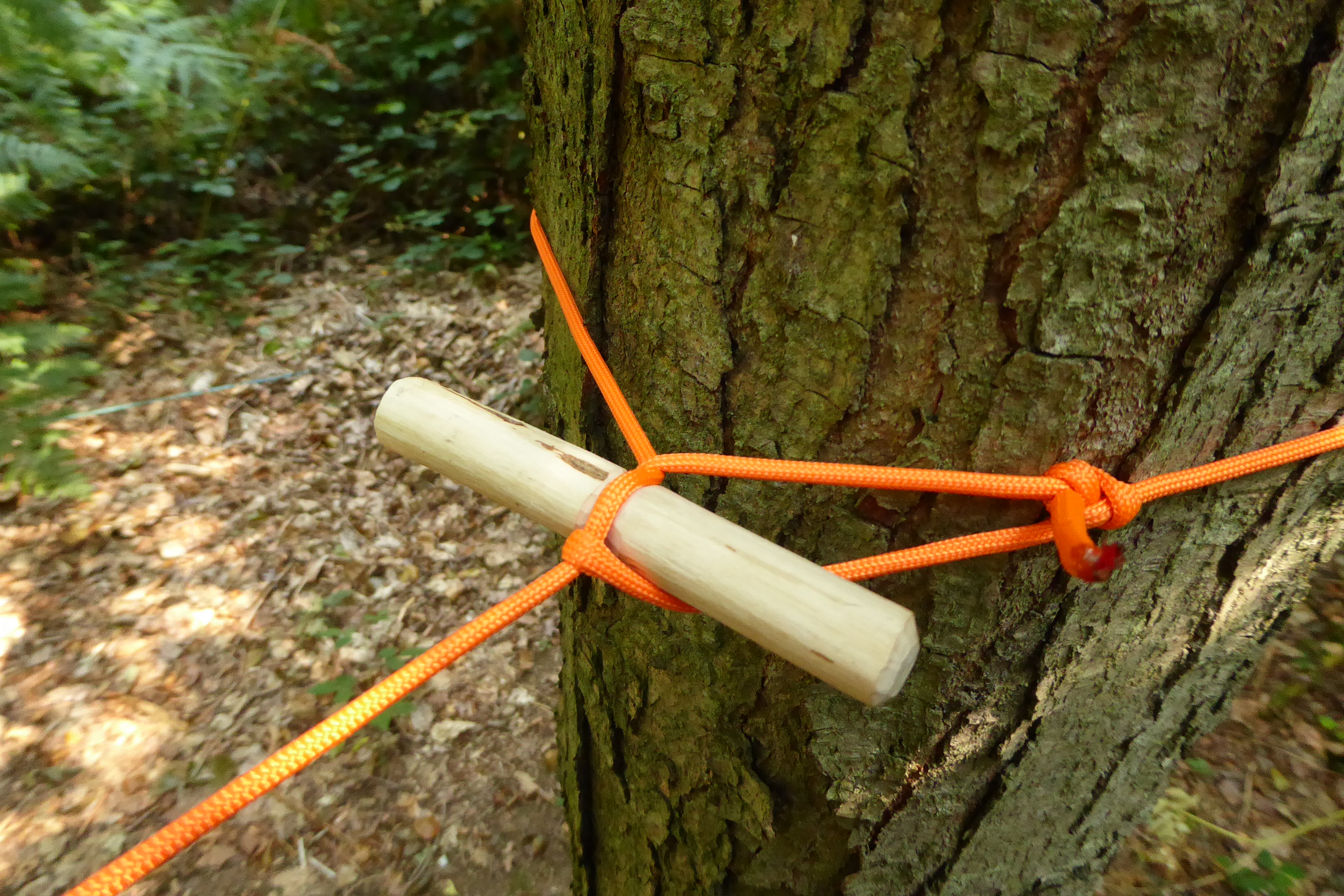
Here’s the Truckers Hitch (sorry it’s blurred)
and here’s the whole thing in situ. It worked very well
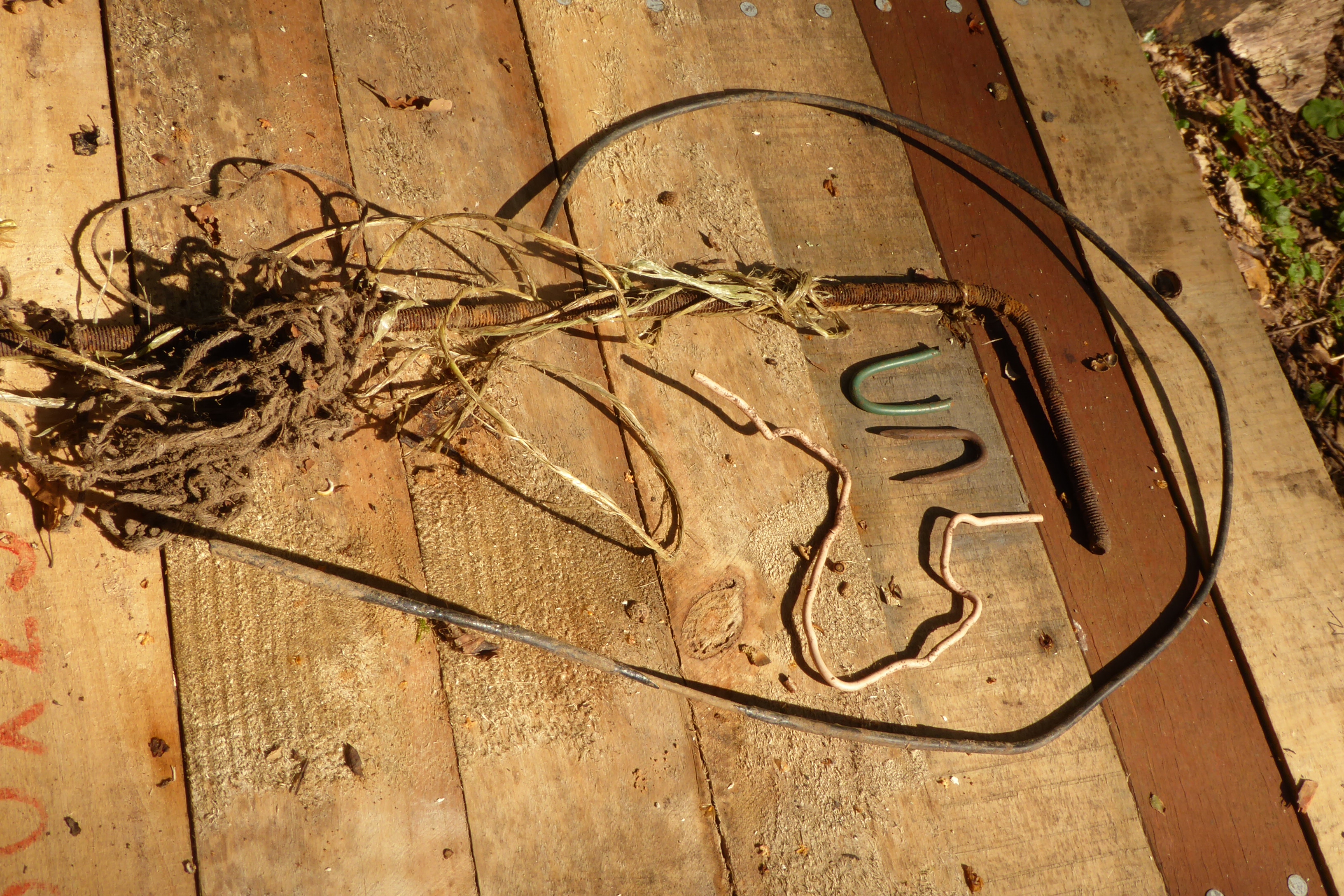
Now what about the special find whilst detecting? I dug up about eight finds. The usual rubbish – wire, a staple and a long threaded piece of steel bar with string around it which had been left by the student archeologists who dug here in the 1990s.
But the little gem was this thing – can you tell what it is?
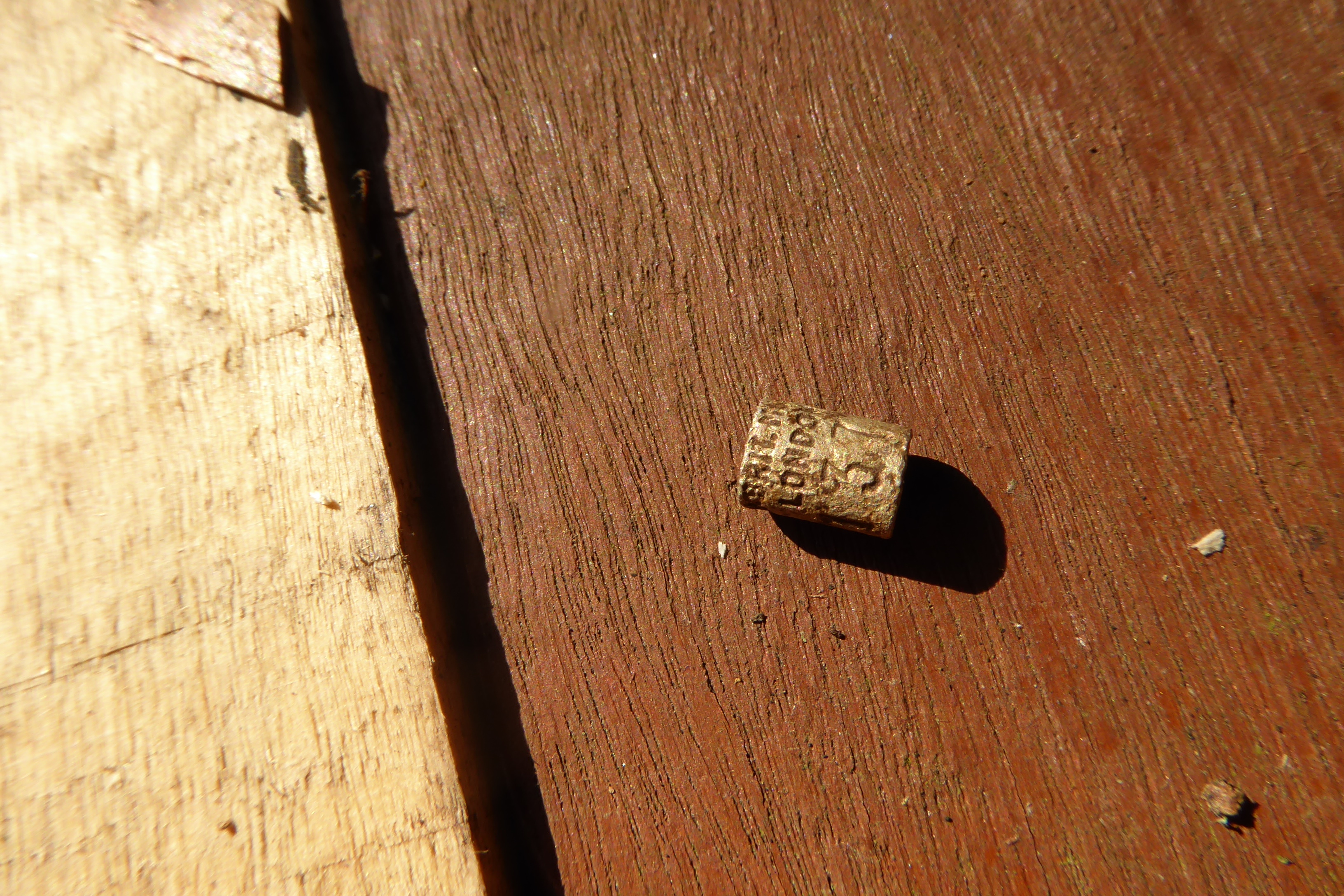
It’s a leg ring from a small bird. I was well impressed with the sensitivity of my detector to find this tiny object and even more amazed that I actually found it! The inscription says INFORM BRIT. MUSEUM LONDON SW7 and there’s a serial number on it. A bit of research tells me the Natural History Museum used to be called the British Museum up until 1992 but actually they parted ways in 1963. So the ring must be at least pre 1992 and even pre 1963. I have informed the BTO (British Trust for Ornithology) who now request any ring findings, so I am hoping they can supply me with some interesting data – what species of bird, when and where it was ringed etc. I’ll let you know what they say.


August 16, 2020 at 9:01 am
Hi David, I agree with you about the weather forecasts, and since the BBC took up with Meteo instead of the Met Office things seem to be even worse.
I am now using https://www.yr.no, the Norwegian weather service, and it seems blisteringly accurate for our Cumbrian location compared to any of the others. If you are a smartphone user, there’s an App you can download, although I generally look at the desktop version. Hope this helps.