Diary of a man and his woodland

A blog about a man's dream to own a small woodland.


Leave a comment

Chalara update and the Black Dog

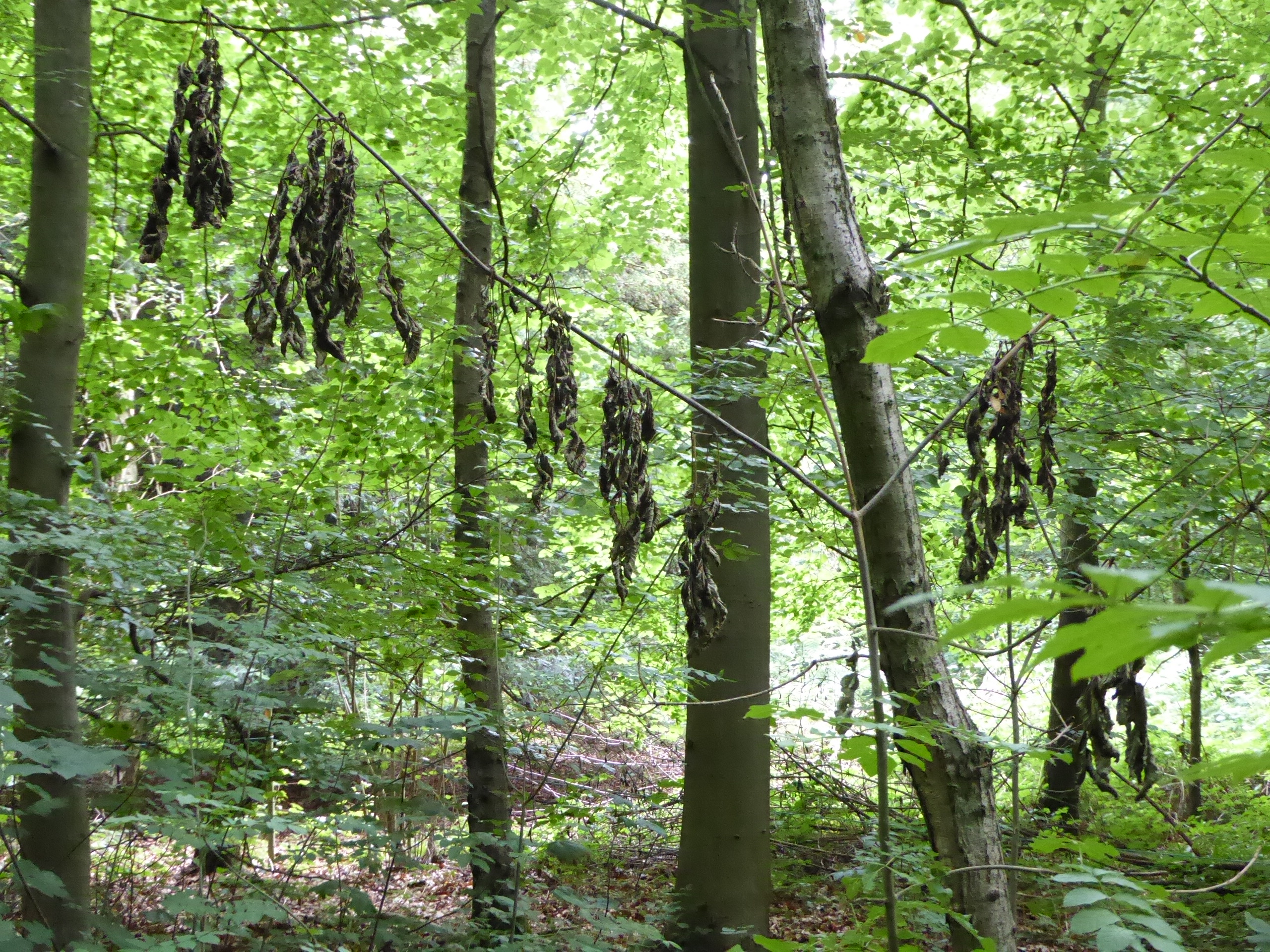
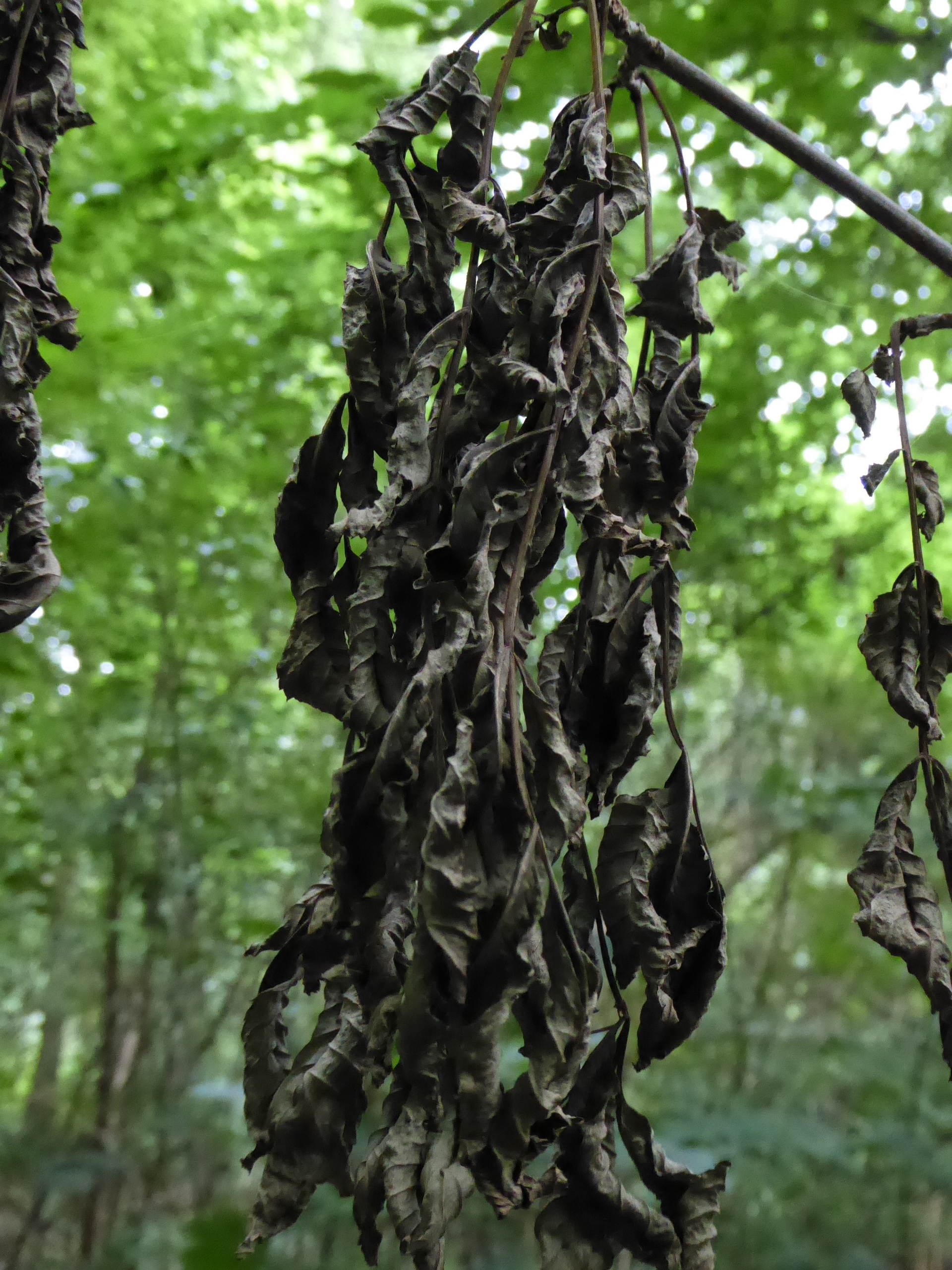
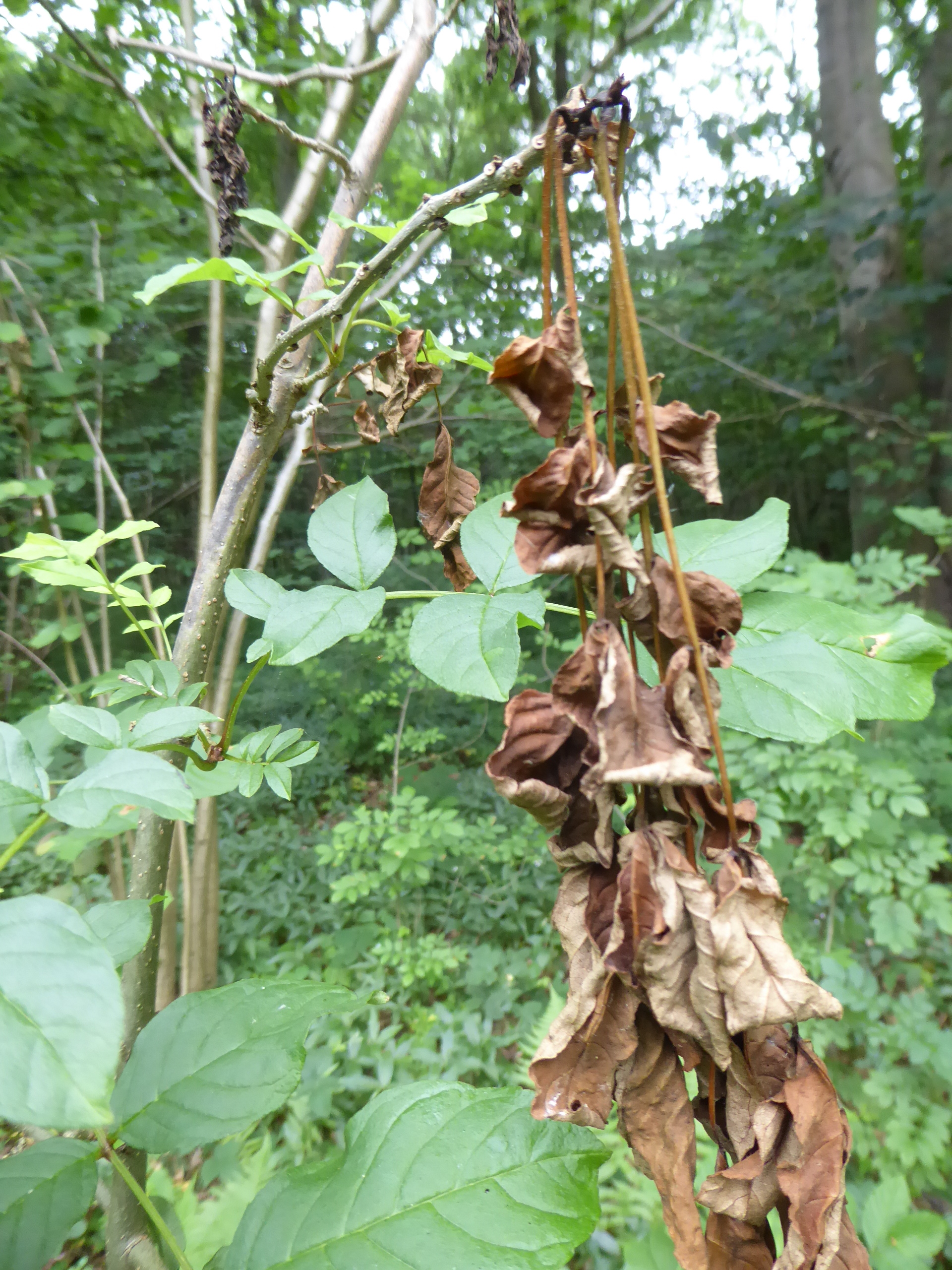
I had hoped to do a camp-over yesterday but the weather forecast for today was horribly wet, so I plumped for just spending the day there, having another “easy” day just doing a few jobs and enjoying being in the woods. It was one of those days when the “Black Dog” seemed to be barking at my heels, so I was hoping a day at the woods would shake him off. I took my usual walkabout and decided to check the ash saplings that I had suspected have succumbed to Chalara (ash dieback disease). They didn’t seem much worse and I continued the walk looking for any signs in other areas. I spotted two saplings that I had not previously seen which looked very sick, the dead leaves hanging on the thin branches like sleeping bats.

Black Dog barked as my heart sank. I felt I needed to check my neighbours’ plot. If it is Chalara then I am sure there would be similar sickly specimens among their many ash saplings. Sure enough I found numerous ones looking just like this. Black Dog took a bite at my ankle. The gloom of the woods seemed to intensify and my piece of paradise was feeling somewhat shabby around the edges. I will need to report the disease to the Forestry Commission. It’s a statutary requirement but at present there is no other requirement to do anything (like felling and burning). I shall closely monitor the situation. There are hundreds of ash saplings around the woods and some areas look perfectly healthy at present, so hopefully some of them might have a natural resistance to the disease.

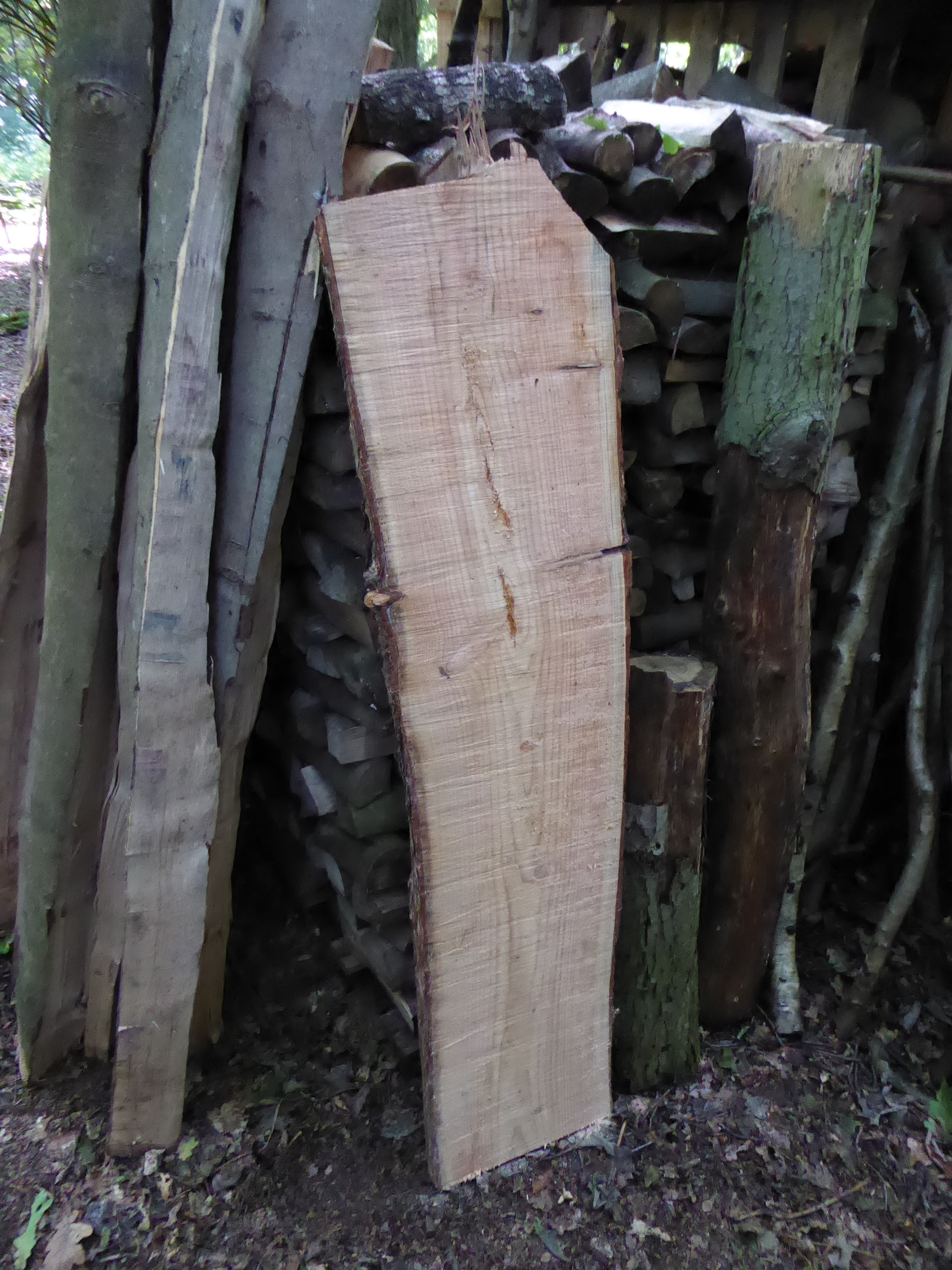
Physical work can help keep the dog at bay so I set-to chopping more logs. I heard a whistle and looked up to see Alan, one of my other neighbours heading down the ride. He always welcomes me with a genuine smile and solid handshake. He’s a very resourceful person and we always have lots of woodlandy chat. I was telling him I planned to make a shave-horse for the woods but was struggling to source a plank from my logs to use as the bench part. He kindly offered a piece of his larch that he has planked using a portable sawmill device. We headed to his place and left Blackie sleeping. I returned with a beautiful two inch thick plank about four and a half feet long and about fifteen inches wide – ideal for my shave horse.

By which time my other next door neighbours had arrived. I took them to see the sick ash saplings so they would know what to look for and just as second witnesses. We had a nice chat over a mug of coffee and a piece of bakewell tart and I showed them how to make bramble cordage. I carried on chopping wood and before I knew it, it was time to pack up. I looked around for “Blackie” but he seemed to have taken his leave for now.


Leave a comment

A new fire and something good about bramble

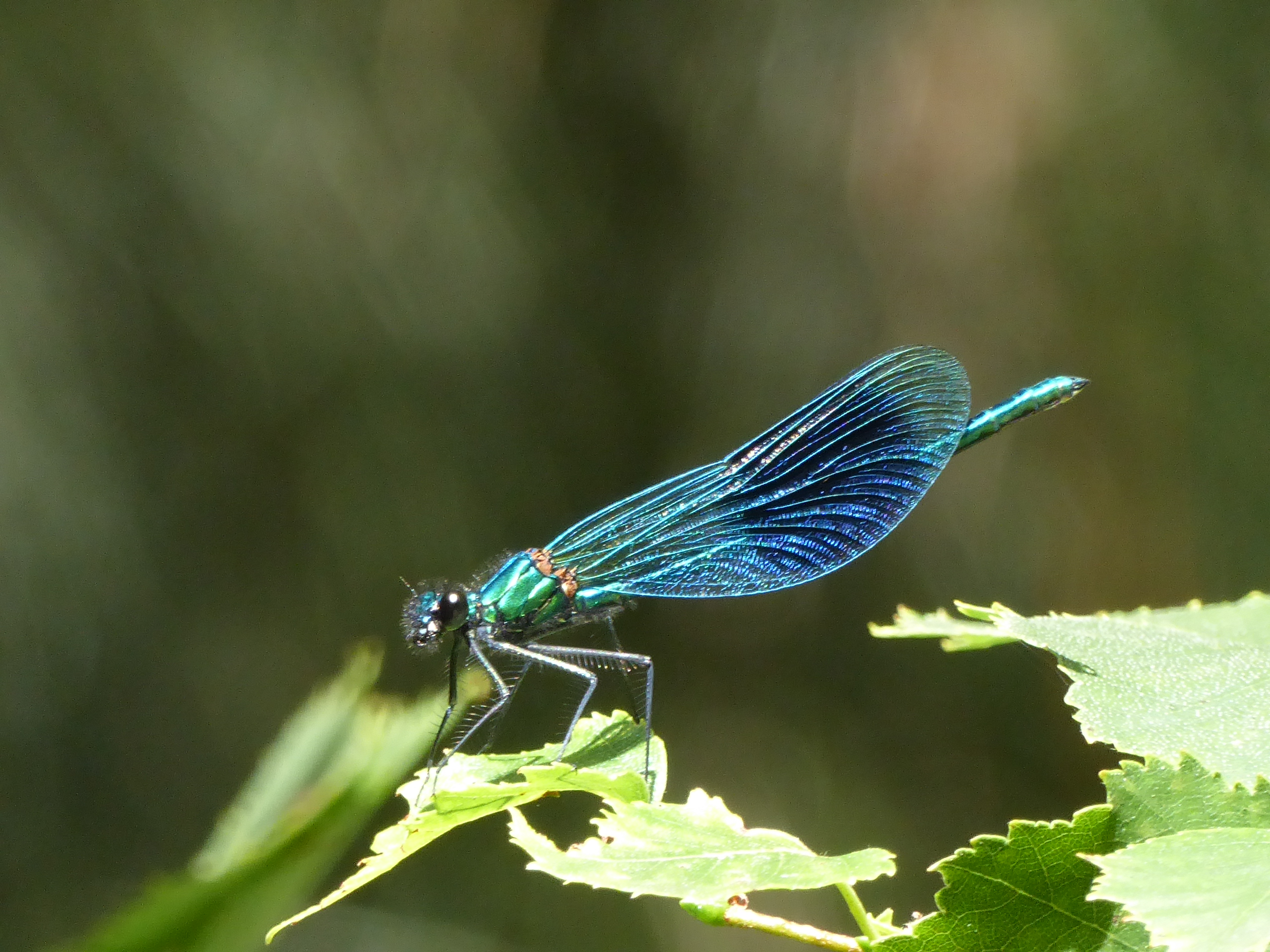
Yesterday’s weather was due to be hot so I planned an “easy” day doing a few small jobs and some bushcrafting. I drove down in the mist and arrived at a quiet wood at 7.45am. I love an early start when it feels like I’m the only person there and it gives me a good seven or eight hours in my woodland sanctuary. I’d spent a day at my friends wood on Sunday and got badly bitten by the mosquitos but this year, they haven’t bothered me much at mine. As well as there being too many mossies at his woods, he also had lots of beautiful damsel flies. I managed to get a good photo of one.

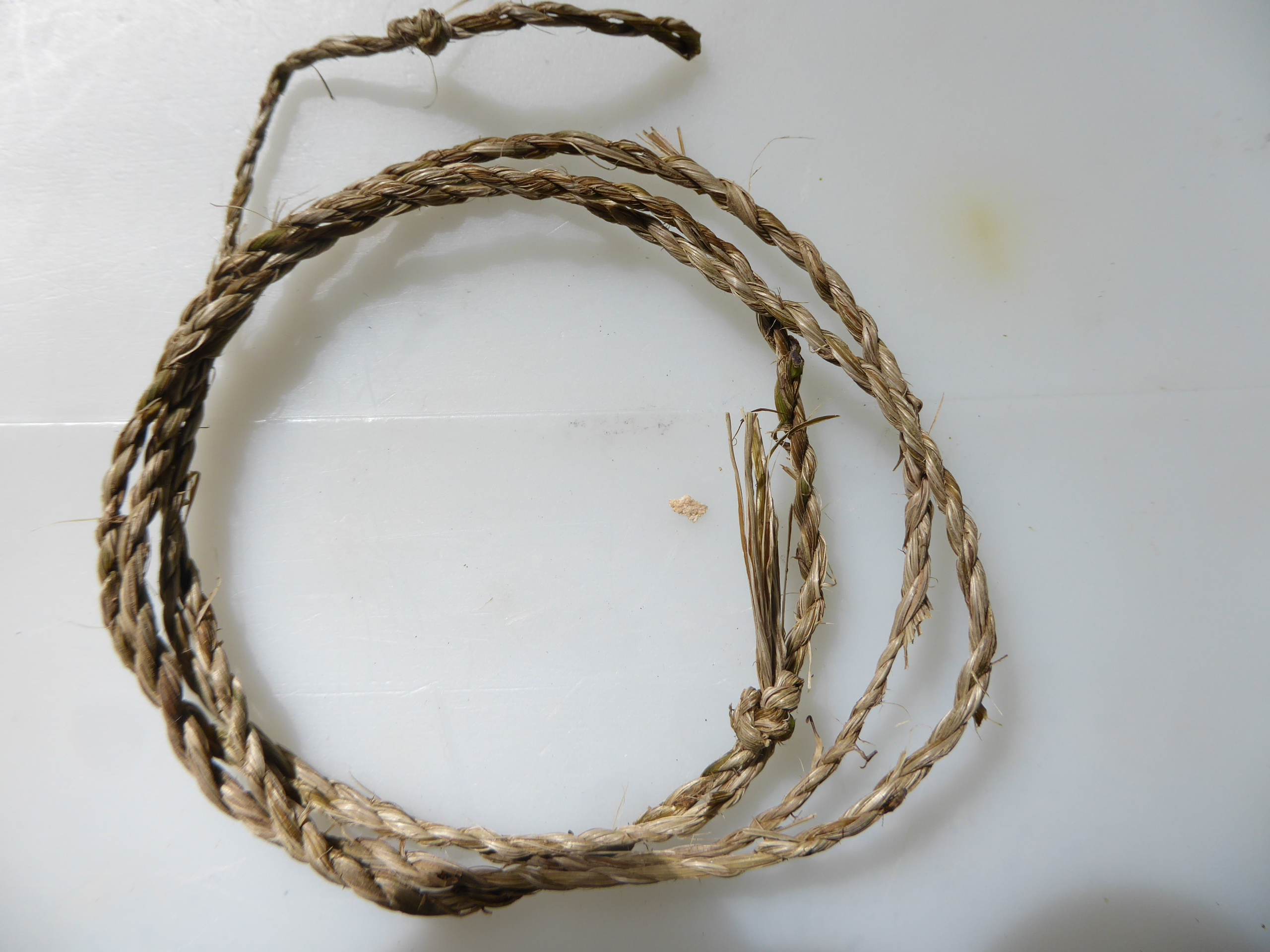
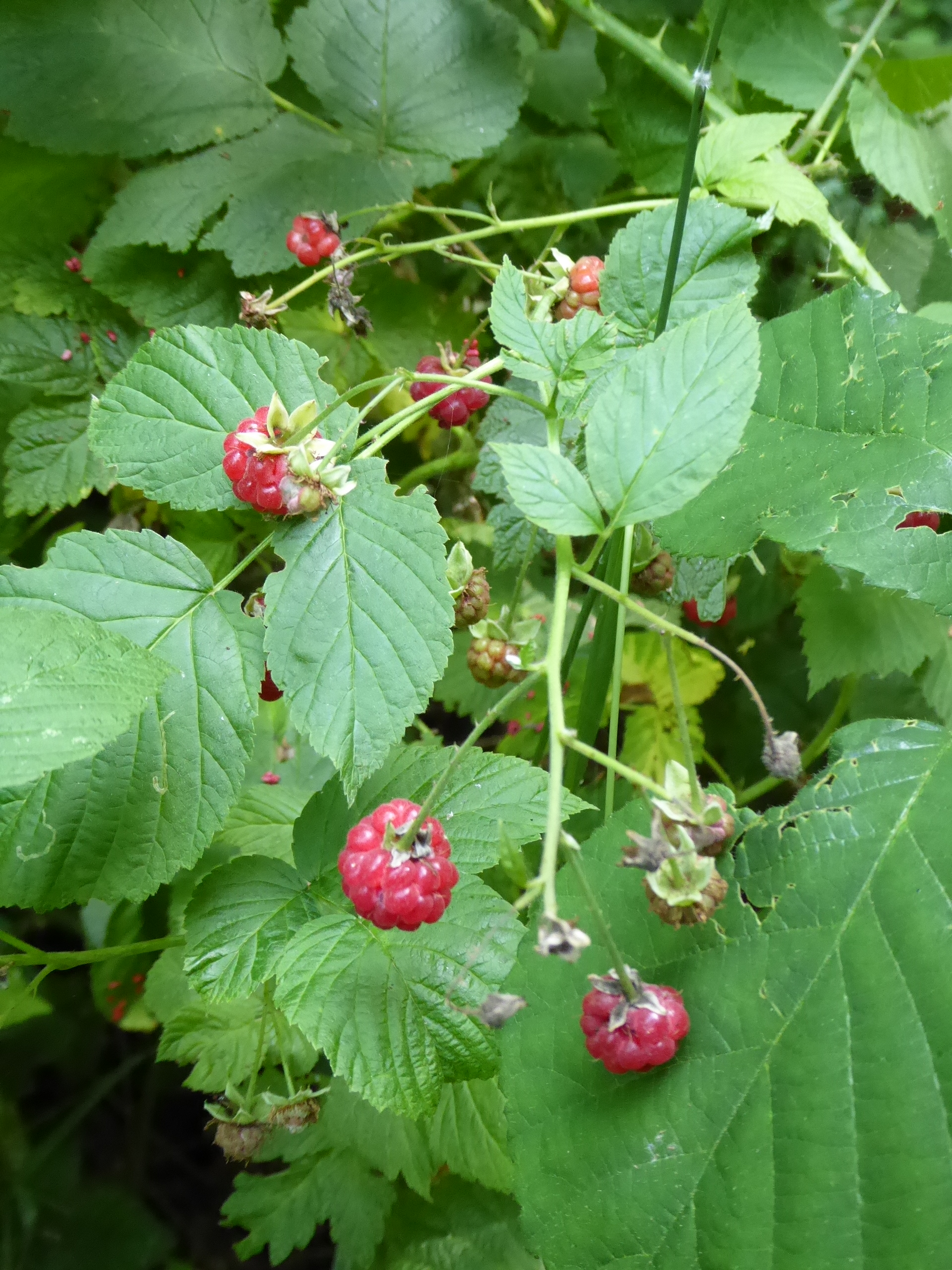
So what’s good about bramble apart from the edible berries (which I get very few of)? After all the bramble-hating stuff I’ve said, I can see them in a slightly favourable light, after watching a video of someone making cordage from the fibres in the stems. I had a quick qo at it on Sunday and found it makes incredibly strong cordage and what’s more, because they grow so long, you can get very long lengths of fibre which means less splicing-in of new pieces. I cut two long stems and processed them down to the fibres which lie just below the outer skin. It’s a similar method to making nettle cordage but you gently scrape off the outer green skin first whereas with nettles it is the outer skin that you use. You then gently bruise the stem with a stick to release the fibres from the inner pith, then pull them away. It’s tougher then nettle fibre but easy enough to work with and you can get thicker and longer cordage in less time and having to cut fewer stems. This is the piece I made quickly yesterday. It’s about a metre long and took just over half an hour to make.

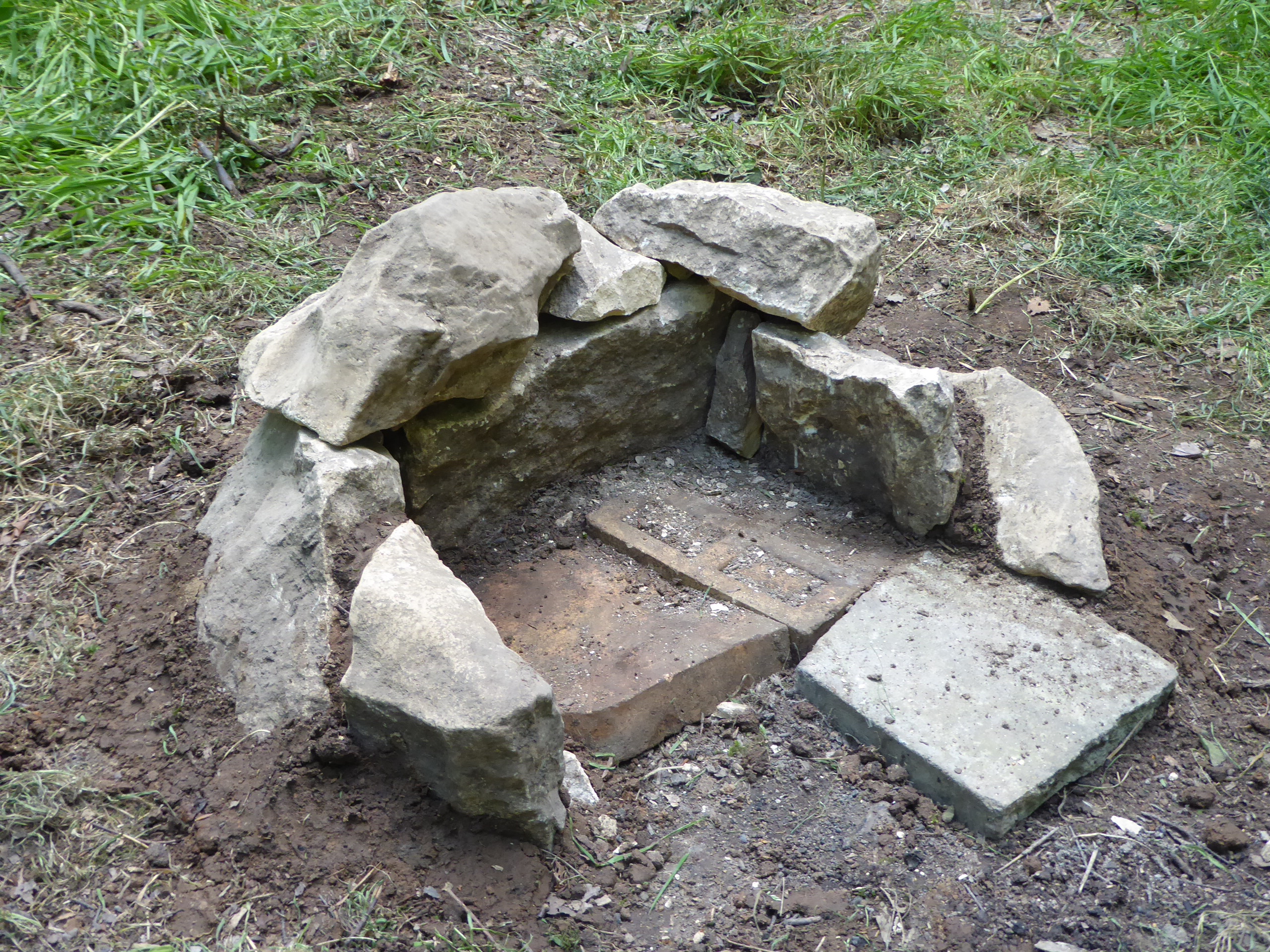
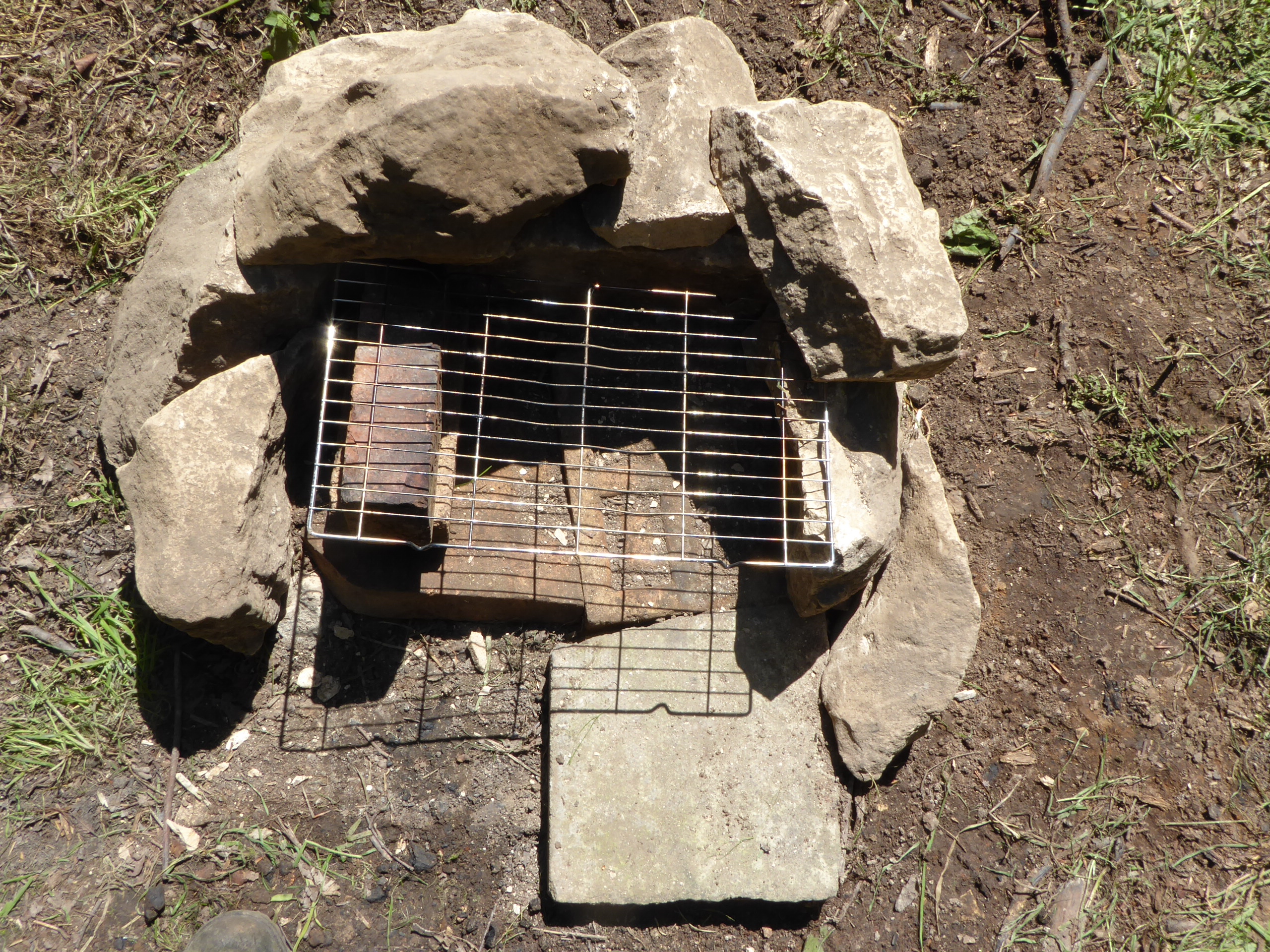
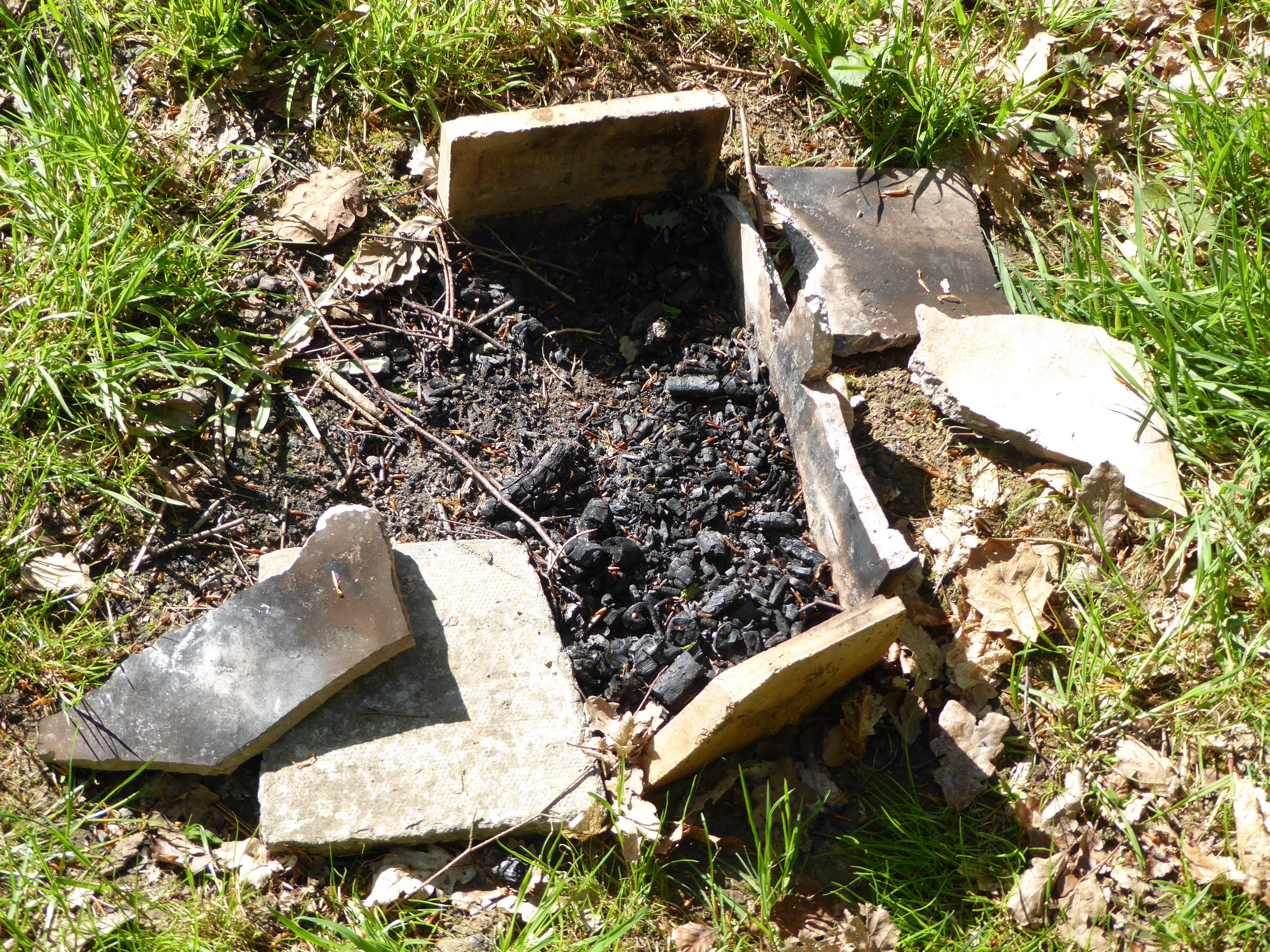
After digging up the limestone rocks the other week, I wanted to use some of it to rebuild one of my campfires (I have two). The old one was built from an assortment of bricks and oddments from home and didn’t really look the part. I used the two old firebricks (which are flat) to make a hearth,then built the rocks around in a semi-circle. A small piece of paving stone at the front acts like a sort of hot plate to stand a pot or kettle on when cooking. Building it was a bit like doing a 3D jigsaw puzzle and a bit of a balancing act, trying to get the irregular rocks to lock together slightly to make a stable structure. I added clay around the base to stabilise them further. Two house bricks can be placed inside to support a metal grill when cooking over embers. I didn’t get time to light it and it will look better once it’s had a few fires in it.

What else? Just a few log-related jobs but I won’t bore you with the details. I’ll just leave you with a few photos.


Leave a comment

A bit of house keeping and photography

Yesterday, my priority was to take the summer season fixed point photographs for my Woodland Trust volunteering role. I have three sets now – Winter, Spring, Summer and comparing photos of each location it’s quite interesting. Some areas look hugely different either due to work having been done or the seasonal change in foliage etc. Whereas some areas, where no work has been done and where they tend to be dark and dingy, there is very little change over the seasons. I can’t show you them now because the files are too big for this blog but at some stage I would like to edit a few down and post them.

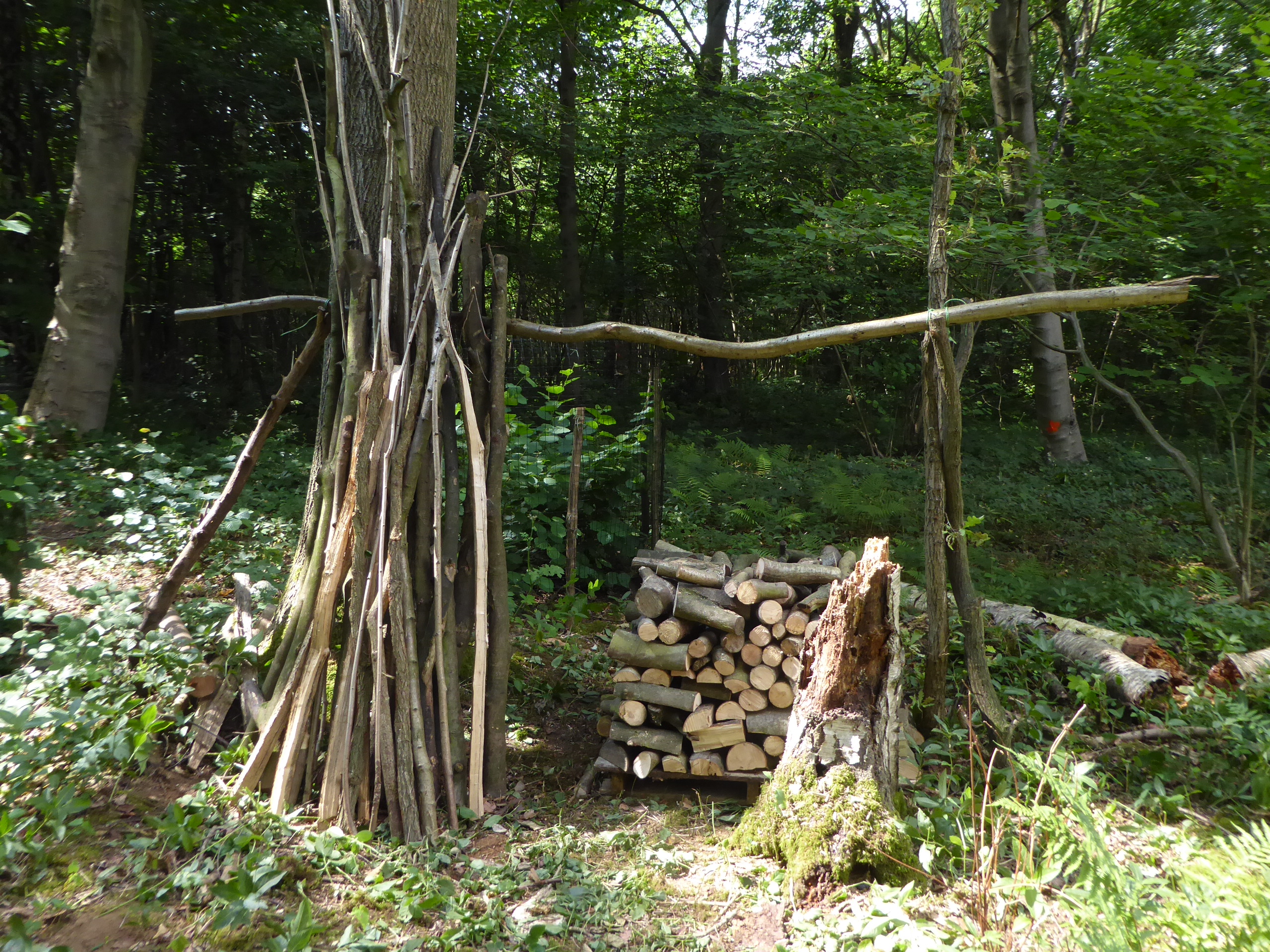
As usual I had intended doing all sorts of jobs but it ended up mainly doing some “housekeeping” for my logs. I have piles of  logs on the ground waiting for a place to stack so they can dry out and season ready for fuel. I had a tidy up in the log shed so that I could move some of last years logs into it and make way for this years stack. In the coppice area I wanted to create a new stack for the logs I cut up last visit. I did some bramble pulling, laid an old wooden pallet down and started building the stack. It’s one of those labour intensive jobs but a satisfying one. Here’s how it’s looking so far. I shall be adding to it later.

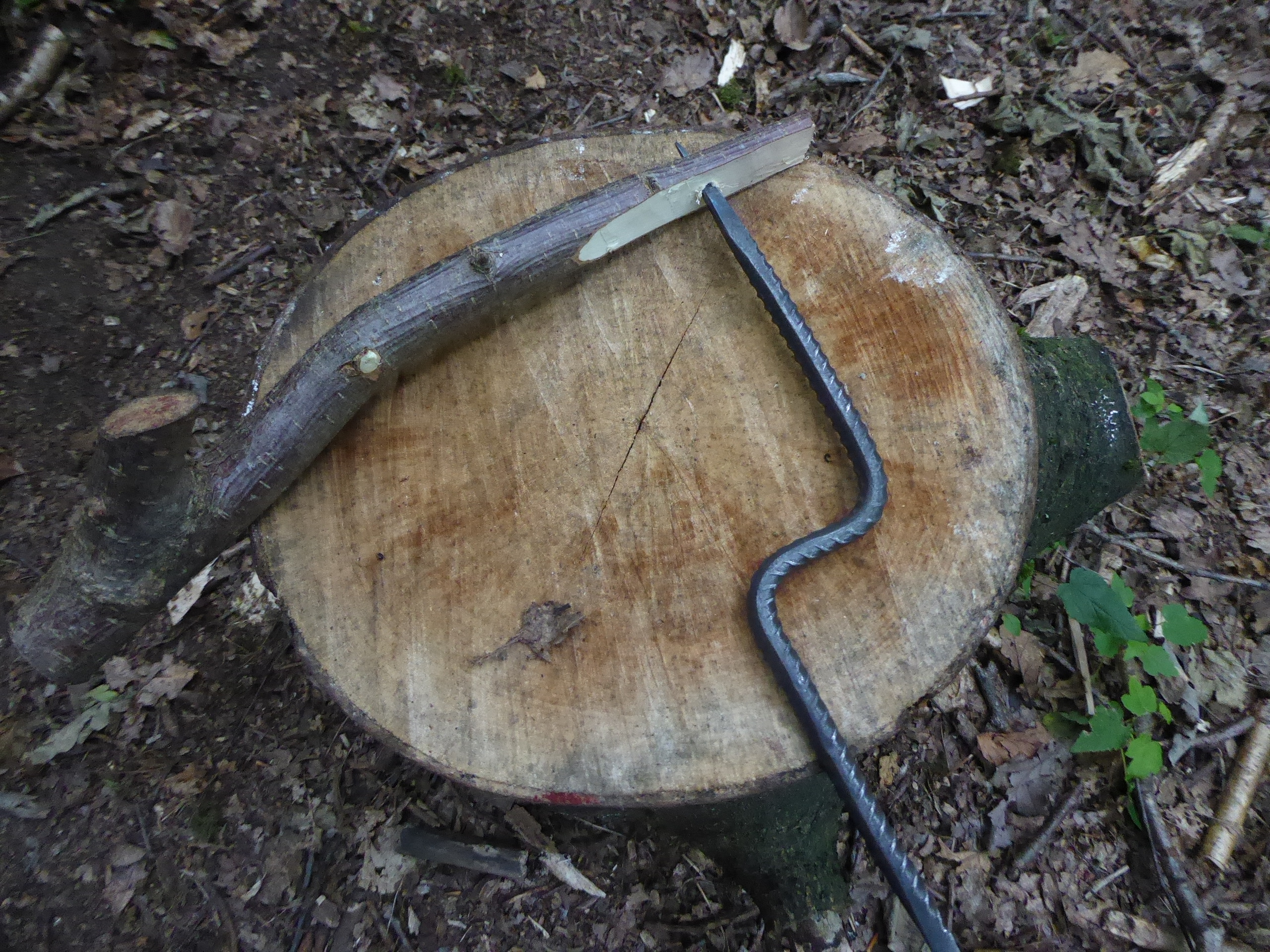
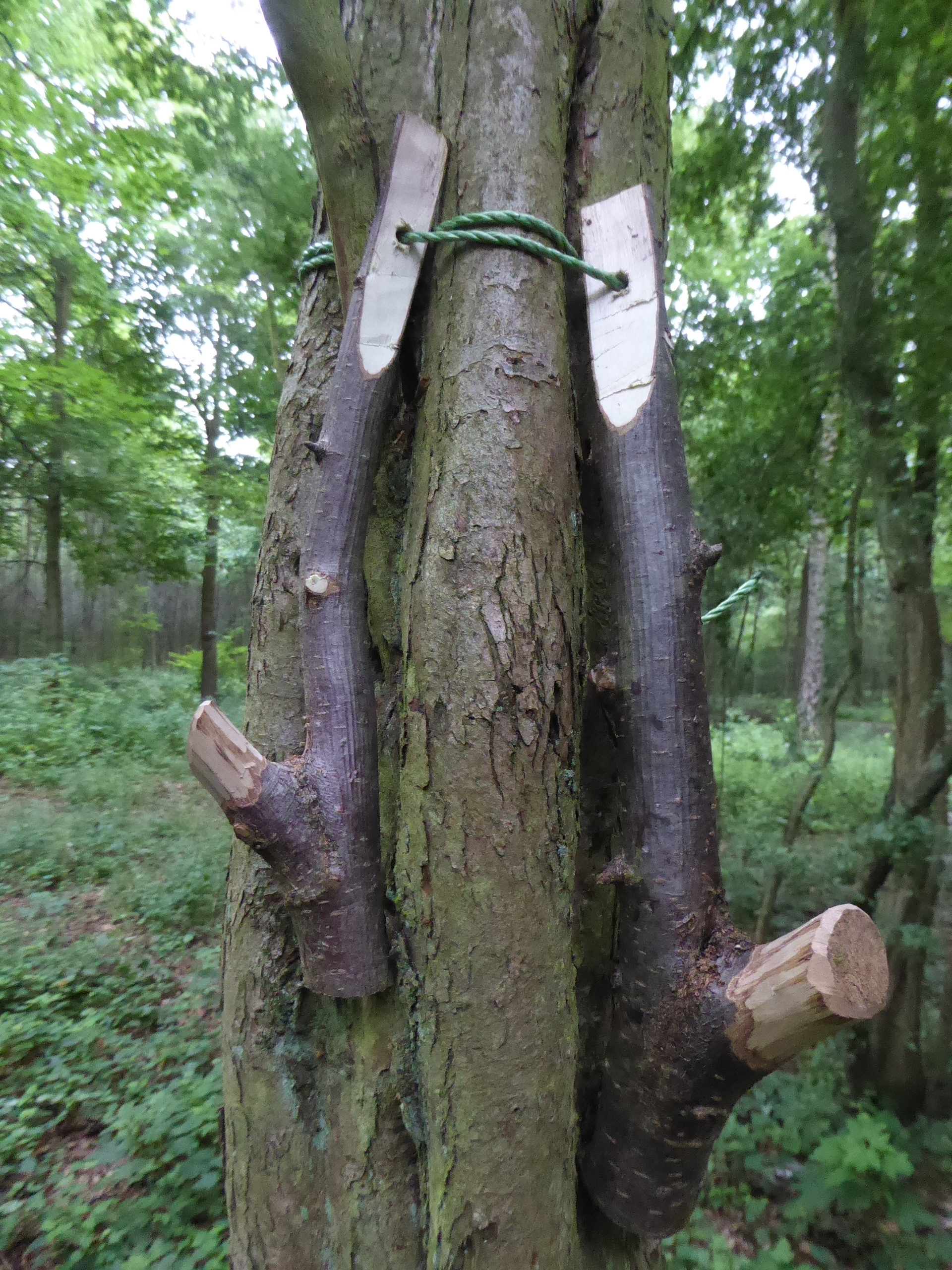
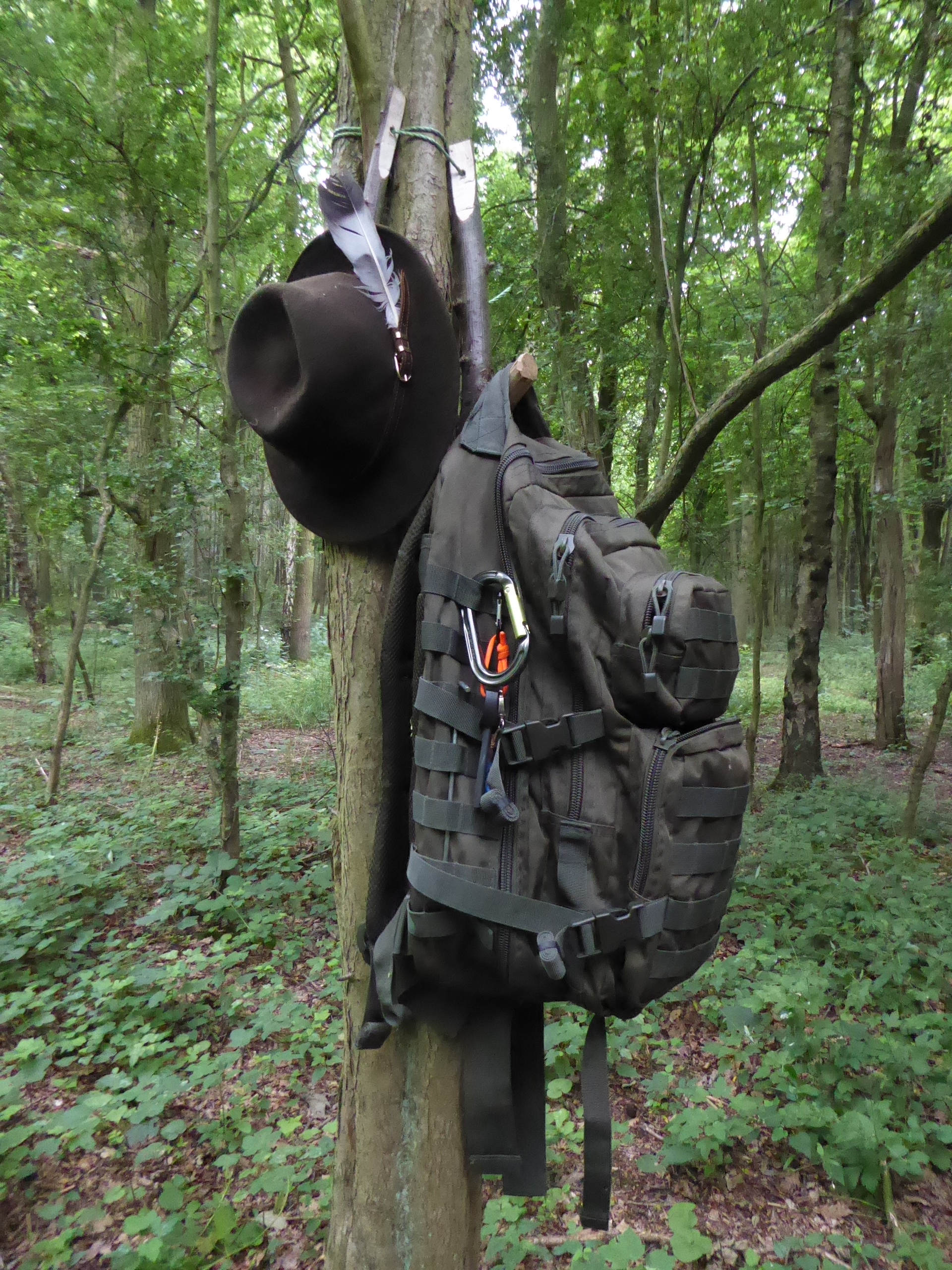
Lunchtime and a chance to get a bit creative. I wanted to make a hanging hook for my rucksack and jacket or hat. An easy project, just need some pieces of forked branch and some twine. I thinned and flattened the tops, then drilled a hole through using the cranked awl that my blacksmith mate made for me. (Hope you see this S.R.) Then threaded two hooks onto the twine and fastened it around a small tree next to my table and work area. Nice to have some home comforts in the woods. As my bushcraft mate says “we are not roughing it, we are smoothing it”. These little things that we can do, can make time spent in the woods so much easier.

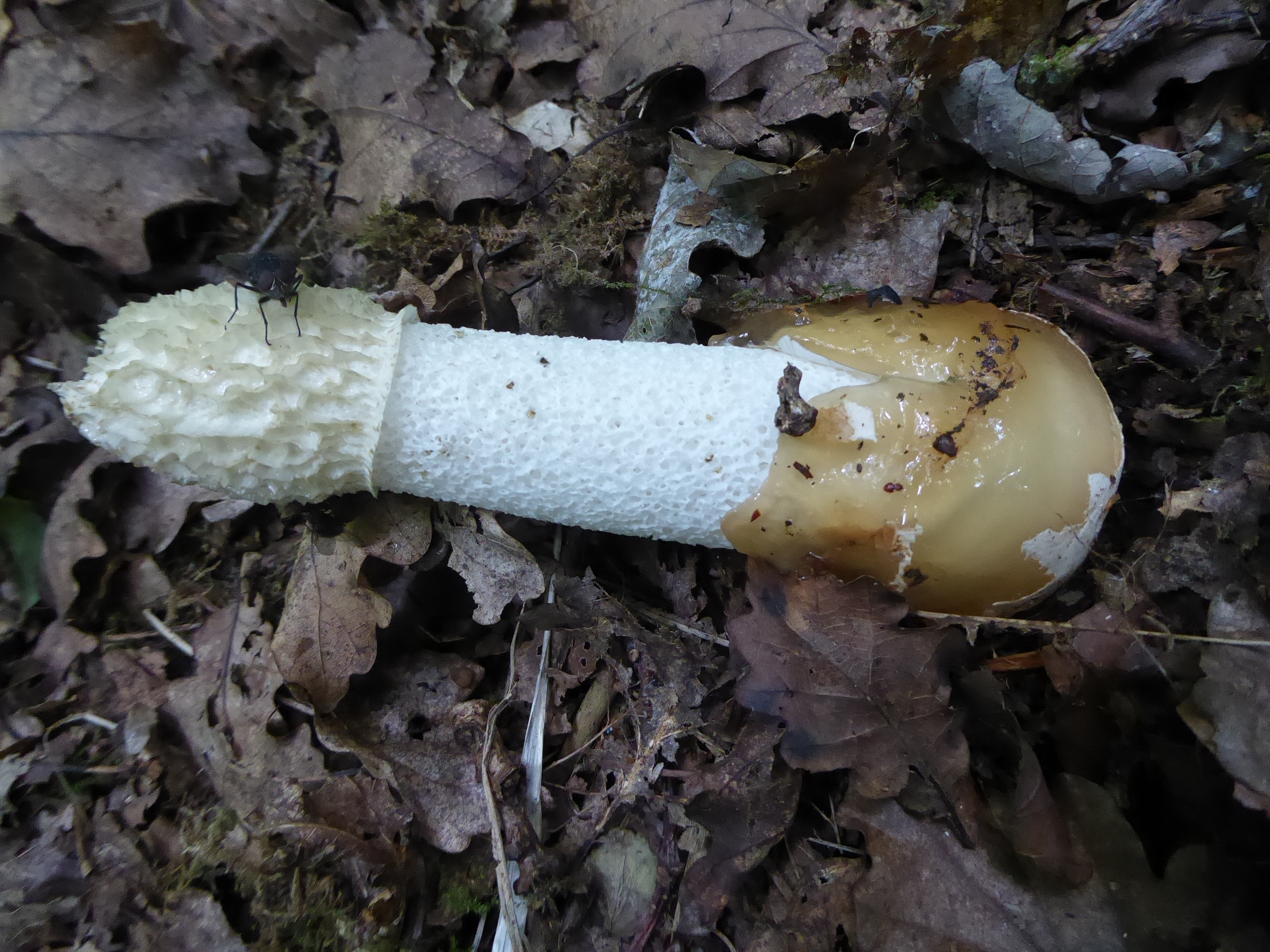
For a few weeks I have kept smelling the familiar gassy smell of stinkhorn fungi (phallus impudicus). Even though they are white, they are hard to spot, usually lurking under some thick bramble. Whilst making my coathook I spotted one nearby. It has fallen or been pushed over but still pristine and attracting a fair bit of attention from the fly residents. It’s a beauty – small but as we know, size doesn’t matter!


Leave a comment

A bit of this and that

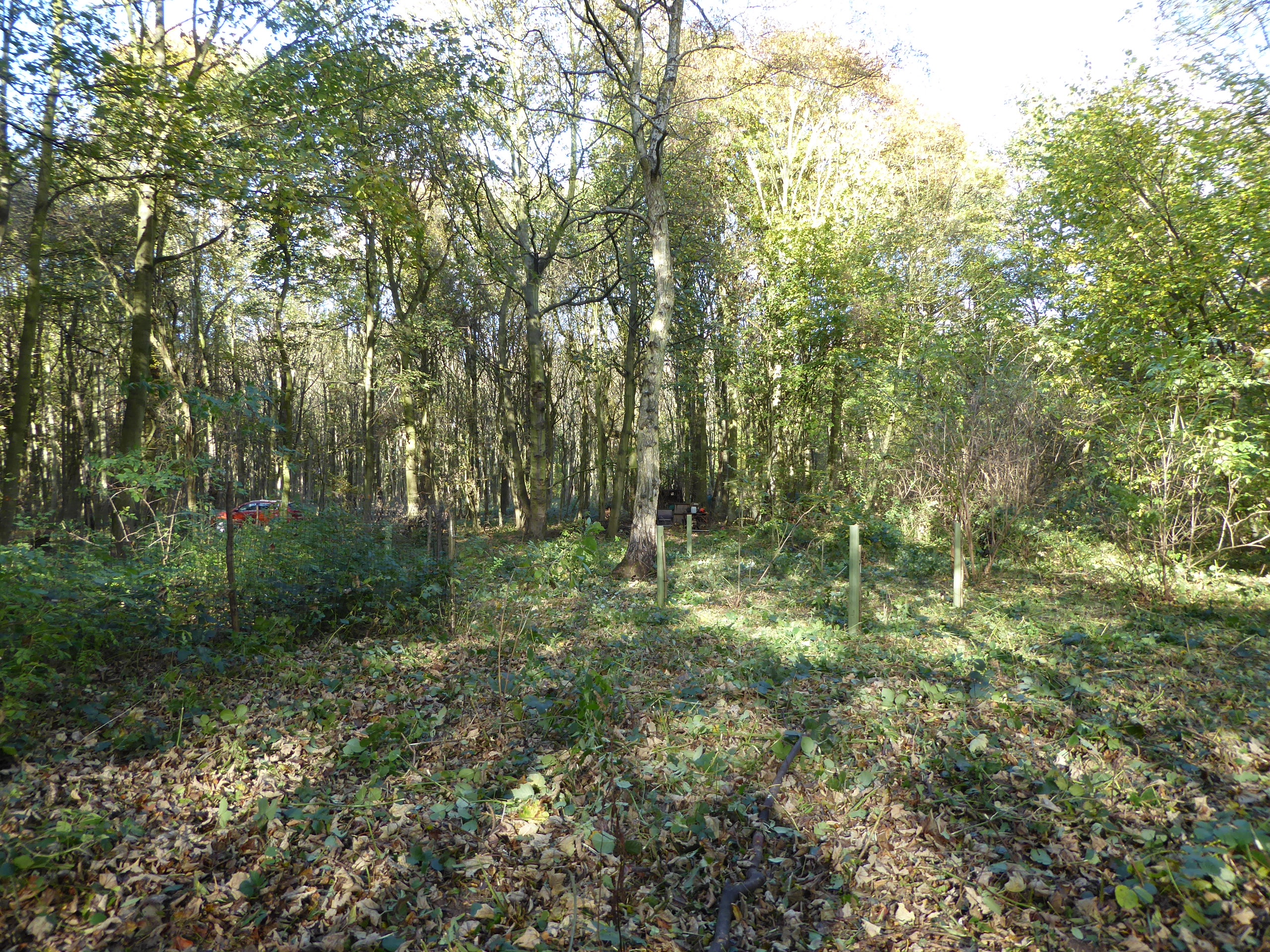
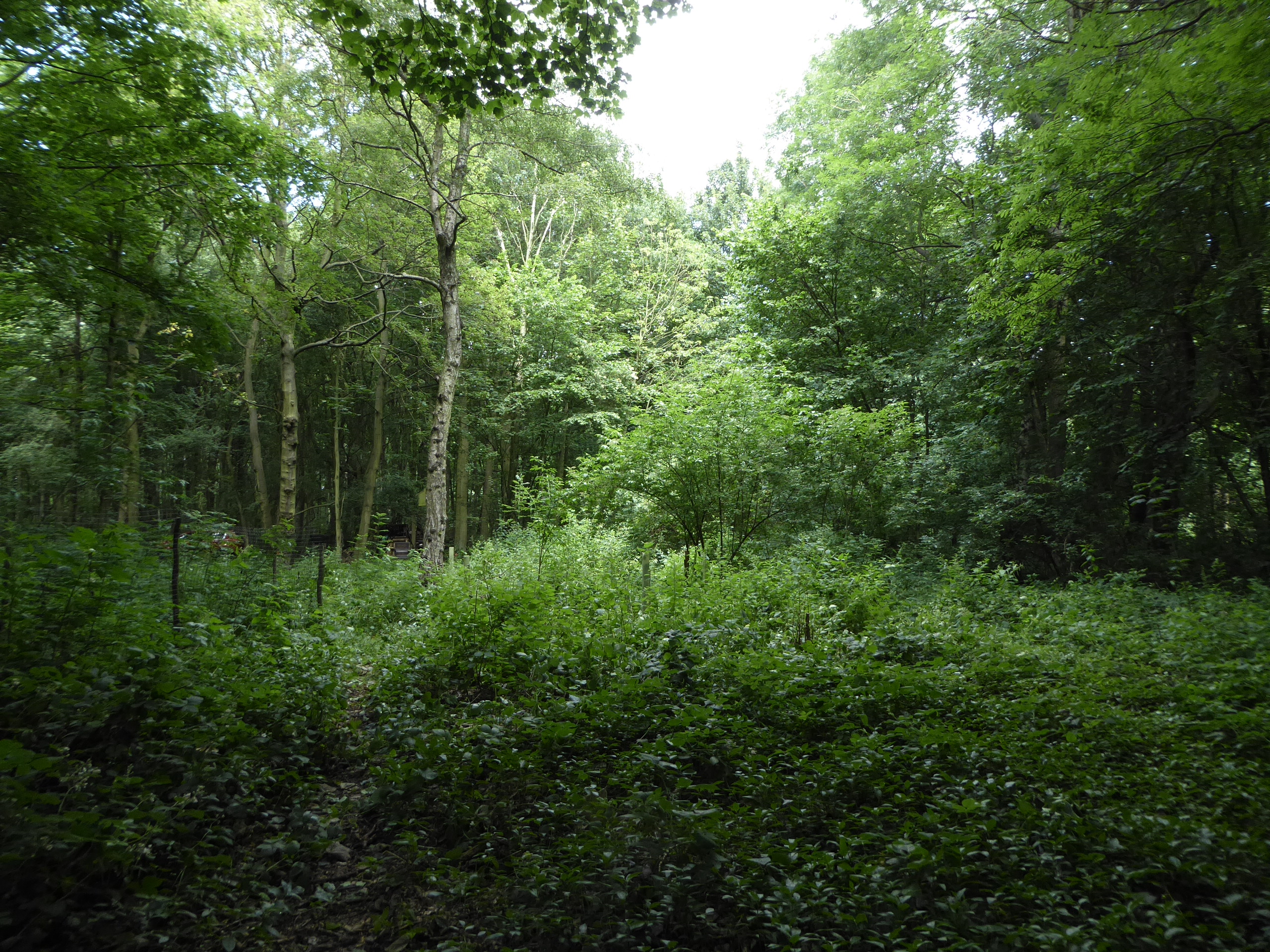
I’m a bit late writing up this post, it was saturday 1st July when I last went. July already? The two shots above are pretty much from the same position, the first taken back in November after brushcutting all the bramble and nettles down and the second shot is how it looks now. The regrowth is amazing.

It was a fairly quiet day, I was expecting a few neighbours but only met one. It was a day of doing a few bits here and there. I was feeling low in energy and didn’t want to overdo things as we were going to be up early the next day to do a car boot sale. So first up was a long slow walkabout. I wanted to check other areas for ash dieback disease and think I spotted a few saplings. I think there might be signs of some of the mature trees having it as there seemed to be a lot of fallen dead leaves.

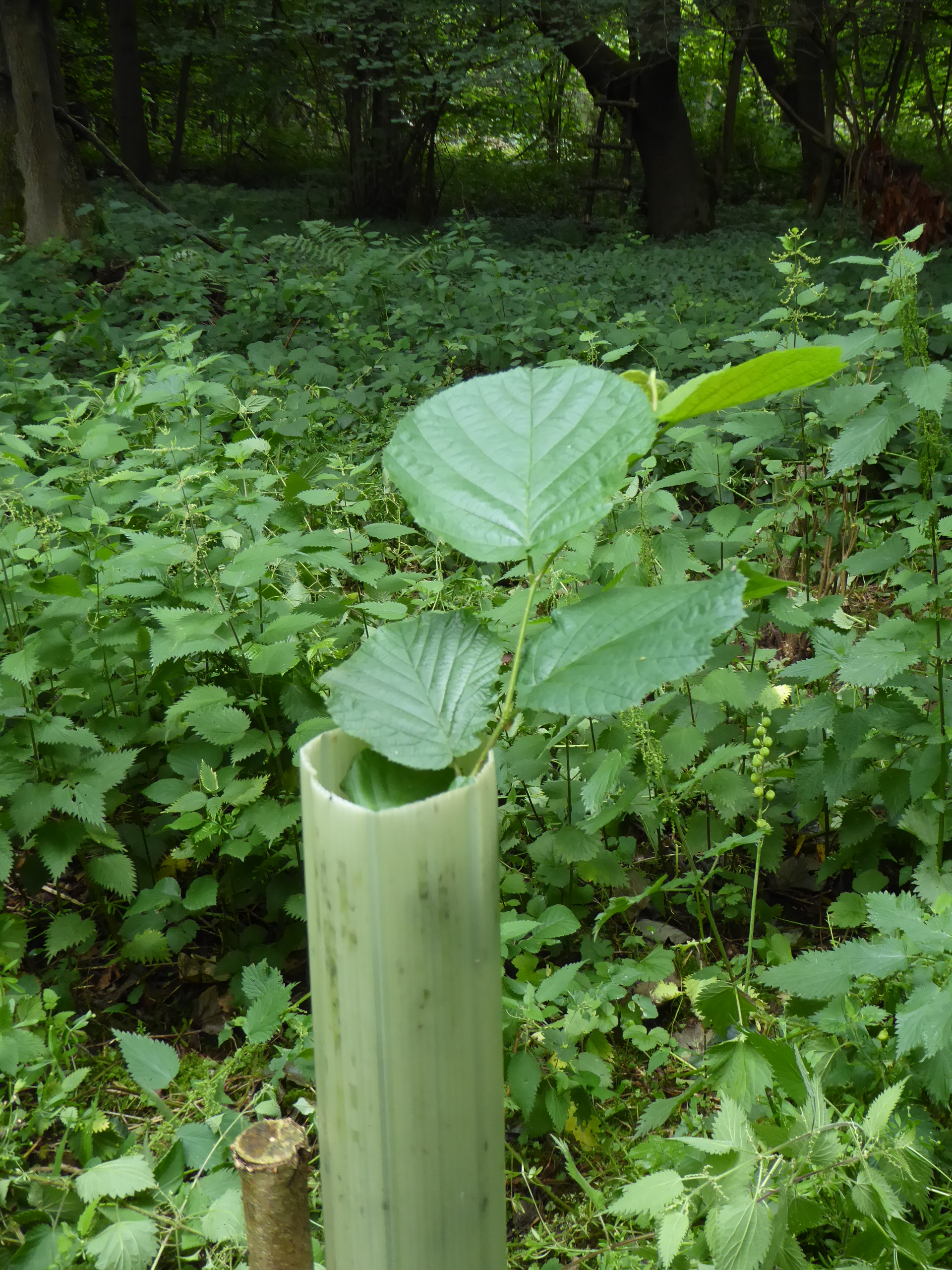
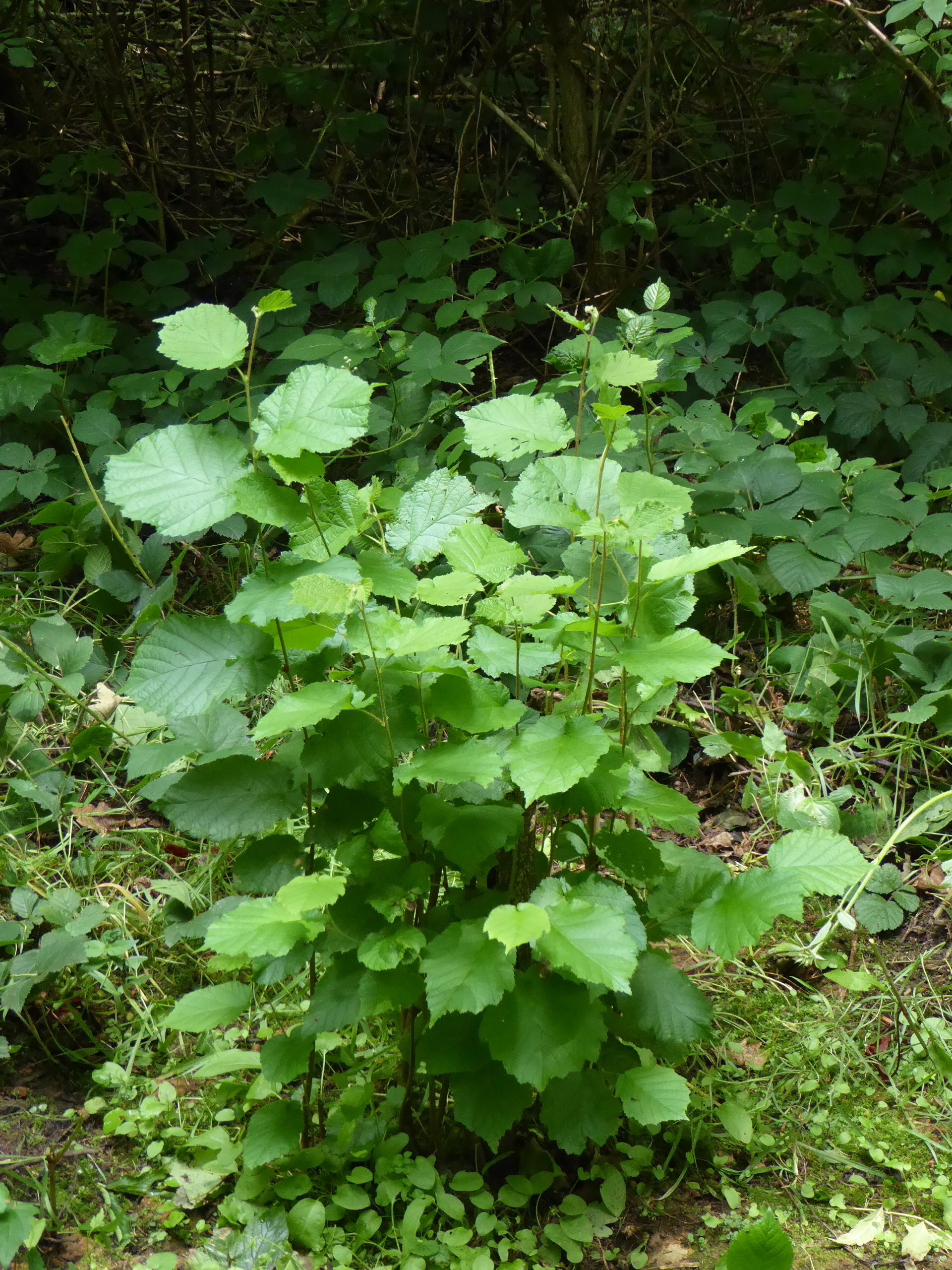
My first planted hazel saplings are now in their third year and it was nice to see this one poking it’s head out of the plastic tube. I spent some time clearing some of the rampant growth that the bramble and nettles have made around some of the saplings. This hazel bush is one of the stumps given to me by a friend and only planted this spring. I was worried the long dry season might see them off before they could make new roots but it’s looking very healthy. I haven’t time to net it so I’m hoping the deer will leave it alone.

I spent some time sawing up logs that I’d left littering the coppice area and cut a couple of hefty logs from a large felled sycamore to see if I could get some stool seats out of it. It had been down a couple of months but as it was in one piece still, it hadn’t dried out much at all. Not much else to tell but I’m heading there again tomorrow so check back in a couple of days for an update.


Leave a comment

Chalara fraxinea – Ash dieback disease

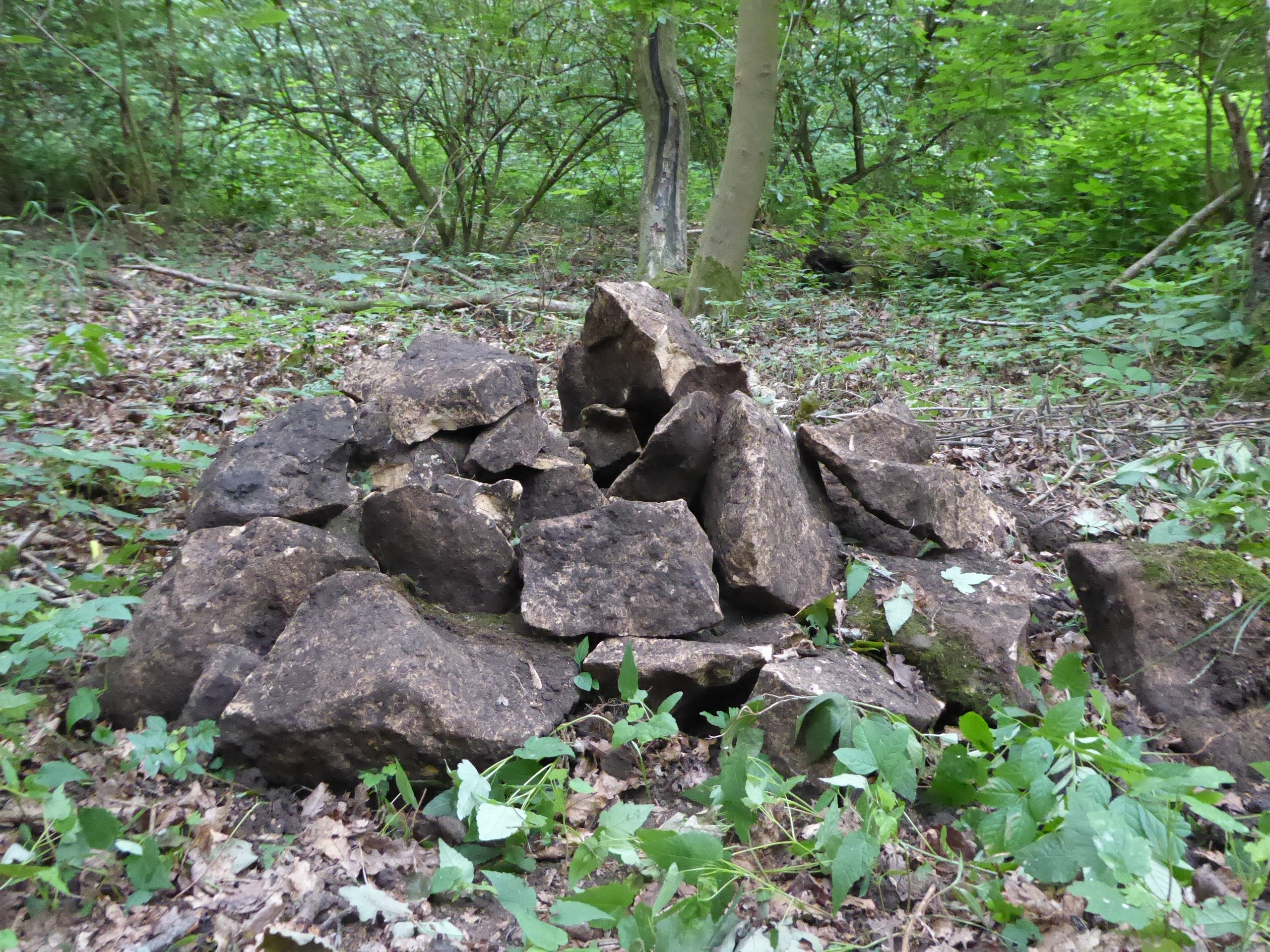
It’s been incredibly hot the last few days but yesterday had cooled enough to make a visit and do some work. Robin from the Woodland Trust was going to be there doing an assessment of timber volumes for his project to help us remove some big trees, using a contractor. This plan is to help open up the canopy and aid restoration and some possible re-planting. I had a list of mainly small, non-essential jobs that would be good to complete. I have been aware of a few small limestone rocks sticking out of the earth in one area and thought that they might be useful for building a better, more natural, camp fire surround. So I took a heavy iron bar to prise them out. It soon became evident that there was a sizeable cluster of them so I just kept going until I had amassed  a decent pile. Mostly they had sharp edges but some pieces had very rounded ones (presumably from lomg term erosion). So this suggests that they had been larger,partly exposed rocks, which had been dug out and broken up at some time in the past. The area in and around the woods has lots of signs of old quarries but not in my patch. So had these been used for building something in the past? There is another area lower down in my woods where there are numerous large rocks in a vague circular pattern and these have been investigated by the local archeological society about 20 years ago. Apparently they were thrown out by the owner then and no definite conclusions were made as to whether they were the remains of some sort of ancient building. I won’t be disturbing those.

Second job, to try to split some more sycamore logs for stool seats. They were cut in the winter and left as short logs about a foot in diameter. They were already drying out and cracks starting to appear, so I didn’t rate my chances of getting useable pieces out of them. I had a go at a few and got some reasonable pieces to take home. I took the opportunity to sort through the logs, selecting some big knotty pieces to use as chopping blocks and woodland “furniture” for my camp sites. They are handy as stools and occasional tables when camping.

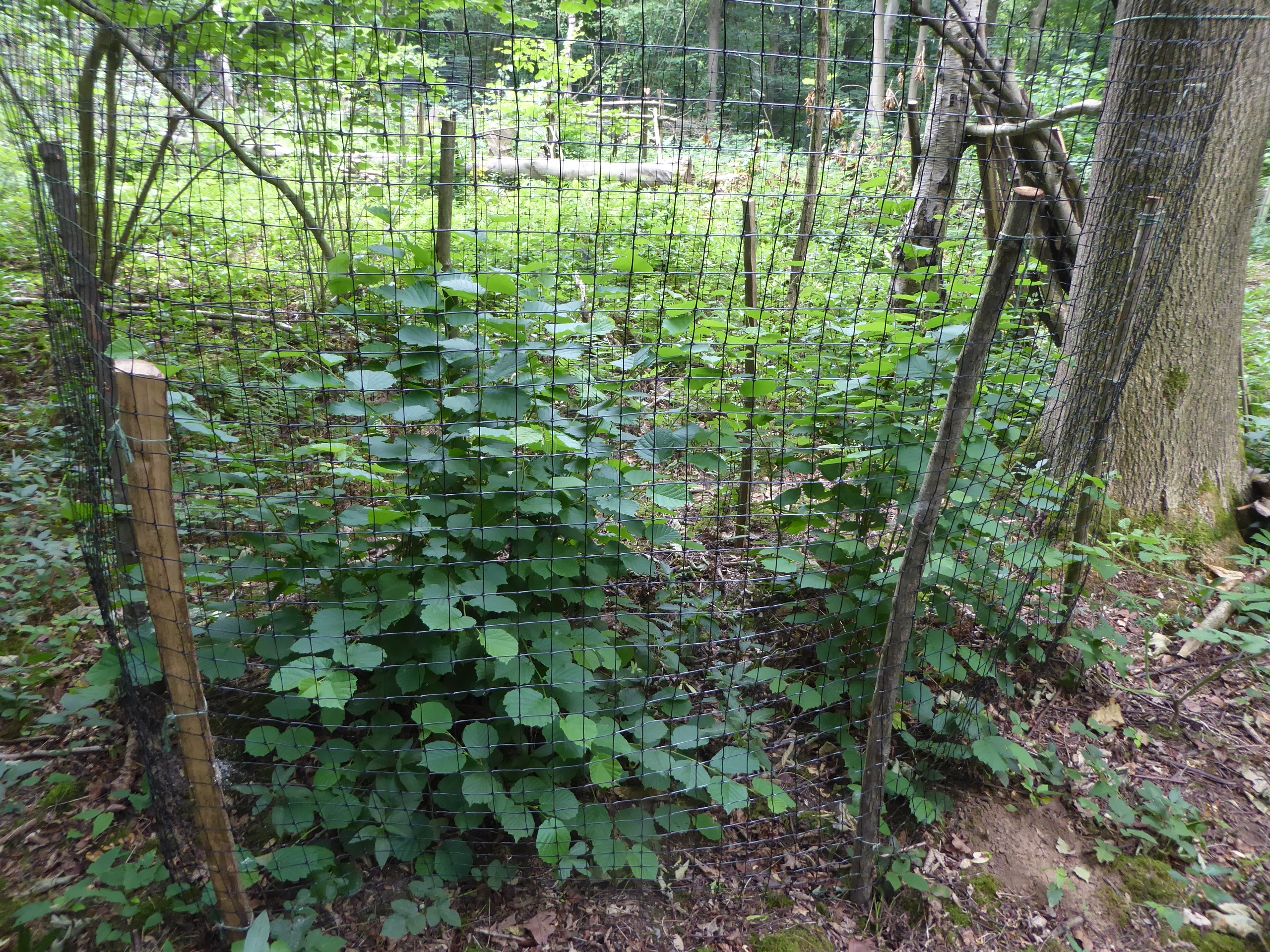
I continued with netting off newly coppiced hazel to protect the new growth from deer browsing. There was evidence that some were starting to be nibbled. This picture is a hazel stool that was cut the previous year and heavily browsed last summer. I netted it off in spring and it’s showing good signs of lush new growth.

It was late afternoon when Robin arrived to look at the trees I’d selected to be felled. So far the day had been rewarding and enjoyable but we were about to discover some bad news. He noticed some wilted leaves on some young ash saplings and we took a closer look. He said it was classic Chalara (Ash dieback) disease symptoms. He gave some sympathetic pats on the back which told me he was pretty sure the dreaded disease had arrived – probably late last year. The advice is to do nothing other than observe it’s development. The disease kills young trees fairly quickly and weakens older trees, leaving them vulnerable to other diseases which may eventually kill them. I tried to remain positive, thinking that maybe some of my trees will be in the small percentage that have a natural resistance to it. The news is still just sinking in. At least I don’t have to worry about getting it anymore!


Leave a comment

A few branches down

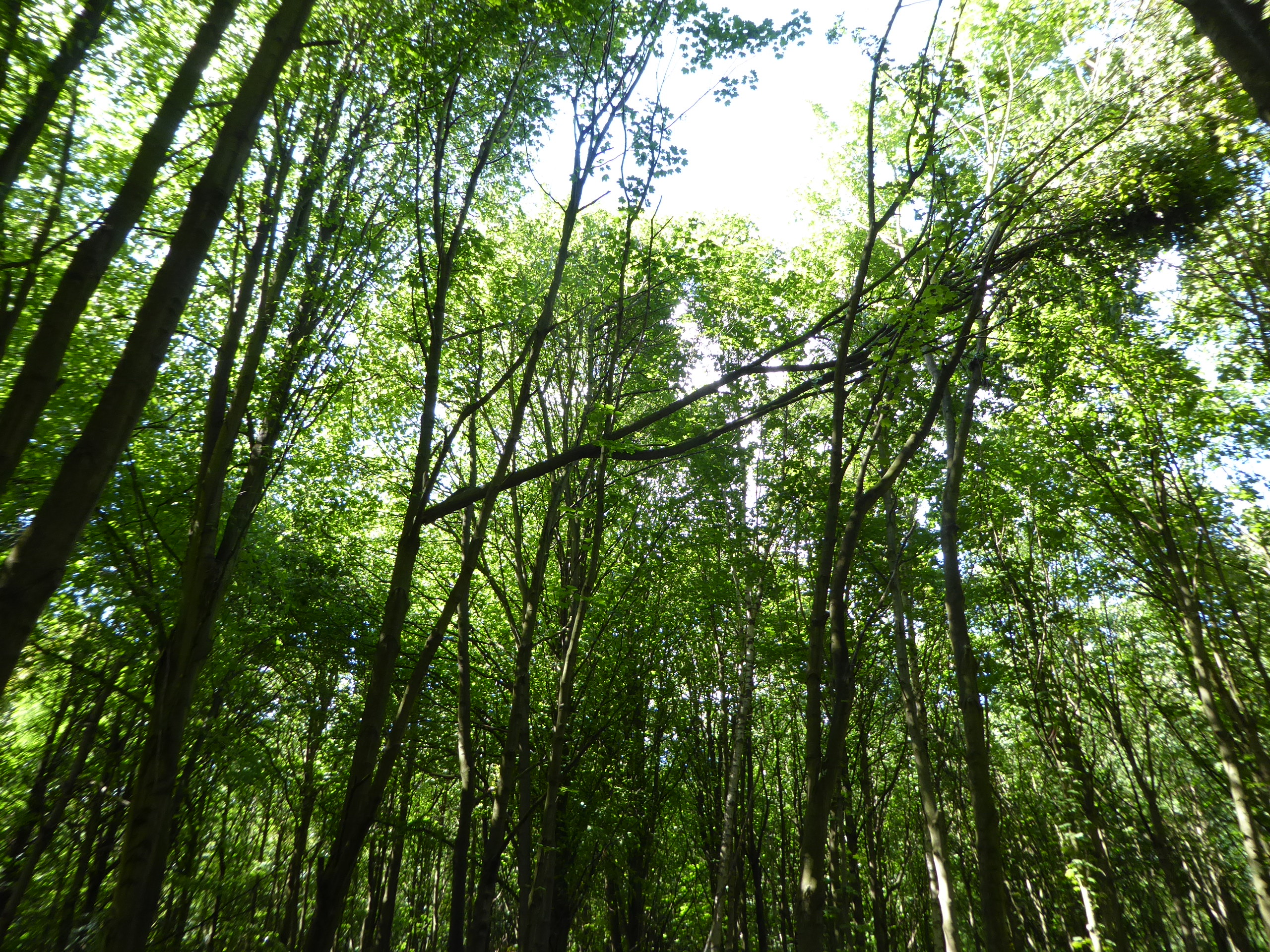
It’s been a wet and windy week so it was no surprise yesterday to find a few broken branches. This was the worst, where a large limb on one of the tall sycamore has snapped and lodged itself in a neighbouring tree. These plantation trees are very tall but quite narrow. It’s quite eerie when the wind gets up as they flap about in all directions and sometimes bang into each other making a loud wooden clap sound. I stay well away from them on those days.

It’s two week since my last visit but for some reason seems much longer. At this time of year, a lot changes in two weeks. The trees are now fully leaved which makes most areas quite dark. The ground cover has shot up and brambles are sending out massive long leaders. The recent rain has softened the earth though, making it fairly easy to pull them up by their roots. I had a a couple of hour-long sessions just doing that and it’s surprisingly satisfying, though hard work and at times painful – they fight back!

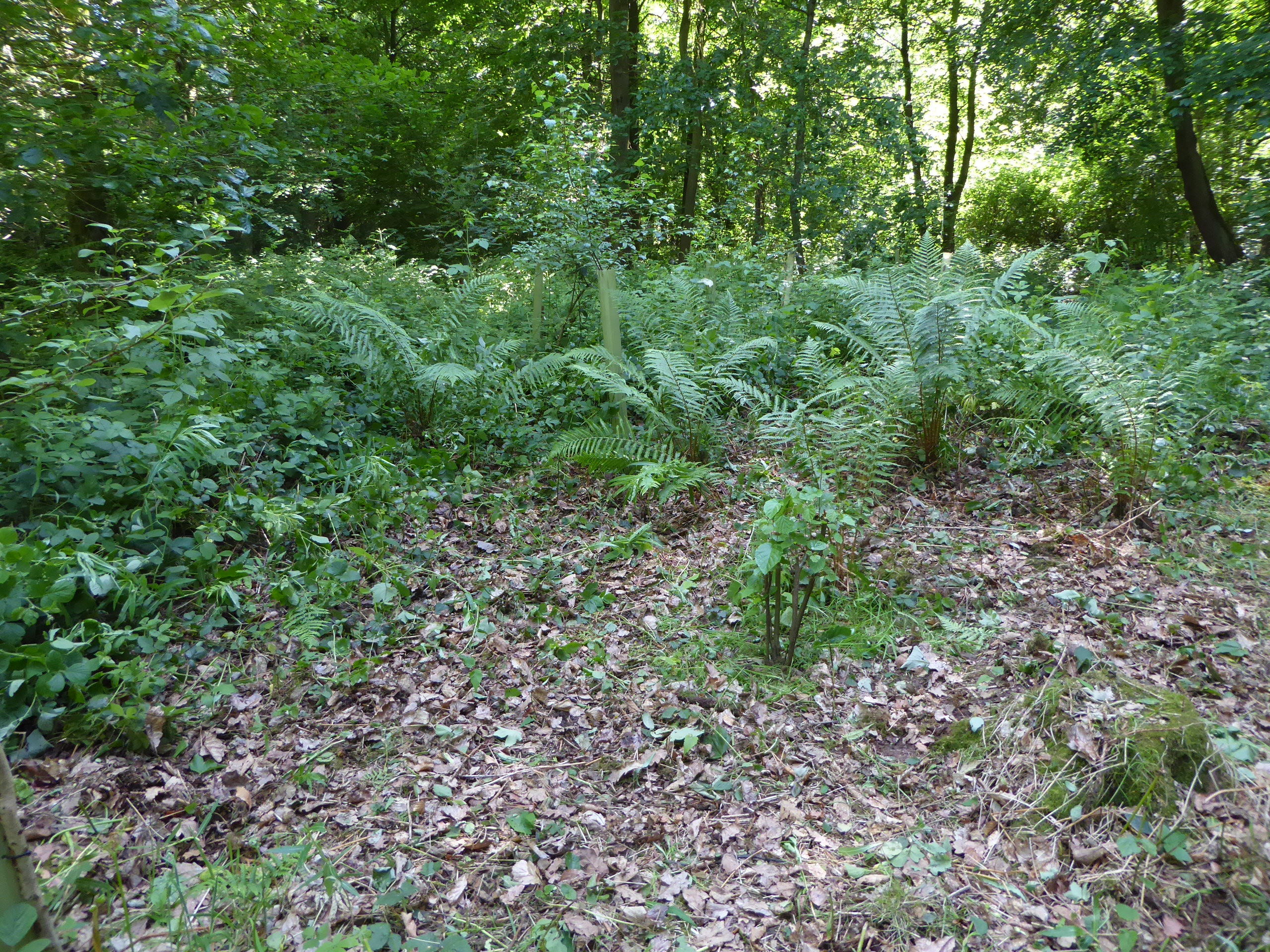
This is one of the areas close to my camp. The bramble and willow herb were swamping these beautiful ferns and the small hazel in the foreground. I’ve brushcut this area a few times which has definitely encouraged lots of new, different ground cover species and the ferns are flourishing with the extra light but the brambles don’t give up so easily. So pulling them by the roots is my main strategy now.

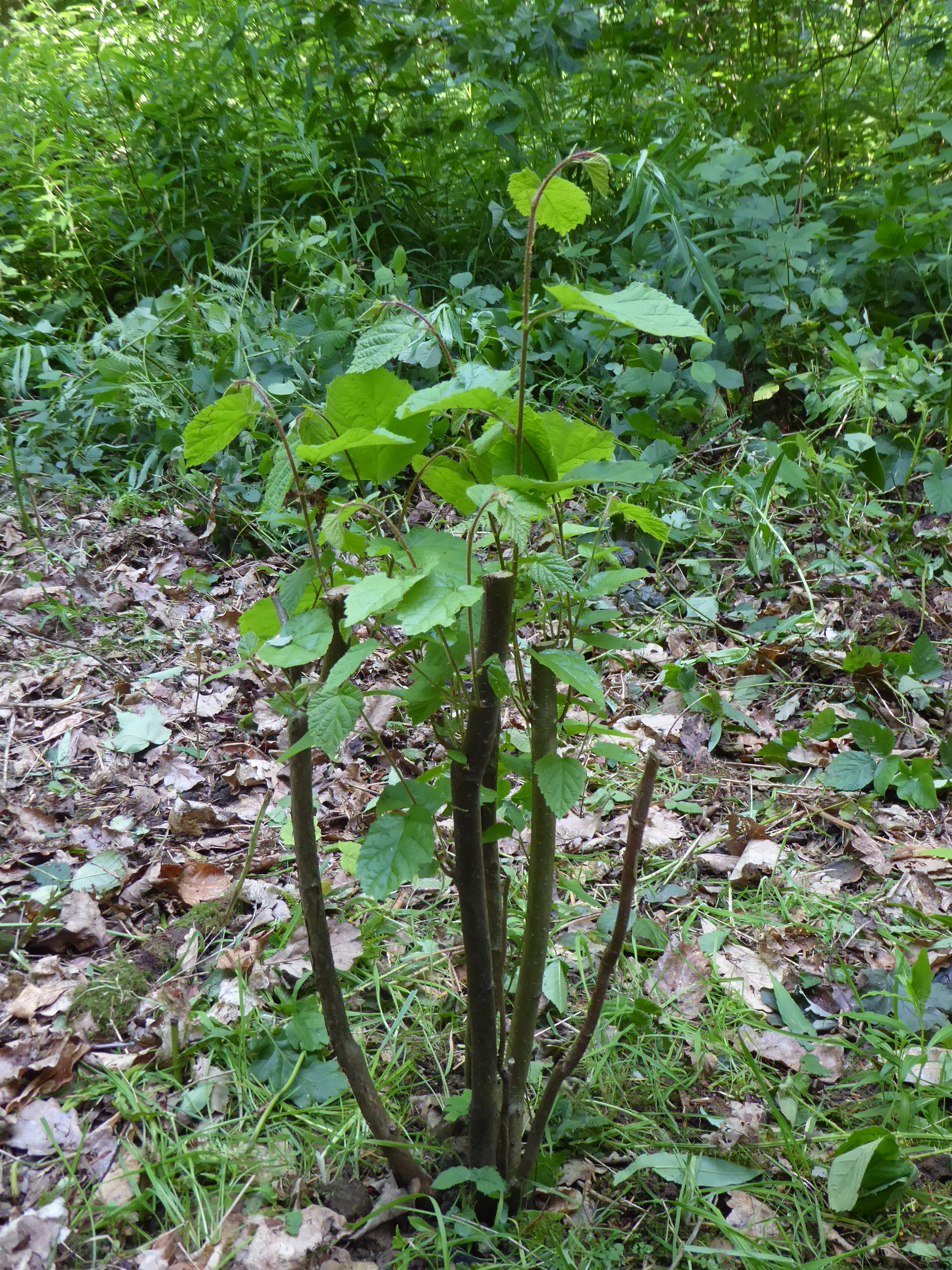
The small hazel is one of the plants given to me by a friend whose partner had dug them out of her garden. I was quite late planting them and they were bare rooted and had lost most of their small fibrous roots, so there was some doubt as to how well they might recover – if at all. They would need to make new roots pretty quickly in order to take in water to feed the new leaves which would soon be sprouting. I purposely left about 12 inches of old stem which would be holding water and energy to help them through the first recovery stage. It’s been a very dry spring which is not what they needed. I’ve watered them whenever I could but it was never enough. Well so far so good, I’m pleased to say they seem to be doing very well. Simon R. – please report back to Jane and show her this photo.

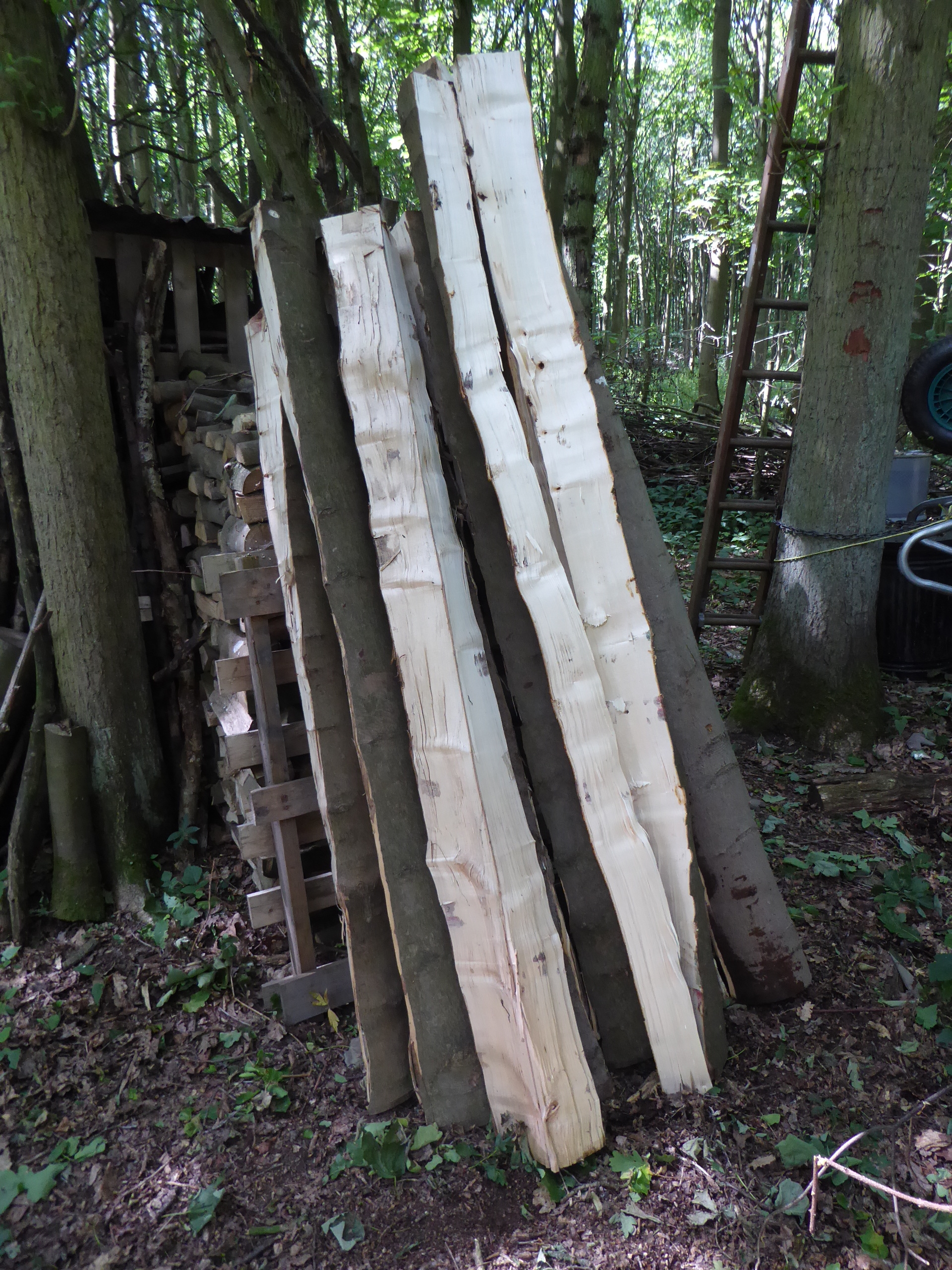
The other main job I planned, was to continue splitting down some of the large sycamore logs, hoping to be able to use them as stakes for the deer netting. Well sycamore isn’t a particularly good timber for that but as I have lots and lots of it, I wanted to see if it was feasible. The verdict is – debatable. Some of it came out as useable but much of it didn’t. It’s hard work and time consuming so is it worth the effort? Probably not but here’s a picture of the pieces I worked on. Much of it is too thick for stakes and to try splitting further will probably result in pieces that have “run off” i.e. not split evenly along the full length, ending up with shorter and unusable shapes. These pieces shown might be used for the other walls around the composting toilet so not a wasted exercise.

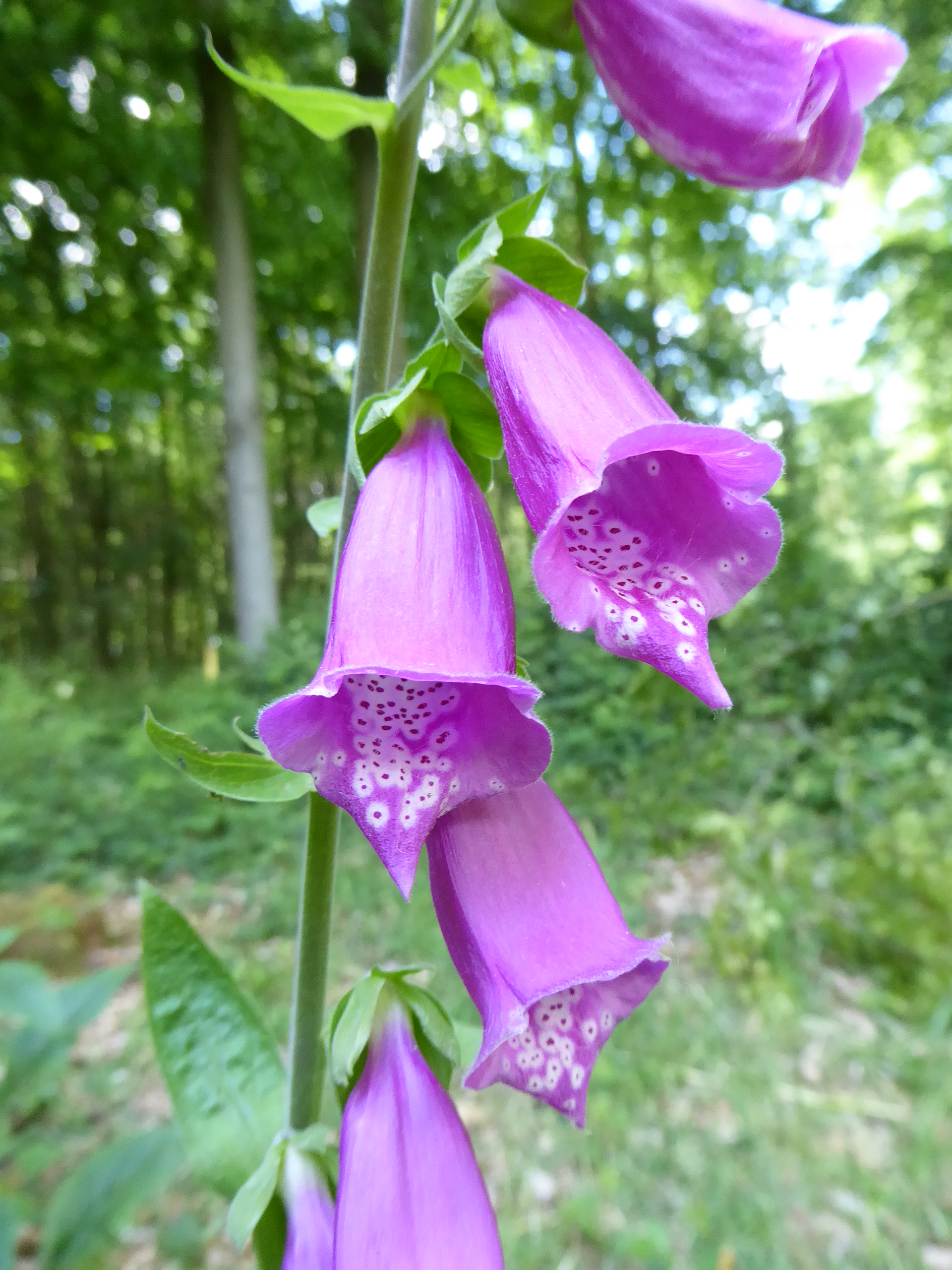
Finally, I mentioned how the ground cover has benefited where bramble has been controlled to a degree. I have tried to improve these areas with the odd bit of wild flower planting, to help nature. Two years ago I dug up a couple of foxglove plants that had self-seeded in my garden at home. I planted them around my camping area to add some colour and and foraging opportunities for bees and other insects. I’m pleased to see that they survived and have even spread a little bit. The bumble bees love the flowers and so do I.


Leave a comment

Another one nighter at the woods – part two.

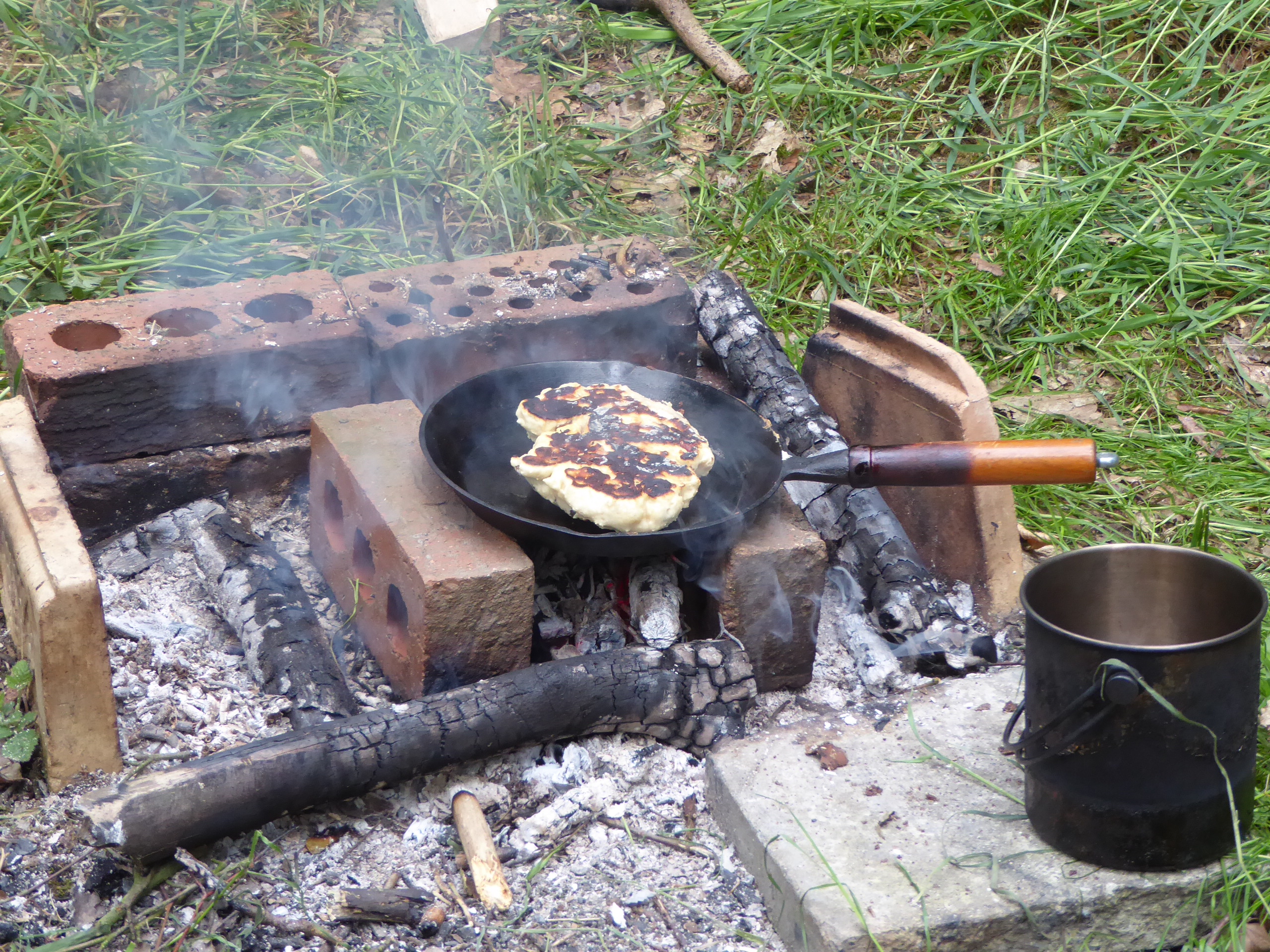
I came to, around 5am and it was light. I tried to go back to sleep but it wasn’t possible and the prospect of sitting in my wood and a campfire coffee at that time day was sufficient to get me out and about. The trail camera I had set up where deer appeared to have been resting recently, showed nothing but to be honest I didn’t expect it to with me being there. Breakfast was fruity bannock and banana which I had enjoyed last time.

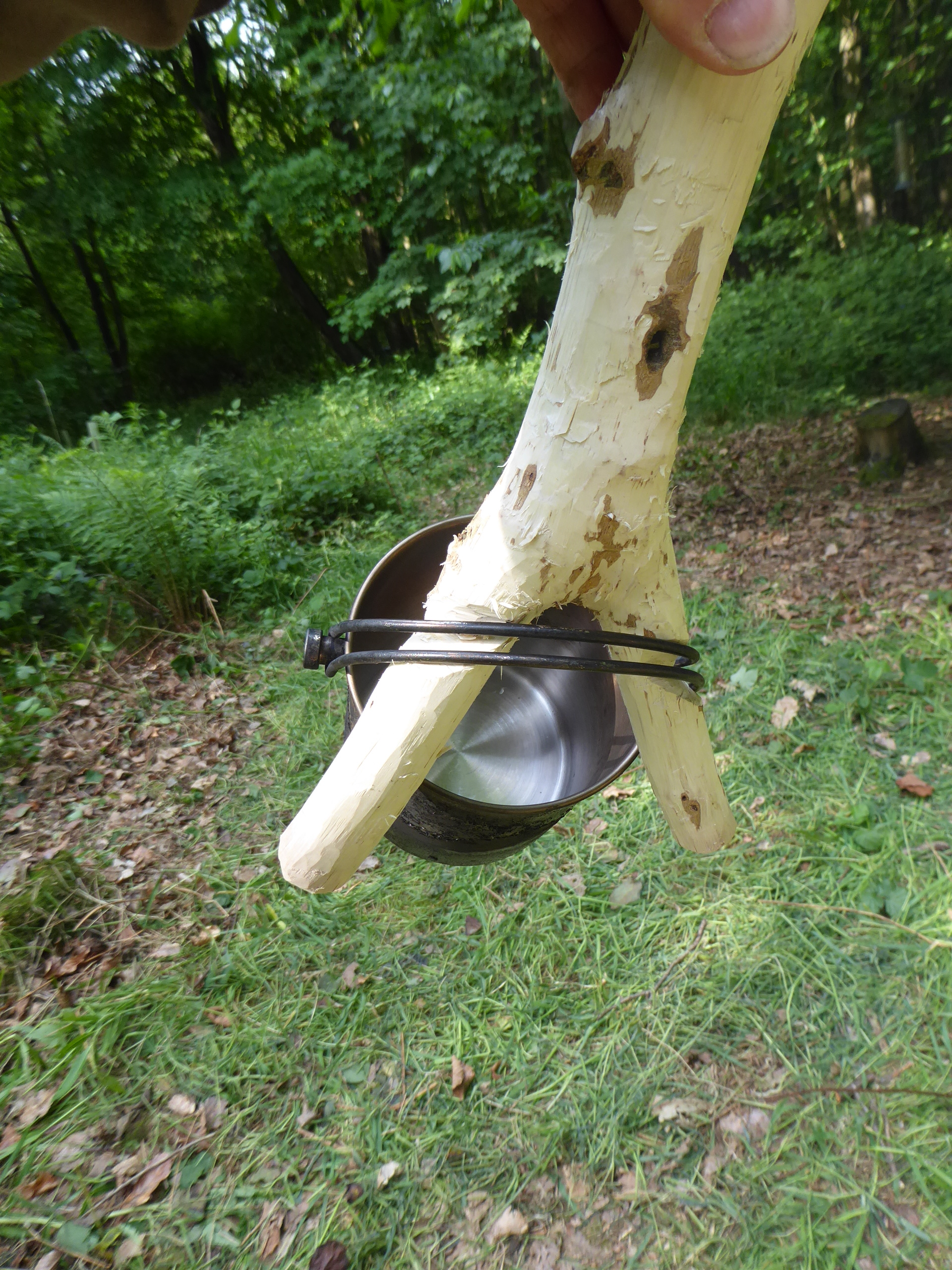
The previous evening I had spent some time carving a billy can pourer. It allows you to hold and tip/pour the hot can withough burning yourself. A simple but clever idea.

I had a few “proper” jobs planned for the weekend – erect deer netting, split some large logs to try to make stakes for it and possibly planks for making a shaving horse. The forecast looked abit iffy – possible rain between 10-11am and thunder in the afternoon. I prioritised my tasks – first pack my camp away and anything I’d left around that wasn’t essential, ready for a quick getaway if necessary. Next, try splitting some wide, six foot long logs for stakes. It worked quite well using steel wedges and the technique learned on my green woodworking course.

I headed around to the neighbours for a social then bang on 10.30 the rain started, just like someone turning the shower on. I scuttled back to mine but it had almost stopped ten minutes later. Back to work before the storms. I pointed-up the stakes and drove them into position around four newly sprouting hazel stools. There was thunder nearby and a strong wind was brewing up and the sky darkening. Time to pack the last things away and head for my shelter to sit it out. It might be an early finish today. There were several loud claps of thunder and the trees rustled loudly in the wind but surprisingly, very little rain fell. I was disappointed, hoping to witness a terrific storm in my woods and water the trees too. After it passed the sun shone again and I managed to put netting around the stakes and finish the job.  I headed home, tired and happy. A great weekend I shan’t forget.


Leave a comment

Another one nighter at the woods – part one.

The weather forecast was looking promising so I decided to take advantage and try another one-nighter last Friday, using the car to sleep in. I got an early start, had my usual walkabout and as you can see, the new spring growth has really flourished.

My day camp area has become quite overgown with grass, weeds and some brambles. So first job was to clear the area. The brambles are pulling up very easily after the recent rain and I got quite carried away with this job. Hot and uncomfortable but hugely satisfying to know you have defeated a small part of the bramble army.

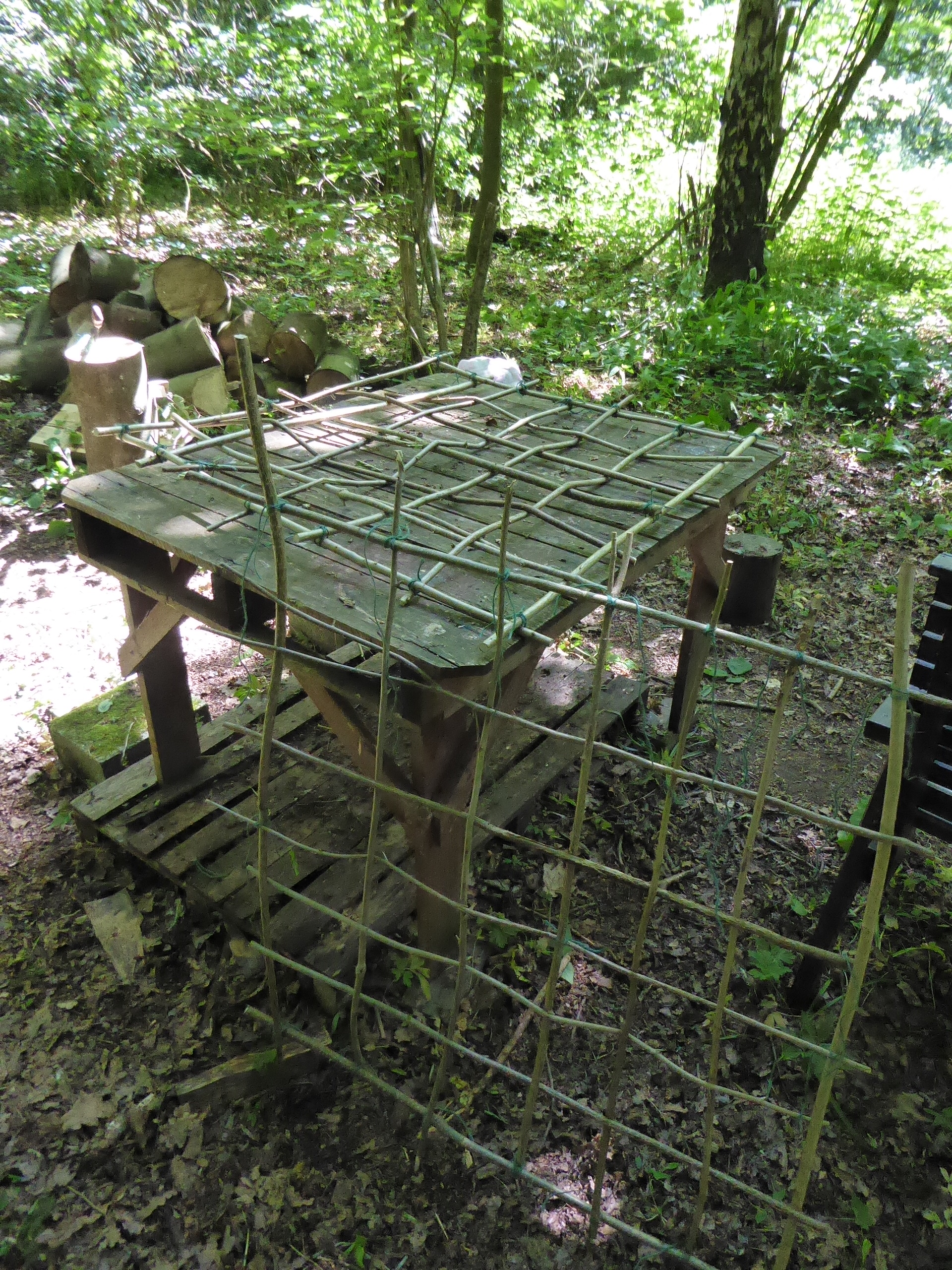
I then set-to finishing the underground fridge, which just needed the lid making. I cut some hazel rods laid them out on the table and attempted to weave them into a grid. It was like fighting an octopus. The rods kept wriggling about and falling out of weave. So tip one is to lash the first row where they cross first. After that it was relatively easy to thread the next ones through, the tension between rows tending to hold things in place. You need to make two of these woven grids.

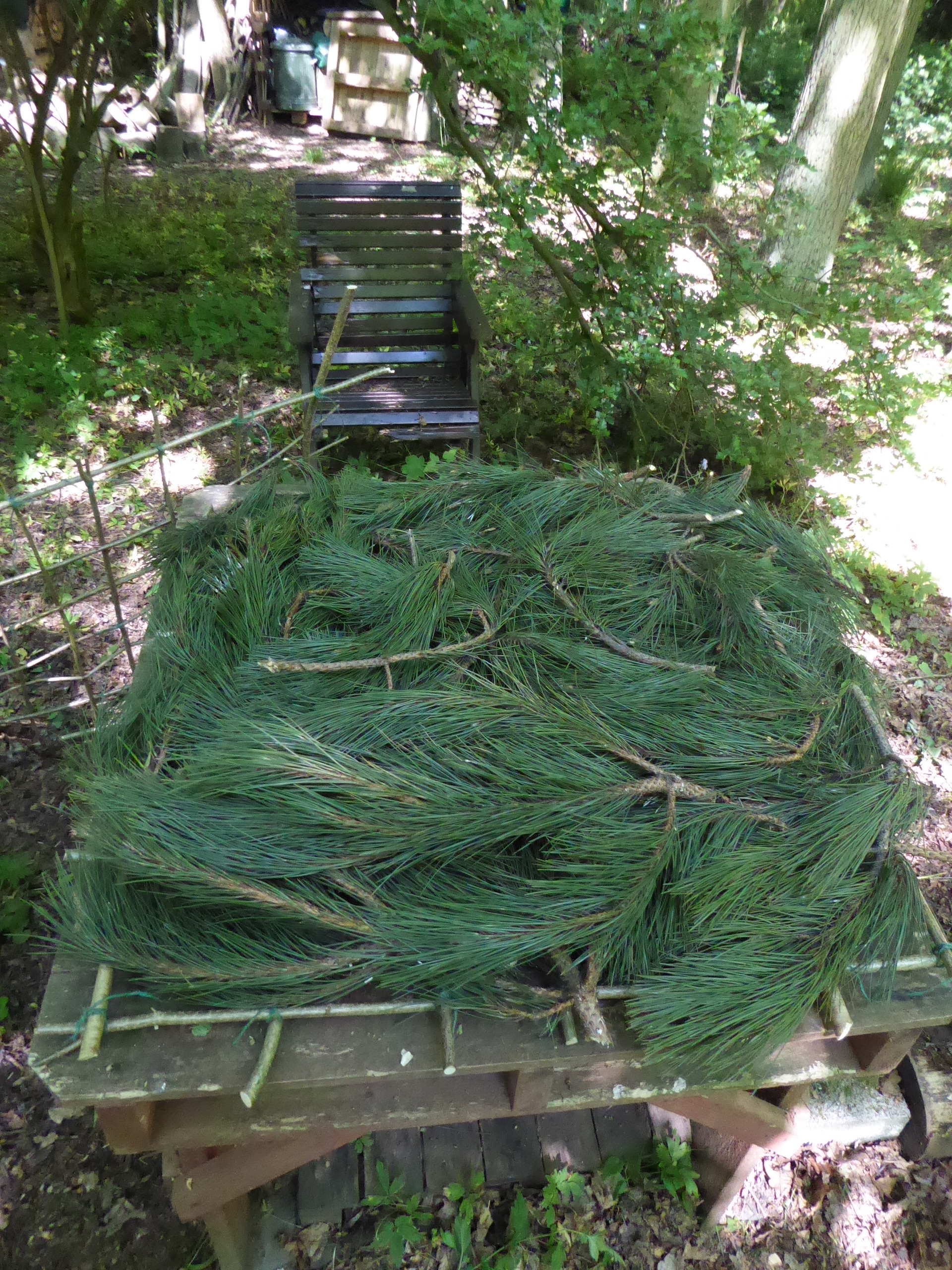
Next, layer some small branches and leaves onto the first grid. I used pine brash from a neighbour’s felling because they should resist rotting too quickly.

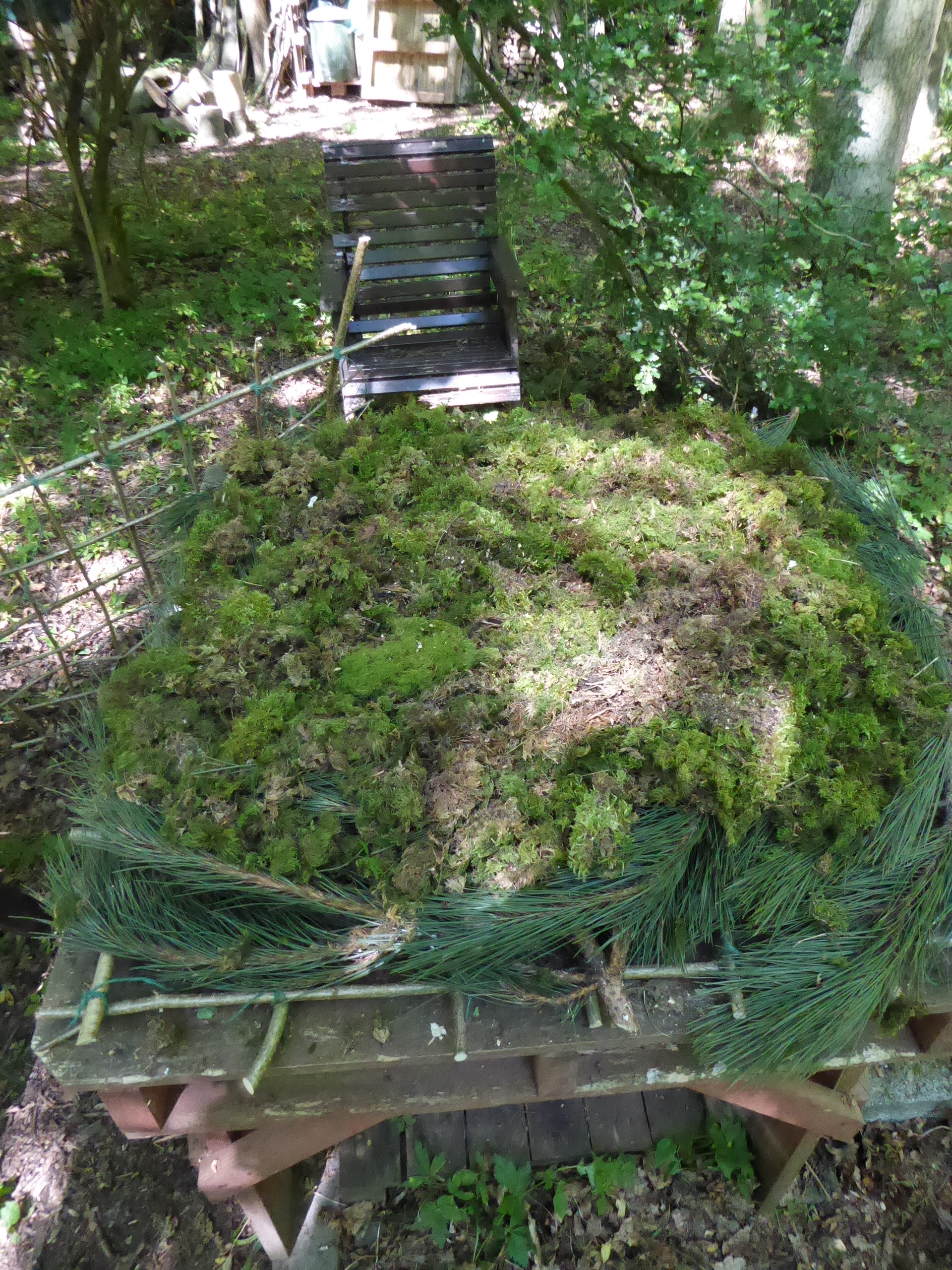
On top off that, layer a thick covering of moss.

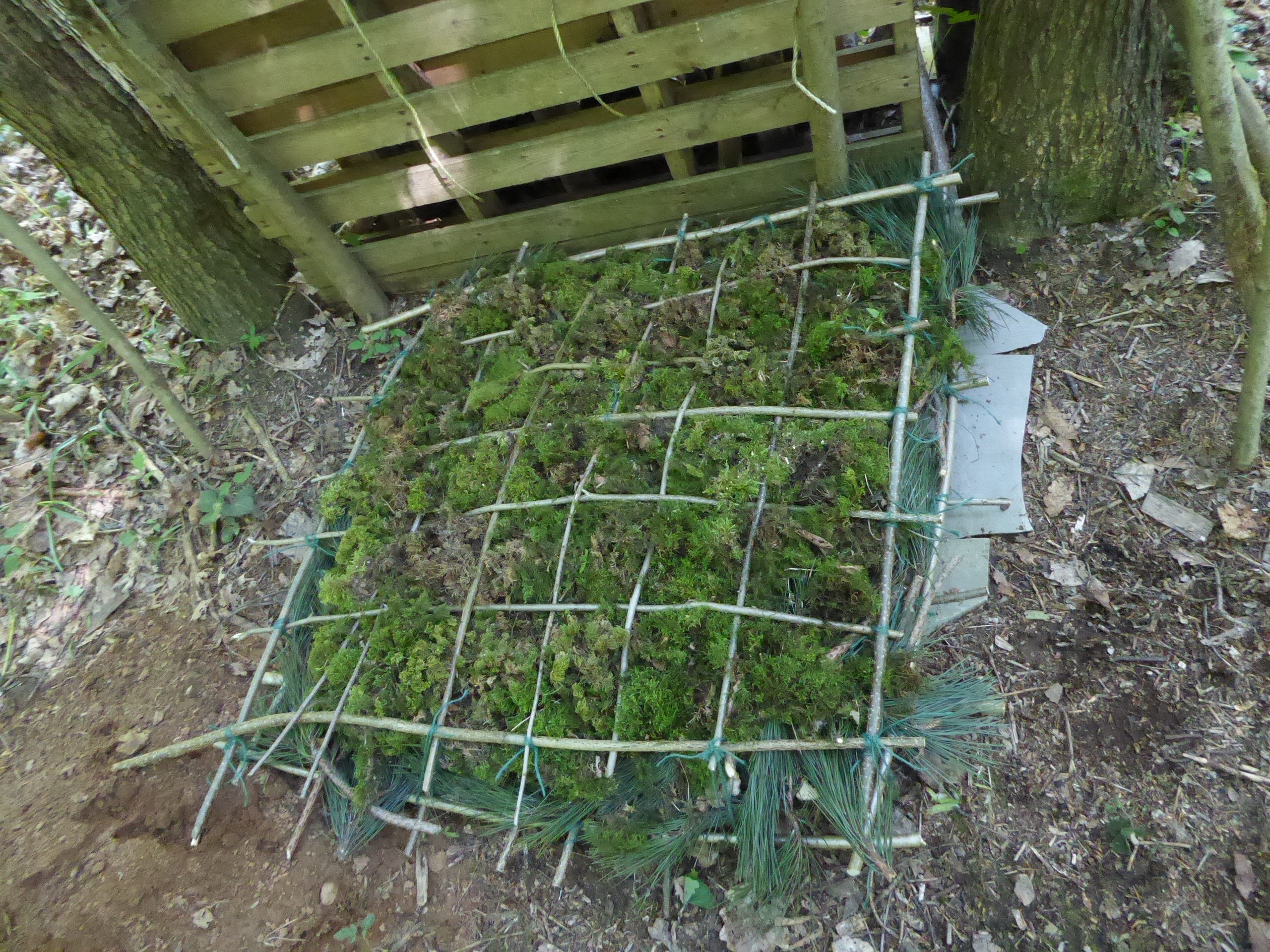
Then put the second grid on top and lash the two together. You now have an insulating “sandwich”. I sprinkled water on the moss because it’s the evaporation process that draws heat out of the hole. Here’s the finished lid in place over the hole. I took the temperature inside and out first to see how effective it is. It was around 72F outside and 65F inside. A couple of hours later, even though the outside temperature had risen, the inside had dropped to around 60F. Not amazing but I think it proved it was working.

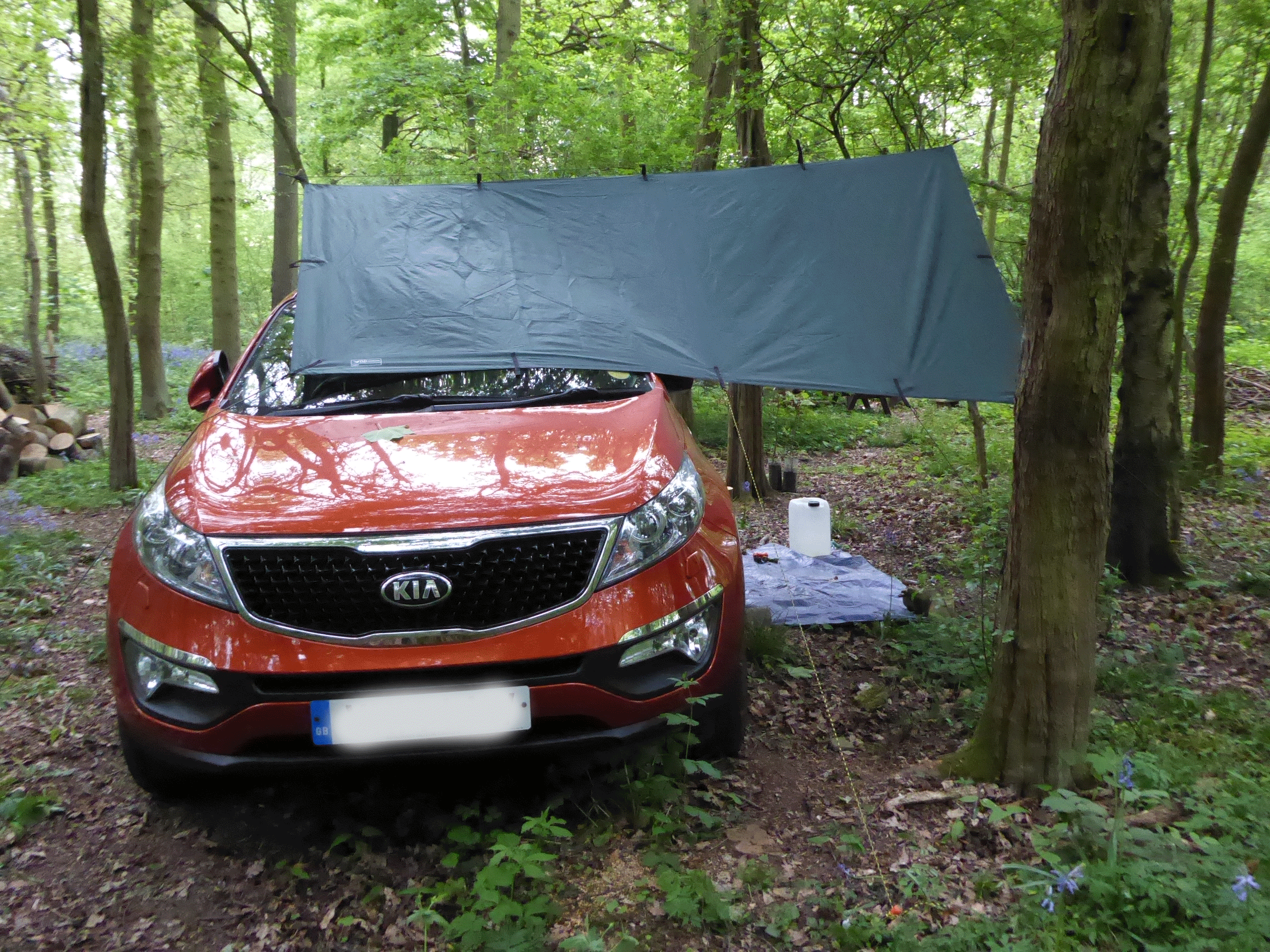
Time to set up my car “tent”. I inflated the air bed, positioned my under blanket and sleeping bag, pillows etc then slung up the tarp over the roof to form a sheltered porch over the back door. It took about 45 minutes. Slightly quicker than erecting a tent but it was the tarp that took the longest. You could just use the car without it which would have only taken about 15 minutes but the tarp gives protection from small falling debris, rain etc allowing you to undress/dress outside (a real struggle doing it lying down in the car) and if you need to get out during the night.

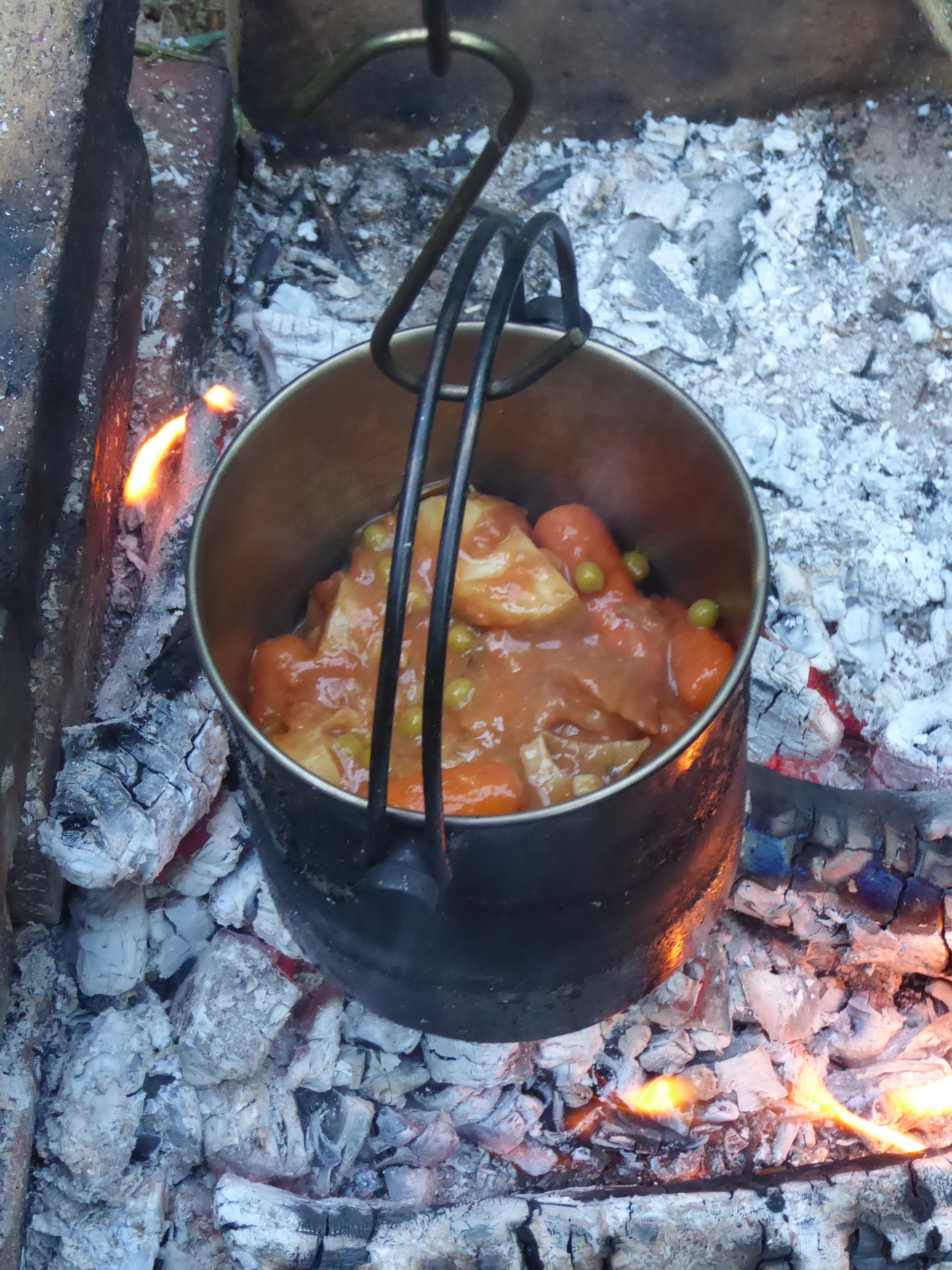
Time to get the fire going ready for heating the lovely casserole my wife had made for me.

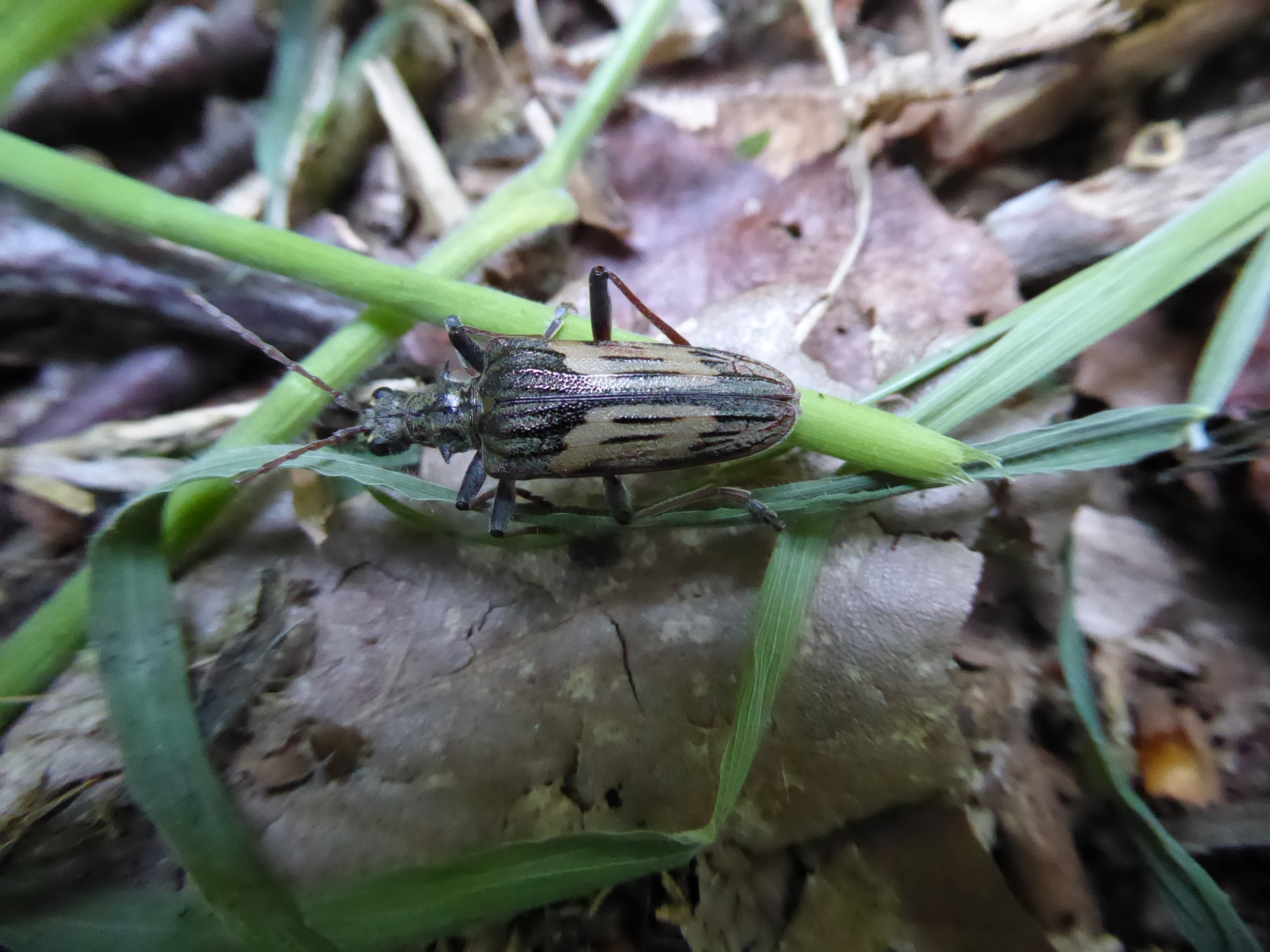
Early evening is a lovely time to relax a bit after a hard day’s work and just enjoy the unique experience of sitting in a sunny glade of the woods, listening to the birds and taking in the shear beauty of nature in it’s many forms. An unexpected visitor landed on my arm and my reflex was to brush it off. A closer look among the floor litter revealed this beautiful beetle. I mus try to ID it later.

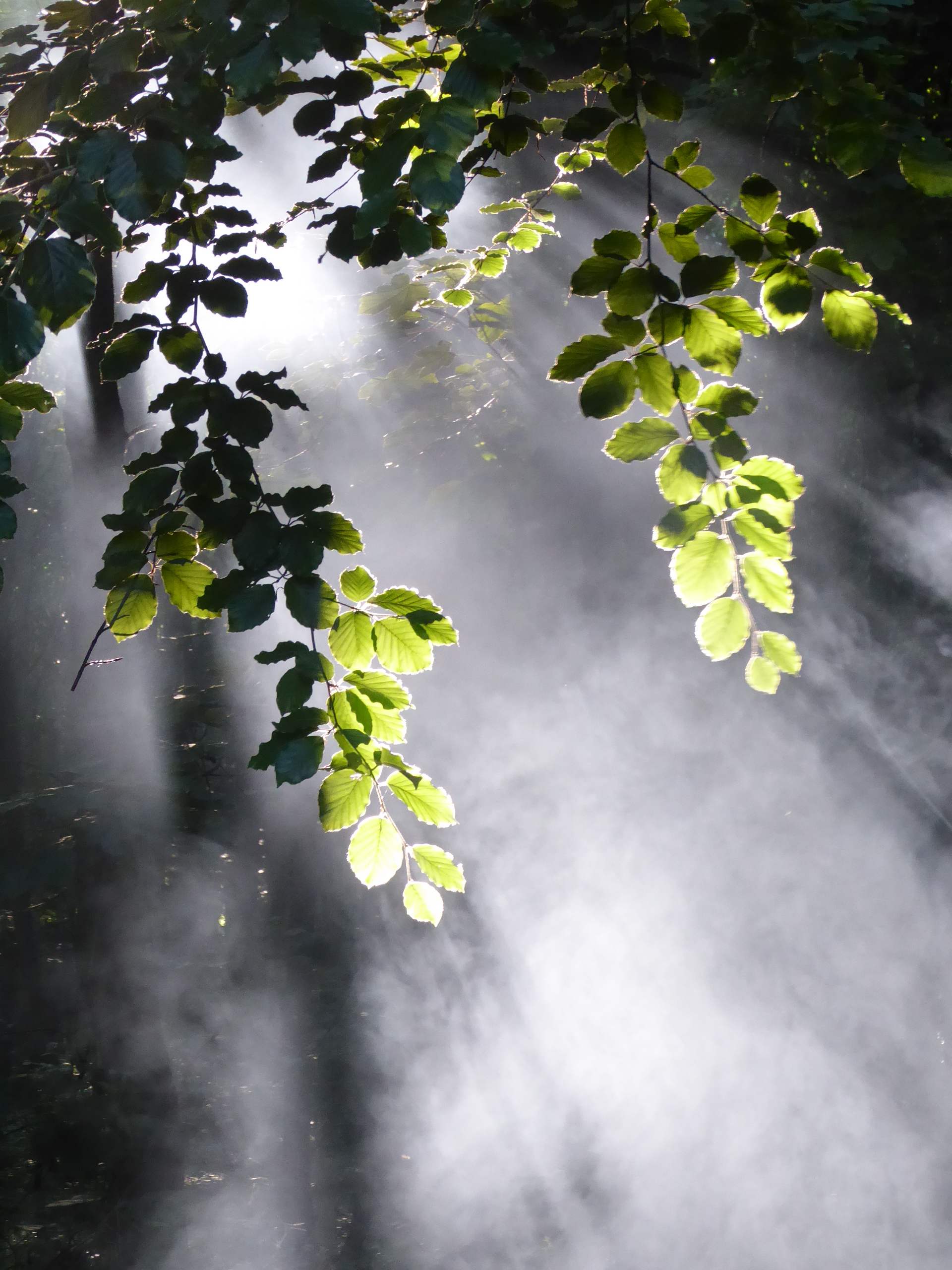
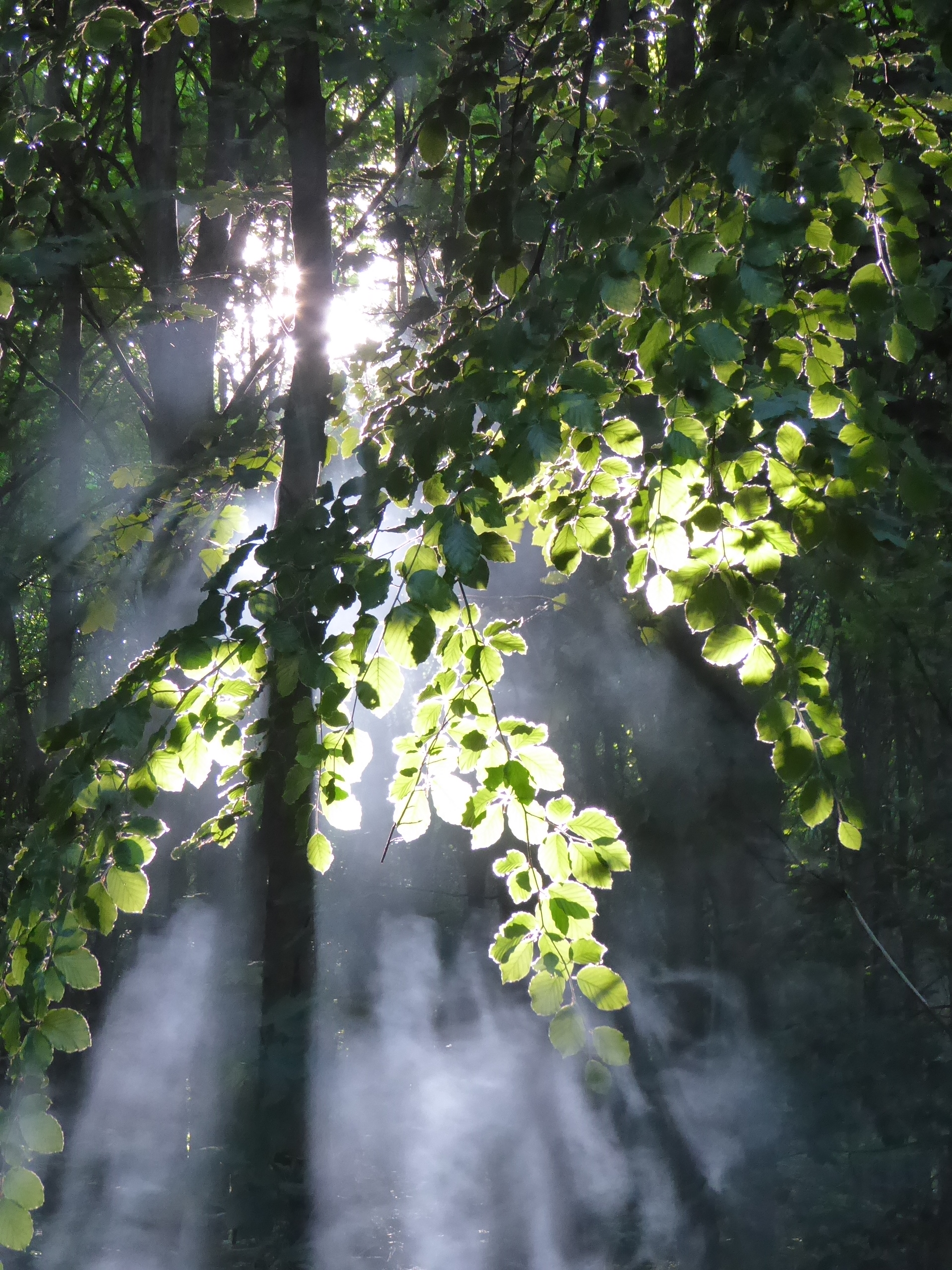
I put some more logs on the fire which created a fair amount of smoke. The setting sun rays were slipping between the trees, lighting up the beech leaves and as the smoke lazily drifted around, the smell of it and the magical images created, seemed to conjured up primeval feelings deep within me that is hard to describe. If you have experienced it, you’ll know what I mean and how comforting and “right” that feels.

As the light started to fade, I decided to take a walk around some of the rides. I was pleasantly surprised to find some neighbours and friends were also camping and had already demolished a bottle of wine. They kindly invited me to stay a while and offered me a shot of whiskey. They even had ice with them! We spent a pleasant hour chatting then I headed back to camp, stoked the fire and sat with a hip flask of rum just to enjoy the nightime before taking to my bed. Whether it was the knowledge of nearby friends or the effects of alcohol or both, I had no fears of intruders this time and enjoyed a pretty decent night’s sleep. See part two.


Leave a comment

Glorious spring

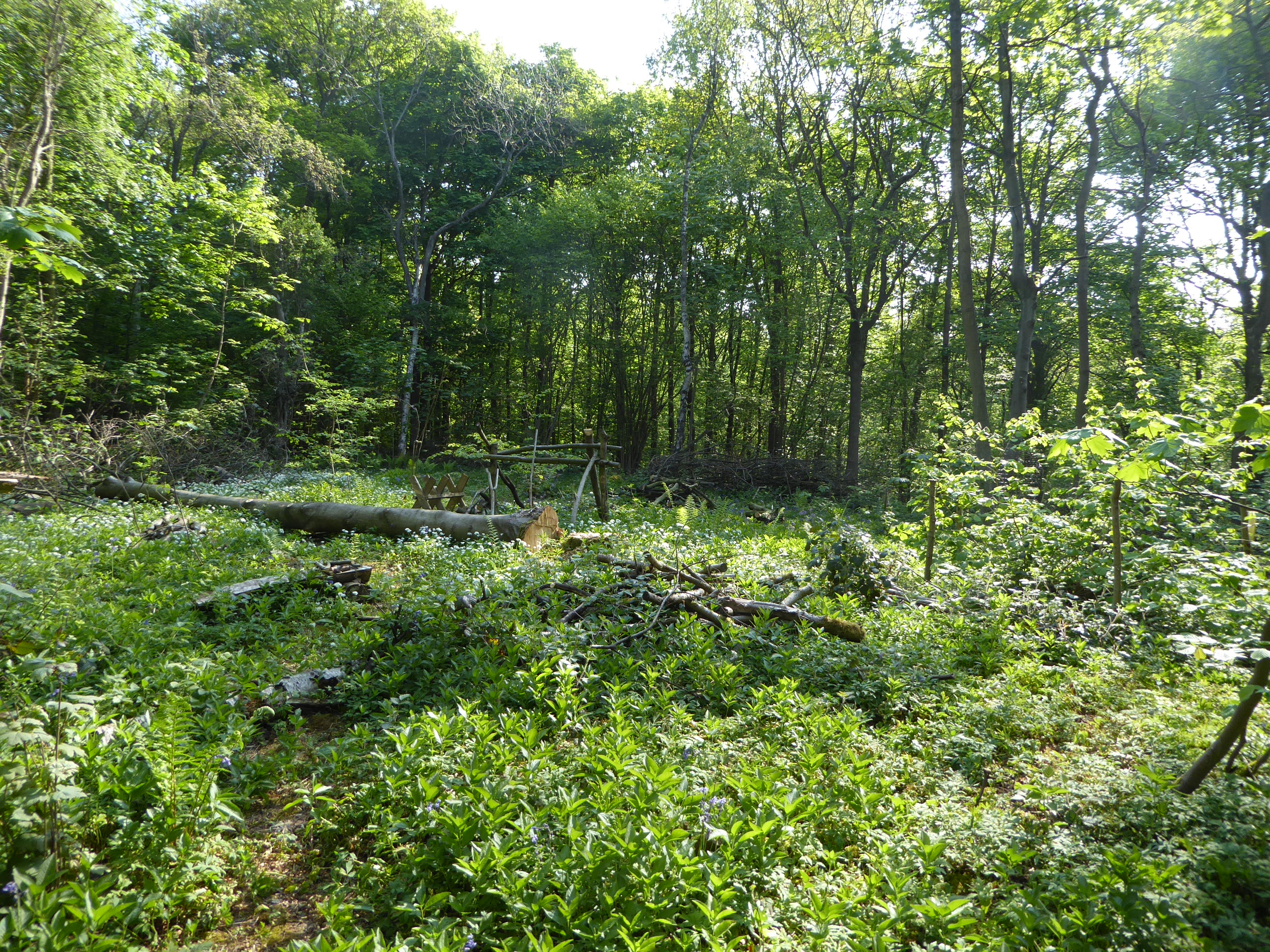
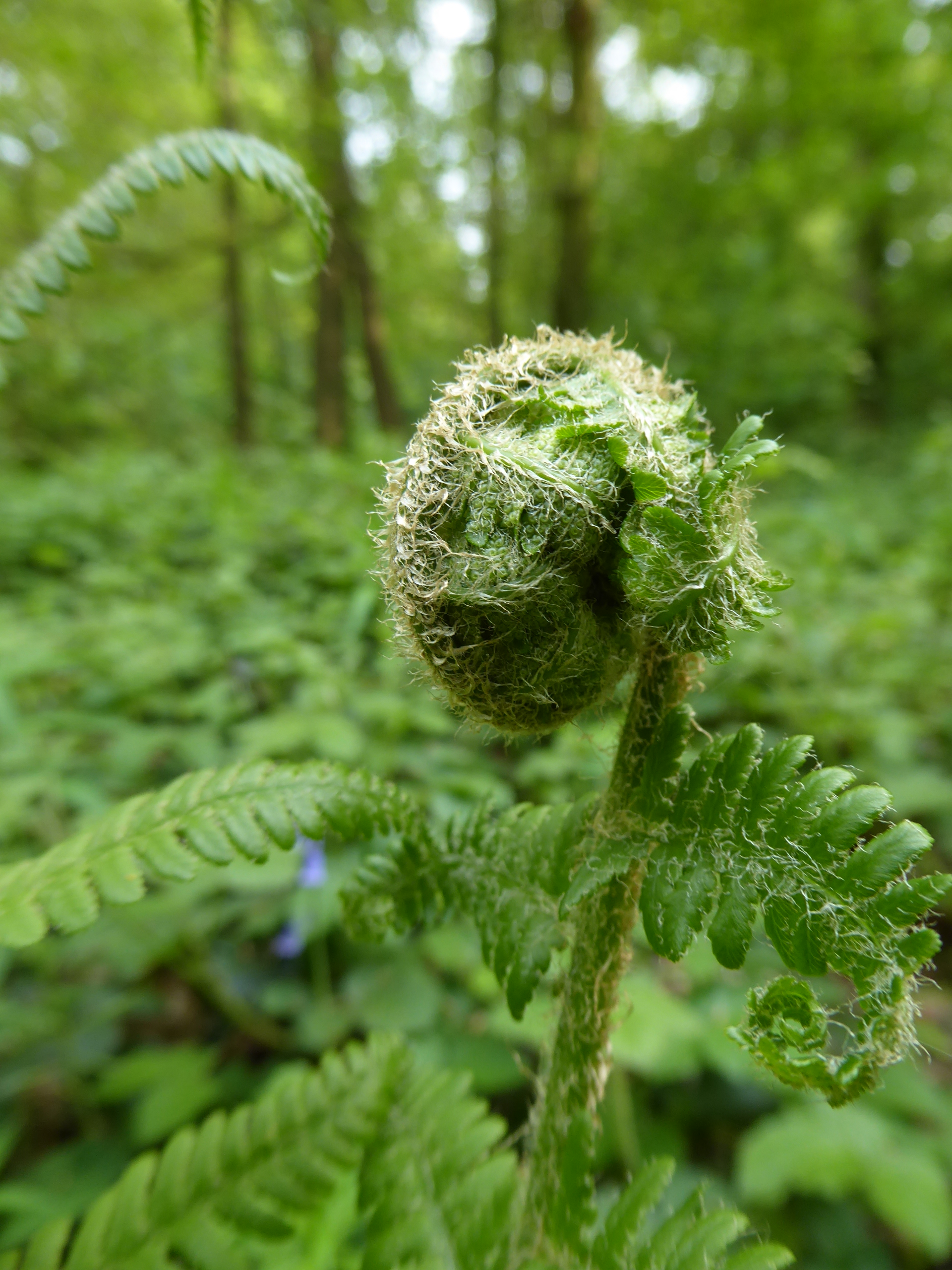
What a fantastic, glorious and sunny day yesterday. The hazel coppice where I felled the big sycamore is a real suntrap now and I’m looking forward to seeing how the hazel comes back with all the extra light. The bluebells are still around and everything else is bursting into life. I noticed two of my birdboxes had a lot of blue tit activity so I guess the eggs gave hatched. I filled the feeders and within minutes the birds were on them. The robins are always the first, bobbing around nearby as soon as I approach the feeders, almost impatient for me to finish. The Male Fern dotted around the woods are unfurling their fronds.

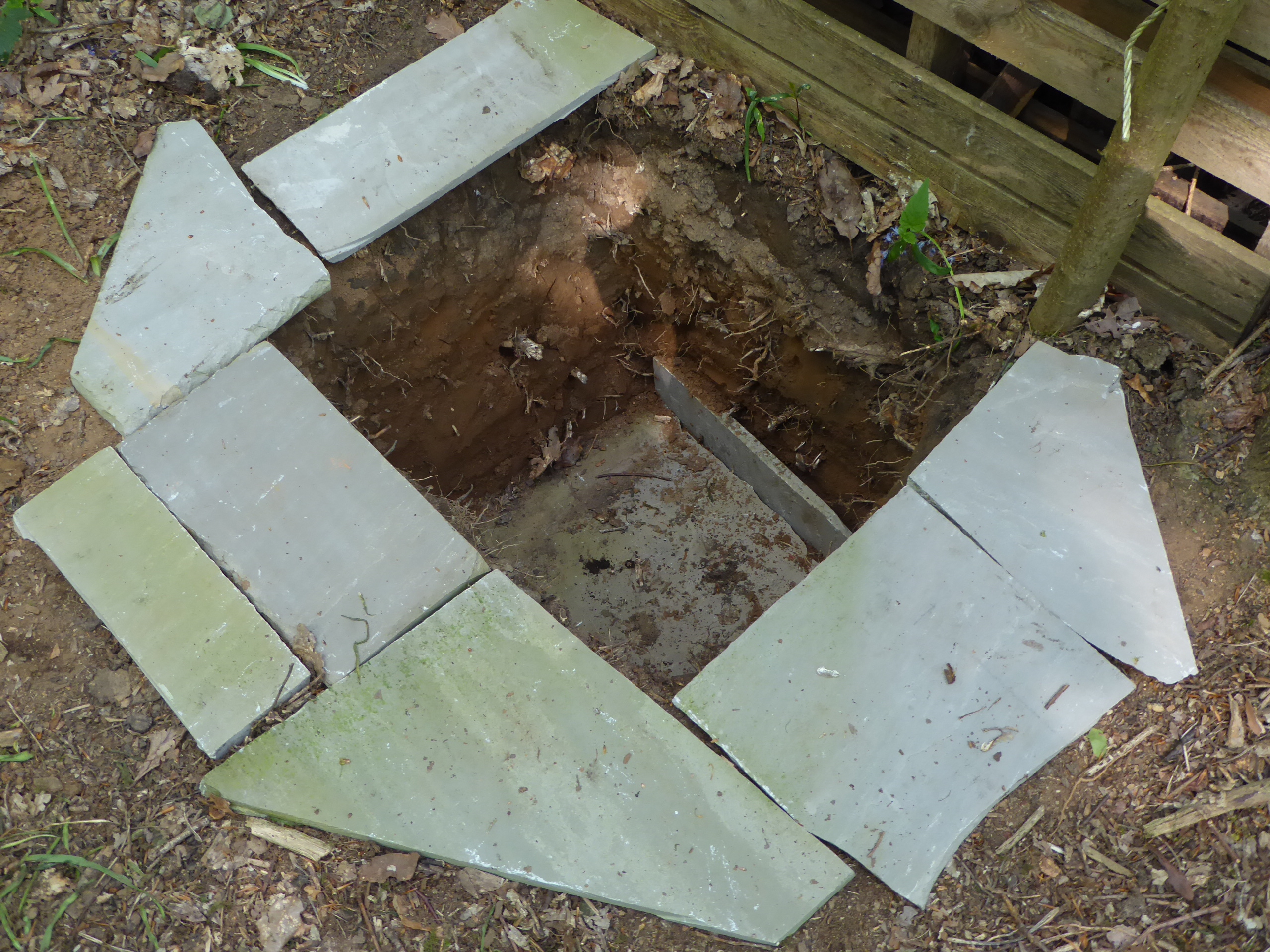
I had two main jobs on the list – carry on building the screen walls around the composting toilet and finish the underground fridge.  After a long wander around, I decided to carry on digging out the fridge hole. I was aiming for about two feet in depth but I’ve settled on around 18 inches. It’s just too hard a job, having to chop through roots and bend right down to scoop out the soil. It’s only going to be used when I occasionally camp there anyway. The lid is to be made of woven hazel rods packed with pine brash. I don’t have any pine but I know a man who has – loads and loads of it, where he has been felling in his plot. I asked permission to take some and he kindly allowed me to. A little shrew scuttled across my path, running for cover, as I dragged a few branches back. I didn’t have time to make the lid yet but here’s the fridge so far. The stone surrounds are left-over scraps from our new garden paving. The whole thing will be covered with the brash lid but I wonder what adventurous animals might find their way in? The sides are rough so they should be able to climb back out.

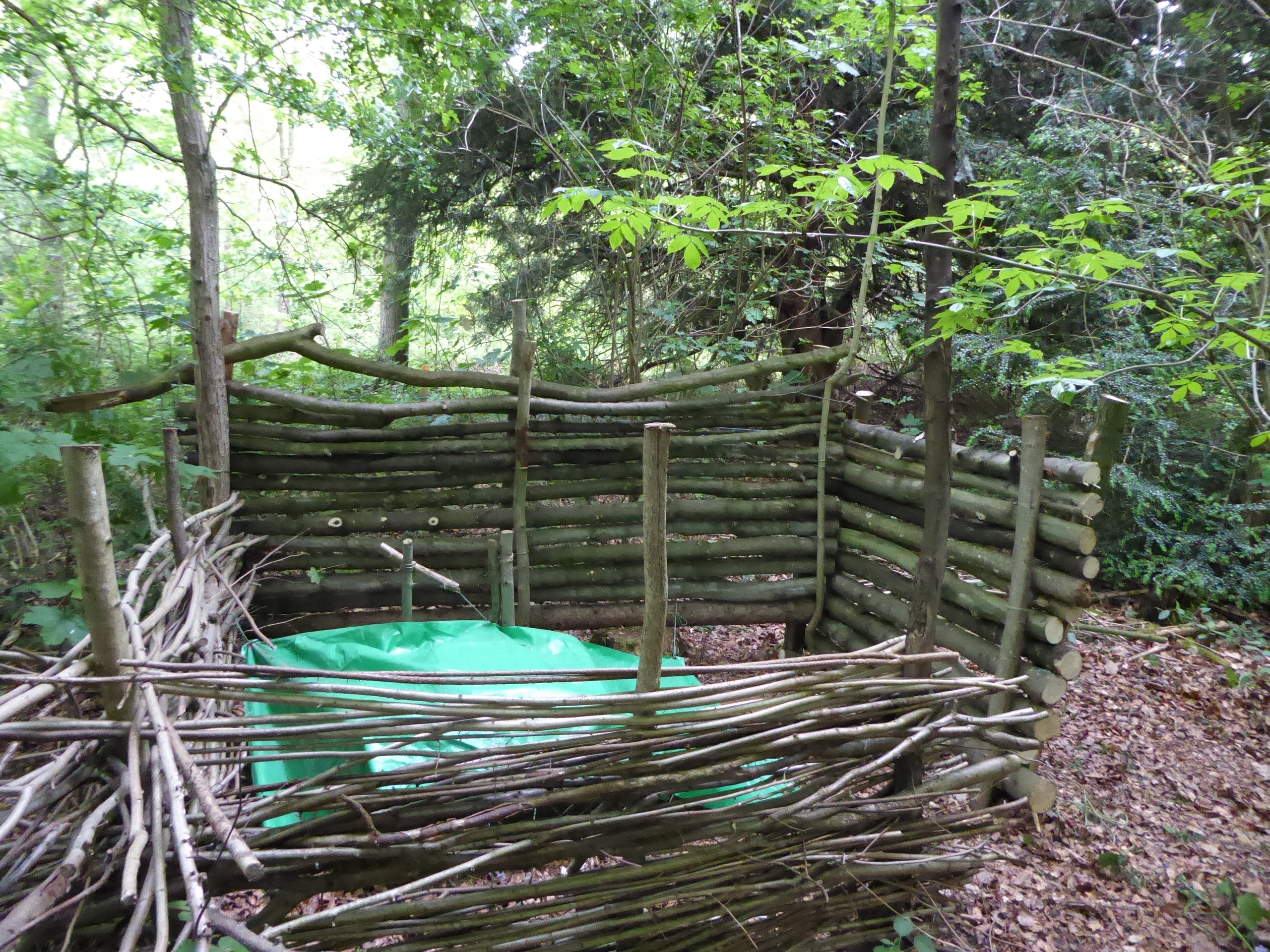
The two new walls for the toilet are finished. I ran out of suitable logs to do the other two but I might just build them up with some of Chris’s pine brash. Another neighbour has been using some of it for nesting sites for his birds, piling dense bunches between the forks of low branches. He also uses piles of dead bramble, an idea I might copy come Autumn.

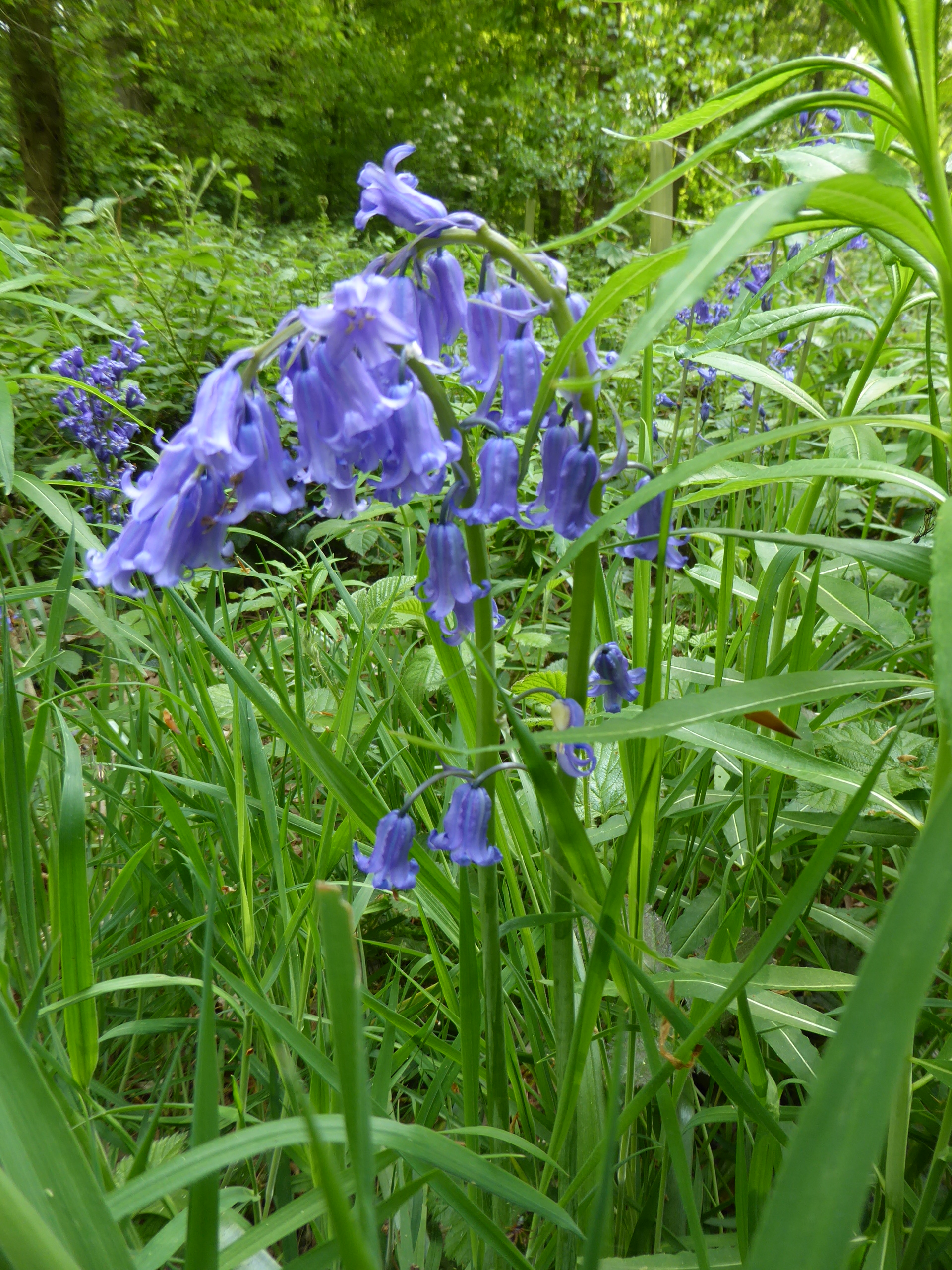
It will be a couple of weeks before my next visit, the wood is getting darker as the canopy leafs up and it will look completely different. I guess the bluebells will have gone so here’s one last photo until next spring.


2 Comments

One night camp and tales of “lampers”

This is going to be a long one, so you might want to make a cuppa tea or coffee first! It’s been a while since my last visit so I was pretty excited to be going again with a one-night camp planned. I was keen to have another go at sleeping in the back of the car on the plywood board I fashioned last year. I’d bought a good quality inflateable sleep mat, the main issue the first time was using a cheap foam one which gave little cushioning to my old bones. I have also cleared a better area to position the car. It’s a bit more private, surrounded by some very tall hawthorn trees and away from the sycamore which had covered my tarp with sticky aphid goo last time. To use the back of the car for sleeping, I have to climb in through the rear passenger door, so I strung a tarp over it to provide a sort of porch and  to provide protection when I get in and out of it or undress/dress. The arrangement worked pretty well.
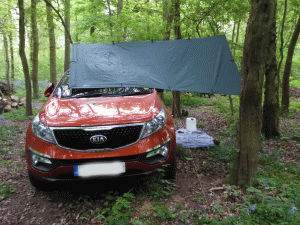
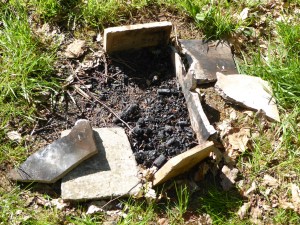
When I arrived, there was evidence of some minor vandalism. The marble slab that formed the back of my camp fire had been smashed and a mature oak had been gouged with my mattock tool. I talked to a neighbour later who told me a bunch of teenagers had been visiting another plot of wood, earlier in the week and had inflicted some minor damage to his property too. It’s always going to be a possibility that intuders will enter the woods and steal or do damge. So far I haven’t had any incidences and I think this was a typical, bored-what-can-we-do-to-show-off-to-the-lads mindless activity that teenage boys often do.
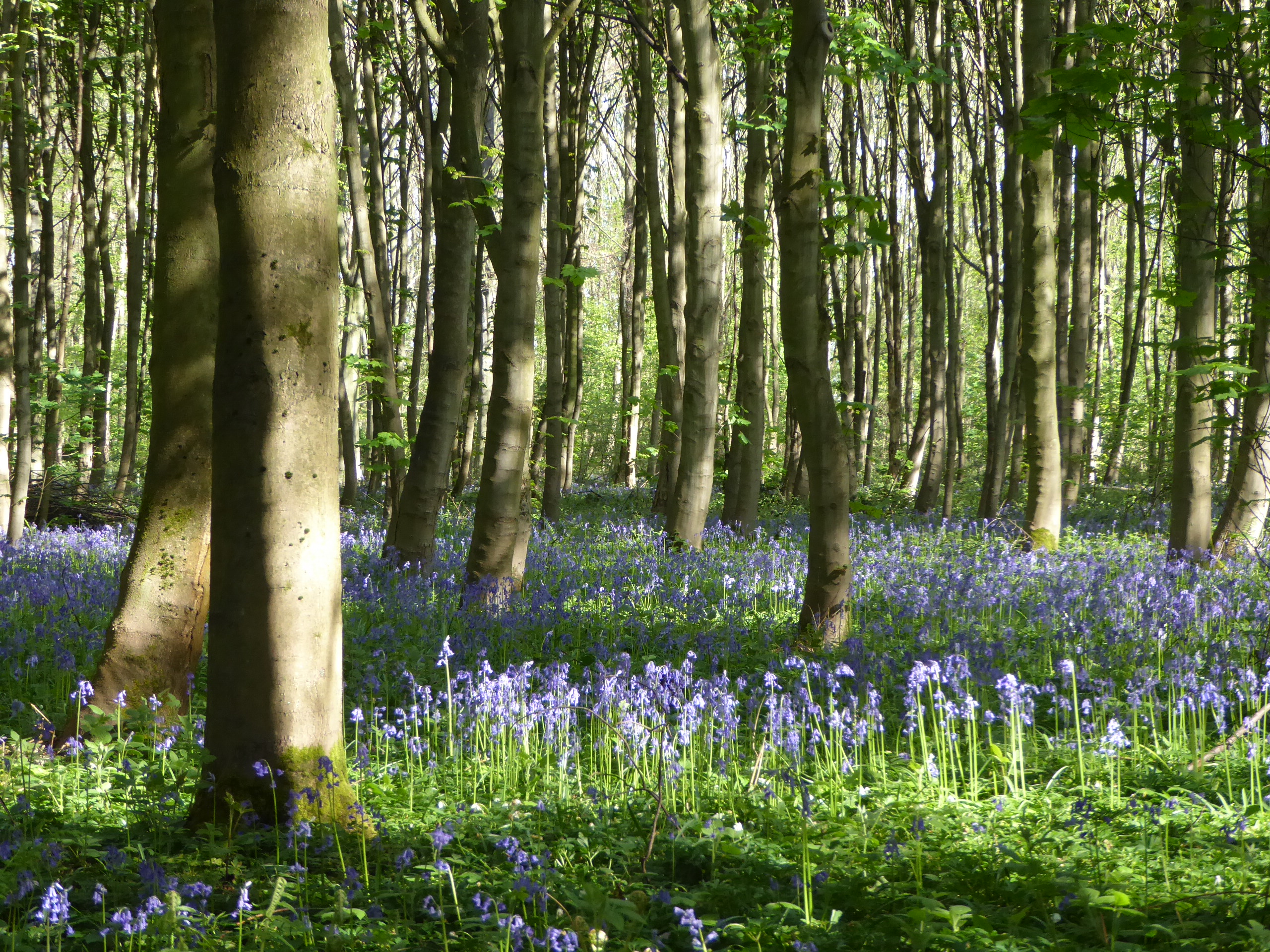
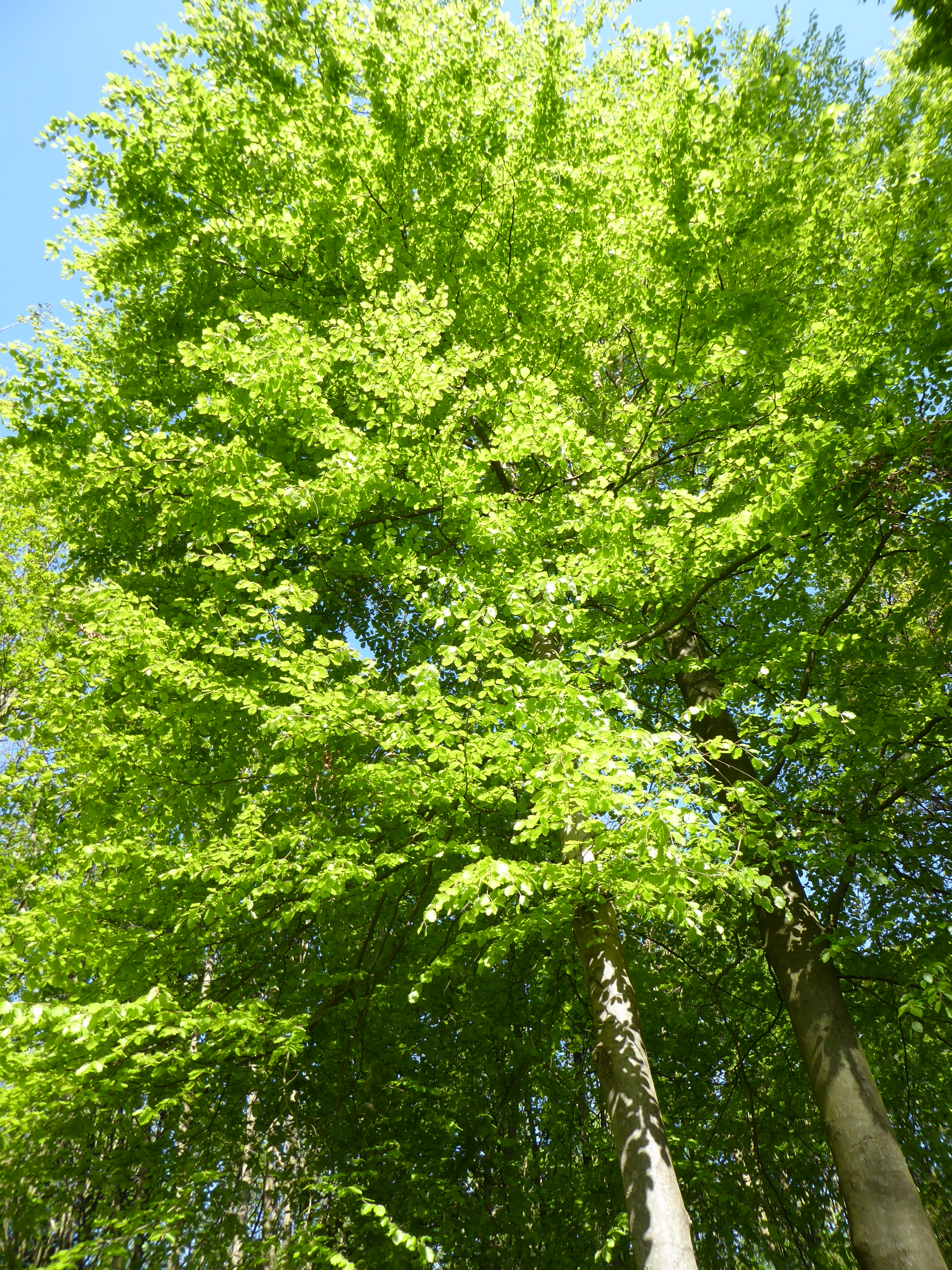
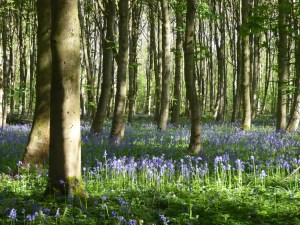
Onto more positive things now. The woods are looking at their finest. Fresh new growth everywhere. The bluebells are at their peak of flowering and many other plants have sprung up and the trees are in their first flush of leaf – vibrant, fresh greens.
The two day trip meant I could also crack on with a few jobs and projects. I saw an idea in a book that appealed. An underground fridge. Basically a hole in the ground with a stone slab in the bottom. You make a lid by weaving thin branches covered with small brash and damp moss. The evaporation draws heat from the pit and keeps it cool. I started digging it and got about a foot deep before running out of steam. Much harder than it sounds. The ground is quite dense and roots here and there to contend with. I didn’t get to finish it so I’ll report back later.

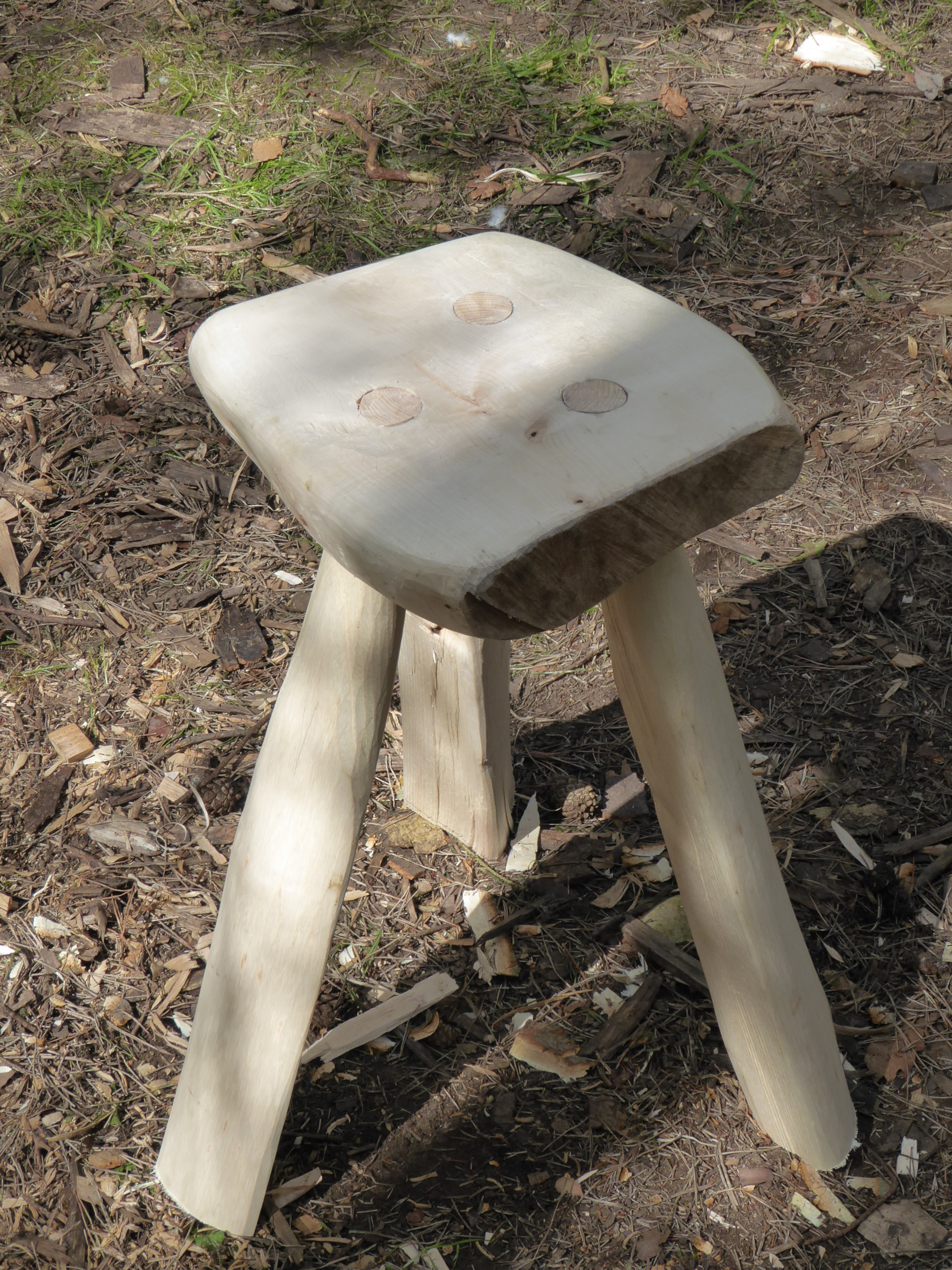
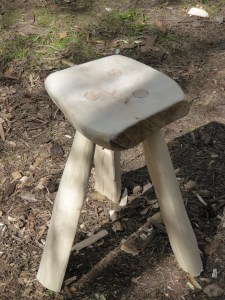
Other jobs on day one – I netted off four large, coppiced hazel trees that have been nibbled off by deer last summer, just as they were regrowing nicely. A job that’s been nagging me to get done. The coppice area where I felled the big sycamore trees was a real sun trap and a joy to work in now. I had a go at splitting some large logs for making the seats for three-legged stools. A skill I learned a few weeks ago on a green woodworking course. Here’s a photo of the stool I made and would love to have a go at some more, using my own timber. I managed to get three nice straight pieces. I just need the time to make them now.
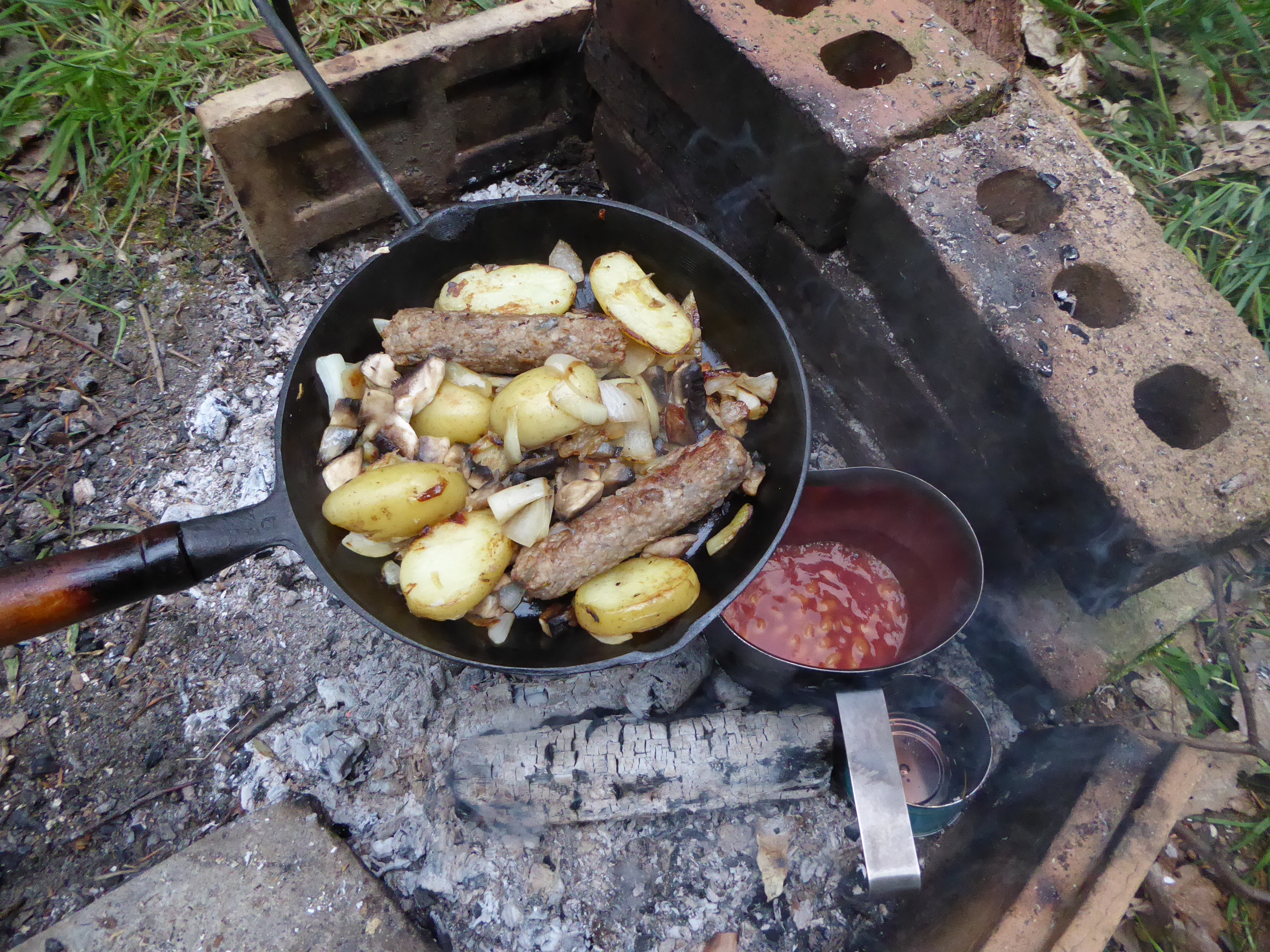
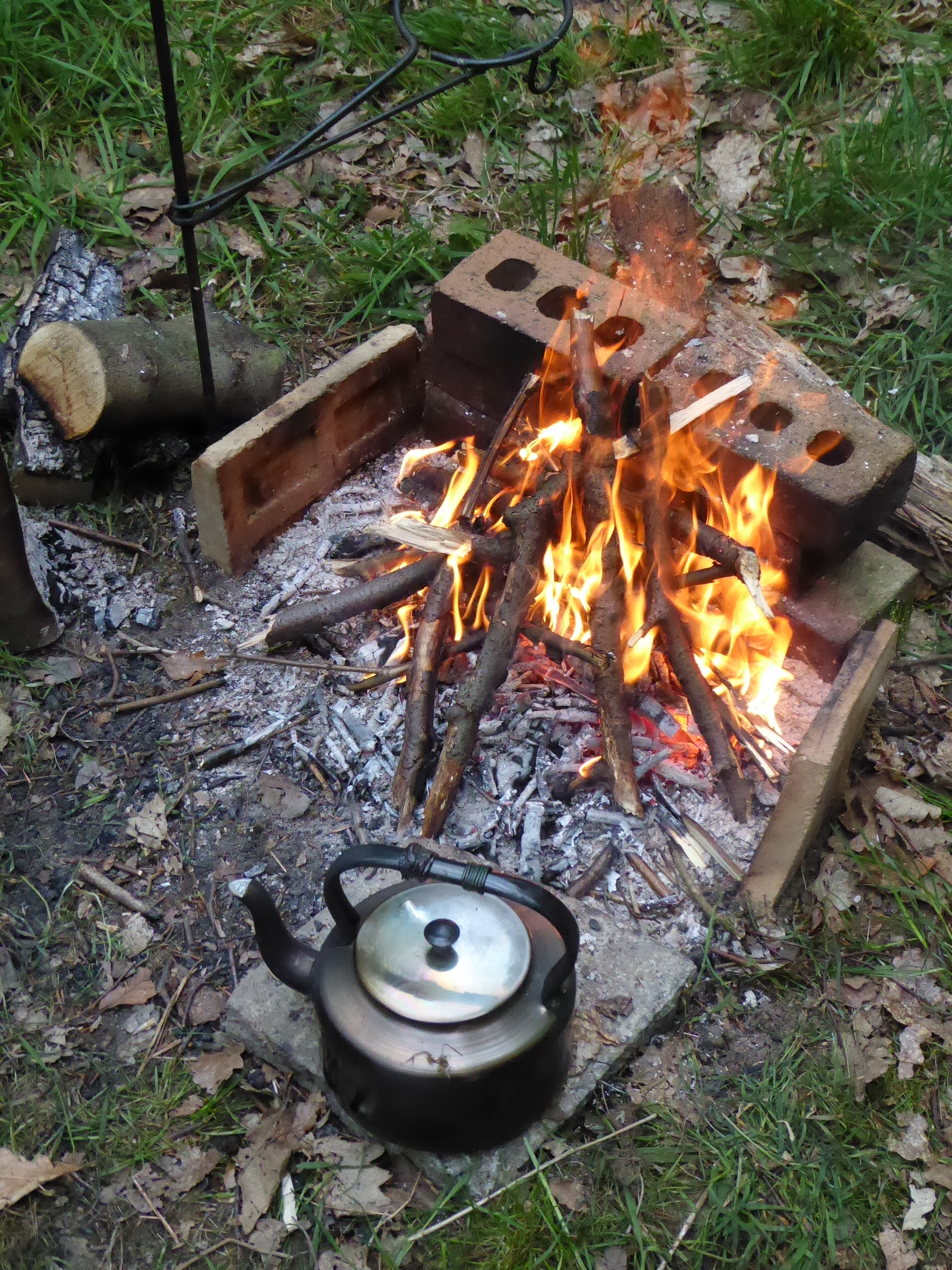
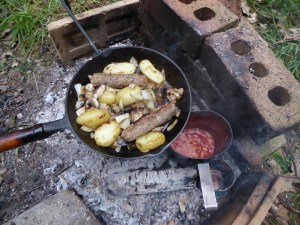
Time for my evening meal – a fry up of potatoes, onions, mushrooms and veggie sausages with baked beans. A lot of work goes into cooking in the woods and you need to be well organised. First to forage for dead wood to make a decent fire. Keeping it going is a job and a half as you need to keep feeding it for the first half hour to create a nice bed of embers. A cast iron pan is what you need on an open fire. This one was filthy and rusted when I bought it for £1 at a car boot sale. Most people would not even consider using such a thing but you can retore them with a bit of work. First leave it in the hot embers of a fire for an hour (take the handle off first!). All the old grease and muck will burn off and leave it as bare metal. Rub it down with wire wool to remove any scale. You can wash it in hot water and washing liquid but make sure you dry it straight away or rust will start forming. That’s the only time you should wash a cast iron pan. Next rub it vigorously all over with cooking oil, several times until no more dirt comes off on the cloth. Then either put it in a very hot oven for about half an hour to season it. The oil will change chemically and form a sort of non-stick coating. When it’s cooled, a light rub of oil and your ready to cook and when done, just scrape any bits off and rub it lightly with oil again. It will get better the more you use it but never, never, wash it now.
I spent the evening doing a few small jobs ready for the nightime, then sat down in front of the fire, whittling a few tent pegs for my tarp, sipping some spiced rum and listening to the birdsong as dusk approached and the last bird (a thrush) finally stopped to say it’s bedtime. I was tempted to turn in early as I knew I’d be awake early too but decided to embrace the peace and quiet and unique experience of sitting on your own in a woodland, in front of a fire, in the dark. There were mixed feelings – contentment but some trepidation. Being on your own and having heard my neighbour’s tales earlier, of “lampers” (guys who sneak around woods in the dark, looking for deer to hunt. They use torches to show up their eyes in the dark). Some were spotted a few weeks ago, it tends to put you slightly on the nervous side of relaxation and the very word, lampers, sounds sort of spooky. Your primitive, primeaval brain kicks in and your senses are heightened. “Fight or flight”.

I thought I saw a flash of bright light in the distance. Yes, another one. I kept watching to see if it moved. I saw some more and yes they were moving. Adrenalin started to negate the effects of the spiced rum. I didn’t want to go to bed without knowing what the lights were. I switched modern man’s part of the brain back on, forcing neanderthal man to listen to logic and reason. Could they be car lights from the minor road that runs parallel half a mile away, glinting occasionally through the dense woodland trees? That makes sense but neanderthal man kept objecting. There’s only one way to find out. Head stealthily toward the lights, in the dark (without a torch to give myself away) to investigate. There was just enough light in the sky to make out where the main tracks were and knowing it well, I could easily find my way toward the edge of the wood, where I could get a clear view of the road. The earlier spiced rum helped! Of course it was car lights and I headed back slightly more relaxed. Neanderthal man was still trudging along, somewhere behind me so it wasn’t the most relaxed sleep I’ve had.
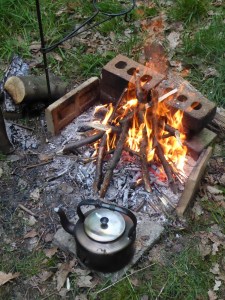
After a rather restless night, I emerged around six o’clock and relit the fire, kettle on and a fresh coffee to kickstart the day. A nice time to reflect, relax and enjoy the new day. I packed my sleeping gear back up then made some breakfast – raisin bannock bread and jam and a banana. Today’s main job was to start building the log-wall, privacy screen around the toilet. It’s only half finished so no photos yet. I planted a few alder saplings that I grew from seed and chatted to some neighbours who turned up late morning. Some welcome human company. I headed home late afternoon, completely knackered, dirty and smokey but very content. A successful and memorable mini adventure.